What Is Reshoring? 4 Factors Driving the Return of U.S. Manufacturing
Ever check the tag on a t-shirt or appliance and see “Made in China” or “Made in Mexico”? Soon, you may be seeing more tags labeled “Made in the USA.”
Today, there’s a reshoring trend that’s reopening factories, strengthening American manufacturing, and creating new opportunities for businesses and workers. As more companies move toward domestic manufacturing, the impact is reaching every corner of the country.
What Is Reshoring?
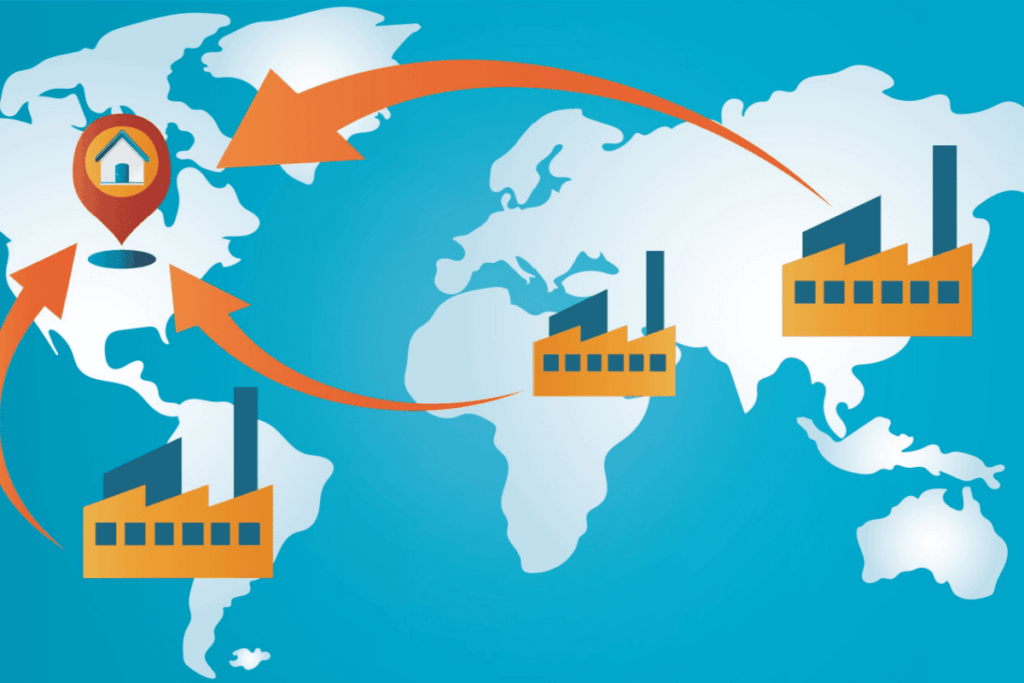
Reshoring happens when American businesses bring manufacturing they once moved overseas back to U.S. facilities. The term isn’t new: According to the U.S. Reshoring Initiative, reshoring first gained traction a few years after the Great Recession.
What Are the Benefits of Reshoring?
Reshoring strengthens domestic manufacturing, supports local businesses, and boosts the U.S. economy through job creation and more reliable domestic supply chains. The U.S. Reshoring Initiative estimates the trend created around 174,000 new jobs in the United States in 2025.
One example of reshoring in action: Home appliance manufacturer GE Appliances announced plans to move production of washers and dryers from China back to its plant in Louisville, Kentucky, in 2025. This move alone is expected to create 800 jobs in the U.S.
What’s the Difference Between Offshoring and Reshoring?
These are opposite terms: Offshoring is when jobs and manufacturing are outsourced to other countries. Reshoring brings those operations back to the United States.
Four Factors Driving the Return of U.S. Manufacturing
Let’s look at four key reasons the U.S. is bringing manufacturing back to regional facilities.
#1 Building a Resilient Supply Chain
A supply chain is the network of people, processes, and resources that move a product from its origin to the customer.
Think about your smartphone. Its journey to your hands relied on a manufacturing supply chain that involved:
Mining minerals
Assembling parts in factories
Creating logistic networks
Loading software
Distributing the final product
A resilient supply chain can absorb disruptions, adapt quickly, and maintain the flow of goods instead of breaking under stress.
Global shocks like the COVID-19 pandemic, shipping bottlenecks, and port congestion exposed how vulnerable long, offshore supply chains are to disruption. These breakdowns cause increased costs, missed market opportunities, and halts in production.
What This Means for U.S. Manufacturing
Reshoring encourages companies to prioritize reliability and shorter, domestic supply chains over lowest-cost production. Products once built overseas can now be assembled closer to home with shorter supply routes.
The result? Greater control over manufacturing operations, suppliers, and inventory levels—and no international delays or complications.
This matters most for critical sectors like:
Healthcare
Semiconductors
Food production
Energy production
Technological advancements like AI, machine learning, and real-time visibility and monitoring are making this shift easier.
#2 Changing Global Cost Structures
The difference between waiting six weeks for a shipment and walking into a nearby plant to fix an issue on the spot is significant. Cheaper doesn’t automatically mean better.
Rising wages in major offshoring hubs—especially China—have narrowed the cost advantage that outsourcing once offered. Meanwhile, U.S. manufacturing productivity rose 3.6% in 2024, the fastest since 2009, making domestic plants more efficient than in recent years.
These shifts are driving major companies to reshore. Apple, for example, plans to open a new Houston facility in 2026 to produce AI servers previously built overseas.
Automation, rising foreign labor costs, and advanced technology are making domestic production increasingly competitive—and creating demand for a highly skilled workforce trained in advanced manufacturing.
#3 Trade Tensions and National Security
Tariff wars affect everyday life, from raising the price of your laptop to delaying the part your auto repair shop is waiting for.
In 2025, escalating trade tensions between the U.S. and countries like China put significant, ongoing pressure on the supply chain. U.S. tariffs on Chinese imports rose to about 51% on all goods, while Chinese retaliatory tariffs reached about 32% on U.S. exports.
There’s also increasing worry about national security and dependence on foreign suppliers for critical goods, like:
Medical supplies
Computer chips
Defense-related products
Policymakers and industry leaders stress the need to rebuild secure domestic production networks that protect technology and ensure continuity even during global crises.
#4 Government Incentives and a “Local-for-Local” Market
As global tensions have intensified, U.S. government policies have started explicitly funding domestic manufacturing expansion to bring manufacturing back home.
Washington is funding the CHIPS and Science Act, which includes billions in federal incentives aimed at rebuilding domestic semiconductor capacity after decades of offshoring.
This has led to companies expanding and strengthening networks of domestic suppliers. One example is Samsung’s facility in Taylor, Texas, which has received a $250 million grant on top of federal CHIPS support. Its production of advanced chips used to be located almost entirely overseas.
What Is a Local-for-Local Market?
A local-for-local market encourages building regional plants to serve the U.S. market directly. This reduces exposure to geopolitical shocks (like sudden conflicts) and secures access to essential technologies. To reduce foreign dependence, the U.S. is also building “friend-shoring” networks with trusted allies.
This approach ensures economic resilience and national security while supporting sustainability by reducing long-distance shipping and emissions.
Key Takeaways
Here’s what you need to know about the reshoring initiative:
The reshoring movement is accelerating as U.S. companies bring manufacturing home, supported by job growth and rising demand for domestic production.
Supply chain resilience is now a top priority after years of global disruptions that exposed how fragile offshore production networks can be.
Cost structures have shifted, with rising wages overseas and improved U.S. productivity making domestic manufacturing more competitive.
Geopolitical tensions and tariffs are pushing firms to reduce reliance on foreign suppliers for critical goods like chips and medical equipment.
Government incentives, including CHIPS Act funding, are driving major investments in U.S. semiconductor and high-tech facilities.
The future needs creative thinkers and problem solvers in manufacturing. Does this sound like your next career move?
How UTPB’s Industrial Technology Programs Prepare You for the Reshoring Boom
Imagine helping launch a new factory in your hometown or designing the system that keeps a production line running smoothly.
That’s the kind of impact students make when they study industrial technology at The University of Texas Permian Basin. If you’re drawn to manufacturing, automation, problem-solving—or the reshoring movement happening across the U.S.—UT Permian Basin offers two flexible, 100% online IT programs:
You’ll develop expertise in the areas employers are looking for, like:
Quality control
Logistics
Industrial safety
Advanced manufacturing systems
These are the skills companies need as they rebuild U.S. operations.
UTPB partners with major West Texas manufacturers, including firms expanding production thanks to CHIPS Act incentives and new reshoring investments in the region.
Whether you’re just launching your career or advancing it, these programs prepare you to join the skilled workforce powering new manufacturing operations across Texas and beyond. Study from anywhere you want, anytime you want.
Ransomware, phishing, viruses: If it’s connected to the internet, someone’s probably trying to hack it. Threats are everywhere in today’s digital world, and now that factories run on smart technology, it’s not just laptops at risk. Industry 4.0 has moved manufacturing from traditional methods to smart, automated systems (think robots and sensors on the factory…
Imagine a factory where machines, robots, and sensors are all talking to each other, like nerves sending signals to a brain. Before a human notices anything, the system’s already flagged a motor that’s starting to lag and adjusted a product’s assembly in seconds. This is connected manufacturing in action. Today’s smart factories run on connected…
Imagine factories where robots handle the heavy lifting and engineers adjust machines using virtual models—all while reducing waste and pollution. This is the future of industrial technology. In this article we’ll explore how Industry 4.0 and beyond will shape the way we work, create, and innovate. Smart Factories: The Changing Face of the Industry Sector …