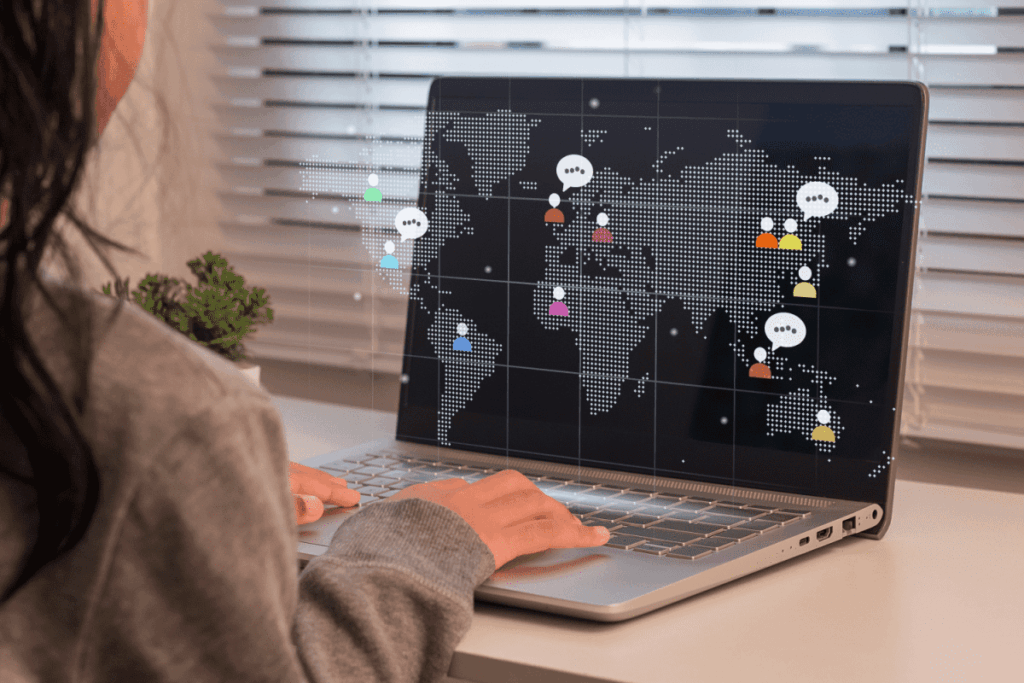
What Is Intercultural Communication (and Why Does It Matter?)
You can speak the same language as someone and still completely miss each other’s meaning. That’s part of what makes intercultural communication so important.
Whether you’re working with international teams, studying abroad, or connecting with people from different backgrounds, communication involves more than just choosing the right words.
Intercultural communicationis how people from different cultures share ideas and make sense of one another. That can include differences in nationality, language, religion, age, gender, profession, or social identity.
In other words, it’s what happens when culture and communication interact.
Why Is Intercultural Communication Important?
Culture shapes how people interpret cues like tone, body language, authority, and politeness. When people from different backgrounds interact, misunderstandings can happen even when everyone has good intentions.
Intercultural communication helps people:
Build trust
Work together more effectively
Avoid confusion that can slow down progress or damage relationships
In a globalized world, those skills are useful in business, education, healthcare, media, and just about any field that brings people together across different experiences.
Why Context Matters in Cross-Cultural Communication
It’s important to phrase communications carefully, but words are just one small part of the message you’re sending. Cultural context also shapes how communication is sent and received.
A firm “no” in one culture might be a polite “maybe” in another. The same words can land very differently depending on who’s saying them, where, and how.
Here’s a few examples:
#1 Eye Contact
In many Western cultures, eye contact signals confidence and attentiveness. In countries like South Korea or Japan, intense eye contact can be seen as rude or confrontational.
#2 Email Etiquette
Did you know that email etiquette also differs between cultures?
A German manager will usually jump straight to the point—for example: “Please send the quarterly report by Monday.” An American counterpart may soften the tone: “Could you please send over the quarterly report when you get a chance?”
The intent is the same, but the delivery reflects very different cultural norms.
#3 Emotional Expression
Some cultures are comfortable with open emotional expression, while others place more value on restraint.
For instance, in the U.S., publicly showing emotion—such as expressing frustration—is mostly accepted. In countries like the United Kingdom, emotion is expected to be subdued (hence the British term “stiff upper lip”).
Certain hand gestures—like a thumbs up—are appropriate in the United States but offensive in some Middle Eastern countries.
That’s why strong intercultural communication isn’t just about speaking a language. It’s also about understanding the expectations and values that shape it.
How to Strengthen Intercultural Communication Skills
The good news is that intercultural communication is a skill you can build.
A few ways to improve it include:
Learning how different cultures view authority and hierarchy
Understanding the difference between individualist and collectivist values
Paying attention to nonverbal cues
Practicing active listening
Doing research before working with people from different cultural backgrounds
At its core, intercultural communication requires flexibility and self-awareness. It means being willing to adjust your approach instead of assuming your communication style is the default.
You can focus your studies with four specializations:
General Communication
Strategic Messaging
Professional Communication
Sports Media
Do you see yourself as a future bridge-builder? Transcontinental journalist? International marketing professional? Find out with UTPB and turn your passion into your future.
Picture Martin Luther King Jr. standing on the steps of the Lincoln Memorial, delivering his “I Have a Dream” speech to over 250,000 people gathered for the March on Washington. Could he have known, in that moment, that his words would terrify some, inspire many more, and echo across decades of social movements? King and…
AI is now an inseparable part of our classrooms, homes, and offices. Capable of performing trillions of calculations in a second, AI-powered machines dredge the depths of the internet to find and convey information in any style, language, or difficulty level. But don’t worry, AI is only here to lend a hand. At least, that’s…
Picture this: A TV meteorologist warns about a brewing hurricane, the storm’s cone of uncertainty and spaghetti models streaking all over the screen. As you quietly regret moving to the coast and plan for gas, water and higher ground, you hear the harried meteorologist explain which hurricane category will destroy your home—and which will wash…