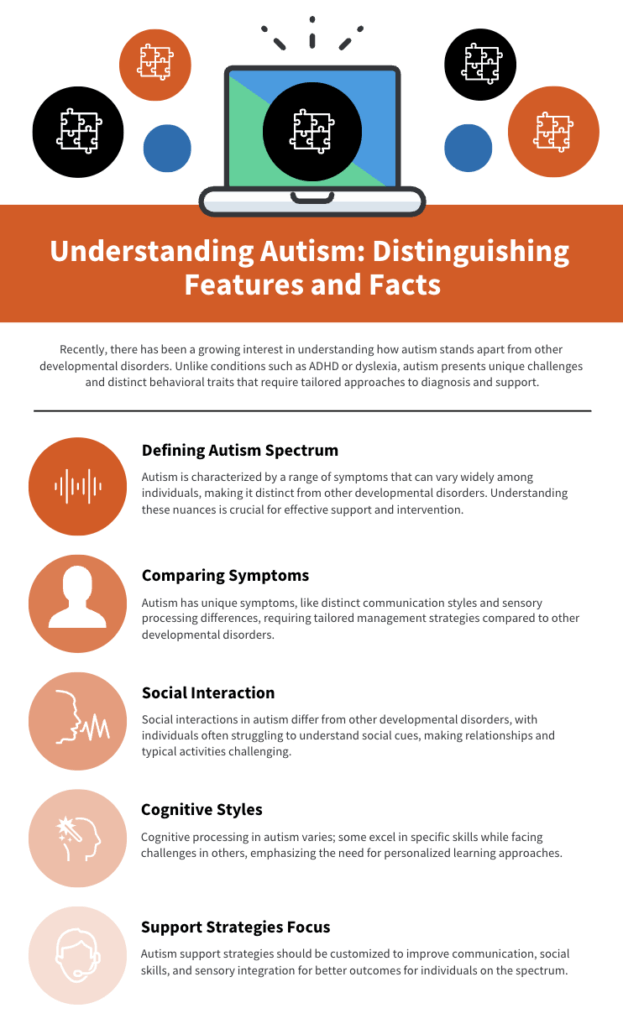
Yes, autism spectrum disorder, or ASD, is considered a developmental disability. It affects how a person communicates, interacts with others, learns, and behaves.
As autism diagnoses have become more common, more families and educators have started asking questions about what autism is, how it’s classified, and how it differs from other developmental conditions. According to data from the Centers for Disease Control and Prevention (CDC), about 1 in 31 8-year-old children were identified with ASD in 2022.
This article breaks down how autism is classified, how it differs from other disorders, and why early intervention matters.
Autism Is a Developmental Disability, but It’s Also a Spectrum
Autism is classified as a developmental disability because it affects development early in life, especially in areas like:
Communication
Social interaction
Behavior
But autism is also a spectrum disorder, which means symptoms and support needs can vary widely from person to person.
Some autistic children may have difficulty with eye contact, social communication, or adapting to changes in routine. Others may show repetitive behaviors or have very focused interests. Some communicate verbally, while others are nonverbal or communicate in other ways.
That range is part of what makes autism different from many other disorders: There’s no single “look” or profile.
How Autism Differs From Other Developmental Disorders
Autism can overlap with other developmental disabilities, which is one reason its diagnosis can be complex.
For example, autism and ADHD can both affect attention, communication, sleep, and impulse control. A child who struggles in the classroom may show signs that could fit one condition, the other, or both. In recent years, diagnostic guidelines have made it easier for clinicians to identify co-occurring autism and ADHD more accurately.
In short, autism is a developmental disability, but it’s not interchangeable with every other developmental disorder. It has its own diagnostic features and support needs.
How to Identify Autism
There’s no single medical test for autism. Instead, healthcare providers look at behavior and development over time.
The CDC says ASD can sometimes be detected as early as 18 months, and by age 2, a diagnosis by an experienced professional can be considered reliable. The American Academy of Pediatrics also recommends autism-specific screening at 18 months and 24 months.
A child may first go through developmental monitoring and screening, followed by a more formal developmental evaluation if concerns come up.
Why Early Intervention Matters
Early intervention can make a meaningful difference for children with autism. Because development moves quickly in the early years of life, support provided during that time can help improve a child’s communication and daily functioning.
Recognizing the signs of autism early and connecting families with the right services can have a lasting impact on a child’s long-term development.
Make a Difference in the Lives of Children With ASD
UT Permian Basin’s online Master of Arts in Special Education with Autism Spectrum Disorders track is built to help professionals support students with ASD.
Through flexible online coursework, you’ll learn about early signs of autism, evidence-based interventions, and strategies for meeting the needs of learners across the spectrum.
Put yourself in the best position to make a difference in the lives of students with ASD. Apply to UTPB’s online MA in special education, ASD track to learn how to better assess your students’ needs, whether or not they’re on the spectrum.
Many young students dread stumbling across an unknown word while reading aloud to the class. Looking for context in pictures or surrounding sentences, students in this situation tend to guess and hope that they’ve landed on the correct pronunciation. The key to word recognition, however, lies not in contextual guessing but in decoding. By identifying…
The terms mainstreaming (integration) and inclusion are often used interchangeably. The careful implementation of these contrasting teaching approaches, however, can have a profound impact on the academic outcomes of students with disabilities. Knowing the difference between inclusion and mainstreaming can help you better reach students with and without disabilities, so we encourage you to join…
Superintendents oversee virtually every aspect of a school district, from ensuring that its curriculum meets approved standards to meeting with parents regarding their child’s education. As leaders, superintendents can enact positive, lasting change that benefits the lives of students, teachers, and administrators. They must be able to set an example, inspire others, encourage teamwork, and…