Graduate Certificate vs. Master’s Degree: Which One Is Right for You?
Trying to decide between a graduate certificate and a master’s degree? You’re not the only one. Both can help you grow your skills, strengthen your resume, and move your career forward, but they’re built for slightly different goals.
A master’s degree is usually the better fit if you want a broader graduate education or qualifications for higher-level roles. A graduate certificate makes more sense if you want to build a specific skill set in a shorter timeframe.
Here’s a closer look at how they compare.
Graduate Certificate vs. Master’s Degree: What’s the Difference?
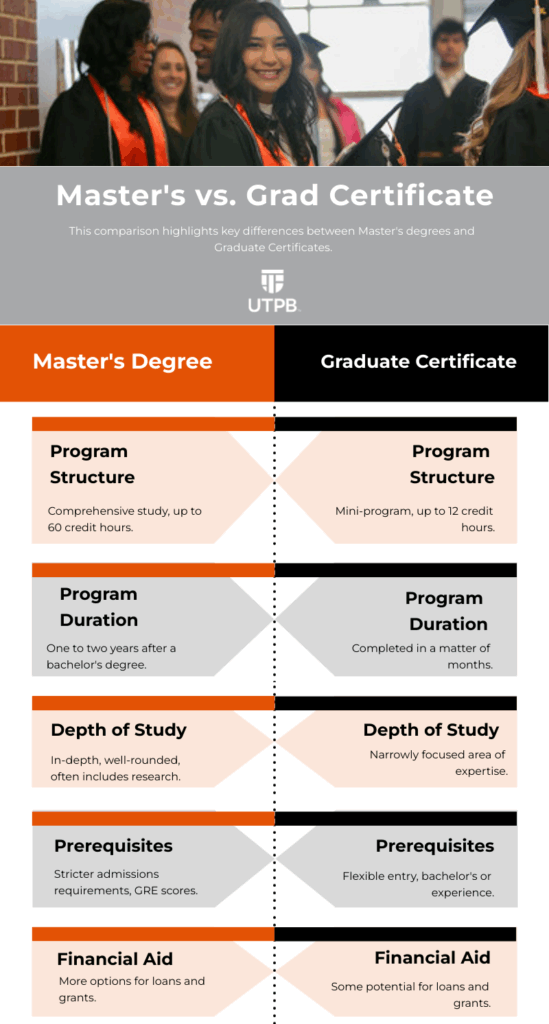
A master’s degree is a full graduate program in a broader field of study. These programs often require 30 to 60 credit hours and may include research, internships, or thesis work, depending on the field.
A graduate certificate is shorter and more focused. Most require about 9 to 15 credit hours and are designed to help students or working professionals build skills in a specific area.
Program Length
For many students, a master’s degree takes one to two years to complete. A graduate certificate can often be finished in a matter of months, which makes it appealing if you’re looking to upskill without committing to a full degree program.
Depth of Study
Master’s degree programs cover a specific discipline in depth, typically including research and thesis components, and more coursework overall.
Graduate certificate programs help aspiring professionals build expertise in a focused area without the extensive coursework of a full master’s degree.
Career Options
Depending on the field and profession you’ll pursue, a master’s degree can qualify you for specialized roles and lead to higher earning potential.
A graduate certificate can still add value, especially if you want to sharpen a certain skill, meet licensing requirements, or transition into a new area without starting from scratch.
Prerequisites
Master’s degree programs often have stricter admission requirements. This can sometimes include letters of recommendation or passing scores from standardized tests like the GRE.
Graduate certificates usually have a more flexible admission requirements and are accessible to professionals with a bachelor’s degree or relevant experience.
Financial Aid
Students pursuing a master’s degree often qualify for federal financial aid, including loans and grants.
Those pursuing a graduate certificate may also qualify for financial aid, depending on the school’s policies.
A master’s degree may be the better choice if you:
Want a broader graduate education
Are aiming for leadership or specialized roles
May pursue a doctorate later
Need a graduate degree for your field
A graduate certificate may be a better fit if you:
Want to build a specific skill set quickly
Are changing careers or testing a new field
Need a shorter, more flexible program
May want to stack credits into a master’s later
Frequently Asked Questions: Graduate Certificate vs. Master’s Degree
Still deciding between a graduate certificate and a master’s degree? These common questions can help clarify your options and guide you toward the right next step.
Is a graduate certificate worth it? Yes, especially if you want to build specialized skills quickly, boost your resume, or explore a new field without committing to a full degree. It’s also a great way to test the waters before pursuing a master’s degree.
Can I use a graduate certificate toward a master’s degree later? In many cases, yes. Some programs allow you to transfer certificate credits into a related master’s degree, which can save time and money. Be sure to check with the specific program you’re considering.
Which option leads to better career opportunities? A master’s degree typically qualifies you for higher-level roles and increased earning potential, especially in leadership or research-based careers. A graduate certificate can still enhance your qualifications but is best suited for more targeted career moves.
Explore Your Flexible Learning Options at UT Permian Basin
UTPB offers the flexibility to start with a graduate certificate and later transition to a master’s degree program—or vice versa. Whether you’re a prospective student or mid-career professional, you’ve got the opportunity to customize your educational path to align with your goals.
You only get one chance to make a first impression. Cover letters have long been one of the best ways to set yourself apart in a competitive market. But in the era of AI screeners, even the most polished resumes—and their accompanying cover letters—feel like they’re disappearing into the void. With the job market more…
Getting accepted to The University of Texas Permian Basin is a big milestone. If you’re a working professional, the next step—asking your employer about tuition reimbursement—can feel a little intimidating. But it doesn’t have to be. Most organizations want employees who grow, stay, and contribute at a higher level. And many companies offer tuition reimbursement,…
The University of Texas Permian Basin is home to over 7,000 students. Whether on campus in West Texas or from a laptop hundreds of miles away, they’re part of a diverse community that values culture, connection, and progress. Every member of our Falcon Family deserves some time in the spotlight. But with Hispanic Heritage Month…