Great Women in History: 9 Heroines You Should Know
Imagine being told you can’t do something—by law, by tradition, by those close to you—and doing it anyway.
Even today, women face greater barriers to recognition and authority than men. Yet throughout history, countless women stepped beyond traditional domestic roles, often at great personal risk.
This article highlights nine of the countless important women who refused the roles assigned to them. They reshaped science, politics, flight, freedom, and the course of history itself.
1. Cleopatra VII (69–30 BCE)
Hollywood often celebrates Cleopatra’s beauty, but her contemporaries were far more captivated by her intelligence.
She ruled Egypt with razor-sharp political strategy, spoke multiple languages, and excelled in economics and diplomacy—often acting against counsel.
Though Cleopatra inherited a debt-ridden kingdom, she turned it into one of the wealthiest states in the Mediterranean. Her alliances with Julius Caesar of Rome and Mark Antony delayed Egypt’s annexation by Rome for over a decade.
2. Queen Elizabeth I (1533–1603)
Queen Elizabeth I’s leadership brought stability to England during a turbulent era. This era came to be known as the Elizabethan Age.
Declared illegitimate by her father, King Henry VIII, Elizabeth Tudor persisted. She claimed the throne and ruled for over four decades.
Among her lasting achievements:
She established the Protestant Church of England to reduce religious conflict.
In 1588, England defeated the Spanish Armada, strengthening national security and encouraging global exploration.
Literature and drama flourished under her patronage, including the works of William Shakespeare and Philip Sidney.
3. Ada Lovelace (1815-1852)
In the 1840s, Ada Lovelace envisioned computers as we know them today—decades before the first one was built.
In the mid-19th century, “nice ladies” weren’t expected to touch mathematics, let alone transform it. But Lovelace collaborated with inventor Charles Babbage on his proposed Analytical Engine and developed an algorithm for computing Bernoulli numbers. The result is now widely regarded as the first published computer program.
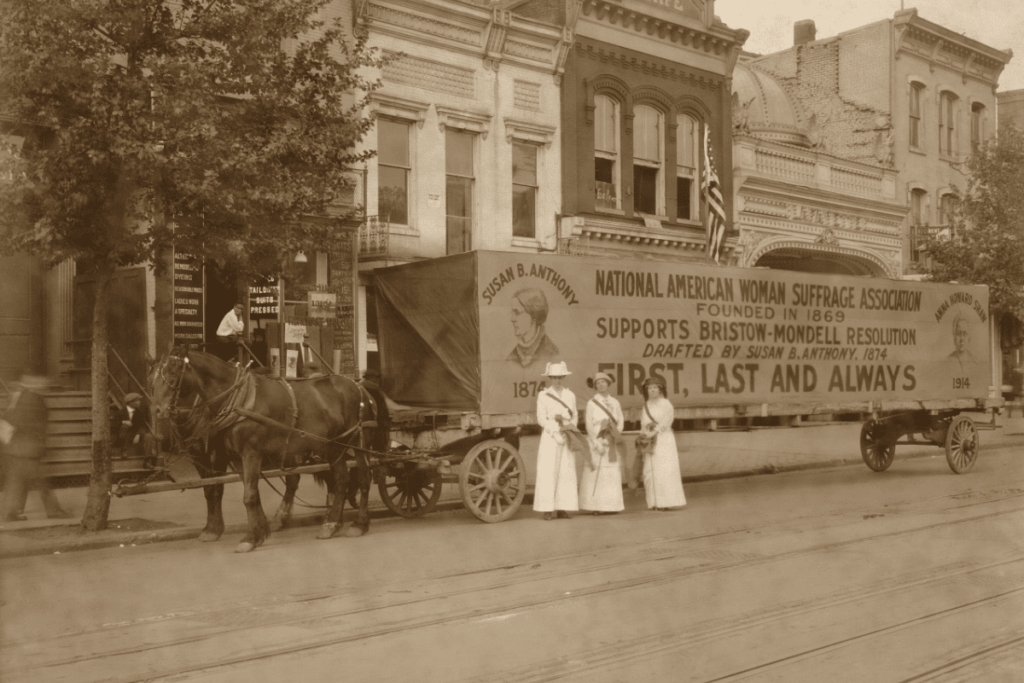
Susan B. Anthony was arrested on November 5, 1872, for voting illegally. Dropping a name in a Rochester ballot box during a time when women were banned from voting, her act of defiance would help reshape American democracy.
Anthony advocated tirelessly for women’s equality, became a leader of the American women’s suffrage movement, and helped found the National Woman Suffrage Association.
Although she didn’t live to see the Nineteenth Amendment ratified in 1920, her work laid its foundation.
5. Harriet Tubman (c. 1822-1913)
Born into slavery in Maryland and nicknamed “Minty” as a child, Araminta Ross (later Harriet Tubman) endured brutal conditions, including a severe head injury at 13 that caused lifelong seizures and visions.
Determined to be free, she escaped to the North. But she didn’t stop there. Traveling by night, evading capture and death, Tubman returned to the South 13 times as a conductor on the Underground Railroad, guiding more than 70 enslaved people to safety.
Later in life, she devoted herself to women’s suffrage and the broader fight for civil rights.
6. Marie Skłodowska Curie (1867-1934)
Before Marie Curie, radiation had no name. After her, it completely transformed science and medicine.
Working in a scientific field dominated by men, Curie co-discovered the elements radium and polonium in 1898 alongside her husband, Pierre. She coined the term radioactivity and remains the only person to win Nobel Prizes in two different scientific fields.
Her groundbreaking work ultimately cost her her life, but its impact continues to save lives today.
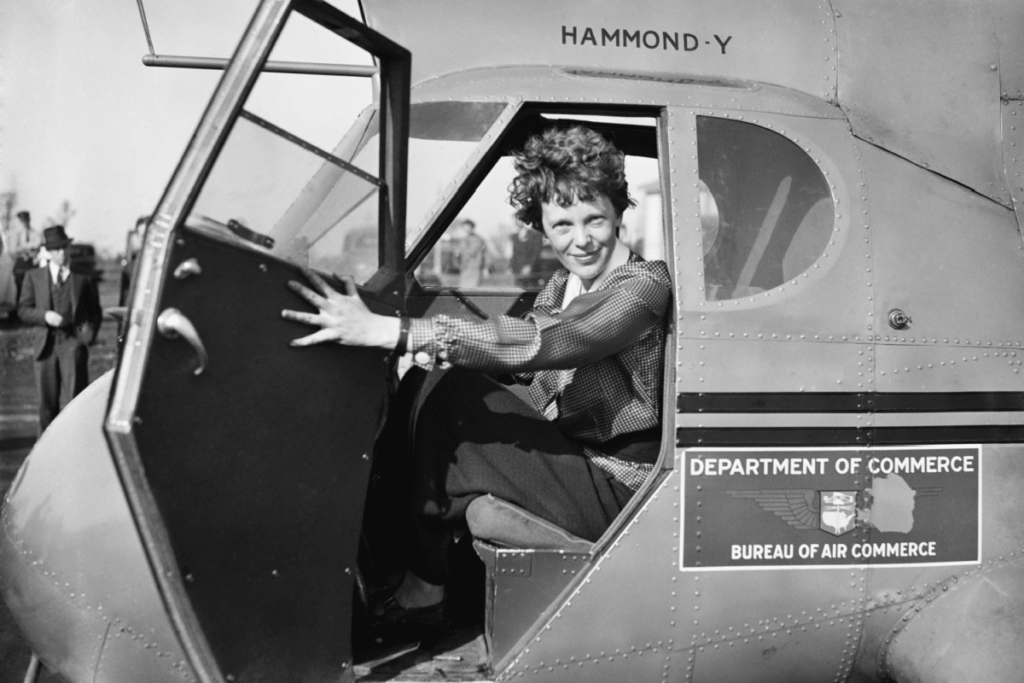
7. Amelia Earhart (1897–c. 1937)
In 1920, 23-year-old Amelia Earhart took her first plane ride, and she was mesmerized. Flying was still a novelty and firmly a man’s world, but Earhart didn’t let that stop her. She started taking flying lessons and purchased her first single-engine plane, which she endearingly called “The Canary,” and took to the skies just a year later.
Imagine trying this today: without GPS, the internet, or a world prepared for female aviators.
Amelia Earhart was the first woman to fly solo across the Atlantic and complete a nonstop transcontinental flight. She set multiple distance and speed records and co-founded The Ninety-Nines, which still trains successful female pilots today.
8. Eleanor Roosevelt (1884-1962)
In the 1930s, at a time when First Ladies were expected to remain ceremonial figures, Eleanor Roosevelt refused that script. She transformed the position by holding regular press conferences for women journalists and writing a widely syndicated newspaper column called “My Day.” She also traveled across the country, advocating for civil rights, labor protections, and economic justice.
Later, she served as U.S. delegate to the United Nations and chaired the committee that drafted the Universal Declaration of Human Rights. This document’s principles endure to this day.
9. Rosa Parks (1913-2005)
On a wintry day in December 1955, Rosa Parks sat in the colored section of Cleveland Avenue Bus No. 2857. The driver ordered Black passengers to give up their seats. She refused with a simple: “No.”
Although she was not the first to resist bus segregation, her arrest sparked the Montgomery Bus Boycott and marked a pivotal phase of the civil rights movement. Parks continued her advocacy, working against lynching, voter suppression, and poverty in Black communities.
What We’ve Learned: The Achievements of Women of History
The lives of these great women of history remind us that progress is rarely granted; it’s claimed by those courageous enough to step forward anyway.
Cleopatra VII preserved Egypt’s power through strategic diplomacy.
Elizabeth I unified post-medieval England and launched a cultural golden age.
Marie Curie transformed science through the discovery of radioactivity.
Harriet Tubman led enslaved people to freedom through the Underground Railroad.
Ada Lovelace laid the foundations of modern computing.
Susan B. Anthony pushed women’s suffrage onto the democratic agenda.
Amelia Earhart expanded aviation’s limits for women.
Rosa Parks defied racial inequality and sparked the modern civil rights movement.
Eleanor Roosevelt shaped global human rights standards.
So … who rules the world?
History Isn’t Finished. Ready To Find Your Place?
Eleanor Roosevelt famously said: “The future belongs to those who believe in the beauty of their dreams.”
History isn’t only shaped by grand moments. It starts with those who want to understand the past, act in the present, and change the future.
“Our country has deliberately undertaken a great social and economic experiment, noble in motive and far-reaching in purpose.” -Herbert Hoover Today, speakeasies are stylish bars hidden away behind bodegas, coffee shops, and laundromats. Ordering a cocktail is as easy as walking up to the bar, and while some places still require a password, you can…
At the iron gates of Auschwitz-Birkenau, one of the most infamous extermination camps of Nazi Germany, the chilling phrase “Arbeit macht frei” (“Work sets you free”) still casts a haunting shadow. These deceptive words led into one of history’s darkest chapters. Beyond that gate, more than a million lives were brutally ended. Auschwitz-Birkenau was just…
On August 6, 1945, the U.S. dropped an atomic bomb—named “Little Boy”—over the Japanese city of Hiroshima. Three days later, “Fat Man” was dropped on Nagasaki. Between 110,000 and 210,000 people died, either immediately from the blasts or later from radiation exposure. The atomic bombings of Hiroshima and Nagasaki heralded the end of World War…