You know that feeling right after a good workout? The addictive mix of pride, exhaustion, and the sudden realization that climbing stairs is a “tomorrow problem”?
Most of us think workout recovery ends with a quick stretch and a protein shake. But in kinesiology, recovery isn’t the end of your workout. It’s where the real transformation begins.
Muscles repair. The nervous system resets. The cardiovascular system redistributes oxygen and nutrients.
The better you understand what’s happening in this window, the smarter (and more effective) your recovery becomes. Below, we’ll break down the core recovery essentials, along with kinesiology-backed techniques that allow your body to work its hardest for you every time you train.
Why Recovery Matters: A Look Inside the Body
When you go for a run or push through a challenging high-intensity interval training (HIIT) session, your body is pushed into exercise-induced stress. Think of it as a short-term overload your muscles and nervous system are built to adapt to.
During this time, a lot of things happen at once:
Muscles develop tiny microtears that kickstart the muscle repair process.
Your neuromuscular system—the communication network between your brain and muscles—fatigues (even before your muscles are fully exhausted).
In athletic recovery, your body is like an airport after a busy wave of flights. The planes (your muscles) need repairs and maintenance. The control tower (your nervous system) needs to recalibrate. And the ground crew (your cardiovascular system) needs to clear out waste and restock for the next departure.
The Recovery Basics That Matter Most
These are the foundational pieces of smart recovery. They may seem simple, from the perspective of a kinesiologist, each one plays a crucial role in how the body rebuilds and adapts.
Sleep Quality
During deep sleep, hormones involved in tissue repair and muscle protein synthesis are at their peak. This means your body finally gets the uninterrupted time it needs to rebuild, repair, and prepare for the demands of your next workout.
While you’re asleep, your nervous system also resets, which is crucial for regaining coordination and power.
Nutrition & Hydration
After a workout, your body is primed to use nutrients more efficiently. Protein supports muscle repair, while carbohydrates replenish glycogen. Consider eating within one to two hours after exercise to maximize muscle protein synthesis.
And don’t forget about staying hydrated! Hydration and electrolytes also play a major role in relieving soreness after workouts by improving muscle function and restoring fluid balance.
Active Recovery
Slow-paced walking, light cycling, or gentle yoga can be some of the most effective methods for relieving soreness after workouts. These light movements increase circulation, remove metabolic waste, and maintain mobility.
5 Kinesiology-Backed Techniques for Smarter Workout Recovery
To take your recovery a step further, here are five techniques rooted in kinesiology that explain not just what to do, but why each method helps your body bounce back.
#1 Foam Rolling & Myofascial Release
Foam rolling works on the fascia—the connective tissue web surrounding your muscles. When your fascia is tight, it can limit your range of motion and contribute to stiffness. Foam rolling helps:
Reduce neural tension
Increase blood flow
Improve short-term mobility
#2 Compression Gear
Compression garments create gentle, consistent pressure that helps blood move back to the heart more efficiently. Research shows this simple mechanism can lead to several recoverybenefits, including:
Reduced delayed onset muscle soreness (DOMS)
Less muscle fatigue after high-intensity exercise
Improved circulation and lymphatic return
Faster overall recovery as waste products clear more efficiently
#3 Cold and Heat Therapy
Cold therapy reduces inflammation and numbs soreness. It’s especially helpful within the first 24 hours after intense or unfamiliar exercise.
Heat therapy, on the other hand, increases blood flow and mobility, making it a perfect way to treat stiffness the day after a workout.
A quick rule:
Use cold right after hard workouts
Use heat 24+ hours later
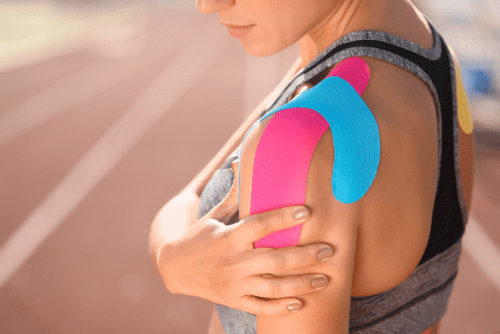
#4 Kinesiology Tape (KT Tape)
Kinesiology tape creates a gentle lifting of the skin that can enhance lymphatic flow and improve proprioception, or your body’s sense of position and movement. Some studies suggest it may reduce soreness and swelling.
#5 Nervous System Reset Techniques
Your autonomic nervous system has its own recovery timeline. Slow breathing, mindfulness, and heart rate variability (HRV)-centered cool-downs (which track the variation between your heartbeats) may help shift your body from stress mode to restorative mode.
When your nervous system recovers, it primes the rest of your body for swift recovery, including muscle repair and energy levels.
A Simple Guide to the Best Post-Workout Recovery
Not all workouts demand the same recovery strategy. Here’s a simple kinesiology-based guide to the best recovery workouts and methods based on your activity:
Workout Type
Best Recovery Methods
Why It Helps
Strength Training
• Protein + carbs • Foam rolling • Light active recovery • Cold therapy for soreness
Supports muscle repair, reduces stiffness, and helps manage inflammation after heavy mechanical stress
Replenishes fluids, enhances circulation, and restores mobility after long-duration cardiovascular efforts
High-Intensity Interval Training (HIIT)
• Prioritize sleep • Contrast therapy (hot/cold) • Breathwork • Low-intensity movement the next day
Calms the nervous system, improves circulation, and restores energy after high neuromuscular and metabolic stress
Ready to Go Deeper Into How the Body Works?
Smart recovery isn’t just about using the right techniques. It’s about understanding how the body responds and rebuilds.
When you know how to interpret these unique cues, you can support athletes, clients, and students more effectively. And if you’re someone who loves understanding the “why” behind movement and performance, The University of Texas Permian Basin’s online Master of Science in Kinesiology takes you even deeper.
In as few as 30 credits, you can level up your expertise in sports performance, fitness, coaching, and wellness. Choose from one of three study tracks aligned with your long-term goals:
Teaching, Coaching, and Administration
Psychology of Sport
Exercise Physiology
Where does your future lie? Explore the program and connect with us if you have questions.
Have you ever seen wheelchair rugby players slam into each other at full speed? How about sitting volleyball players, as they cover the court with explosive movement generated entirely from their upper bodies and core? These are serious athletes doing serious athletic work. And behind a lot of that performance is a science: kinesiology, the study of human movement. Kinesiology…
When you think of a great athlete, you might picture strength, speed, or agility. But what often separates the good from the great is more than physical skill; it’s the ability to stay focused under pressure, recover from setbacks, and trust in hard-earned preparation. That mental edge comes from sports psychology. This key area within…
Only a few decades ago, stopwatches, whistles, clipboards, and a coach’s sharp eye were the main tools used in sports training. But oh, what a difference 30 years can make. Today, those simple tools have been replaced by advanced technology like GPS wearables and AI-powered trackers that do far more than clock a sprint. Sports…