As of 2024, the average American spends 279 minutes—over four and a half hours—on their smartphones each day. This constant checking of texts and scrolling through social media can be distracting for adolescents, especially in school. However, there may be a positive side to Gen Z’s technological savvy.
Digital platforms and social media can be beneficial, especially when young people leverage their power to advocate for positive political, cultural, or environmental changes. In this article, we’ll explore how youth activism has evolved and how Gen Z uses digital tools to shape social movements.
The Rise of Youth Activism
Young people advocating for their beliefs and rights is not a new phenomenon. Youth turnout has played a significant role in activism campaigns throughout history. Two notable examples include the Civil Rights Movement and the anti-war protests of the 1960s.
In both instances, young Americans banded together to support the causes they believed in. Led by Martin Luther King Jr., those involved in the Civil Rights Movement successfully challenged racial segregation and discrimination. Their protests resulted in the Civil Rights Act of 1964 and the Voting Rights Act of 1965.
Similarly, during the Vietnam War, young people organized large-scale marches and created flyers and posters to spread awareness about the consequences of the conflict and the need for peace. Their non-violent anti-war protests provided support to soldiers who had been drafted and demonstrated the impact that young activists can bring in shaping change in society.
Technology: The New Frontier of Youth Activism
Since those days of youth activism, technology has undergone a radical transformation. Today, children and teens have instant access to a wealth of information on the internet, allowing them to receive global news updates and connect with like-minded individuals within seconds.
Social media platforms like X (formerly Twitter), Instagram, and TikTok now serve as powerful tools for amplifying young voices. For instance, climate activist Greta Thunberg utilized Instagram and Twitter to promote her Fridays for Future protests. With just a few clicks and a photo from her first strike, her post went viral, inspiring countless others to join her cause for more drastic action related to climate change. Now, with over 20 million followers, she leverages these digital platforms as a springboard for her message.
How Gen Z Activists Harness Technology
If you can’t beat ‘em, join ‘em—and that’s exactly what Gen Z has done to ensure their voices are heard. Growing up with technology at their fingertips, they’ve learned to harness the tools available to them to effectively advocate for their beliefs.
Below, we explore some of the advantages of incorporating technology into youth activism efforts:
- Raising awareness
Social media platforms and digital news outlets make it easy for youth activists to bring attention to their causes. From their chosen platforms, they can educate peers on specific issues, garner support, and raise funds. For example, Malala Yousafzai wrote a blog for BBC Urdu about her life under the Taliban in Pakistan. Her blog received significant attention and support, but it also made her the target of an assassination attempt that nearly took her life. Since then, she has continued raising awareness of the importance of education for girls through various online platforms.
- Networking globally
Instead of relying on letters or landlines to connect with like-minded individuals around the world, technology now allows youth activists to connect easily with anyone, anytime, anywhere.
- Amplifying voices
Who needs a megaphone when social media can amplify your opinions on almost anything? Emma González is a well-known advocate for gun control. After surviving the shooting at Marjory Stoneman Douglas High School in 2018, she co-founded the March for Our Lives movement, using platforms like Twitter and Instagram to spread the word. Her speeches and posts went viral, earning her more visibility on major media outlets such as Harper’s Bazaar, CNN, and Teen Vogue.
- Real-time documentation
With live-streaming capabilities and the ability to instantly upload pictures and videos to social media and blogs, young activists can report on events and demonstrations in real-time. This enhances awareness and transparency about current issues, allowing a broader audience to engage and respond quickly.
Discover Your Potential for Activism and Beyond at UTPB
Today’s youth are taking stands for what they believe in, using the digital resources at their fingertips. Whether you’re among the Gen Z activists actively participating in movements and advocacy or you’re simply interested in transforming your passion for social justice into a fulfilling career, The University of Texas Permian Basin’s online Bachelor of Arts in Sociology is designed with working professionals in mind.
Through extensive online core courses like Sociological Theory and Social Research Methods, you’ll gain essential knowledge in the field of sociology, exploring how humans interact in group settings and the factors that influence social behavior in society. Additionally, with 18 elective hours, you can focus on courses that align closely with your passions and career aspirations.
Browse our course catalog, contact us with any questions, and when you’re ready, apply to secure your spot for next semester!
Sources:
https://www.statista.com/statistics/1045353/mobile-device-daily-usage-time-in-the-us/
https://www.justice.gov/crt/section-4-voting-rights-act
https://fridaysforfuture.org/
https://www.bbc.com/news/magazine-19899540
As of 2023, the United States was home to over 33 million small businesses. Together, they employ more than 61 million people: an impressive contribution to the economy and job seekers around the country.
However, despite their positive impact, these independent businesses face significant challenges compared to their larger counterparts. According to Forbes, 20% of small businesses fail within the first year, while 50% close their doors by their fifth year.
That’s where Small Business Saturday comes in: a dedicated day each year aimed at boosting revenue for local businesses. In this article, we’ll explore the significance of Small Business Saturday and how you can support the entrepreneurs in your community.
What Is Small Business Saturday?
To spotlight independent businesses, American Express launched Small Business Saturday (SBS) in 2010. Now sponsored by the U.S. Small Business Administration, SBS has grown significantly in popularity. In 2023 alone, Americans spent an estimated $17 billion on this dedicated shopping day.
Falling between Black Friday and Cyber Monday, Small Business Saturday arrives when shoppers are eager to check off items from their holiday lists. While larger retailers attract crowds with deep discounts and buy-one-get-one-free deals, SBS shines a light on the essential role local businesses play in their communities: creating jobs, fostering local economies, and offering unique products and personalized services.
When Is Small Business Saturday?
Small Business Saturday takes place on the Saturday following Thanksgiving each year. In 2024, it falls on November 30.
Participating in Small Business Saturday as a Business Owner
If you own an independent business, there are several ways to maximize Small Business Saturday to boost sales and expand your customer base:
- Start marketing in advance.
Promote your participation in SBS weeks in advance. Use the platforms your audience engages with most, whether it’s social media, email marketing, print advertisements, or local events.
- Create special promotions.
Big businesses aren’t the only ones who know the way to a customer’s heart. Choose promotions that will draw potential buyers to your storefront, like product bundles, juicy discounts, and limited-time offers.
- Dress up your storefront.
From festive window displays to eye-catching signage, decorate your shop so people know you’re part of SBS. Elevate the experience by greeting customers with a smile, offering personalized recommendations, and perhaps even a special incentive like free samples or a gift with purchase.
- Collaborate with other small businesses.
Cross-promote with other independent shops to support the local economy. Create a shared shopping guide for your website, social media, or even in-store flyers to showcase nearby businesses participating in SBS.
How To Do Your Part as a Consumer
One of the easiest ways to contribute to Small Business Saturday is by purchasing products and services from businesses that resonate with you. Other ways to support the local economy include:
- Spreading the word
Use your social media accounts to showcase small businesses you love that are participating in SMS.
- Attending local events
Small Business Saturday may officially only be one day a year, but you can support small businesses all year long. Look up pop-up markets and other events that cater to local companies and bring along friends and family to browse the unique finds from a variety of local businesses.
- Being a loyal customer
Up to 55% of consumers learn about products through word of mouth. That means your reviews and recommendations are a key part of a business’s organic marketing strategy. So, if you loved something from your favorite shop, leave a review to let others know how special it—and the business—truly is.
Benefits of Taking Part in Small Business Saturday
If you’ve never participated in Small Business Saturday, there are plenty of perks to consider, whether you’re a business owner or a loyal customer of local shops:
For Business Owners
Business owners can gain increased visibility and community support. Sure, SBS is only one day a year, but that one day can quickly generate regular customers who come back all year long.
For Consumers
From handmade crafts to homemade treats, shopping local often means access to unique, high-quality products. Plus, by supporting small businesses, you’re contributing to the local economy and helping sustain the companies that have produced nearly 64% of the jobs created since 1995.
Level Up Your Business Know-How at UTPB
Small Business Saturday is a wonderful way for consumers to show their love and support for their favorite local entrepreneurs. It’s also a prime opportunity to discover hidden gems they didn’t know were nearby. But those with a knack for business can take small businesses beyond a single day of success.
With an MBA from The University of Texas Permian Basin, you can earn your master’s degree in as little as one year and develop the advanced skills needed to scale businesses of any size, in areas like finance, marketing, and entrepreneurship.
Learn more about how our online Master of Business Administration degree can benefit you, and discover the steps to advance your career in the dynamic world of business.
Sources:
https://advocacy.sba.gov/2023/03/07/frequently-asked-questions-about-small-business-2023
https://www.forbes.com/advisor/business/small-business-statistics
https://www.investopedia.com/small-business-saturday-5085723
https://blog.hubspot.com/agency/how-online-word-of-mouth-marketing-is-changing
There comes a time in most individuals’ careers when they decide, “You know what? I have career goals—and it’s time to achieve them.” While some have this epiphany early in their career, others might not make any long-term plans until they’ve gained a few years of experience or faced a significant career milestone. One thing is certain: There’s not always a straight path toward achieving those dreams.
That’s where a career development plan comes in. It’s a strategic tool that helps you determine and track your professional goals, allowing you to create a roadmap for achieving them in a timely and organized manner.
In this article, we’re divulging everything you need to know about how to write a career development plan that will help you make your professional ambitions a reality.
What is a Career Development Plan?
A career development plan, also known as a professional development plan, is a tool that allows you to map out your career goals. Once you’ve established your long-term goals, you can create a master plan that breaks them down into smaller, more manageable short-term goals. These incremental steps will guide you toward achieving your broader career objectives over time.
How To Write a Career Development Plan in 4 Steps
Creating a career development plan may seem straightforward at first: Simply outline your goals and devise a strategy to achieve them. However, with a few extra steps, you can assess your strengths and identify areas for improvement, helping you tailor your plan to your unique skills and long-term objectives.
Follow these four steps to craft a comprehensive and actionable career development plan that sets you up for success.
Step 1: Establish Your Long-Term Goal
Start by determining where you see yourself professionally in the long term, whether that’s five, ten, or even twenty years down the road. While you might envision yourself as a principal in your current school district, for example, it’s important to ask these questions to see if your original goal aligns with your aspirations:
- What do I enjoy doing?
- What skills come naturally to me?
- Do I prefer working independently, collaborating with others, or leading a team?
- What drains my energy in a work environment? What excites me?
By answering these questions, you can evaluate if your dream aligns with your passions and strengths.
Step 2: Give Your Skills a Self-Assessment
Before breaking down your objective into smaller goals, it’s important to assess your current skill set. Start by researching job listings related to your long-term career goal. Take note of the experience, responsibilities, and skills that are consistently mentioned across listings. Write those skills down and rank each one from one to five: one meaning you don’t yet have that ability, and five meaning you can already do it flawlessly.
With a clearer understanding of where your current skills stand and what’s needed to qualify for your future role, you can begin setting smaller goals to bridge the gap between your current resume and the one that will land you that position.
Step 3: Set Your Short-Term Goals
Once you’ve identified your long-term goals and researched the skills you need to improve or learn, you can create a roadmap with short-term goals that will help you reach your final destination.
For instance, you can work on soft skills like communication or time management, both at work and at home. Hard skills, such as data analysis or knowledge of federal and state education laws, however, require education and experience. To obtain these skills, you’ll need to consider professional development courses and additional education.
When setting your short-term goals, list them in a logical order, starting with foundational skills and knowledge and gradually progressing to more advanced objectives. Be sure to make SMART goals—specific, measurable, achievable, relevant, and time-bound—to keep you on track and help you achieve your goals within a specific timeframe.
Step 4: Monitor and Evaluate Your Progress
Completing your career development plan doesn’t mean you’ve reached the finish line. To get the most out of your hard work—and to stay on track toward your long-term goal—regularly review your plan at least twice a year to ensure you’re following the timeline you set for your short-term goals. It’s also important to reassess your goals to see if any adjustments are needed to better align with your overarching objective.
Your Path to Success Starts at UTPB
While career development plans are a great way to help you take actionable steps toward your larger goal, it’s not uncommon for career goals to shift during the process. A National Institutes of Health study found that 54% of participants who completed a career-planning course changed their career preferences afterward. While creating a career plan isn’t quite the same as taking a course, it provides a clear starting point to assess your skills and identify the steps needed to reach your ultimate goal.
For many, achieving that objective involves further education. At The University of Texas Permian Basin, we offer a variety of online undergraduate and graduate programs to help you gain the skills you need to succeed.
No matter where you are in life, our online programs make it easier to balance work, life, and education. With asynchronous courses, you can complete your studies on your schedule. Plus, our virtual students also enjoy these online benefits:
- Start your education when you’re ready with year-round start dates.
- Take advantage of affordable tuition rates.
- Access coursework 24/7 from anywhere.
- Learn from experienced instructors who also teach on campus.
- Network with students worldwide, opening doors to future career opportunities.
Your future is only a click away. Browse our online program offerings, and when you’re ready, apply to the program that aligns with your goals!
Sources:
https://www.ncbi.nlm.nih.gov/pmc/articles/PMC7605208/
As Halloween creeps closer, many are caught in a festive frenzy, debating their costume choices and whether to grab trick-or-treat candy now or later. Some might even be plotting an escape from their neighbor’s notorious Spook Fest (last year’s themes were a bit much).
But amidst all the costume chaos and social gatherings, have you ever wondered where Halloween started and how it’s evolved sociologically? As the world’s social structures have shifted over the centuries, so too have the meanings and celebrations surrounding this spooky season.
Let’s unravel the sociological evolution of Halloween through the ages.
Halloween’s Sociological Roots
Halloween wasn’t always known by its modern moniker. Its origins date back over 2,000 years to the Celtic festival of Samhain. The Celts celebrated their new year on November 1st, so Samhain was observed on the night of October 31st.
During this time, they’d gather as a community, light bonfires, don costumes, and offer sacrifices to their deities. While the Celts believed these practices warded off evil spirits, most sociologists would argue that these activities primarily served to strengthen community ties, offering a shared cultural experience among people of different social backgrounds, from farmers to druids.
As Europeans brought their traditions to the American colonies, they adapted their rituals to fit new sociocultural norms. Halloween gradually shifted from its ancient rituals to become a celebration of community through festive gatherings and evolving traditions.
The Start of Commercialism
By the 1900s, Halloween had gained rapid popularity in the United States. While costumes were no longer worn to ward off ghosts, people embraced the chance to dress up as anything from witches to Shakespearean characters simply for fun.
Much of this “ado about nothing” was largely due to the holiday’s commercialization. Suddenly, retailers were licensing beloved fictional characters, and handmade costumes were forgotten in favor of mass-produced ones. In addition, candy manufacturers were jumping for sugar-filled joy at the opportunity to fill the store aisles with mini chocolate treats. (Did you know that in 2023, Americans spent $3.6 billion on candy during the Halloween season?)
From a sociological standpoint, the commercialization of Halloween again shifted its traditional aspects. What was once linked to pranks and a mystical connection to ghosts transformed into a holiday closely tied to companies eager to boost sales. And, of course, Americans were more than happy to join in—for the sake of fun and festivity.
In addition, this Halloween-inspired consumerism lets us express our identities. Whether you’re known for handing out full-sized candy bars or decking out your yard with 12 giant spooky inflatables for the entire month of October, the extensive range of Halloween merchandise available connects our identities to our purchases. This allows us to showcase our values, personalities, and social status through our creative displays and treats.
Media’s Influence on Halloween
Movies like John Carpenter’s “Halloween” and Disney’s “Hocus Pocus” reshaped how people perceive Halloween. With their vivid portrayals, these films set the standard for Halloween villains, revived the magical, supernatural aspects of the holiday, and popularized many of the key elements we now associate with Halloween, including:
- Jack-o’-lanterns
- Costumes
- Halloween parties
- Trick or treating
Costumes: Representation and Inclusivity
Some costumes that were once deemed acceptable 20 or 30 years ago are now viewed as offensive, sparking debates about cultural appropriation and whether it’s appropriate to mimic the traditional attire of marginalized groups. These discussions reflect society’s growing awareness of cultural sensitivity, a concept that was once on the fringes of mainstream conversation.
Halloween’s Impact on Today’s Society
Today’s Halloween traditions echo those of ancient Samhain rituals, serving as a day that puts the “unity” in community. Whether it’s trick-or-treating, attending a local festival, or braving your neighbor’s Spook Fest, Halloween often fosters a sense of togetherness. Like its ancient counterparts, the holiday strengthens social bonds and brings communities closer.
Discover the Societal Impact of Today’s Traditions on the World
The way we celebrate Halloween has changed dramatically over the years, thanks to shifts in society’s values and norms—just like many other holidays and traditions. If you’re fascinated by how human interactions evolve within group settings, UTPB’s online Bachelor of Arts in Sociology program offers core courses that delve into the factors influencing social behavior across various subgroups.
Through courses grounded in leading theories on human interaction, you’ll sharpen your critical thinking, research, and communication skills, all essential for thriving in a range of professional fields. Plus, with our fully online program, you can complete your coursework on your own schedule.
Apply today and jump-start your career in roles such as historian, human resource specialist, mental health counselor, and more.
Sources:
https://www.history.com/topics/halloween/history-of-halloween
https://www.statista.com/statistics/1305961/halloween-candy-spending-us/
https://daily.jstor.org/halloween-a-mystic-and-eerie-significance/
When you think of special education, what comes to mind? You might picture students with developmental delays, speech or language impairments, or other observable challenges. While these are accurate, it’s important to remember that special education also supports students with a range of less visible needs. Despite this, society often focuses on more severe disabilities.
Special education programs are designed to provide personalized support tailored to meet the unique needs of each student. This support helps students thrive and succeed, making special education a valuable resource. So why does it often carry a negative connotation?
Join us as we explore the stigma surrounding special education and discuss strategies to foster a more inclusive and supportive environment for all students.
Understanding the Stigma Surrounding Special Education
As beneficial as special education classes can be for students who need additional support, a stigma still surrounds these programs. Society often casts special education in a negative light, resulting in various forms of discrimination. This stigma can lead to isolating students in special education programs from their peers, setting lower expectations for their abilities, and providing fewer opportunities compared to their classmates in general education classes.
This stigma may stem from common misconceptions about special education programs, including:
- Special education is only for children with severe disabilities.
In reality, not all disabilities are severe, or even visible. According to the National Center for Education Statistics, 32% of children who receive special education have specific learning disabilities, such as dyslexia, while only 7% have developmental delays.
- Special education separates students from their peers.
65% of students served under the Individuals with Disabilities Education Act (IDEA) in 2019 spent the majority of their school day in general classes, only seeking extra assistance as needed.
Strategies for Destigmatizing Special Education
The stigma surrounding special education can have a significant impact on students and their families. Students may struggle with feelings of inadequacy or become overly aware of their unique needs, which can undermine their confidence. Additionally, caregivers often face emotional challenges, such as worry and stress. Financial difficulties are also a factor. These stresses often arise as they work hard to make sure their children are included in social and educational activities and receive the support they need.
Fortunately, there are several proactive steps that educators can take in removing the stigma of special education, shifting society’s perception of it, and recognizing it for the valuable resource it truly is, such as:
- Seeking professional development
Educators can benefit from professional development opportunities that equip them with the skills needed to support students with diverse needs. This might include learning diverse strategies to teach the same concept or organizing small group sessions to provide additional assistance where needed.
- Incorporating inclusive teaching practices
Many students in special education spend a portion of their time learning alongside their peers in general education classrooms, and fostering an inclusive environment allows all students to feel valued and capable. Inclusive classrooms can also nurture empathy and understanding. This offers everyone the chance to appreciate different experiences and perspectives. With consistency, inclusive teaching practices can help diminish the stigma surrounding special education.
- Creating supportive environments
Educational leaders play a crucial role in cultivating a school culture that celebrates diversity. Schools can implement initiatives such as diversity workshops and inclusive curriculum development that promote social-emotional learning, understanding, and mutual respect among students.
- Collaborating with parents
Parents of students with special needs may sometimes feel unsupported by a lack of resources. Schools can address this by providing regular updates and involving parents in their children’s education through workshops and meetings. This approach not only builds a supportive community but also allows parents to voice their concerns, share insights, and feel more connected to other parents.
Help Break the Stigma with a Specialized Education in Special Education
Whether you’ve worked in education or you have a friend or family member in the special education system and have witnessed their triumphs and struggles, you can take a stand against the biases in special education. At The University of Texas Permian Basin, we offer three entirely online master’s degrees that provide a well-rounded foundation in special education to prepare you for a career in this rewarding field:
- Master of Arts in Special Education
This 30-credit online program is tailored for people who want to improve the lives of students with a range of disabilities. Through technology and innovative strategies, you’ll learn how to overcome many of the challenges that special education teachers and students face today, ensuring that and your future students feel empowered and successful in the classroom and beyond.
- Master of Arts in Special Education, Autism Spectrum Disorders Track
If your passions lie in working with students on the autism spectrum, this online program provides the evidence-based interventions and strategies needed to help your students thrive in the classroom. The program also focuses on diversity and inclusion issues, providing more tools to help the destigmatization of special education.
- Master of Arts in Special Education, Educational Diagnostician Track
This online 36-credit program is ideal if you want to work in a role that allows you to diagnose and assess the learning needs of a variety of students. Throughout your coursework, you’ll receive in-depth training on standardized and curriculum-based assessments so you can diagnose students, develop IEPs, and provide recommendations for therapies and behavior plans.
The time to make changes in the lives of students with disabilities is now. Be the change you want to see in the world—apply to the program of your choice today!
Sources:
https://www.wsj.com/us-news/education/special-education-student-growth-teachers-understaffed-20efa9da
https://nces.ed.gov/programs/coe/indicator/cgg
https://online.utpb.edu/about-us/articles/education/3-myths-about-special-education-debunked/
As store aisles fill with skeletons, ghouls, and endless bags of candy, children begin the great debate over whether to be witches or firefighters for Halloween. Meanwhile, adults across the country start adding gargantuan bags of candy to their normal grocery lists in preparation for trick-or-treaters.
This raises the question: Has trick-or-treating always been a part of Halloween? And what were the origins of this spooktacular holiday?
Grab your favorite fun-sized candy bar as we dive into the history of Halloween.
Let’s Take It Back to Samhain
Halloween’s roots trace back thousands of years to the Celtic pagan festival of Samhain (pronounced “sow-win”). Celebrated on November 1st, Samhain marked the end of the harvest season and the start of winter: a harsh, biting season often associated with death. The Celts believed that on October 31st, the last night of their calendar year, the veil between the living and the dead was thinnest.
To celebrate, they lit fires and left offerings for the spirits. Some Celts dressed up as animals to avoid being kidnapped by spirits or faeries and taken to the other plane. Druids, respected community leaders, would use this night to tell the fortunes of the community for the upcoming winter months.
The Start of All Saints’ Day
In the early 600s, the Catholic church designated November 1st as All Saints’ Day to commemorate the saints of the church. November 2nd became All Souls’ Day, a day to pray for deceased loved ones. All Saints’ Day was also known as All Hallows, and the day before it (October 31st) was aptly named All Hallows Eve.
As Christianity spread into Celtic regions, the holiday began to blend with the traditional customs of Samhain. Eventually, parts of all three holidays would blend into what we now know as Halloween, but it would still be over a thousand years before trick-or-treating and other modern-day Halloween traditions emerged.
Soul Cakes
Around the 8th century, the earliest analog to trick-or-treating may have begun in Ireland and England during All Saints’ Day and All Souls’ Day celebrations. On those days, underprivileged individuals would visit wealthy families, offering prayers for the souls of the family’s dead relatives in exchange for pastries called “soul cakes.” Eventually, children took up this activity, going door to door and asking for gifts like food and money.
Halloween in America
Early settlers brought their spin on Halloween traditions to Colonial America, but not everyone reveled in the celebrations. Because of the strict religious beliefs held throughout many of the colonies, only Maryland and some of the southern colonies took part in Halloween-related festivities.
As Native Americans and diverse European immigrants shared their customs and beliefs with settlers, America slowly formed its own version of the holiday, complete with activities such as:
- Sharing stories of the dead.
- Holding public events to celebrate the harvest.
Modernizing Halloween
By the 1800s, Halloween had become known as a night for pranking and tricking unlucky bystanders, effectively putting the spook in spooky season. Teenagers would jump out from dark corners to scare their younger siblings. Children tripped innocent bystanders with hidden ropes as they walked by in the dark. In 1887, a few tricksters even put molasses on the seats of a chapel before church began.
Eventually, the media began to rebrand the holiday as something more positive for the youth of America. Unfortunately, President Truman’s idea of replacing Halloween with “Youth Honor Day” didn’t take off as he’d hoped. Thankfully, another idea had been circulating since the 1930s and was slowly gaining adoption. Since children were already banging on doors and demanding sweets from strangers, why not teach them to do so politely (and recommend adults have candy at the ready)? Throughout the 1940s and 1950s, magazine articles and television and radio programs began promoting this new Halloween activity, known as “trick-or-treating.”
Today, typical Halloween celebrations consist of mostly civilized transactions between adult neighbors and costumed children knocking on doors and sweetly holding out their cauldrons, buckets, and pillowcases for the goods.
Expand Your Historical Horizons at UTPB
If the history of Halloween intrigued you, why stop there? With an online Master of Arts in History, you can turn your passion for the past into a lucrative career as an educator, historian, legislator, and more.
The University of Texas Permian Basin’s 30-credit online MA in history is designed for busy people like you. Its 100% online format lets you complete coursework from anywhere, whether you’re on your lunch break or aboard a flight to your next historic travel destination.
Of course, if you want to participate in live courses, we have you covered. As an online MA in history student, you can enroll in graduate-level synchronous live-remote courses. If you’re interested, contact Department Chair Dr. Ana Martinez-Catsam for more information.
Are you ready to make history by earning an advanced degree in a subject you’re passionate about? Apply today.
Sources:
https://www.history.com/topics/holidays/samhain
https://www.history.com/topics/halloween/history-of-halloween
https://www.smithsonianmag.com/history/when-halloween-was-all-tricks-no-treats-180966996/
If you think of a school as a well-manned ship, who is at the helm steering it towards success? While many educational leaders contribute to a school’s progress, the principal serves as the critical role of captain, guiding students and educators toward excellence. How? By creating a supportive environment that fosters high-quality teaching and engaged learning.
A key approach many principals are adopting to ensure the pursuit of educational excellence is transformational leadership: a dynamic method that emphasizes creating a shared vision that motivates both students and faculty to excel. Join us as we explore the essentials of transformational leadership and uncover four strategies principals use to inspire and motivate everyone on board.
What Is Transformational Leadership in Education?
Transformational leadership is a method of guiding a team—consisting of faculty, parents, and students—toward a shared vision for the school. Leaders achieve ‘buy-in’ from these stakeholders by creating an inspiring vision, leading by example, and celebrating individual and collective achievements.
While instructional leadership was a staple for educational leaders in the 1980s, transformational leadership rose in popularity in the 1990s and has since become a leading method for school improvement. That’s not to say that instructional leadership doesn’t have a role in education. The two approaches share several positive characteristics, such as:
- Focusing on improving the quality of education in a school.
- Supporting staff in their roles.
- Prioritizing student success by creating ideal learning environments.
Transformational leadership takes these efforts one step further, however, by inspiring and motivating the entire school community to embrace changes in education, which can contribute to long-term success.
In addition to these commitments, transformational leaders in education also:
- Inspire faculty to pursue innovative teaching styles.
- Build foundational relationships that are both emotional and intellectual.
- Empower others by embracing their abilities to lead and letting go of the need for complete control.
3 Transformational Leadership Strategies To Implement as an Educational Leader
Below, we explore four transformational leadership strategies often used by successful educational leaders:
#1 Build a Collaborative Culture
Instead of siloing departments, transformational principals and other educational leaders encourage teamwork among all teachers and staff. They establish set times for collaboration and involve all stakeholders in the decision-making process. This approach allows them to share ideas, discuss effective teaching methods, identify areas for improvement, and explore potential interdisciplinary lessons. The result is more cohesive lesson plans and a stronger sense of community.
#2 Address Individual Needs
Everyone has different needs, whether they’re students or educators. Transformational leaders ensure that students receive personalized learning plans tailored to their unique needs. For instance, teachers could offer differentiated reading levels for the same text or create learning centers that cater to different learning styles. Both teaching strategies allow students to learn using methods that resonate with their individual preferences.
From an educator’s perspective, transformational leaders can go beyond simply offering generalized professional development. They encourage teachers to become intellectually stimulated by their continued educational pursuits, inspiring them to try new and innovative methods to improve their students’ learning outcomes.
#3 Encourage Innovation and Change
Educational leaders with a transformational mindset are always open to new ideas and promote innovation among their fellow faculty members. Whether implementing new teaching methods, incorporating different forms of technology, providing multiple learning platforms, or completely revamping the curriculum to make it more engaging, they inspire and drive continuous improvement in their schools.
What Kind of Leader Do You Want To Be?
Becoming a transformational leader starts with you. If you’re an educator with a vision for the future and a passion for inspiring others to be their best selves, you’re one step closer to becoming a leader in education.
At The University of Texas Permian Basin, our online ELCC-recognized Master of Arts in Educational Leadership will lead the way toward the next chapter in your career: an administrative role in education. Our 30-credit online program covers all the essential topics relevant to leadership roles in a school setting, taking the guesswork out of selecting courses that may not align with your career path.
You can also expect the following from our accredited master’s program:
- Competitive tuition costs: only $11,729.70 (plus additional fees) for all 30 credit hours.
- Scholarships available to new registrants.
- Completion in as little as one year for eligible candidates.
Have any questions for us? Feel free to reach out, and when you’re ready to take the next step and become a leader in education, the application is only a click away.
Sources:
https://www.edweek.org/leadership/opinion-transformational-vs-instructional-leadership-which-is-better/2021/10
https://thoughtexchange.com/blog/transformational-leadership-in-education/
Labor Day wasn’t always about end-of-summer sales and long weekends. It was created to honor the hard-fought contributions of American workers—and to advocate for better working conditions during a time when laborers often endured 70-hour workweeks. Before diving into beach plans or backyard barbecues, it’s worth asking: Why do we celebrate Labor Day—and how did it begin?
Let’s explore the true origins of this national holiday and how its meaning has evolved over time.
Why Was Labor Day Created?
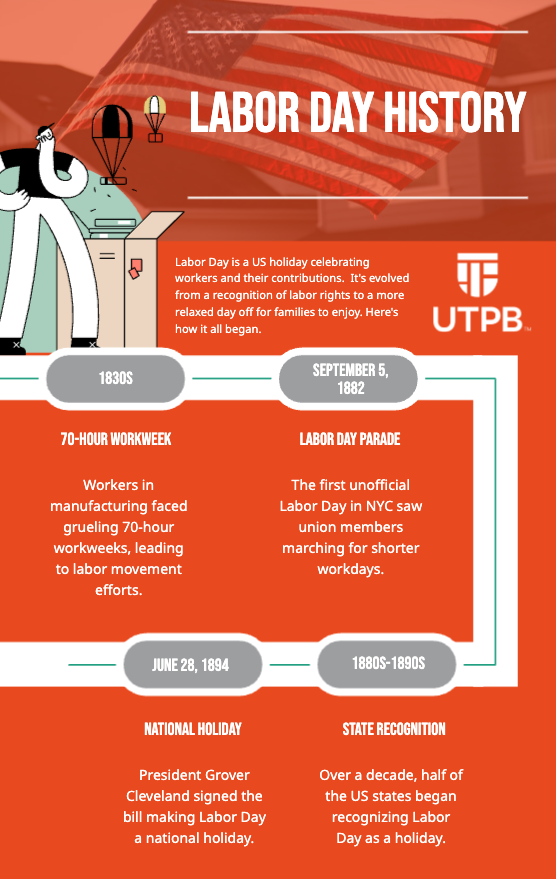
The first unofficial Labor Day occurred in New York City on September 5, 1882. On this day, thousands of union members marched to Union Square, petitioning for shorter workdays and better working conditions. While this looming victory for workers across the country was worth celebrating, the holiday’s origins go back much farther.
Decades prior, in the 1830s, employees in most manufacturing industries were working seven days a week, laboring under a monstrous 70-hour workweek. These unsustainable working conditions were exactly what union organizers focused on when trying to establish a shorter workweek and workday. They also attempted to help workers get more days, like Labor Day, off.
Although employees succeeded in establishing a Labor Day parade in 1882, it didn’t immediately become a public holiday. It took over a decade for half of the states in the U.S. to recognize and honor the day as a holiday. Even then, it wasn’t until President Grover Cleveland signed the Labor Day bill in 1894 that it became a national holiday.
Labor Day Celebrations: Then and Now
At its inception, Labor Day celebrated the contributions of countless workers to the United States economy. It also recognized the achievements of the labor movement in securing higher wages and improving working conditions.
In the years following its national adoption in 1894, workers around the United States continued to celebrate Labor Day in a formal, celebratory fashion. They hosted parades on the streets and had picnics that highlighted the exuberant strength and hard work of the local labor unions.
As we fast forward to today, the days of political parades are largely gone. In their place are the most relaxing of leisurely activities: a trip to the beach, a barbeque with your closest friends, and simply enjoying a day off work.
Perhaps the most significant shift in the holiday’s celebration is the modern commercialization of Labor Day. If you scroll through commercials or social media ads, you’ll likely be bombarded with endless “Major Labor Day Sales You Can’t Miss” campaigns from car dealerships, local appliance businesses, and clothing stores.
The original meaning of Labor Day seems to have become lost in translation over the past century. Whereas society once used the day to formally celebrate slow and steady improvements in the workplace, it’s now seen as our last chance for a final summer hurrah before the start of fall, complete with holiday sales galore.
The Changing Meaning of Labor Day
From a sociological perspective, Labor Day reflects the evolution of our societal values. Originally, it was a time to honor labor unions’ achievements and contributions to improving workers’ rights. Today, it symbolizes the importance of incorporating rest and leisure into our lives.
The holiday also demonstrates our changing cultural attitudes toward labor. In the past, when labor movements were strong and influential, Labor Day’s focal point was advocating for labor rights. In contrast, during more periods of a stable economic and work environment, the focus shifts to leisure and consumer consumption.
Labor Day’s shift in meaning shows how society’s perception of work and rest has evolved over time. While the essence of celebrating workers’ contributions remains, the way we observe Labor Day today reflects modern societal changes, emphasizing personal relaxation and economic activity, like treating yourself to a new kitchen appliance in the spirit of the holiday.
Labor Day FAQs: Origins, Meaning, and Modern Traditions
Labor Day is more than just a Monday off work. It’s a holiday rooted in advocacy, history, and social change. Here are some common questions people have about its purpose and transformation over the years:
- Why was Labor Day created?
Labor Day was established to recognize the contributions of American workers and to support the labor movement, which fought for fair wages, shorter workdays, and improved conditions during the industrial revolution.
- When did Labor Day become a national holiday?
Although the first unofficial celebration occurred in 1882, Labor Day became a federal holiday in 1894, after President Grover Cleveland signed it into law amid growing support for workers’ rights.
- What is the original meaning of Labor Day?
Originally, Labor Day was meant to honor the economic and social achievements of workers, especially labor unions, whose efforts led to major reforms in the workplace.
- How do people celebrate Labor Day today?
While early celebrations included parades and public speeches, today’s observances are more casual, focusing on rest, leisure, and sales events that signal the unofficial end of summer.
Earn Your Bachelor of Arts in Sociology From UTPB
If you have a passion for social justice, UTPB’s online Bachelor of Arts in Sociology program explores several crucial elements of society, including how humans interact in group settings, the diversity of cultures on an international scale, and what influences social behavior. During your core courses, you’ll discover leading theories on human interaction and sharpen your critical thinking, research, and communication skills for a promising career in numerous industries.
We know your time is valuable, and our program’s convenient online format allows you to complete coursework in your time frame from almost anywhere. In addition, we offer competitive tuition rates, excellent networking opportunities, and multiple start dates throughout the year.
If you’re ready to expand your knowledge in sociology and prepare for a rewarding career in a field you’re passionate about, take the first step. Apply today.
Sources:
https://www.usnews.com/opinion/articles/2023-09-01/have-we-forgotten-the-true-meaning-of-labor-day
Other articles you may be interested in:
-
When someone struggles with depression, homelessness, or discrimination, who steps in to help? A psychologist? A social worker? A sociologist? These three fields all address human challenges, but they explore humanity from very different angles: one from society, one from the mind, and one from the front lines. So what are the similarities and differences between sociology, psychology, and social work? This guide clears up…
-
Lunar eclipses don’t happen often, but when they do, everything seems to slow down. People step outside. Neighborhoods get quieter, tuned in to the skies above. Suddenly, something outside of our control brings us all together for a shared moment of collective awe. Eclipses remind us that we’re all living under the same moon, no…
-
How many times a day do you unlock your phone to scroll through your favorite feed? Ten? Twenty? Lost count after breakfast? You’re not alone. The average American checks their phone 205 times a day and spends about two and a half hours of that time on social media. Whether you’re catching up on family…
Are you passionate about upholding ethical standards and advocating for others ? Do you thrive on the intellectual challenge of legal debates? If so, you’ve likely dreamt of the day that you can finally tell the world, “I’m an attorney.”
However, becoming a lawyer involves seven or more years of schooling after high school—not to mention passing the bar exam and meeting state-specific requirements. In the words of the iconic Elle Woods in the film “Legally Blonde”: “What, like it’s hard?”
With tenacity and passion, turning your dream of becoming a lawyer into reality is challenging but entirely achievable. Today, we’ll explore the role of a lawyer and the steps needed to embark on this career path.
What Does a Lawyer Do?
The better question is: What don’t lawyers do? Beyond prosecuting and defending criminals, many attorneys specialize in crucial areas that help us during important life events, such as buying houses, drafting wills, and handling divorce proceedings.
However, your role as a lawyer will vary based on your specialization. Before delving into some of your typical responsibilities, let’s outline some common types of lawyers:
- Intellectual property (IP) lawyer
The specialty you choose will determine whether you spend most of your time preparing for and partaking in court proceedings and trials, but here’s a list of some typical responsibilities for most lawyers:
- Advising and representing clients in legal matters.
- Conducting research and offering counsel on legal rights and obligations.
- Drafting contracts, deeds, wills, and other legal documents.
- Negotiating settlements on behalf of clients.
- Presenting arguments in court.
- Upholding ethical standards as mandated by legal regulations.
- Mediating between disputing parties and offering alternative resolutions outside of court.
How to Become a Lawyer
Below, we discuss the general steps involved in becoming a lawyer.
Step 1: Earn a Bachelor’s Degree
After graduating from high school, completing a four-year undergraduate program is the first step to earning your Juris Doctor (JD) degree. While there isn’t a specific major required for law school admission, certain majors can provide foundational skills necessary for your graduate studies, such as:
Step 2: Take the LSAT (Law School Admission Test)
After earning a bachelor’s degree, you’ll begin studying for the LSAT, which measures your knowledge and readiness in four areas:
The first three sections are multiple choice, while the writing section (as you might expect) requires a written argument on behalf of one of two competing policy options.
We recommend preparing for the LSAT while earning your bachelor’s degree. You can tailor your courseload to include courses that will strengthen your ability to think critically, argue persuasively, and analyze precisely, such as UTPB’s Introduction to Philosophy or Psychology and Law, both offered through our online BA in psychology program.
Step 3: Apply to Law Schools
After taking the LSAT, you can begin applying to the law schools of your choice. Most law schools will accept students with an LSAT score of 150, while more prestigious schools require scores of 160 or higher. Other requirements may include your undergraduate transcripts, letters of recommendation, or a personal statement.
Step 4: Earn Your JD
It typically takes full-time students about three years to complete their JD coursework. Part-time students may extend this to four or five years.
According to U.S. News, the first year of law school is often the most demanding, as students are adapting to new and rigorous schedules. Justin Hansford, a law professor at Howard University’s School of Law, suggests that the second year offers more flexibility, allowing students to explore specialties and define their professional identity. In the third year, the focus shifts to preparing for the bar exam and entering the legal profession.
Step 5: Pass the Bar Exam
Most states offer the bar exam twice yearly, in the winter and summer. After graduating from your JD program, you’ll apply for admission to the bar and spend a few months intensely studying for the exam. The Multistate Bar Examination (MBE) consists of 200 multiple-choice questions, with 25 being unscored pretest questions.
Of the 175 scored questions, there are 25 randomized questions from seven subject areas, including:
- Criminal law and procedure
Step 6: Complete Additional State Requirements
Depending on the state where you plan to practice, additional requirements may be necessary, such as state-specific law exams or participation in a mentorship program. Check your state’s guidelines to confirm any further requirements after passing the bar exam, and prepare for the exhilarating moment that you’re sworn in as a licensed attorney!
Start Your Journey Toward a Rewarding Legal Career
As you pursue a legal career, mastering essential skills like critical thinking, communication, negotiation, time management, and analysis is crucial. While law school refines these skills, you can build a strong foundation through one of the online bachelor’s programs offered by The University of Texas Permian Basin.
We offer several relevant online undergraduate programs that are ideal for aspiring lawyers, including:
With year-round start dates and a flexible online format, you can complete your studies at your own pace. Explore our offerings and choose the path that’s right for you.
Sources:
https://www.indeed.com/career-advice/finding-a-job/types-of-lawyers
https://www.forbes.com/advisor/education/law/pre-law-majors/
https://www.usnews.com/education/blogs/law-admissions-lowdown/articles/lsat-writing-sample-what-to-know
https://www.usnews.com/education/best-graduate-schools/articles/what-the-lsat-is-and-how-to-prepare
https://www.usnews.com/education/articles/how-long-is-law-school-and-what-is-it-like
It’s no secret that universities are competitive, and their programs are equally so. Whether you’re a student searching for the most prestigious graduate literacy program or an educator aspiring to join the ranks at a globally recognized university, there’s one credential you’re looking for: ILA recognition.
According to the International Literacy Association’s website, ILA National Recognition is a rare distinction that is awarded to outstanding licensure, certificate, and endorsement literacy programs. Earning ILA recognition shows that a particular program follows a rigorous set of standards to prepare literacy professionals for excellence in their field. Essentially, if you see a literacy program with ILA recognition, you know they represent the best of the best.
The University of Texas Permian Basin’s online Master of Arts in Literacy proudly boasts this coveted recognition, and today we’re exploring exactly what that entails.
What Is the International Literacy Association?
Founded in 1956, the ILA is a professional membership organization recognized by 128 countries around the world. It supports educators, researchers, and experts alike and is committed to “improving the quality of literacy learning across the globe in ways that are respectful, responsive, and ethical.”
The ILA establishes benchmarks for excellence in literacy education, whether you’re a literacy coach or reading specialist. According to its website, members of the ILA publish cutting-edge research, create evidence-based resources for educators, provide relevant professional development opportunities, recognize exemplary teacher preparation programs, and support literacy leaders with financial awards and grants.
Understanding ILA Recognition
The ILA recognizes multiple types of achievements, including outstanding literacy programs, awards for educators and researchers, and innovative literacy projects and research approvals. Although many literacy programs and individuals apply for ILA recognition each year, only a handful are selected to receive the distinction.
To obtain the honor, the program or person must undergo a thorough evaluation process. Of UTPB’s ILA recognition, Assistant Professor of Literacy Dr. Tara Wilson said, “We applied for this recognition by writing a very extensive self-study that was then evaluated by ILA. ILA paid specific attention to how well our program aligns with the national reading specialist standards which are research and evidence-based.”
Our ILA recognition reflects our dedication to offering a top-tier education for our students. Students immediately become part of a distinguished community of literacy professionals shaping the future of literacy-based education. And with an education from an ILA-recognized program, you’ll be confident, poised, and prepared to help improve students’ reading, writing, and communication skills.
Earn Your MA in Literacy Through an Esteemed University Program
UTPB’s ILA recognition demonstrates that our program’s instructional methods, curriculum design, and assessment practices surpass industry standards. Students in our graduate literacy program can feel confident that they’re receiving a rigorous and enviable education from experienced professors. Coursework is tailored for working professionals seeking to elevate their career as reading specialists, literary coaches, curriculum developers, or other lucrative careers in the literacy space.
With a structured and impactful lineup of courses, our comprehensive 30-credit online graduate program is meticulously designed to deliver essential skills and knowledge, focusing solely on what matters. Courses such as Vocabulary and Spelling Practicum and Clinical and Remedial Reading Practicum equip you with the expertise needed to excel in current or future roles.
But the advantages don’t stop there. We also offer the following competitive benefits:
- Prestigious CAEP-accreditation.
- Program completion in under two years.
- Flexible year-round program start dates.
- Affordable tuition at $11,729.70 (plus additional fees).
Choose the literacy program that sets you apart from the rest. Apply today and start making a meaningful impact in the field of literacy education.
Sources:
https://www.literacyworldwide.org/get-involved/awards-recognition/national-recognition
https://www.literacyworldwide.org/about-us/our-mission
https://www.utpb.edu/success/2022/01/college-of-education-national-literacy-recognition