What Are Liberal Arts? Meaning, Key Subjects, and Career Paths
What Are Liberal Arts?
When people think of liberal arts, they often think of subjects like history or literature. But a liberal arts education is much broader than that. Think: less about locking into one career, more about building skills you’ll use no matter where you land.
At its core, the liberal arts focus on building transferable skills that apply across industries and careers. Rather than training for one specific job, a liberal arts education prepares you to adapt to many possible career paths.
Where Did the Term “Liberal Arts” Come From?
The phrase “liberal arts”comes from the Latinliberales artes, meaning “education worthy of a free person.” In ancient Greece and Rome, this type of education wasn’t about learning a trade. It was about developing the mind.
Philosophers like Cicero believed these studies helped people reason, communicate, and participate in civic life. Later educators took the idea further, arguing that a liberal arts foundation made it easier to adapt as roles changed, whether someone became a politician, a teacher, or even a stone mason.
How Have Liberal Arts Evolved?
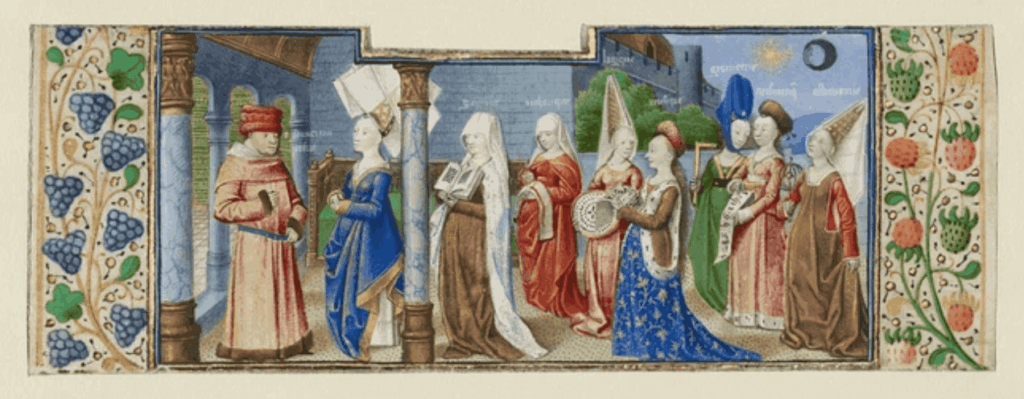
During the Middle Ages, liberal arts education centered on seven core subjects:
The Trivium – grammar, logic, rhetoric
The Quadrivium – arithmetic, geometry, astronomy, music
Today, these areas have evolved into broader disciplines. Modern liberal arts programs may include:
Literature and languages
Sociology and psychology
Natural sciences like biology, chemistry, and physics
Arts and humanities
This flexibility allows you to tailor your education. Interested in marketing but fascinated by psychology? Great, because a liberal arts pathway lets you combine both. Drawn to public service but curious about communication? That works, too.
What Does a Liberal Arts Degree Look Like Today?
A modern liberal arts degree offers a strong academic foundation while allowing room for exploration. One example is a Bachelor of Arts in Humanities, a program that focuses on several subjects, including:
History and philosophy
Literature and languages
Social sciences
Visual and performing arts
These programs also incorporate core general education subjects like English, math, and science, ensuring you graduate with a well-rounded skill set valued by employers.
What Can You Do with a Liberal Arts Degree?
Liberal arts degrees open doors to many career paths, including:
Marketing or communications
Human resources
Public relations
Nonprofit or public service roles
Journalism or writing
Education and advising
Many graduates also pursue advanced degrees in law, business, or education. The versatility of liberal arts is its greatest strength.
Earn a Bachelor of Arts in Humanities Online at UT Permian Basin
The online Bachelor of Arts in Humanities program at UT Permian Basin helps students build essential skills like communication, critical thinking, and social responsibility, all in a flexible online format.
You can choose up to two concentrations to personalize your degree, and with guidance from faculty advisors, you can create an individualized plan of study that aligns with your interests and career goals.
If you’re looking for a degree that values adaptability, creativity, and lifelong learning, a liberal arts education may be the right fit.
Ever found yourself humming an earworm and suddenly wondering, “Where did this come from—and who created it?” Music is a universal language. It conveys memory, rebellion, grief, joy, and identity. Across centuries, women have used the language of sound in a world where they’ve been told, repeatedly, to stay invisible. Here are some of the…
Modern challenges like AI and global weather crises can stir up fear and controversy. But that’s for the scientists to sort out, right? Not exactly. The humanities play a powerful, often overlooked role in technology and science. Trends in these fields can create ethical, moral, environmental, and philosophical dilemmas. The humanities equip us to navigate…
“Any form of art is a form of power; it has impact, it can affect change – it can not only move us, it makes us move.” — Ossie Davis, actor and activist October is Art and Humanities Month in the United States, a celebration that provides the perfect opportunity to consider how art helps…
A 2019 research report from the acclaimed Mellon Foundation addressed the overall value of humanities, stating that they’re “useful to society in the preservation and curation of culture” and also that the humanities “contribute to the maintenance and health of democracy via teaching skills of critical reasoning, debate, and evaluation of ideas.”
Being part of a culture gives us an innate sense of the history, customs, and values of our own social group, but this scope is often limited. In the context of education, humanities can help bridge this gap in cultural knowledge. The focus of an education in the humanities is not just on mastering a broad range of academic disciplines but on introducing students to humanities on the global scale. Humanities expand our understanding of different human cultures and enable us to understand ways in which they’re similar and ways in which they differ, in the present and historically, delivering a broader perspective on the world in which we live.
The humanities encompass the full range of human thought and creativity, including history, literature, languages, religion, philosophy, music, theatre, and all of the performing arts and visual arts. In a formal educational setting, students may gain foundational knowledge in all of these but also be given the chance to learn more about specific subjects which appeal to them. This does more than strengthen an individual’s ability to identify from which era a piece of music originates or which art movement a particular painting exemplifies. It instills them with marketable, transferrable skills that can help them in their professional lives and beyond.
As the publication NH Business Review states in an article titled “The business case for humanities education”: “The humanities are part of an interconnected whole that yields a broad, deep education fostering 21st century career readiness and the ability to work with others to respond better to day-to-day work responsibilities, as well as life’s broader needs and challenges.”
Translating Humanities to Real-World Skills and Benefits
The truth is, studying humanities helps one develop skills that are beneficial in any role, in any field. Humanities studies are broad by design and the value of humanities in education is equally expansive. So, what humanities skills do employers seek? What kind of professions do humanities degree holders represent? What types of compensation do these roles offer?
The following skills—all introduced or strengthened through a humanities education—are among the skills and qualities today’s employers consistently value:
Critical Thinking
Teamwork
Communication
Empirical and Quantitative Reasoning
Personal and Social Responsibility
Recent U.S. Census Bureau data shows that graduates of bachelor’s degree programs in humanities commonly work in roles including management, office and administrative support, sales, business and financial operations, and the arts and media. That’s a fairly broad spectrum that doesn’t relegate degree holders to employment within one position or industry.
The same census data indicates that bachelor’s degree holders in the humanities earned an annual median compensation of $52,000. This amount is in clear contrast to the earnings of those with an associate degree or limited college experience, reported as $40,000 per year, and those with a high school diploma alone, reported as $34,000 per year.
Earning a Bachelor of Arts in Humanities Online
The University of Texas Permian Basin’s online Bachelor of Arts in Humanities program can help you develop career-enhancing skills and join the many graduates who’ve recognized the value of humanities in education.
Our immersive, affordable online BA in humanities program offers students a tremendous amount of flexibility. As a student, you won’t be expected to follow a predetermined path. Instead, the program empowers you to choose up to two concentrations that align with your personal areas of interest, including art, communication, English, history, or music, for a total of 24 credits of specialized coursework in these areas. Our faculty advisors collaborate with you to establish an individualized plan of study with an interdisciplinary theme, period, set of problems, specialization, or perspective. Degree programs that combine one major and one minor don’t offer you the same experience.
UT Permian Basin’s online BA in humanities program is presented 100% online and allows you to finish assignments at your own pace, any time of day, from any location with internet access. Additionally, you can choose from six start dates a year. Courses are eight weeks in duration, which allows for an accelerated degree completion time. Each course is taught by the same renowned faculty who teach them in person at the UT Permian Basin campus. When you graduate, you’ll receive the same degree that campus-based students receive, with no mention of “online” on your diploma.
The humanities are the study of how humans understand and express the world around them. They include disciplines such as art, language, history, philosophy, religion, and performance (all fields that examine human culture across time).
This need to understand and express the human experience is not new. Long before formal education existed, humans were already engaging in the humanities. From early cave art to literature and philosophy, our ancestors used creative expression to record their experiences and communicate ideas
As civilizations developed over centuries, these forms of expression have become more structured, forming what we now recognize as the humanities.
In this article, we’ll:
Trace the early origins of the humanities
Examine key periods of development
Explore how the evolution of the humanities became a formal field of study
Ancient Greece and the Foundations of Humanities
Between the time of the Neanderthals and what we call ancient Greece, art found its way onto practical objects such as vases and bowls. Languages developed. Religions were born. Even then, works that would make an enduring impact in the humanities were being created.
“The Odyssey” and “The Iliad,” both attributed to Homer, are some of the oldest surviving works of Western literature and are estimated to have been written in the eighth century B.C. They’re still widely read by secondary school and college students today.
Homeric scholarship, the study of Homer’s works, is one of the oldest subjects in education. Around the time Homer’s epics were written, various forms of arts, crafts, and writing in Greece were flourishing, coinciding with expanded trade with other countries, which exposed people to more diverse cultural influences.
In the fifth century B.C., democracy thrived in Athens, and the city essentially became the world capital for philosophy, drama, literature, art, and architecture. The Parthenon and some of the other famed Greek monuments date from around this time.
The Renaissance and the Rise of Humanism
The Renaissance (meaning “rebirth”) was a revival of classical scholarship and heralded a renewed interest in the study of ancient Greek and Roman civilizations, which in large part was a study of humanities. The Renaissance is said to have started in Italy as early as the 14th century B.C. and expanded throughout Europe in the following centuries.
During this period, fine art in particular grew in importance, with many influential paintings and sculptures stemming from this time. Some of the most notable figures from the Renaissance era include:
Philosopher Niccolò Machiavelli
Poet Francesco Petrarca (Petrarch)
Astronomer Galileo Galilei
Dramatist William Shakespeare
The exploration of lands outside the known world also began in earnest in the Renaissance, bringing new influences into Western culture. New inventions that would prove critical to education and the humanities, such as the printing press, also emerged during this time.
The development of humanism during the Renaissance played a key role in the rise of what would later be formally called the humanities. While philosophy and learning had previously been dominated by clerics, humanism (not to be confused with modern secular humanism) was started by secular (nonreligious) scholars and writers.
Humanism put the focus of art and other forms of expression on human nature and the human form. According to the Encyclopedia Britannica, it empowered men to “break free from the mental strictures imposed by religious orthodoxy, to inspire free inquiry and criticism, and to inspire a new confidence in the possibilities of human thought and creations.” Over time, the idea of humanism came to denote the humanities as we understand and use the term today.
How Humanities Education Expanded in the United States
Flash forward to the United States in the 20th century. World War II had a detrimental effect on higher education in the country, with many college-aged individuals leaving or foregoing college for military service.
Following the war, the U.S. made a concerted effort to help returning service members resume their studies. Furthermore, Congress completely revamped and expanded the higher education system through the enactment of a series of laws.
After this legislative overhaul, college-level education in humanities soared from the 1950s through the early 1970s, and it’s been enjoying its own type of renaissance in the 21st century as employers express demand for the skills that students of humanities develop.
Earn Your Bachelor of Arts in Humanities Online
The University of Texas Permian Basin’s online Bachelor of Arts in Humanities program can help you develop skills that will be valuable to you in any professional field.
As a student, you’ll follow your own path, choosing two concentrations that align with your personal areas of interest. Options include art, communication, English, history, and music.
Keep the humanities alive and see how they can positively impact you, both in your personal and professional endeavors. An online Bachelor of Arts in Humanities program is the first step.
Ever found yourself humming an earworm and suddenly wondering, “Where did this come from—and who created it?” Music is a universal language. It conveys memory, rebellion, grief, joy, and identity. Across centuries, women have used the language of sound in a world where they’ve been told, repeatedly, to stay invisible. Here are some of the…
Modern challenges like AI and global weather crises can stir up fear and controversy. But that’s for the scientists to sort out, right? Not exactly. The humanities play a powerful, often overlooked role in technology and science. Trends in these fields can create ethical, moral, environmental, and philosophical dilemmas. The humanities equip us to navigate…
“Any form of art is a form of power; it has impact, it can affect change – it can not only move us, it makes us move.” — Ossie Davis, actor and activist October is Art and Humanities Month in the United States, a celebration that provides the perfect opportunity to consider how art helps…
The humanities encompass the full range of human thought and creativity, including languages, religion, philosophy, and the broad spectrum of the arts (including the performing arts and the visual arts). Humanities education explores the commonalities and differences in self-expression that humans have exhibited through the ages and continue to demonstrate today. The humanities have always been and will continue to be the basis of human cultures and source of our perceptions of different cultures.
In the academic realm, a student may study any or all of the humanities as part of a formal degree program such as a Bachelor of Arts in Humanities. These programs expose students to diverse ideas from around the world, broadening their knowledge and developing their critical thinking abilities.
Are the Humanities Important?
People from all walks of life, across philosophical and political perspectives, agree on the importance of the humanities. Famed “Star Wars” director George Lucas said this of the humanities: “The sciences are the ‘how,’ and the humanities are the ‘why’—why are we here, why do we believe in the things we believe in. I don’t think you can have the ‘how’ without the ‘why.’”
Former President Ronald Reagan believed that, “The arts and humanities teach us who we are and what we can be. They lie at the very core of the culture of which we’re a part.” J. Irwin Miller, famed industrialist and civil rights proponent, also spoke to the transformative nature of the humanities when he stated, “The calling of the humanities is to make us truly human in the best sense of the word.”
The broadly applicable skills that the humanities offer also directly benefit individuals in their personal and professional lives. As American philosopher and law professor Martha Nussbaum notes, “Business leaders love the humanities because they know that to innovate you need more than rote knowledge. You need a trained imagination.”
What Skills Can You Gain by Studying Humanities?
Humanities expand our knowledge of human cultures and help us understand what binds us together and what differentiates us from one another. In addition to these high-level insights, however, they also provide practical applications that can enhance your professional skillset and give you a competitive edge. By studying humanities in a formal university-level program, you can acquire transferrable, marketable skills and qualities that will be an asset to you in your professional pursuits. What will you learn in a humanities program? Examples include:
Critical Thinking—The ability to receive and analyze knowledge and to use your creativity to develop innovative solutions to problems.
Communication—The ability to form unique viewpoints and to express yourself clearly and persuasively in both written and spoken forms.
Empirical and Quantitative Reasoning—The ability to comprehend and use numerical data to formulate and deliver educated decisions.
Teamwork—The ability to understand and accept the viewpoints of others and to work collaboratively with them to achieve common goals.
Personal Responsibility—The ability to see the consequences for your actions and take responsibility for and justify the choices you make.
Social Responsibility—The ability to see what’s best for society and the world as a whole and to act accordingly.
Employers want professionals who can come up with fresh approaches to solving problems, express themselves clearly, collaborate with others, and act in a responsible, ethical manner. These abilities are the foundation for nearly every career path, as well as many graduate-level programs. Equipped with these skills, you’ll be prepared to take on a diverse range of career paths, including:
Teacher
Writer
Public relations manager
Advertising sales agent
Travel agent
Counselor
Event organizer
Artist
Lawyer
Minister
Military service member
Why Earn Your Degree in Humanities From The University of Texas Permian Basin?
The University of Texas Permian Basin’s online Bachelor of Arts in Humanities program goes beyond discussions of the world’s great works of art and philosophies. This immersive, affordable program empowers you with the key skills today’s employers value most.
Our BA in humanities program is unique in that, as a student, you’re not given a preset path to follow; the program enables you to choose concentrations based on your personal areas of interest. Our faculty advisors work with you to develop an individualized plan of study with an interdisciplinary theme, period, set of problems, specialization, or perspective that you can’t get by combining a major and minor in the traditional way. You’ll choose a minimum of two concentration areas in art, communication, English, history, or music, totaling 24 credits of specialized coursework in these areas.
Our program is flexible not only in terms of what topics you may study but in how you complete your degree. The 100% online format allows you to complete coursework anytime, at any location with internet access. You can choose from six start dates a year and enjoy condensed eight-week courses and an accelerated completion time. All courses are taught by the same esteemed faculty who teach on campus at UT Permian Basin. When you’re ready to graduate, you’ll receive the same valued degree that campus-based students receive.