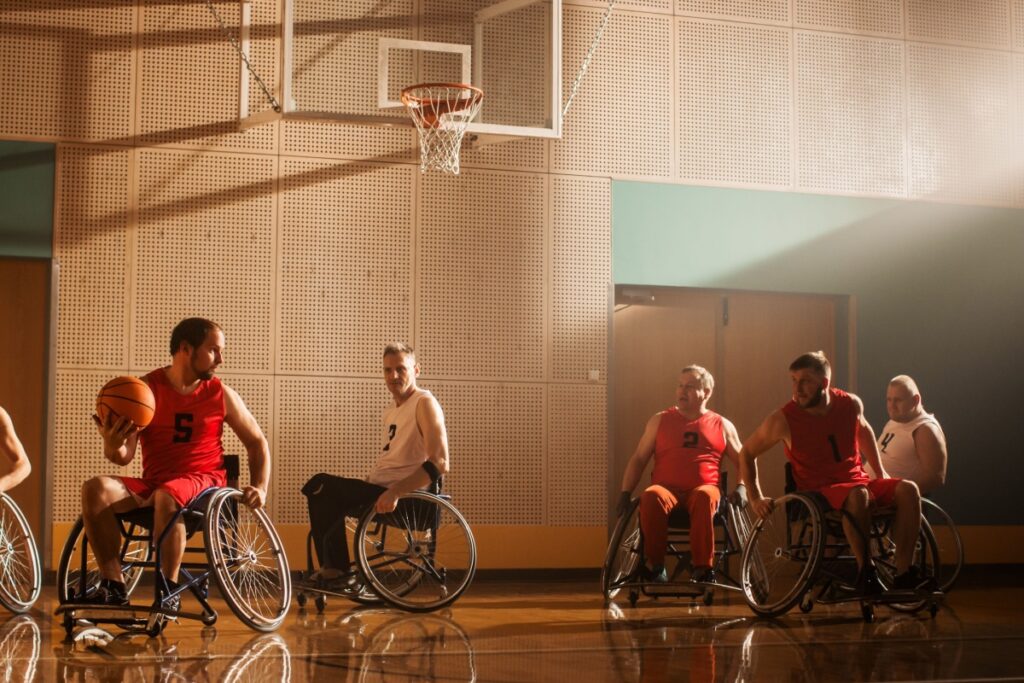
How Kinesiology Supports Athletes With Disabilities
How Kinesiology Supports Athletes With Disabilities
Have you ever seen wheelchair rugby players slam into each other at full speed? How about sitting volleyball players, as they cover the court with explosive movement generated entirely from their upper bodies and core?
These are serious athletes doing serious athletic work. And behind a lot of that performance is a science: kinesiology, the study of human movement. Kinesiology plays a key role in improving the performance of athletes with disabilities.
Kinesiology helps coaches and performance specialists understand how the body moves, how it responds to training, and how to build programs that actually fit the athlete.
In adaptive sports—competitive and recreational sports designed for athletes with physical, cognitive, or sensory disabilities—that knowledge gets applied in ways that are more specific and individualized than in most other settings.
No two athletes with disabilities move in exactly the same way. A training plan might need to account for a prosthetic limb, a wheelchair, differences in balance or coordination, or how an athlete manages fatigue. A coach’s ability to understand an athlete’s biomechanics helps them see exactly how that person is generating force and where small adjustments might lead to big performance gains.
That means the staff supporting these athletes needs more than basic fitness knowledge. They need to understand what efficient, effective movement looks like for that specific person in that specific sport.
Kinesiology gives students the tools to:
Analyze how an athlete moves and identify where adjustments might help
Design training plans based on what the athlete’s body can and does do
Reduce unnecessary strain during exercise
Support strength, endurance, and recovery around the demands of the sport
Why Individualized Training Matters
Individualized training matters because no two athletes have the same needs, and in adaptive sports, that’s especially true.
Wheelchair basketball, para track, and seated shot put all make completely different demands on the body. Each sport has its own movement patterns, and within each sport, athletes bring unique strengths, limitations, and goals. A training plan that works for one athlete might not work at all for another, even within the same sport.
This is where individualized programming makes a real difference. A strong adaptive training environment includes:
Equipment that fits the athlete and their sport
Coaching strategies that are clear, flexible, and adjustable
Performance goals built around the individual athlete
Access to training that treats adaptive athletes as the serious competitors they are
What Adaptive Physical Activity Looks Like in Practice
Adaptive physical activity means matching the activity to the person. In a kinesiology context, that means knowing when and how to adjust a workout so the athlete can train more effectively.
That might look like:
Changing how a drill is set up or sequenced
Adjusting pace, resistance, or range of motion
Modifying the environment for safety or better access
Using feedback and instruction that fits how the athlete learns best
For example, a strength coach working with a wheelchair athlete might shift the focus from lower-body lifts to upper-body pulling and pressing movements, then adjust grip positioning based on the athlete’s range of motion.
The goal is the same as it would be for any athlete—build strength, reduce injury risk, improve performance—but the path to get there looks different. That kind of thoughtful adjustment is what adaptive physical activity is all about, and small changes like these can make a big difference in how consistently an athlete improves.
What Can You Do With a Master’s Degree in Kinesiology?
A master’s degree in kinesiology prepares you to work across a wide range of sports settings, and adaptive sports are among the most rewarding areas you can go into.
Kinesiology covers a lot of ground. From biomechanics and exercise physiology to motor learning and strength and conditioning, all of it applies directly to adaptive sports. These subjects help explain how athletes generate power, develop skill over time, manage fatigue, and recover between sessions.
That foundation can take you into careers like:
Adaptive sports coaching and performance training
Exercise programming and fitness instruction
Skill development across different sports and ability levels
Rehabilitation and clinical support
And because adaptive sports require creative, on-the-fly problem solving, students who train in this space often come out as stronger practitioners across the board.
Build Your Foundation With UTPB’s Master’s Degree in Kinesiology
If you want to work in adaptive sports, coaching, exercise programming, or rehabilitation, graduate-level training in kinesiology gives you a real edge. You’ll go deeper into the science of human movement and come out better equipped to design programs, support athletes, and solve performance problems.
The University of Texas Permian Basin’s Master of Science in Kinesiology is fully online, so you can build that expertise without putting your life on hold, whether you’re already working in the field or looking to move into it.
Beyond a diploma, you’ll graduate with a stronger understanding of how the body moves, how training shapes performance, and how to apply that knowledge with real athletes across all sports. In adaptive sports, especially, that preparation can make a genuine difference—for you and for the people you work with.
You know that feeling right after a good workout? The addictive mix of pride, exhaustion, and the sudden realization that climbing stairs is a “tomorrow problem”? Most of us think workout recovery ends with a quick stretch and a protein shake. But in kinesiology, recovery isn’t the end of your workout. It’s where the real…
When you think of a great athlete, you might picture strength, speed, or agility. But what often separates the good from the great is more than physical skill; it’s the ability to stay focused under pressure, recover from setbacks, and trust in hard-earned preparation. That mental edge comes from sports psychology. This key area within…
Only a few decades ago, stopwatches, whistles, clipboards, and a coach’s sharp eye were the main tools used in sports training. But oh, what a difference 30 years can make. Today, those simple tools have been replaced by advanced technology like GPS wearables and AI-powered trackers that do far more than clock a sprint. Sports…