True Crime Armchair Detectives: Helpful or Harmful?
In a recent poll centered around true crime, half of participants gave the chilling genre their nod of approval. If you can’t get enough of these gritty stories, consider yourself among the 13% of respondents that claimed it’s their favorite genre. While it’s hard to pinpoint the exact reason true crime has become such a phenomenon, one factor is likely that these often graphic real-life nightmares feed our innate desire to solve the unsolvable. Some people, however, take their love for mysteries to the next level.
Known as armchair detectives, these everyday members of society use their sleuthing abilities—and Wi-Fi connections—to solve these unresolved mysteries. While some armchair detectives have found success in solving decades-old cases, others have ruined lives by falsely accusing innocent individuals. Today we’re doing some sleuthing of our own as we dig into the world of armchair detectives and their relationship to true crime stories. Join us as we debate whether they’re helpful or harmful in their quest to unravel unsolved crimes.
What Is True Crime?
Whether you get your murder mystery fix during your morning commute or while you’re chopping veggies for dinner, one thing is for sure—true crime is taking over podcasts and television in a big way. But what exactly is a “true crime”?
True crime is a non-fiction genre found in a multitude of mediums. It dissects the stories of real-life violent crimes, including kidnappings, murders, serial murders, sexual assault, robbery, and more. And while we may not have a list of the best true crime podcasts on hand, we do know the secret list of ingredients that most mediums use to create the most addictive content, such as:
The crime: What did the crime consist of?
The investigation: What was the investigative process like?
The criminal: What was the alleged criminal’s psyche, motivation, and background?
The victim: Who was the victim? What impact did the crime have on their life and that of their family?
The trial: What was the legal system’s role in the case?
The resolution: Was the crime resolved? What justice was found for the victim and their family?
What Are Armchair Detectives, Really?
An armchair detective is someone who enjoys solving mysteries from home. While they may feel the call of the investigative trench coat, they don’t actually need to leave the comfort of their chairs thanks to modern advancements like the internet. Once they find a case they’re passionate about, they have several tools at their fingertips, including:
Scanning the Internet for public records.
Using web browsers to research almost anything, from blog posts to maps of specific addresses.
Utilizing social media forums to research potential suspects and discuss their theories with other like-minded individuals.
Armchair Detectives: Friend or Foe?
While the idea of untrained (and unlicensed) detectives solving true crimes from their living rooms may seem farfetched, their theories and extensive computer-sleuthing skills have aided in solving long-unsolved murders and crimes. For example, in the documentary “Don’t F**k With Cats,” a group of ordinary people banded together to identify a man who’d been posting disturbing videos online. With the help of public video footage, online maps, and a heated social media discussion forum used to discuss their theories, they were able to find a murderer that had previously roamed free.
But the inquisitive nature of armchair detectives doesn’t always end with a happily ever after or a conviction of the guilty party. When it comes to cold cases, an onslaught of theories or “leads” from armchair detectives can turn into hours of futile work for detectives who are currently working 40 or more hours a week on more recent, open cases.
There have also been reports of amateur detectives distracting investigators and providing police departments with false accusations and rumors. For example, in 2022, four college students were murdered in the college town of Moscow, Idaho. Before a suspect was in custody, armchair detectives took to the internet to find the killer. One of those internet investigators claimed that a professor was guilty of initiating the plan to have the students murdered. While police later debunked this theory, this brazen claim altered the reputation of the accused and resulted in a lawsuit against the armchair detective who made the false statement.
Turn Your Passion into Your Career at UTPB
From the successful documentary “The Staircase” to the countless true crime podcasts you can sift through like a sugar addict searching for their next sweet fix, it seems like this pop culture fad is here to stay. If you’re interested in translating your armchair enthusiasm for true crime into a fulfilling career, one of UT Permian Basin’s online criminal justice programs can help.
Bachelor of Science in Criminology and Criminal Justice Studies
UTPB’s online undergraduate criminology and criminal justice studies program is ideal for students seeking a thorough grasp of the criminal justice system, including corrections, courts, and law enforcement. Not only do our experienced professors provide a rigorous, research-based curriculum, but the online format makes it simple for you to choose from a wide selection of courses that align with your busy schedule.
Master of Science in Criminal Justice Administration
Our online graduate criminal justice administration program is ideal for individuals looking for a deeper understanding of the world of criminal justice and ready to enact positive change. Whether you’re already a working professional in the industry or recently completed your bachelor’s degree, you can complete this 30-credit program entirely online at your own pace.
Your courses will help you:
Identify and craft solutions to issues from criminal law to law enforcement and correction.
Influence policy as a leader to create positive change from within.
Protect your agency and its employees while serving the public.
Interested in learning more? Request more information or take the next step and apply to the program that’s right for you.
From the tried-and-true political science major to a more elusive degree in puppet arts, there really is a degree for everyone. But if you’re not sure exactly what your future career path holds, maybe you’re interested in a major that lends itself to diverse career possibilities. After all, one day you might feel passionate about becoming an investigative journalist. Next month, your dream job could morph into the exciting role of social media coordinator.
From communication to psychology, today we’re diving into five of the most versatile degrees for undergraduate students who want flexibility in their future.
#1 Communication
As the title would suggest, a communication degree concentrates on giving students the skills needed to effectively communicate in a variety of roles, from marketing to media and everything in between. Some of the hard skills you’ll gain from a communication degree include:
Written and oral communication
Public speaking
Interpersonal communication
Media production (e.g., audiovisual production, graphic design)
Public relations (e.g., managing an organization’s reputation, handling crisis communications, and developing media relations)
Because the skills associated with this degree are so broadly applicable, they’re highly sought after in many industries. Some of the career paths commonly chosen by communication graduates include:
Public relations
Journalism
Advertising
Marketing
Corporate communications
Event planning
Social media management
Human resources
#2 English
An English degree is a steadfast choice for lovers of books and the written word—not to mention those who appreciate having a wide selection of job opportunities to choose from. This major provides the opportunity to master many covetable work skills:
Communication
Critical thinking
Reading comprehension
Research
Literary analysis
Cultural awareness
Presentation skills
With such a wide range of aptitudes, English graduates set themselves up for countless job opportunities, including:
Writing and editing
Education
Publishing
Public relations
Marketing
Communications
Law
Human resources
#3 Marketing
Whether you dream of becoming the biggest brand manager in the industry or the go-to event manager for the most well-known clients in the business, a marketing degree delivers a diverse set of skills that you can apply across various industries, like:
Market research and analysis
Branding and positioning
Digital marketing
Creative problem-solving
Customer relationship management (CRM)
Project management
Data analysis
After earning a marketing degree, you’ll afford yourself a flexible list of career choices to choose from, including:
Market research
Social media management
Public relations
Marketing analytics
Sales and business development
Product marketing
#4 Finance
While finance students are often deeply immersed in numbers and figures, that doesn’t mean a finance program isn’t a worthwhile contender in the realm of the most versatile degrees. To the contrary! This flexible degree prepares students for numerous roles with a broad set of skills, such as:
Risk management
Financial compliance
Quantitative skills
Financial planning
Problem-solving
Business acumen (e.g., accounting, economics, and investment)
Within the wide world of finance, there are a wealth of careers to choose from. Potential roles include:
Financial consultant
Treasury analyst
Commercial banker
Risk manager
Insurance underwriter
Private equity analyst
Investment banker
#5 Psychology
An undergraduate major known for its ability to give students a deep understanding of human behavior and cognitive processes, psychology also offers a wide-ranging set of skills that students can apply to most any current or future role, including:
Research
Critical thinking
Empathy and listening
Ethical guidelines
Data analysis
Cognitive and behavioral assessment
While people often associate psychology with careers in counseling or therapy, there are plenty of other career paths to choose from for students who aren’t yet sure where their passions lie. Graduates often pursue roles in:
Human resources
Sales and marketing
Forensic psychology
Data analysis and research
Social services
User experience (UX) research
Visualizing the Value of Versatile Degrees
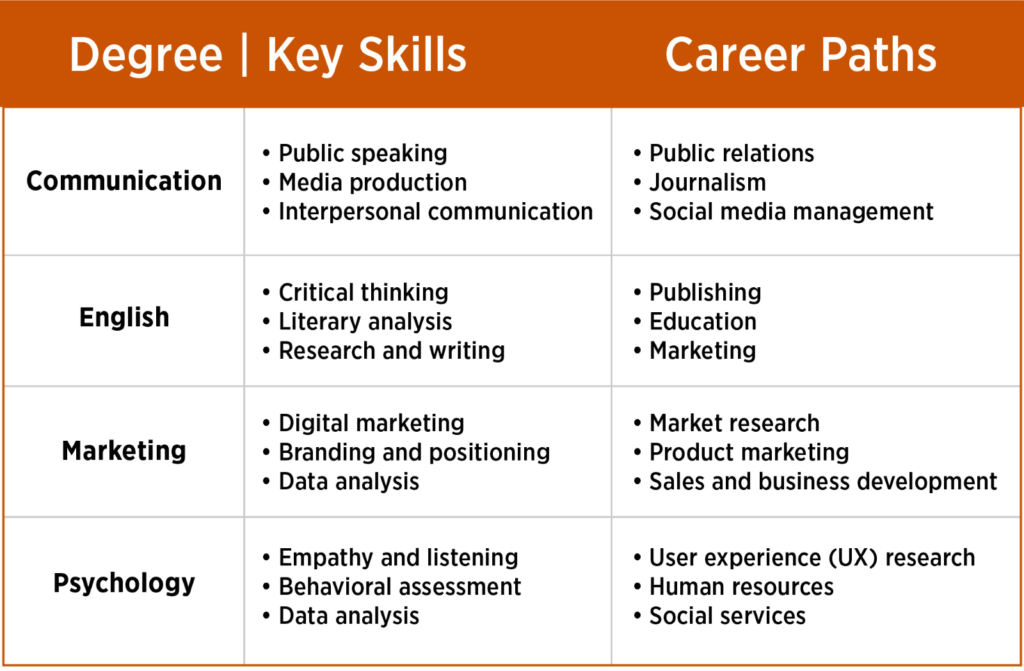
Each of these degrees opens doors to a wide range of industries and career paths. Use the chart below to explore how core skills connect to professional opportunities, so you can choose a major that matches your goals and grows with you.
FAQs: Choosing a Versatile Degree
Thinking about a major that offers long-term flexibility? Below are five quick questions to help you better understand what makes a degree versatile and how to choose the right one for your goals.
What makes a degree “versatile”? A versatile degree provides a broad set of transferable skills that can be applied across multiple industries and job roles.
Are versatile degrees less valuable than specialized ones? Not at all. Versatile degrees offer flexibility, making them especially valuable for students who want to explore different fields or pivot later in their careers.
Can I go to graduate school with one of these degrees? Yes! Degrees like psychology, English, and communication are great foundations for graduate programs in business, law, education, and more.
What kinds of jobs can I get with a versatile degree? Graduates commonly pursue roles in marketing, human resources, publishing, research, communications, finance, and more, depending on their interests.
Does UTPB offer these degrees online? Yes! UTPB offers fully online undergraduate programs in all five of these versatile areas—designed with flexibility and accessibility in mind.
Choose the Program That’s Right for You at UTPB
We understand that life can be hectic, but even with a personal and professional life vying for your time, it is possible to obtain the education and career you deserve. With a degree and a broad set of skills in hand, your professional opportunities will abound.
The University of Texas Permian Basin offers 17 entirely online undergraduate degrees to choose from (including the five listed above) to help you gain the skills and knowledge needed to succeed in whichever career you choose.
Still not sure? Check out some of the benefits of our online programs:
Flexibility Courses are asynchronous, so you can complete coursework at your own pace.
Accessibility Not located near our campus? Not a problem! With a Wi-Fi connection, you can do your work from almost anywhere in the world.
Accreditation UTPB is regionally accredited by the Southern Association of Colleges and Schools Commission on Colleges (SACSCOC) to ensure all our online programs meet rigorous standards that are widely recognized and transferable.
Convenience Complete your work anytime, anywhere without ever traveling to campus.
Join the Falcon family and discover all the perks of a top-tier online education. Apply to UTPB today!
From the tried-and-true political science major to a more elusive degree in puppet arts, there really is a degree for everyone. But if you’re not sure exactly what your future career path holds, maybe you’re interested in a major that lends itself to diverse career possibilities. After all, one day you might feel passionate about…
Getting accepted to The University of Texas Permian Basin is a big milestone. If you’re a working professional, the next step—asking your employer about tuition reimbursement—can feel a little intimidating. But it doesn’t have to be. Most organizations want employees who grow, stay, and contribute at a higher level. And many companies offer tuition reimbursement,…
Online programs can be an excellent option for students with a busy lifestyle, especially those balancing school, work, and family. Nevertheless, if you are new to online classes, you might wonder how they differ from on-campus courses. Here are some hacks students wished they had known before starting an online program. Structure Your Own Schedule …
If you haven’t yet begun a career, or are still in the early stages of one, it’s imperative to keep an eye on the horizon for changes and new skills that can turn emerging challenges into opportunities. Often, changes in the working world are connected to technological innovations, e.g., the expanding use of AI across job sectors. Sometimes, the need for new skills accompanies a demographic shift. Here we’ll discuss the United States’ growing population of Spanish speakers and how you can capitalize on this shift professionally with the necessary skills and credentials.
5 Career Benefits of Mastering the Spanish Language
Let’s review a few of the professional advantages you may enjoy upon mastering the Spanish language:
Increased Likelihood of Landing That New Job
If you’re fluent in Spanish, you can edge out other job candidates when applying to companies and government entities that prefer employees who are bilingual or who speak Spanish specifically.
Higher Income Potential
Bilingual employees in the median pay range earn about $8,738 more per year, according to glassdoor.com.
A Diverse Selection of Career Fields
Language mastery positions you to work in a variety of fields and roles:
Bilingual education
Content development
Diplomacy
Government
International business
Interpreting services
Translation
Writing/editing
Greater Employability on at Least Four Continents
The statistics for Spanish speakers we discussed above are specific to the United States, but there are 20 countries for which Spanish is the official language. If you plan to seek job opportunities outside the U.S., being fluent in a language spoken by half a billion people on our planet can only help.
Effortless Interactions
Equipped with Spanish proficiency, you’ll be able to interact smoothly with a larger number of colleagues, clients, and customers. This benefit can also translate to your personal life and everyday interactions outside the workplace.
Online Programs That Help You Speak the Language of Broader Career Potential
The University of Texas Permian Basin—named among Newsweek’s “America’s Top Online Colleges 2023”—offers online degree and certificate programs that can put speaking Spanish among your strongest professional skills:
Build your fluency in both the Spanish language and Spanish culture in a graduate degree program that does not require GRE scores or a thesis. Data from the U.S. Bureau of Labor Statistics shows master’s degree holders have about 18% higher median earnings and higher employment rates than those with a bachelor’s degree alone.
If you’re not looking for a master’s degree program right now but want to bolster your understanding of Spanish and related cultures, this program was designed for you. Complete our Spanish graduate certificate and add a graduate credential to your resume in as little as three semesters.
As a paramedic or EMT, your ability to speak Spanish can literally make the difference between life and death for someone experiencing a health crisis. Make sure you have this critical skill! Learn medical terminology and participate in simulated interactions with patients while you complete this program in as little as two semesters.
Regardless of which UTPB Spanish program you choose, you can complete your studies online from practically any location worldwide—no campus visits are required. You don’t have to live in Texas or the United States—or even be a U.S. citizen. Our flexible asynchronous learning format enables you to continue meeting professional and personal commitments while you earn a respected education credential at your own pace!
We’re truly in a golden age of content. Kaitlyn Siragusa (better known as Amouranth) is a Twitch star, a top OnlyFans creator, and now, an AI companion bot. As reported by Dexerto, “AI Amouranth” satisfies fans’ needs and offers an experience that “blurs the lines between reality and virtual interaction, creating an indistinguishable connection with the esteemed celebrity.”
Fans and followers clamor for unfettered access to their favorite celebrities, so why shouldn’t Amouranth and other public figures cash in on the attention?
The problem comes from the unbalanced relationships that exist between celebrities and their fandom. Although shallow and usually harmless, these relationships are built on emotional connections and can therefore lead to pain and suffering.
Let’s dive into the positives and negatives of parasocial relationships and how they help define our relationship with the world around us.
What Is a Parasocial Relationship?
A parasocial relationship is a one-sided connection formed with a celebrity, such as an actor, athlete, influencer, musician, politician, or even fictional character. Can you blame a kid for daydreaming about fighting crime alongside the Caped Crusader or Man of Steel?
Sociologist Donald Horton and his psychiatrist co-author Richard Wohl coined the term in the 1950s to describe how listeners were drawn into an illusion of intimacy by radio personas. At the time, broadcasters were trying a “fireside” technique. If they could make listeners feel like they were at home chatting with an old friend by the fire, they could captivate their audience. It worked.
But it’s not enough to be a fan. Someone in a parasocial relationship is emotionally invested in the life of a celebrity, feeling sad when a beloved actor is snubbed at an award show, proud when a favorite athlete makes a game-winning goal, or attacked when an admired politician is accused of misconduct. There’s a sense of intimacy and familiarity that goes beyond casual interest.
Am I in a Parasocial Relationship?
When you think about your favorite celebrity, do you have the same level of admiration for them that you normally reserve for friends? Do you read articles about them, watch interviews featuring them, and follow them on social media?
Let’s get down to the nitty-gritty: Have you ever had imaginary (but comforting) conversations with them that play in your head like a scene from a movie? That’s a parasocial relationship. Don’t worry, though. Parasocial relationships are common and (mostly) harmless, so long as someone doesn’t start believing their own fantasy.
The Positives of Parasocial Relationships
Heroes, imaginary or otherwise, are a source of inspiration and motivation. For example, celebrities offer a way for teens to connect with someone without the risk of rejection while they learn to make and maintain connections with their peers. Think about it: How many members of Gen Z look up to Taylor Swift? And rightly so. “Tay Tay” turns every breakup into a chart-topping album.
Young adults, however, don’t have a monopoly on parasocial relationships. Adults often fall victim as well, especially in a society grappling with “an epidemic of loneliness.” COVID-19 hit hard, and social distancing—although necessary for physical health—took a toll on everyone’s mental health, cutting us off from friends, family, and loved ones. Parasocial relationships offer a simple way for people to feel connected though they may be far apart.
The Negatives of Parasocial Relationships
As you can imagine, a one-sided connection characterized by deep emotional attachment has the potential for harm. Parasocial relationships can be healthy (or at least, not unhealthy), but problems arise when fans develop romantic feelings and expect them to be reciprocated in real life.
Complicating matters is the fact that celebrities thrive on engaging with fans and often offer (carefully curated) glimpses into their personal lives on social media to build those connections. Lucky fans may actually receive a response after DMing their favorite influencer. “Celebrity engagement with social media may allow people to believe that their feelings are reciprocated, or that celebrities are aware of them in a way that traditional media did not,” said psychology lecturer Joanne Ingram.
Amouranth, whom you’ll remember is promoting an AI version of herself, is no stranger to harassment stemming from parasocial relationships. One of her stalkers sold all of his earthly possessions and flew halfway around the world to find her, only to be detained by police after showing up at her door. “I don’t know what else to do at this point, besides build a moat with crocodiles,” said Amouranth. Stalkers, although rare, exemplify what can go wrong when parasocial relationships are valued over real ones.
Develop a Healthy Obsession With Sociology
The positives and negatives of parasocial relationships are a fascinating area of study for sociologists. Whether healthy or not, they offer insight into how media shapes our perceptions of the world around us and connections can form without people ever meeting. As our society becomes increasingly connected through technology and social media, parasocial relationships will likely continue to play an important role in our lives.
If you’re interested in learning more about the social processes that shape society, check out our online Bachelor of Arts in Sociology program. Specifically, you’ll learn throughout this undergraduate program how social structures impact the way marginalized groups are treated by society. By the time you graduate, you’ll have gained a prestigious credential, an expanded skill set, and a new perspective on the influences behind how people relate to and interact with one another.
Check out our program page to learn more about earning your BA in sociology online at The University of Texas Permian Basin. If you’re ready to get started, apply now.
Students in special education are likely to encounter all the challenges other students face while also contending with a variety of unique difficulties. These students in particular need a caring, sincere, and highly trained teacher to guide them through their education experience—especially when mainstreaming special education students is becoming the norm. Here we’ll discuss some of these possible hardships and introduce you to programs that will help you build the qualifications to set special education students up for success in the classroom and beyond.
Understanding Their Unique Difficulties
The most common special education hardships can be divided into four categories:
Learning Challenges
A student in special education may not be able to grasp some lessons as quickly as other classmates: a deficit attributable to dyslexia, ADHD, or a variety of other conditions. Some may require individualized instruction or need other special learning arrangements to be made. Individualized Education Plans (IEPs) are sometimes difficult for students and their families to navigate.
Interpersonal Challenges
A student in special education may be more prone to experience difficulties in following social norms, including controlling their emotions, and may have a tough time making friends. They may also endure more bullying or shunning by fellow students.
Resource Challenges
Mainstreaming is an important but controversial step toward “normalizing” life for students with special needs. Yet a mainstream classroom may lack special education services and technologies for these students due to insufficient staffing or budget shortfalls. Administrators of some schools may not fully comprehend how to meet these students’ specific needs.
Post-Graduation Challenges
Most students are either going to find jobs, join the military, or go to college or technical school upon graduating high school. This is a particularly challenging time for special education students, who may have more limited options than other graduates. This transition often necessitates additional support services for students in special education
Lessening Hardships for Students in Special Education
You may not have control over all the factors that cause hardships for students in special education, but you can prepare to guide these students through the learning process with understanding and expertise to ease their challenges. The University of Texas Permian Basin’s CAEP-accredited special education master’s degree programs equip you to be a more impactful teacher and mentor to generations of students that need some extra attention in the classroom. We offer all these programs online—a flexible learning format that allows you to work at your own pace while maintaining your professional and personal duties. Log in from any location with internet access at any hour of the day.
Master of Arts in Special Education
UTPB’s online special education programs aim to empower students with developmental and learning disabilities, enabling them to lead more fulfilling and independent lives. With a focus on technology and innovation, our master’s degree in special education delves into the crucial role these elements play in today’s inclusive classrooms. By equipping educators with essential tools, we address pressing challenges such as working with limited resources, fostering diversity, creating inclusive learning environments, and identifying individual student needs.
No GRE is required.
Complete your degree in as little as one year.
Use a TEACH Grant to fund up to $4,000 of your master’s degree program per year, if eligible.
Master of Arts in Special Education, Autism Spectrum Disorders track
Designed for individuals with a passion for supporting students on the autism spectrum, our MA in special education also offers a specialized track focused on autism spectrum disorders. This track delves into the comprehensive study of the physical and cognitive development of individuals on the autism spectrum across their lifespan. This tailored curriculum emphasizes the significance of technology, innovation, and inclusion within the dynamic landscape of modern special education.
No GRE is required.
Complete your degree in as little as one year.
Use a TEACH Grant to fund up to $4,000 of your master’s degree program per year, if eligible.
Master of Arts in Special Education, Educational Diagnostician track
Our MA in special education’s educational diagnostician track is tailored for individuals seeking expertise in identifying and assessing the unique learning needs of individual students. This specialized track explores the integration of technology and innovation in modern special education and provides comprehensive instruction in standardized and curriculum-based assessment methods to effectively identify and address learning or developmental barriers in students.
No GRE is required.
Complete your degree in as little as two years.
Use a TEACH Grant to fund up to $4,000 of your master’s degree program per year, if eligible.
Become eligible for Texas Educational Diagnostician Certification.
If you’re seeking an online bachelor’s degree in industrial technology, you’ll find options such as Bachelor of Science in Industrial Technology and Bachelor of Applied Arts and Sciences in Industrial Technology. Unless you understand the differences between these similarly named online programs, how can you decide which one might be best for you? The University of Texas Permian Basin offers both programs and, for the majority of this discussion, we’ll focus on what our own programs have to offer.
Program Differences Explained
The qualities that differentiate these online programs from one another can be divided into several categories. Let’s examine what these degrees look like in the wider education world before exploring UT Permian Basin’s features and benefits.
The Current Industrial Technology Degree Landscape and UTPB
Bachelor of Applied Arts and Sciences in Industrial Technology programs are generally aimed at preparing you for specialized roles and career paths within the industrial technology industry. With an applied focus, this degree is particularly well-suited for anyone seeking immediate entry into specialized positions or individuals interested in pursuing industrial technology management or leadership roles.
Many Bachelor of Science in Industrial Technology programs are designed to provide a comprehensive and diverse foundation in the field of information technology, offering you exposure to various areas within the discipline. This breadth of knowledge allows for greater flexibility in career choices.
UT Permian Basin’s industrial technology bachelor’s degree programs empower you to gear your studies toward a broader or more specialized direction through your choice of courses, including optional add-ons.
Previous Degree Completion
If you plan to apply to our Bachelor of Applied Arts and Sciences in Industrial Technology program, you must complete or be in the process of completing an Associate of Applied Science degree (AAS degree). This requirement does not apply to Bachelor of Science in Industrial Technology applicants, which makes UT Permian Basin’s Bachelor of Science in Industrial Technology program a good option for first-time college students and transfer students.
Capstone Opportunity
Our Bachelor of Applied Arts and Sciences in Industrial Technology has a capstone that enables you to choose between an industrial technology senior project and an internship from which you can gain hands-on industry experience. Our Bachelor of Science in Industrial Technology does not have a capstone element.
Minor in Management Option
With our Bachelor of Applied Arts and Sciences in Industrial Technology, you can hone your management expertise while minoring in the discipline by completing several management-focused courses. This option is not available with our Bachelor of Science in Industrial Technology program.
Extra Credentials on Your Resume
Our Bachelor of Applied Arts and Sciences in Industrial Technology program offers the option to add a 12-credit undergraduate certificate in petroleum technology to your degree, enabling you to graduate with two credentials in about the same amount of time it takes to earn the degree alone.
Program Similarities—and Why You Should Choose UTPB
No matter which program you end up choosing, you’ll find them identical in some key respects:
The convenience and flexibility of 24/7 online access from anywhere in the world
Doctoral level faculty who teach the same programs on campus
High-quality, up-to-date curriculum
Preparation for rewarding professional roles including industrial production manager, quality control systems manager, quality control analyst, and others
Our industrial technology programs are the only programs of their kind offered online in the University of Texas System
Explore Our Programs
We invite you to review our undergraduate industrial technology degree program descriptions, courses, and requirements in greater detail for yourself now:
Just as the internet revolutionized our lives starting in the 1990s, artificial intelligence (AI) is transforming the way we interact with others, run businesses, and conduct many other aspects of our lives in the 2020s. While AI is by no means a new concept (depending on which source you consult, it was conceived sometime during the 1940s to 1960s), you’re hearing so much about it now for good reason.
There’s an analog to the journey of the computer in the recent emergence of AI. Computing once required a large room filled with banks of giant tape-driven machines with limited speed and storage capacity and a hefty price tag. Then came the personal computer, which put computing literally at the average person’s fingertips.
At one time we only saw AI applications in business, the military, and scientific sectors. Now AI is available to the masses in a robust, user-friendly form thanks to applications such as ChatGPT, Jasper, and Midjourney. Average people are now more aware of its power and potential, though many of us have long been using AI, even if we didn’t know it. Interactive, automated phone menus are one everyday example.
Like computers and the internet, AI has the potential to be another game-changer for business and society in general.
Increasingly Commonplace AI Applications in Business
The business applications of AI are many—and growing. This technology is being broadly adapted, and an increasing number of businesses rely on AI to complete tasks faster, more accurately, and more affordably than was previously possible. Here are some of the ways AI is currently being harnessed in the business world:
Automating routine and repetitive tasks such as reviewing candidate resumes, scheduling meetings, and debugging software, allowing human employees to focus on more complex duties.
Assessing and improving workflows by identifying problems and wasteful steps, thereby increasing efficiency and lowering costs.
Analyzing massive amounts of data to determine past and present performance of a product, service, or organization and predicting future performance, enabling fact-based decision making.
Securing data networks and equipment by detecting fraud, cyber breaches, or any out-of-the-ordinary activities that may compromise these systems.
Personalizing the customer experience by delivering recommendations that align with their previous preferences, whether it’s a book genre or their favorite pizza.
Connecting consumers with the content or information they want in mere seconds via voice recognition applications like Alexa and Siri and virtual customer service representatives.
Jump-starting the ideation and product development process by suggesting ideas and providing simulations that help to determine their viability.
Considering the Risks of AI Implementation Versus Non-Implementation
An organization that uses AI for any combination of the tasks outlined above can certainly establish a competitive edge. Still, there are increasing concerns that AI will put many people out of work. And unlike those of us who must “cite our sources,” AI draws liberally from existing works without identifying them, potentially violating all manner of copyrights, trademarks, and intellectual property rights.
Credentials That Prepare You for Whatever’s to Come in Business
No matter what the prevailing technology is, the fundamentals of business remain the same. That means that you still need recognized business credentials to flourish in the field, no matter what kind of high-tech help you may be getting. The University of Texas Permian Basin’s AACSB-accredited College of Business offers online programs that enable you to acquire those qualifications. Choose the degree that corresponds to your education level:
Build the foundation for a leadership role in a variety of business disciplines. This undergraduate degree program allows you to add a concentration in operations management, a highly lucrative career field. As you complete your degree, you’ll gain a deep understanding of practical and theoretical business fundamentals.
Aim for the highest levels of business management with an MBA, the degree the U.S. Bureau of Labor Statistics says is closely associated with top executives of large corporations. Our in-demand graduate program comprises all the business disciplines, including management, marketing, finance, and accounting, giving you the broad perspective essential to leading a business of any size. “MBA” is a title you’ll be proud to wear and a designation hiring managers look for in their candidates. Some companies may require a master’s degree for new hires or those seeking advancement within their organization.
UTPB Online’s Technological Edge
The introduction of any new technology to a field brings the potential to transform that field for the better. Just consider the unequaled benefits of getting an education through our 100% online degree programs:
Access your program from anywhere in the world, at any time of day—no campus visits required.
Enjoy the flexibility to complete assignments and exams on a schedule that makes room for your professional and personal commitments.
Build the expertise to succeed in business no matter what technology is leading it. UTPB has the online programs you need. Apply today!
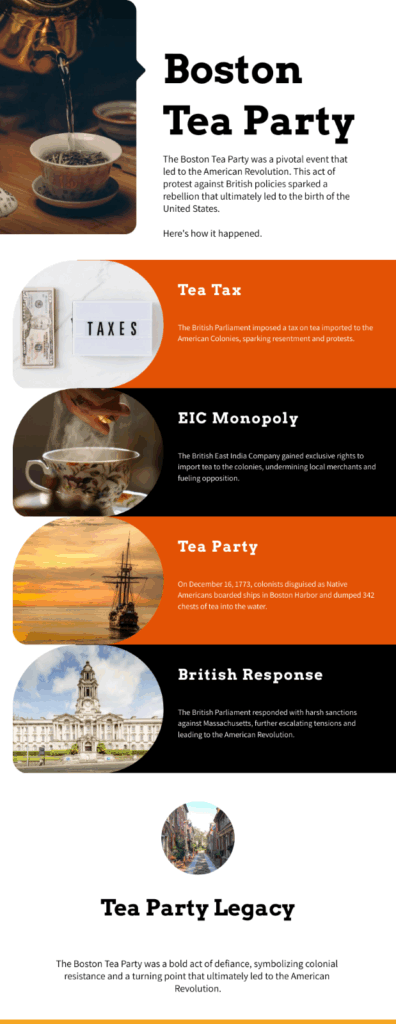
The Boston Tea Party was a political protest against British taxation and trade control in the American Colonies. In 1773, colonists in Boston dumped tea from British ships into the harbor to protest the Tea Act and Parliament’s growing control over colonial trade.
More than an act of destruction, the Boston Tea Party became a powerful symbol of resistance that helped deepen tensions between Britain and the Colonies. And spoiler alert: It wasn’t a party, and no tea was consumed, sadly.
Join us as we explore what led to the Boston Tea Party, what happened that night, and the aftermath that followed.
What Led to the Boston Tea Party?
The Boston Tea Party was caused by growing colonial frustration over British taxes and trade restrictions, especially the Tea Act of 1773. When British subjects crossed the Atlantic Ocean and settled as colonists in the Americas, they brought their noted fondness for tea with them and weren’t about to let geography deprive them of their homeland habit. At that time, most tea was imported to the Colonies; even today, tea is still not widely grown in the United States.
In the 1770s, the British East India Company (EIC)—which transported tea but was also closely associated with trafficking African slaves to the Colonies—was experiencing financial problems. To bolster the struggling company, the British Parliament passed the Tea Act, which made the EIC the exclusive importer of tea to the American Colonies, among other stipulations.
A tea tax had been levied in the Colonies since 1767, though some tea merchants had sidestepped this by purchasing tea from Dutch smugglers. This latest exertion of control by the government back home did not sit well with the independent tea sellers that were edged out by EIC’s monopoly and low-price advantage, essentially creating long before the term was officially coined 233 years later.
What Happened During the Boston Tea Party?
During the Boston Tea Party, colonists boarded British ships in Boston Harbor and dumped imported tea into the water to protest British rule.
But to paint a more colorful picture, here’s how it went down: About 60 white men diguised as Native Americans descended on Boston Harbor one crisp December night in 1773, boarded EIC ships, and dumped about £18,000 worth of tea (about $1.7 million today) overboard.
Some accounts have participants breaking open the heavy chests before pouring the tea directly into the water, while others have them heaving the chests into the water. The incident was famously immortalized in a 1970s educational cartoon.
Samuel Adams—influential writer, politician, signatory to the Declaration of Independence, and inspiration for the beer brand that’s sold today—was a colonial-rights supporter who opposed the Tea Act and “taxation without representation.”
The night of the Boston Tea Party, Adams spoke at a large meeting of likeminded individuals at Boston’s Old South Meeting House. Some attendees later took part in dumping tea into Boston Harbor, though Adams’s role in planning that act of protest and whereabouts during the act itself remain unclear.
What Happened After the Boston Tea Party?
Parliament responded to the Boston Tea Party with wide-ranging sanctions against Massachusetts in particular. While this may have been predictable, it served as yet another point of contention in an escalating feud between the Colonies and their mother country.
About 16 months later, the American Revolutionary War broke out. That conflict lasted more than eight years and, in combination with a small outbreak that ran concurrently, resulted in hundreds of thousands of deaths. But it also gave birth to an independent nation that showed Britain its control over its growing global footprint could be successfully challenged.
Revisit History and Enrich Your Future
One of the most fascinating aspects of studying history is gaining a more nuanced perspective on some eras and events and a more accurate understanding of those that may be commonly misunderstood.
Delivered in a 100% online, asynchronous format, The University of Texas Permian Basin’s Master of Arts in History program features in-depth 16-week courses that illuminate the American Revolution and other pivotal epochs of American and world history. View all program courses here.
Ready to go back in time so that you can move forward? Apply here.
Every fall, families in Mexico and beyond gather to honor the lives of their ancestors in a tradition rooted in ancient beliefs. This is Día de los Muertos, also known as the Day of the Dead. It’s a celebration with origins that stretch back thousands of years to the time of the Aztecs and the…
This November, American families will gather around the dinner table to feast on stuffed turkey before celebrating a timeless Thanksgiving tradition: Thursday Night Football. Thanksgiving as we know it bears little resemblance to historical events. Once upon a time, Native Americans shared stores of food with English settlers—strangers from across the Atlantic—who would have starved…
The Boston Tea Party was a political protest against British taxation and trade control in the American Colonies. In 1773, colonists in Boston dumped tea from British ships into the harbor to protest the Tea Act and Parliament’s growing control over colonial trade. More than an act of destruction, the Boston Tea Party became a…
Meeting patients for the first time is like walking into the unknown. Most patient encounters are unremarkable, and those that do make a lasting impression can often be among the most challenging. You know these interactions: patients who are angry, defensive, or grieving and who can demand a substantial emotional toll — if you’re not careful.
As a nurse, there will always be aspects of patient encounters that are beyond your control, whether it’s as trivial as an out-of-stock cafeteria item or as serious as having to deliver a bleak diagnosis. How you react to an encounter, however, is in your control. Here’s how you can deliver high-quality care in the face of challenging patient encounters. Take a deep breath. You’ve got this.
Empathize With Your Patients
Some patients can be kind and others may be confrontational, but all are responding to a situation that’s largely beyond their control—a feeling some will have never experienced before. So don’t take it personally if a patient is uncooperative. The reason for their behavior probably has nothing to do with you, even when you’re on the receiving end of verbal abuse.
An uncooperative patient could be having an adverse drug reaction, struggling with mental illness, frustrated with their insurance company, or grappling with their own mortality. For all you know, a stressed physician with a terrible bedside manner set the stage for a bad encounter long before you picked up a patient’s chart.
Consider things from the patient’s perspective, challenging though it may be. Empathy is one of your most important nursing skills, and by showing compassion for all patients, regardless of their behavior, you’ll be better able to manage encounters.
Reflect on Your Interactions
How you communicate sets the tone for every patient encounter. Meet anger, fear, and frustration with understanding and respect and patients will be more willing to meet you on your level. You can’t control your patients’ behaviors or emotions, only your own.
Practice More Effective Communication
Speak in a clear and calm voice, even when patients raise theirs. And don’t be afraid to set boundaries: Having empathy for patients doesn’t mean you’re their punching bag. If necessary, remind patients that it’s unacceptable to raise their voice at you and that the conversation will only continue once they’ve settled down.
Empathy is your best tool for navigating challenging patient encounters, but when you find yourself running out of goodwill, there are strategies you can use to connect with patients more effectively. Here are a few:
The Teach-Back Method
The teach-back method is a simple way to confirm that your patients understand what you’ve told them about their health and the care they’re receiving. Simply ask them to repeat in their own words what they need to know or do going forward. By using this method, you’ll prevent misunderstandings, ensure patients are educated on their healthcare, and pave the way for positive patient encounters.
Open-Ended Questions
Ask open-ended questions that require patients to pause before answering. Questions that start with “How do you feel about …,” or “What do you think about …,” are more likely to lead to a back-and-forth conversation than a sterile call-and-response. Asking open-ended questions can reveal vital medical information and, like the teach-back method, ensure you and your patients are on the same page.
Cultural Sensitivity
Imagine receiving care from a medical professional who speaks a language different from your own. This is the reality for the 8.2% of Americans who speak English less than very well. When there’s a language barrier, always try to speak with patients through an interpreter or at least devote extra time to these encounters to make sure your message is received and understood.
Active Listening
Active listening means giving patients your undivided attention and making a constant effort to not only hear them but also understand everything they’re trying to convey. Maintaining eye contact and remaining seated during an encounter will assure patients you’re taking their concerns seriously. Give patients a chance to tell their story and talk through their feelings and they’ll be more willing to trust you with their healthcare.
Give All You Can (Within Reason)
By empathizing with your patients, reflecting on your interactions, and practicing more effective communication, you can navigate even the most challenging patient encounters. You may even find that some patients with a rough exterior are inwardly gentle. But be careful: compassion fatigue and burnout are real concerns for nurses, especially those emotionally invested in their patients. There is, however, a career path you can take if patient encounters are taking a toll.
A Bachelor of Science in Nursing (BSN) can help you qualify for high-level nursing leadership roles. As a nursing leader, you’ll no longer be on the frontlines. Rather, you’ll provide your fellow nurses with the resources they need to deliver safe, high-quality care and achieve optimal patient outcomes. This way, you can make a significant impact on patient health without risking your own emotional health.
Earn Your RN to BSN Online From UT Permian Basin
The University of Texas Permian Basin offers an online RN to BSN program that is ideal for aspiring nursing leaders like you.
Led by a dedicated team of nursing educators, all of whom are experienced in the nursing field, our online program will help you develop a deeper understanding of the evolving challenges facing healthcare practitioners. Under the guidance of our esteemed faculty, you’ll learn how to address these issues and foster a safe, supportive environment for patients, staff, and visitors.
Apart from two clinical courses, our program is composed of asynchronous coursework that can be completed online and on your schedule. No UT Permian Basin campus visits are required. Dive into a course module’s readings, assignments, and quizzes after a shift or during a long weekend—it’s entirely up to you. As a nurse, your time is valuable, which is why we’re placing control of the pace of your education in your hands.
Life sometimes gets in the way of your higher education. Priorities shift. Relationships happen. Children come into the picture. Unexpected setbacks occur. Your job keeps you busy. You simply may not have had the option or interest to attend college or graduate school.
There are many reasons why you may have delayed furthering your education, and all of them are valid. But none of them need stop you from resuming your educational journey. Now that you have a few more years of life experience under your belt, there are distinct advantages to returning to school in this modern educational landscape, as you’ll see below.
Don’t Sweat the Time Gap
If you’re still reading this, you probably fit into one of these categories:
You never went to college.
You started but never finished a degree.
You finished an undergraduate degree years ago and are thinking about going back to college for a graduate degree.
No matter which of these categories best describes you, there are compelling reasons why you should get a college credential:
New credentials can help you advance in your existing career or pursue a new career. U.S. government statistics show that degree holders generally enjoy higher earnings and are less likely to be unemployed.
Completing a degree gives you a confidence boost and bragging rights.
If you’re feeling apprehensive about going back to school, understand that you’re not alone. Many others feel the same way you do right now. There are also many people available to guide you through the process right here at The University of Texas Permian Basin. In fact, the answers to some of the most common questions we receive from prospective students are much more straightforward than you might think:
You might have some credits left over from an earlier college program. Use our handy transfer credit calculator to see if they will transfer to your new UT Permian Basin program.
Will I need to provide my SAT scores?
SAT scores are not required. However, submitting SAT scores is recommended since they can qualify students for certain scholarships. If you have any questions, contact an admissions representative for answers applicable to your specific situation.
How do I request transcripts?
Contact any high school(s) and college(s) you may have previously attended and request to have your official transcripts sent to UT Permian Basin. In many cases, you can make transcript requests online.
Been Away From College for Years? You’ll Love These Changes to the Learning Experience
Some of our current students waited 20 years or more before going back to school for a degree. If you’re going back to college after a long absence, you may be pleasantly surprised by what’s changed! Online learning is now a widely accepted way to earn a degree. Employers don’t mind and often don’t even know that a college credential was earned online. The online learning format offers many distinct benefits that aren’t possible in a campus-based program, including greater convenience and cost savings. See for yourself:
You can now access undergraduate and graduate programs online from practically any location in the world. You don’t have to live in Texas or even the United States to enjoy a quality UT Permian Basin education.
Bloomberg reports that one of the primary reasons people don’t earn a college degree is “the difficulty of combining college with other commitments.” Our self-paced online programs enable you to complete exams and assignments around your professional and personal responsibilities.
Online learning eliminates the costs typically associated with commuting to a campus-based program, e.g., parking, fuel, tolls, vehicle maintenance, etc.
Due to its global reach, online learning offers expanded professional networking opportunities. Your classmates may be from any other state or country.
The Time Is Now and the Choice Is Yours
UT Permian Basin’s online programs are home to students ranging from recent high school graduates to empty nesters. There’s a place for you here! You may even find having such a diverse group of classmates rewarding.