Everyone loves a good crime story. The inherent drama gives audiences a vicarious glimpse of life that they, fortunately, are never likely to face firsthand. But do these stories influence what people really believe about criminal activity?
The Power of Media in Shaping Crime Perceptions
Academic George Gerbner coined the term “mean world syndrome” during the 1970s to describe the perception of the world as a perilous place (more so than studies may suggest): a phenomenon that may stem from violence-saturated media. Statistics show violent crime declining, but a 2023 Gallup poll found that 77% of Americans still believe crime is increasing nationally.
Gerbner’s cultivation theory, dating to the 1960s, also posits that ongoing exposure to media distorts our perception of the world. It’s notable that studies differ on whether media causes violence and crime or just instills a belief that these are more prevalent.
Let’s consider the ways entertainment media has influenced public views on criminal activity and the social consequences of these views, occasionally referencing some popular titles along the way.
On-Screen Crime vs. Reality: Debunking the Myths
Serial Killers: Rare, Not Rampant
Hannibal Lecter, the educated, articulate, and occasionally charming antagonist of “The Silence of the Lambs” made a lasting impression on film audiences. His personality and ability to evade capture through ever-more clever methods made him an iconic character. But while some serial killers are highly educated, they’re exceedingly rare. Fewer than 2% of murders are the work of serial killers.
Violent Crimes: Not the Norm
While violent crimes understandably stoke the greatest fear, theft is five times more common. According to the FBI, just 0.38% of Americans experience violent crimes, while nearly 2% are victims of theft. Of course, unless a theft is particularly complex and consequential, it lacks the visceral appeal of violent crime onscreen.
Law Enforcement: Beyond the Action Hero
While all first responders can be considered heroes, John McClane from “Die Hard,” a lone wolf police officer who singlehandedly (and with few resources) thwarted a host of brutal terrorists, is a rare hero indeed. The cop who goes to great lengths—and here, heights—to stop the bad guys using creative but unlikely methods is almost exclusively the work of fiction.
Consequences of Media Misrepresentation
Stereotype and Bias Reinforcement
Stereotypical depictions of on-screen criminals’ ethnicity or socioeconomic status can contribute to misconceptions that criminals typically fit certain demographic profiles. Likewise, films featuring corruption and dysfunction within law enforcement, from “The Departed” to “Training Day” to “Dark Blue,” can reinforce biases against law enforcement.
Desensitization to Real Suffering
Desensitization to screen violence as a catalyst for violent behavior in viewers is a contentious topic. But desensitization in another sense—stemming from turning real-life tragedies into entertainment—creates its own concerns. True crime stories can be engrossing, but the public may lose empathy for the real victims of these events.
Policy Impact
While murder rates have been falling in recent years, the public’s perception of these rates is rising, driven to some extent by the overrepresentation of crime in entertainment and news. As a result, some public officials are proposing or enacting tough, punitive policies that may not align with actual criminal trends.
Get a True Picture of Criminal Activity From the Experts
While media portrayals often exaggerate criminal activity for dramatic purposes and diverge from reality, education can bridge this gap. Understanding the realities of criminal activity and the criminal justice system is crucial for:
- Informed civic engagement.
- Effective policy-making.
- Fair and just law enforcement practices.
The University of Texas Permian Basin offers online criminal justice degree programs that provide an accurate, comprehensive understanding of crime, law enforcement, and the justice system. Led by faculty who have worked extensively in the criminal justice field, these programs equip you with knowledge and credentials that provide a strong foundation for a diverse range of rewarding careers.
Online Bachelor of Science in Criminology and Criminal Justice Studies
Get started with an enlightening review of criminal justice concepts complemented by a diverse range of soft skill-enhancing general education subjects. If you’re a member of Texas law enforcement, you may be able to waive a portion of tuition and fees for this undergraduate program. Contact UTPB’s financial aid team for details.
See potential career paths and salaries associated with this UTPB degree.
Online Master of Science in Criminal Justice Administration
Ready for graduate studies with no GRE or thesis requirements? This program provides an advanced examination of criminal justice issues that’s especially valuable for individuals working in the field and seeking to become more impactful leaders.
See potential career paths and salaries associated with this UTPB degree.
Both programs enable you to complete your studies on your schedule from just about any location. Whether you’re dealing with shift work, personal obligations, or other commitments, you can earn a career-boosting degree online from UTPB!
Apply to your program today!
Sources:
https://www.simplypsychology.org/cultivation-theory.html
https://www.psychiatrictimes.com/view/new-evidence-suggests-media-violence-effects-may-be-minimal
https://www.apa.org/topics/video-games/violence-harmful-effects
https://thecord.ca/the-impact-of-media-on-public-perception-of-crime-and-criminal-justice/
https://johnhoward.ca/blog/media-portrayals-crime-create-problems/
https://www.silvalegal.com/the-impact-of-media-on-public-perception-of-crime-and-the-criminal-justice-system/
Imagine a financial institution comprised not of brick and mortar, but primarily of algorithms. That’s what one futurist entrepreneur and former presidential advisor predicts banking will look like by the 2050s. Is he correct? Time will tell, though our increased reliance on technology is a certainty.
As we explore upcoming finance industry changes that could reshape the financial landscape, we’ll also look at technologies already present in the financial sector but not yet fully harnessed. Implementation of these innovations will help financial institutions remain competitive and viable.
Evolving Finance Industry Trends and Technology
Digitization and Automation
Like many industries, finance is moving toward fully digital transactions. However, this transition is much farther behind than you might expect. Most surveyed chief financial officers (CFOs) report that while they’ve invested in digitization and automation, nearly 75% of their processes haven’t yet been upgraded due to resource constraints, capability gaps, or competing demands. As organizations overcome these obstacles, digitization and automation will become standard.
Digital Currency
Digital currency can refer to electronic representations of traditional currencies, like dollars or euros, or cryptocurrency like Bitcoin. All transactions with these currencies are performed electronically.
Cashless businesses are on the rise, and a remarkable 84% of payments made in the U.S. in 2024 were cashless. Still, finance industry executives don’t believe we’ll be 100% cashless worldwide anytime soon, as not all countries and economic classes are prepared to make the transition. Further, as cashless transactions become the norm, the need for increased cybersecurity measures will grow, since digital currency systems can be hacked and sensitive information exposed.
Generative AI
Only about 20% of surveyed CFOs report using generative (gen) AI, and half of those individuals state they’re still in the early stages of gen AI use. However, adoption is expected to grow, as companies using gen AI have seen considerable productivity gains. Gen AI frees employees from many manual tasks, allowing them to focus on value-adding activities and improve decision-making through vital data analysis.
Blockchain
Blockchain, primarily used in the finance industry and government, employs a shared, decentralized digital ledger. Every transaction is referred to as a “block” added to the chain, visible to all users. Due to its unprecedented security and transparency in tracking financial transactions, shipments, and other commercial activities, blockchain is expected to become a standard tool.
Open Banking APIs
Application programming interfaces (APIs) connect financial applications with financial institutions, significantly impacting transaction security, speed, and cost. Technology-driven financial institutions, or fintechs, and traditional banks alike rely on these software applications, often in partnership. These collaborations are driving the global expansion of open banking APIs.
Quantum Computing
Quantum computers, which encode data on qubits made of electrons or photons, are exponentially faster than traditional computers and can solve problems that even supercomputers can’t. While currently in limited use and not sold commercially, industry sources project quantum computers will be widely available within a decade or two.
Diversify Your Finance Industry Options With a Degree
The University of Texas Permian Basin offers a choice of three AACSB-accredited online finance degrees to prepare you for a variety of rewarding careers in today’s (and tomorrow’s) finance industry. Each program is guided by renowned PhD-level educators with finance industry experience.
Online Master of Business Administration in Finance
An MBA is widely regarded for its prestige in the business world. Develop comprehensive business expertise with an emphasis on finance by completing 33 to 42 credits. Finish in as little as four semesters.
Online Master of Science in Finance
Prefer a graduate degree focused on finance? Consider this 30-credit program: one of the few in Texas with STEM certification. Finish in as little as four semesters.
Online Bachelor of Business Administration in Finance
Looking for a bachelor’s degree? Gain essential financial management skills applicable across many career paths with a BBA in finance: a stepping-stone to earning prestigious Chartered Financial Analyst (CFA) and Certified Financial Planner (CFP) designations. Available online exclusively at this UT System institution.
Invest in Your Future on Your Own Terms
A finance degree is an investment in your career that requires your valuable time and financial resources. UTPB’s asynchronous online program format enables you to earn your degree on your schedule, from virtually anywhere. We’re also one of the most affordable accredited universities nationwide, as these accolades demonstrate:
- #2 Most Affordable Online MBA for 2025 (Fortune)
- Best Value Schools (U.S. News & World Report)
Prepare for a successful future in the finance industry. Apply to an online UTPB finance degree program today!
Sources:
https://www2.deloitte.com/us/en/pages/finance-transformation/articles/finance-digital-transformation-for-cfos.html
https://www.mckinsey.com/capabilities/strategy-and-corporate-finance/our-insights/toward-the-long-term-cfo-perspectives-on-the-future-of-finance
https://www.pwc.com/us/en/services/consulting/business-transformation/library/future-of-finance.html
https://www.mckinsey.com/capabilities/operations/our-insights/finance-2030-four-imperatives-for-the-next-decade
https://www.paypal.com/us/brc/article/cashless-business-pros-and-cons
https://thequantuminsider.com/2023/06/06/types-of-quantum-computers/
Nonverbal communication can make or break a relationship. A single glance can spark an argument, while a simple touch on the shoulder can mend wounded pride. And sometimes, the sting of words is easier to bear than the weight of crushing silence. There’s power in what goes unspoken.
We’re here to look at the influence of nonverbal communication on interpersonal relationships. Because when it comes down to it, how you say something matters as much as what you say, whether you’re talking with friends, family or the person you love most.
What Is Nonverbal Communication?
Nonverbal communication refers to any form of unspoken communication, often taking the form of hand gestures and facial expressions—but it doesn’t stop there. Every glance, posture, and movement you make has an invisible meaning.
How Does Nonverbal Communication Affect Interpersonal Relationships?
Nonverbal communication adds an extra layer of meaning to everything we say, potentially clarifying or muddying the message. It’s what makes many conversations so engaging and emotionally resonant. And when it comes to relationships, these silent cues help us:
Clarify the message: When nonverbal and verbal communication align, misunderstandings fade, and underlying messages become clear. If you’re in a relationship and you don’t have a secret way to signal to your partner that you want to leave a party, you’re missing out.
Express emotions: Nonverbal communication helps us convey joy, frustration, sadness, or excitement. Sometimes, words fail us, like when someone chokes up telling their partner they love them. The message is nonetheless received through the stream of tears.
Build trust: Open body language—maintaining eye contact, uncrossing your arms, and giving head nods and other signals that you’re paying attention—is a subtle way to build rapport, making relationships stronger without exchanging a word.
Nonverbal Communication: When Wires Are Crossed
Not all nonverbal cues are as overt as a slap to the face. Take microexpressions: subtle facial expressions that come and go in as little as one-fifteenth of a second. Though unconscious, microexpressions and other nonverbal cues still have a significant influence on our relationships. Here’s a look at the unintended consequences of nonverbal communication:
Ambiguity and Misinterpretation: Nonverbal signals are open to interpretation, and that interpretation might not always be accurate. Crossing your arms could signal that you’re defensive or closed off when you’re actually standing too close to an AC vent.
Manipulation and Deception: Nonverbal communication can be harmful and even dangerous in the wrong hands. A steady gaze while telling a lie or a forced smile are subtle tricks that can deceive even the sharpest observer. Anyone who’s lost at a social deduction game like “One Night Ultimate Werewolf” knows what we’re talking about.
Emotional Leakage: Not everyone has a good poker face. A clenched fist, furrowed brow, or flicker of sadness in the eyes are all signs that betray emotions we’d often rather keep locked away. Try though we might, our expressions often give away the truth.
Cultural Differences: Facial expressions are universal, regardless of race, culture, or nationality. A smile is a smile the world over. Gestures and other nonverbal cues, on the other hand, vary across cultures and could get you in trouble if you’re not careful. For instance, flash the “OK’ sign in France or Germany and you might have a fight on your hands.
How Does Nonverbal Communication Play Out in Your Life?
Worried about how nonverbal communication is affecting your interpersonal relationships? Start by taking a long look at your interactions with others. Notice how you carry yourself when you’re happy versus when you’re frustrated (and try not to cross your arms so much). Think about how your tone changes, rising or falling with the weight of your emotions.
Now that so much of our interpersonal communication has shifted online, being mindful of your nonverbal habits is more important than ever. Your tone and expressions speak volumes online, especially during video conferences—Don’t think for a second that no one’s watching your Zoom square during big meetings. Drop an emoji to punctuate your messages. Better yet, send a voice instead of a text. That way, you know your messages land the way you intend.
You should also consider how you react to other people’s nonverbal cues. During conversations, try to remain patient and observant. And before you assume someone’s crossed arms or lack of eye contact is a sign of disinterest, ask yourself, “what are they really feeling?” When you put yourself in someone else’s shoes, conversations and relationships in general become a whole lot easier.
Take Your Studies Further
Want to sharpen your communication skills? Consider pursuing a Bachelor of Arts in Communication online from The University of Texas Permian Basin. Our online program offers the knowledge you need to write clearly, speak eloquently, and master the art of communication, no matter the situation.
Check out our online BA in communication program, and if you’re ready to explore all forms of communication, apply today!
Sources:
https://www.apa.org/news/podcasts/speaking-of-psychology/nonverbal-communication
https://www.verywellmind.com/types-of-nonverbal-communication-2795397
“The application of GIS is limited only by the imagination of those who use it.” – Jack Dangermond, president of Esri
Geographic information systems (GIS) have become indispensable for analyzing and visualizing spatial data. While many of us associate GIS primarily with mapping and GPS (global positioning system), its applications extend far beyond these familiar uses. For instance, GIS plays a crucial role in tracking the spread of diseases and is a valuable resource for law enforcement in criminal investigations.
In this article, we’ll look at ten technologies that you might not realize rely on GIS. Let’s dive in!
- Mobile Navigation
Many of us use navigation apps like Google Maps or Waze almost daily — and some of us are permanently lost without them! Have you ever wondered how you get those helpful alternative route suggestions mid-commute?
While GPS can locate you anywhere on the planet, these apps also use geospatial systems to provide real-time traffic updates, route optimization, and location-based services. Grateful for all this information at your fingertips? You can thank the integration of satellite data, road networks, and live traffic information. GIS to the rescue!
- Smartphones and Tablets
Your smartphone is a constant hub of geospatial activity. Beyond just navigation apps, every time you use a location-based service — whether to find a nearby restaurant or track your steps — GIS is hard at work. From Apple’s location-based apps to your favorite social media platforms, GIS provides the real-time data that powers these experiences.
- Fitness Trackers
Wearable devices made by companies like Fitbit and Garmin have transformed the way we monitor our health. These fitness trackers rely on GIS to map our runs, bike rides, and hikes. By combining GPS with GIS, these devices visualize data such as distance, speed, and elevation in real time, helping you track your progress and adjust your workouts for better results.
- Building Information Modeling (BIM) Systems
Modern skyscrapers and smart buildings are engineering marvels, and GIS is integral to their design. BIM software like Autodesk Revit incorporates GIS to create detailed digital models of physical structures. This integration allows architects and engineers to optimize designs based on geographic factors like terrain, climate, and environmental conditions — essential for urban planning and the development of future smart cities. As our cities evolve, GIS will play an increasingly critical role in their design and management.
- Internet Mapping Technologies
Popular mapping software programs like Google Earth, Bing Maps, and ArcGIS Online are only made possible through geospatial technology. GIS integrates and visualizes geographic data online, powering real-time updates, location-based services, and interactive features like zooming, searching, and route planning.
- Content Management Systems
National Geographic’s journalists and writers often use geospatial technology in their content management tools. ArcGIS StoryMaps, for example, is often used by those who work in media, journalism, or education to create interactive, map-based stories. These systems are used not only to present location-specific content but also to visualize complex datasets, track changes over time, and even integrate real-time data feeds into stories – making the narratives both engaging and informative.
- Autonomous Vehicle Systems
GIS technology isn’t just for static data. It also powers advanced dynamic systems like autonomous vehicles. Self-driving cars, such as Tesla’s Model S, rely on GIS to navigate and make real-time decisions. By integrating GIS with GPS and sensors, these vehicles can map and contextualize their surroundings, plan routes, and avoid obstacles, ensuring safe and efficient travel.
- Drone Technology
Drones are popular for both recreational and professional use. What many don’t realize is that drones rely on GIS for navigation, data collection, and mapping. Whether it’s capturing aerial footage or conducting land surveys, geospatial technology helps drones operate accurately and efficiently.
- Remote Sensing
Remote sensing involves collecting data from satellites or airborne platforms like drones. This imagery is then processed and analyzed using GIS to extract valuable geographic information. GIS is crucial for visualizing environmental changes, such as deforestation or urban sprawl, by comparing satellite images over time. This technology is also essential for monitoring climate change and supporting humanitarian efforts.
- Emergency Systems
In critical situations, GIS technology can be a lifesaver — literally. Dispatch systems for ambulances and other emergency services use GIS to optimize routes, ensuring that help arrives as quickly as possible. During natural disasters, systems like the Esri Disaster Response Program (DRP) leverage GIS to provide live, continuously updating data, guiding response efforts and saving lives.
Endless Applications for Geospatial Technology
The applications of GIS are vast and expanding, driving innovation across diverse fields. With today’s user-friendly interfaces marking a significant evolution from the complex software used by GIS specialists in the past, advanced geospatial analysis is now accessible to everyone.
Empower Your Career With Cutting-Edge Expertise
If you’re fascinated by how the modern world uses geospatial technology to improve our daily lives, why not boost your career with The University of Texas Permian Basin’s 12-credit, entirely online GIS and Geospatial Graduate Certificate? UTPB has a decades-long connection to the GIS and geospatial industry and can provide the knowledge and tools you need to integrate GIS into cutting-edge solutions. Best of all, you can study from anywhere in the world — without compromising any commitments.
Geospatial technology is a dynamic field, and GIS analysts are in constant demand. Your expertise can be applied in industries like:
- smart technologies
- biology
- business management
- urban planning
- energy and environmental monitoring
- political science
- sociology
- social media
Step into the future of technology and begin your journey today.
Sources:
https://www.usgs.gov/faqs/what-geographic-information-system-gis
https://gisgeography.com/history-of-gis/
Convenience. Fear. Legal obligation. Apathy. There are many factors that impact participation in the democratic process of voting in global elections. Let’s explore some of the complex dynamics that influence voter turnout throughout the world.
Voter Turnout Boosters and Barriers
Holidays and Weekends
Countries like South Korea have declared election day a public holiday, making it much more convenient for many voters to get to the polls. The day of the week on which an election is held can also impact voter turnout, with weekends potentially boosting voter numbers. Cyprus, Iceland, New Zealand, and other countries hold their major elections on Saturdays. Croatia, Finland, and others hold theirs on Sundays.
Lack of Desirable Alternatives
In early 2024, Vladimir Putin once again cemented his hold on the Russian presidency and may maintain that position well into the 2030s. While Putin took 87.3% of the vote—a landslide by most measures—it’s important to understand that voters had few other choices, as most other candidates had either been forced to leave Russia, blocked from the ballot, imprisoned, or had met untimely, suspicious deaths.
Compulsory Voting
In some countries, voting isn’t just a right, it’s required by law. Nations including Australia, Argentina, Belgium, Bolivia, and Ecuador may penalize eligible citizens who do not vote with fines, denial of wages, or even jail time.
Ease of Voter Registration
In most locations, individuals register as voters before casting their vote. The U.S. streamlined this process in 1993 with the National Voter Registration Act (NVRA), also known as the “motor voter law.” This required state motor vehicle license applications and renewal forms to include an option that simultaneously allows the applicant to register to vote, with some stipulations. As of 2024, 44 states and the District of Columbia abide by the NVRA.
Voter Suppression
Sometimes, casting a ballot requires courage. In Brazil, voter suppression was alleged in a 2022 runoff election when federal police used roadblocks to stop buses full of voters who supported a challenger to the incumbent president. The opposition candidate prevailed despite these efforts.
Violence
In the Democratic Republic of Congo, violence between supporters of opposing political parties during the country’s most recent presidential, parliamentary, and local elections led to many voters avoiding the polls. Authorities were widely criticized for not doing more to stop the violence.
Ineligibility
While Switzerland is generally recognized as a forward-thinking country, it has one of the lowest voter turnout percentages internationally—coming in at #50 in one study. This is not due to a lack of civic engagement among the Swiss, however, but because more than a quarter of the residents of that country are foreign nationals who are not permitted to vote.
Exasperation, Desperation, or Apathy
Some people simply choose not to vote because they’re fed up with politics, don’t think their vote will make a difference, don’t like their choices, or aren’t interested in taking part in the electoral process. These reasons may transcend all national borders.
Put Your Support Behind a Credential With Tremendous Career Potential
Fascinated by the complexities of elections and governance? The University of Texas Permian Basin’s online Bachelor of Arts in Political Science—offered online exclusively at this UT System institution—provides an enlightening exploration of political systems and election processes of the U.S. and beyond. You’ll dive into courses like:
Equipped with our BA in political science, you’ll be empowered to pursue careers in government and related professions or the private sector. This degree also provides an excellent foundation for law school.
See potential careers and salaries associated with this degree.
Presented in an asynchronous online format, UTPB’s BA in political science program enables you to complete all coursework at locations and times that are convenient for you. No campus visits are required, and you can follow your own schedule throughout your studies. This flexibility means you don’t have to choose between earning a degree and giving your professional and personal commitments the attention they deserve.
Ready to become a catalyst for political change? Your journey starts here.
Apply now and help shape the future of politics.
Sources:
https://ourworldindata.org/grapher/free-and-fair-elections-index
https://theconversation.com/which-day-of-the-week-gets-the-most-people-to-vote-we-analysed-thousands-of-international-elections-to-find-out-222143
https://worldpopulationreview.com/country-rankings/countries-with-mandatory-voting
https://www.globalcitizen.org/en/content/voting-rights-around-the-world/
A nerve-wracking day is approaching, and since Halloween has already passed, you know it must be that other day. Thankfully, presidential Election Day only happens once every four years, because it has Americans seriously stressed. According to an American Psychiatric Association poll, 73% of U.S. adults are anxious about the 2024 election. Let’s examine a few of the major causes of this anxiety and offer some ways to cope with it.
Psychological Factors Contributing to Election Anxiety
Fear of the Unknown
This is one of the leading and most obvious causes of election anxiety. People fear their candidate(s) might not win, or they may feel uncertain about the changes to their country, state, standard of living, and quality of life that may result.
Hostile, Misleading, or Unreliable Rhetoric
Social media has made the public conversation immediate and wide-reaching. Though a powerful vehicle for self-expression, this technology has also empowered and emboldened those inclined to share questionable statements as facts, sometimes in connection with hateful or offensive messages.
Long Election Cycles
General elections in the U.S. seem to be transforming into perpetual affairs, with candidates campaigning years in advance of Election Day. News media outlets speculate about who will run in the next election cycle almost as soon as the current one is concluded.
Before the 1970s, presidential candidates would begin their campaigns mere months before voters went to the polls. The never-ending election mindset and discourse can cause fatigue among the voting public, who by the time Election Day arrives have accumulated a considerable amount of anxiety.
Managing Election Anxiety: Psychology-Based Strategies
Control What You Can
In elections, as elsewhere in life, there are some things we can control and others we cannot.
Registering to vote and following through with voting is the best way to have some influence over your political concerns. Volunteering for candidates you support is another option.
Tune Out
Take an occasional break from election coverage and discussions. The idea is not to hide from what’s going on but rather experience it in smaller portions, especially when it causes you stress. Fearmongering hits its peak during election cycles: Don’t give in to it.
Consider the Source … and Other Sources
Much of the negative election discourse comes from organizations and lobbyists who have much to gain from your fears. Media outlets tend to run sensationalistic stories because they know viewers, readers, or listeners will pay attention. Headlines are often exaggerated and self-serving, focusing on worst-case post-election scenarios.
It’s equally important to gather information from a variety of sources and draw your own conclusions, not just follow rhetoric from a single source which may not be presenting a full picture of the facts. Exposure to both alternate viewpoints and shared perspectives from those who share your concerns and views can provide some equanimity and peace of mind during this hectic season.
Rely on Your Standbys
Do you practice yoga? Get massages? Exercise regularly? These acts of self-care become especially important in stressful times, so be sure to maintain your routines or start new ones if you don’t already have them. Keep yourself busy and productive, and spend time with friends and family members who aren’t likely to stoke your election anxiety.
Explore Human Behavior With UTPB’s Online Psychology Degree
If you find emotion, behavior, and other aspects of human psychology compelling, you’ll find much to consider and explore in The University of Texas Permian Basin’s online Bachelor of Arts in Psychology program—available online exclusively at this UT System institution.
Our program empowers you to:
- Develop skills valued across a wide range of professions.
See the high-profile employers graduates of this UTPB program are working for.
Looking to work in a helping profession? Our BA in psychology provides a strong foundation for degrees that can lead to professional licensure/certification and doctoral studies, such as UTPB’s online Master of Social Work*.
Earning a Degree Doesn’t Have to Be Stressful
Delivered in an asynchronous, 100% online format, our program gives you the freedom to complete your studies at your own pace from practically any location on the planet. This flexibility means you don’t have to choose between earning your degree and continuing to meet your professional or personal obligations. And assistance from faculty, classmates, advisors, and tutors is always just a click away.
Take the first step toward a credential that can open countless possibilities. Apply today!
*Currently engaged in the accreditation process.
Sources:
https://thrivingcenterofpsych.com/blog/political-anxiety-statistics/
https://www.usnews.com/news/health-news/articles/2024-05-02/economy-election-spur-rising-anxiety-among-americans-in-2024
https://publichealthpost.org/mental-behavioral-health/the-2024-presidential-election-is-making-americans-anxious/
https://tinyurl.com/5yms49jp
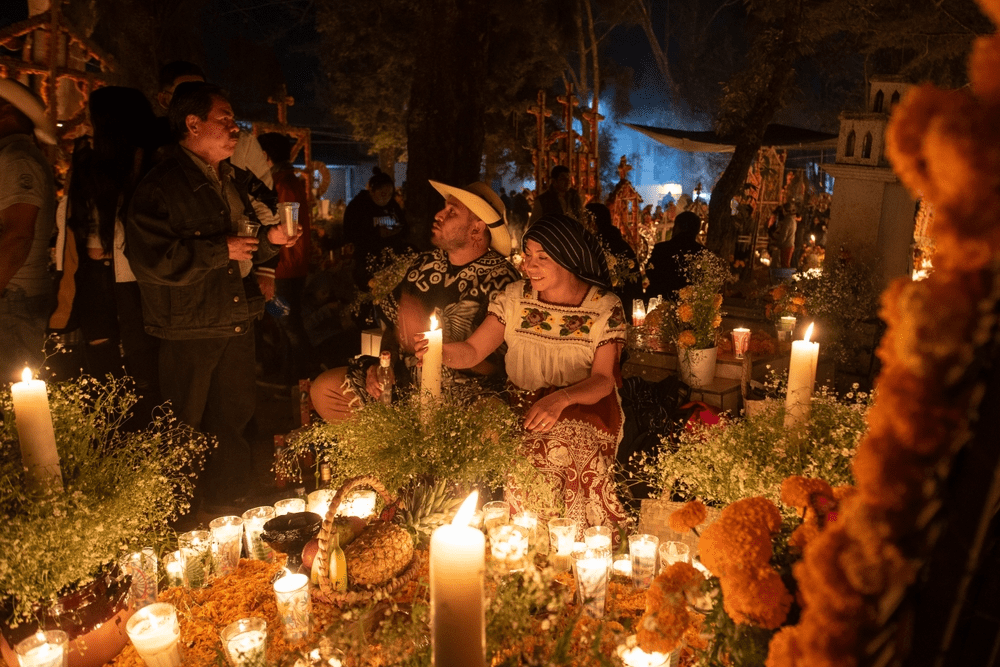
Every fall, families in Mexico and beyond gather to honor the lives of their ancestors in a tradition rooted in ancient beliefs. This is Día de los Muertos, also known as the Day of the Dead. It’s a celebration with origins that stretch back thousands of years to the time of the Aztecs and the sacred journey to Chicunamictlán, the Land of the Dead.
In this article, we’ll explore the origin, history, and traditions of the Day of the Dead, from its Mesoamerican roots to its modern-day celebrations.
The Ancient Origin of the Day of the Dead
Thousands of years before the Spanish Conquest, various Nahua peoples—including the Olmec, Maya, Toltec, Aztec, Huastec, and Mixtec—lived in what is now Mexico and honored the lives of the dead with month-long rituals.
The Journey Through Chicunamictlán
According to Nahua belief, after death, a person’s soul embarked on a journey to Chicunamictlán, the Land of the Dead. From there, they had to pass nine challenging levels (a journey that took several years) before arriving at Mictlán, their final resting place. During this time, family members would offer food, water, pottery, personal items, and tools to help their deceased family members along their path.
For these ancient cultures, death was not an end but a continuation of life. It was a natural phase in the cycle of existence, not something to be feared. This inspired the modern Day of the Dead practice in which celebrants place food and other offerings on loved ones’ graves.
How Catholic Traditions Shaped Día de los Muertos
In the 16th century, Spanish colonizers introduced and imposed Catholic beliefs and traditions on the indigenous peoples. Traditions similar to the celebrations of the dead were the Christian holidays of All Saints’ Day and All Souls’ Day, which fell on November 1st and 2nd. Over time, Día de los Muertos merged with Catholic traditions, shifting from a months-long celebration in August to November 1st and 2nd.
Despite centuries of suppression and oppression, the resilient indigenous traditions in Mexico adapted and endured.
Modern-Day Día de los Muertos: What Families Do Today
In the modern-day celebration of Día de los Muertos, people across Mexico and beyond honor their deceased loved ones with joy rather than sorrow, much like in the ancient rituals of the Nahua. November 1st is dedicated to children, while November 2nd is dedicated to adults. Let’s look at how families prepare:
- Ofrendas: Altars, or ofrendas, are created in homes and cemeteries and decorated with vibrant marigolds, candles, and photos of the deceased. Offerings of food include the deceased’s favorite dishes and drinks.
- Sugar skulls: These well-known symbols of the festivity, called calaveras, serve as a symbol of the deceased. They are placed in homes and cemeteries and on the altars of the deceased. This practice dates back to ancient Nahua practices, where skulls were offered to the god Mictlantecuhtli to ensure a safe passage to the afterlife.
- Traditional foods: Families bake pan de muerto and special meals to share with family and place on the ofrendas.
- Visiting gravesites: Families visit, clean, and decorate the graves of their ancestors with flowers, candles, incense, and food offerings.
- Participating in parades: Celebrants join local parades and events wearing traditional face paints and colorful costumes. This echoes Mesoamerican times when Nahua people dressed in ceremonial clothes, face paint, and masks to celebrate the dead.
Symbolism from Aztec Mythology to La Catrina
The people of the Aztec Empire worshiped the goddess Mictecacihuatl, the Lady of the Dead, who was a central figure in the celebrations and believed to watch over the bones of the deceased. Although unrelated, her symbolism in the festival is echoed in La Calavera Catrina, a popular modern figure that emerged in the early 20th century and has since become an iconic symbol of the celebration.
Global Influence: How the Day of the Dead Resonates Worldwide
Día de los Muertos is filled with pride, love, and deep reverence for the past. It’s a joyful celebration of life and memory. As the holiday has spread, it has both shaped and been shaped by other cultures.
For example, while some have adopted the American practice of trick-or-treating on Halloween (“mi calaverita”), the holiday remains dedicated to honoring the dead. Its vibrant traditions have inspired new ways of remembering the departed in places as far as Europe and Asia.
Although unique in its traditions, Día de los Muertos shares similarities with other cultures that independently evolved similar ways of honoring the dead. For example, Japan’s Obon festival and Cambodia’s Pchum Ben reflect a universal desire to honor and celebrate the deceased. Despite evolving separately, these celebrations demonstrate our shared desire to remember, respect, and maintain the continuity of life: a testament to our common humanity.
FAQs About the Day of the Dead
Curious about the origins and traditions behind Día de los Muertos? Here are answers to some of the most commonly asked questions about this vibrant and meaningful celebration.
- What is the origin of the Day of the Dead?
The Day of the Dead has its roots in ancient Mesoamerican cultures, particularly the Nahua peoples, including the Aztec and Maya. These civilizations believed that death was a natural phase of life, and they held month-long rituals to honor their deceased loved ones. Over time, these indigenous beliefs blended with Catholic traditions introduced by Spanish colonizers.
- What is Chicunamictlán, and why is it important?
In Nahua mythology, Chicunamictlán is the first level of the underworld. After death, souls were believed to pass through nine levels over several years before reaching Mictlán, their final resting place. This journey was physically and spiritually demanding, which is why families left offerings to support their loved ones along the way, an early inspiration for today’s altar practices.
- Why is Día de los Muertos celebrated on November 1st and 2nd?
These dates reflect the influence of Catholicism, which recognizes All Saints’ Day (November 1st) and All Souls’ Day (November 2nd). As indigenous and Catholic traditions merged, Día de los Muertos was aligned with these dates: November 1st is typically dedicated to honoring deceased children, and November 2nd is for adults.
Preserve Cultural History with an Online MA in History from UT Permian Basin
For history buffs with a passion for cultural traditions like Día de los Muertos, pursuing an online Master of Arts in History at The University of Texas Permian Basin can provide a deep dive into the historical contexts that shape our world today. This program equips you with the knowledge and tools to teach the next generation about the significance of historic holidays and ensures that the rich traditions of the past are preserved, honored, and appreciated for years to come.
Our MA in history is available 100% online, where you’ll learn broadly applicable skills like critical thinking, leadership, analysis, and communication that allow you to work in diverse roles, such as:
If you’re committed to preserving history and guiding the next generation, take the next step and apply today.
Other articles you may be interested in:
-
Studying classics helps us understand where many of our biggest modern questions came from, including who gets power, how societies define justice, and why humans keep telling the same stories in new outfits. A single, harmless question comes up a lot in humanities courses (usually from someone trying very hard not to care): Why does any of this matter? And…
-
Monsters have been with us since the beginning of storytelling. Before novels, there were myths. Before myths, there were campfire stories about things lurking just outside the firelight. Something about the human brain is wired to conjure creatures (and compelled to write entire books about them). But literary monsters have never just been about scaring people. The…
-
“I took the road less traveled by, And that has made all the difference.” Even if you don’t know the entire poem, you may recognize the closing words from Robert Frost’s “The Road Not Taken.” They’re quoted at graduations, shared during moments of change, and used to describe the quiet courage of choosing your own path. So why have these simple words endured across generations? The power of…
The stock market crash of 1929 ushered in an era of economic uncertainty that saw many businesses shutter, banks fail, and life savings evaporate. This economic cataclysm triggered the development of new accounting standards that are still in use today. Here we’ll examine the world’s two primary sets of accounting standards and some related organizations, events, and laws.
Financial Disaster Catalyzes Government Action
The federal government deemed questionable practices of publicly traded companies as one culprit behind the 1929 crash. To stabilize the economy, reestablish trust in financial institutions, and prevent similar fiascos in the future, legislators turned to regulation.
President Franklin D. Roosevelt signed the Securities Act of 1933 into law—the first federal legislation regulating the stock market. The act established a uniform, centralized set of rules to safeguard investors from fraud. The law was overseen by the Securities and Exchange Commission (SEC), established the following year. With this, the most consequential set of accounting standards was just starting to take shape.
GAAP Grabs the Reins
A 1936 report by the American Institute of Accountants (AIA) first mentions the term “generally accepted accounting principles,” later typically referred to as GAAP. These rules help ensure that financial reports are consistent, accurate, and transparent. Public companies are required to follow GAAP, and it’s also commonly used in government accounting.
Early Organizations and Efforts
Established in 1939 by the AIA, the Committee on Accounting Procedure (CAP) addressed accounting concerns through Accounting Research Bulletins. Two decades later, CAP was replaced by the Accounting Principles Board (APB), which was designed to offer more extensive guidance. However, this board was deemed slow to respond to developing accounting concerns and criticized for being too beholden to the accounting profession.
The “10 Commandments” of U.S. Accounting
The Financial Accounting Standards Board (FASB), established in 1973, manages GAAP and regularly revises and publishes rules centered around ten principles:
- Regularity
- Consistency
- Sincerity
- Permanence of Methods
- Non-Compensation
- Prudence
- Continuity
- Periodicity
- Materiality
- Utmost Good Faith
IFRS: Accounting Standards on the International Stage
While GAAP has been the main set of guiding principles inside the U.S., most of the outside world adheres to the International Financial Reporting Standards. Established in 2001, the IFRS applies to other countries, including those in the EU, and is administered by the International Accounting Standards Board (IASB).
IFRS and GAAP share the common aim of keeping publicly traded companies honest in their financial reporting, though IFRS has a broader definition of revenue and is more lenient in expense reporting than GAAP. Further, IFRS is built around standards, while GAAP is a rules-based accounting approach.
A Single Set of Rules for the World?
In a global economy, it’s logical to wonder if there ever might be a single set of accounting principles worldwide. An alignment of GAAP and IFRS has been underway since 2002: a slow, incremental process that’s seen the SEC allow foreign companies registered in the U.S. to use IFRS exclusively and most S&P 500 companies now using some IFRS measures in financial statements.
Still, the SEC remains reluctant to fully switch to IFRS, so, like a U.S. conversion to the metric system, it may not come to fruition. While this means that international accounting practices may never be truly seamless, the allowances in recent years suggest a potentially smoother path for global business ahead.
Corporate Scandals Remind Us Why We Have GAAP
Just as the 1929 stock market crash stoked government action on accounting practices, fraudulent financial reporting by corporate entities such as Enron, WorldCom, and Tyco prompted renewed government action. The Sarbanes-Oxley Act of 2002 created new rules for accountants and anyone connected to public company finances and included criminal penalties for some violations.
Insist on the Highest Standards for Your Accounting Education
Explore multiple facets of accounting and business from the traditional to the leading edge in one of The University of Texas Permian Basin’s online accounting degree programs. We have options for where you are in your educational journey now and where you want to go in your career tomorrow—accessible online from virtually anywhere in the world.
Online Bachelor of Business Administration in Accounting
A bachelor’s degree is usually required to enter the accounting profession. Our AACSB-accredited BBA in accounting—available online exclusively at this UT System institution—is designed to equip you with the essential skills and knowledge needed for accounting and related roles in government, public, private, and non-profit organizations.
Explore career options and potential salaries with this degree.
Online Master of Business Administration With Accounting Track
If you’ve already earned your bachelor’s degree and are ready for a graduate degree, expand your business acumen and enhance your expertise in accounting principles, strategic analysis, and decision-making through our AACSB-accredited online MBA program with an accounting track.
- Choose our optional CPA track if you plan to seek CPA certification.
- Alternatively, pursue broader accounting studies in our non-CPA track.
- Complete your degree in as little as four semesters.
Explore career options and potential salaries with this degree.
Online Master of Professional Accountancy
Hone your skills in both historical and contemporary accounting methodologies while enhancing your decision-making and strategic-thinking abilities—all with the goal of becoming a CPA—in our online Master of Professional Accountancy program.
- Complete your degree in 2 to 4 years.
Explore career options and potential salaries with this degree.
Ready to get started? Apply now!
Sources:
https://www.investopedia.com/ask/answers/021315/when-and-why-were-gaap-first-established.asp
https://tax.thomsonreuters.com/blog/understanding-gaap-rules/#what-are-the-main-principles-of-the-gaap-framework
https://www.forbes.com/advisor/business/generally-accepted-accounting-principles-gaap-guide/
https://www.ifrs.org/issued-standards/list-of-standards/ifrs-1-first-time-adoption-of-ifrs/
“Any form of art is a form of power; it has impact, it can affect change – it can not only move us, it makes us move.” — Ossie Davis, actor and activist
October is Art and Humanities Month in the United States, a celebration that provides the perfect opportunity to consider how art helps shape society. Our societal norms and values have an inextricable link to the arts, and here we’ll discuss some fascinating aspects of that connection.
Providing Foundations
Modern political systems, including the US federal government, drew their structure from ancient civilizations. The Greeks conceived a democratic system with a written constitution, while the Romans formed a republic with a senate. These systems helped shape American society largely because they were preserved in the literature, frescoes, architecture, and sculptures these cultures produced.
Recording Events and Inciting Action
The grim reality of the Spanish Civil War was brought to light for much of the world through Pablo Picasso’s painting “Guernica,” which depicts an incident that might never have been known outside of Spain and could have been largely forgotten by history. Now, it’s immortalized on canvas.
The masterwork depicts an attack ordered by Francisco Franco on a small town called Guernica, which was a historical symbol of democracy for Spain. With help from Germany, Franco bombed the town, killing hundreds of people, including many women and children. The painting was sent on tour and was used to raise money in support of refugees who left Spain during its civil war.
Reinforcing Beliefs
Why are central figures from Christianity often depicted in clothing and settings from the Middle Ages? Gerard David’s 16th-century painting “Virgin and Child with Four Angels” is an example of a work in which the artist painted ancient subjects with a more modern look. Period images of these religious figures were scarce, and painting them in more familiar medieval contexts made them more relatable to people of the 16th century, thereby reinforcing their faith.
Creating a New Normal
What is normal, decent, and acceptable? This varies with time and geography, but changes to societal norms are often spurred by works of art. For eons, art was used primarily to depict the familiar: people, objects, settings, and scenarios that were recognizable and situated in the known world. Then abstract art appeared on the scene.
Abstractionism received its share of resistance from art critics and the public. It represented a radical, shocking shift away from traditional art style and subjects, which tended to focus on religion or history. But it also opened our minds, changing our perceptions of what could be deemed art.
Promoting Social Change
Art is a form of commentary with the power to draw attention to serious social issues, spark sympathy and outrage, and change attitudes in a way that’s necessary to bring about social change. At the very least, it can start some important discussions. While we may think of social activism as a recent phenomenon, political cartoons created during the French Revolution are but a few historical examples of art that calls for change.
Moreover, art calling attention to social concerns sometimes came from unexpected sources. Even Norman Rockwell, most closely associated with Americana images of baseball games and barbershops, took on serious social issues with his painting “Golden Rule.”
Shape Stronger Professional Potential With a Humanities Degree
Explore all forms of art from ancient to modern in The University of Texas Permian Basin’s online Bachelor of Arts in Humanities—available online exclusively at this UT System institution. Our program provides an enriching, comprehensive, multidisciplinary exploration of cultural expression not only in the arts, but also in communication, history, languages, and across the spectrum of the humanities.
This curriculum, combined with a variety of general education courses, helps you develop broadly applicable skills highly valued by employers today. See the internationally known companies and organizations where some graduates of this UTPB program are working now.
We offer our BA in humanities program in a 100% online, asynchronous format that enables you to meet your professional and personal obligations while earning an essential and adaptable degree. Complete coursework from just about any location on the planet. No campus visits are required.
Get more information about our online BA in humanities program and apply now.
Sources:
https://www.americansforthearts.org/events/national-arts-and-humanities-month
https://thedailyguardian.com/the-impact-of-art-on-society-role-of-art-in-shaping-culture-challenging-societal-norms-and-sparking-social-change/
https://www.montenagler.com/art-affect-culture-society/
https://artificialpaintings.com/blog/2024/07/10/the-influence-of-abstract-art-on-public-opinion-2/
https://www.britannica.com/art/abstract-art
https://artsproutsart.com/creating-art-for-social-change-how-art-can-inspire-activism/
You’re interested in a healthcare career, but you envision yourself in a management or leadership role rather than a hands-on position. While patient health remains your top priority, you know that leading a team or managing an office, department, or even an entire facility is just as vital to the overall healthcare mission. Many of these crucial roles fall under the title “health services manager.”
A Day in the Life of a Health Services Manager
Nearly a third of U.S. health services managers work in hospitals, with many others in physicians’ offices. Their duties include:
- Hiring, training, and overseeing staff.
- Setting goals and objectives to enhance the efficiency and quality of healthcare services.
- Preparing and overseeing budgets, managing financial operations, and supervising patient fees and billing.
- Developing and coordinating work schedules.
- Representing the facility or department at investor meetings or on governing boards.
- Ensuring the facility adheres to all applicable laws and regulations.
- Maintaining and organizing records of facility services.
Health services managers can have a variety of titles, such as nursing home administrator, clinical manager, or health information manager. They regularly interact with doctors, nurses, medical technicians, patients, and insurance representatives.
Earning and Employment Potential
The job market for aspiring health services managers is booming! According to the U.S. Bureau of Labor Statistics, the projected growth outlook through 2032 is an astonishing 28%—much faster than the average for all occupations. Median annual pay for these positions is $110,680.
Degree Requirements
Most health services management positions usually require an undergraduate degree, though a graduate degree or licensure may be required for some roles. A bachelor’s degree provides an excellent foundation for your career as a health services manager, and we have an ideal program for you at The University of Texas Permian Basin.
Your Fast Track to a Healthcare Leadership Career
While we always welcome students to our Odessa, Texas, campus, we understand that other obligations and geography can sometimes stand in the way of campus-based learning. That’s not an issue with these online UTPB College of Business programs:
Online Bachelor of Business Administration in Healthcare Management
Apply core business principles from the BBA program to a healthcare setting, covering topics like financial management in healthcare organizations, patient service strategies, and legal and regulatory frameworks. Here are some top employers where UTPB alumni with this degree are now working.
Online Bachelor of Applied Arts and Sciences in Healthcare Leadership
Enhance your ability to meet the needs of both employees and patients while honing your skills in financial management and quantitative decision-making. This 60-credit program is designed for students with an AAS degree in nursing, emergency medical services, radiology, or other healthcare-related fields.
UTPB Accolades and Advantages
Whichever healthcare business program best matches your professional ambitions, you’ll enjoy the same benefits:
- AACSB accreditation: a distinction awarded to only 5% of business programs worldwide.
- A 100% online, asynchronous format that enables you to earn your degree around your current work and personal commitments.
- Up-to-date curriculum that prepares you for the modern workplace.
- Renowned faculty with extensive research experience and publication history.
Begin your path to a career as a health services manager here. Choose your program and apply today!
Sources:
https://www.bls.gov/ooh/management/medical-and-health-services-managers.htm