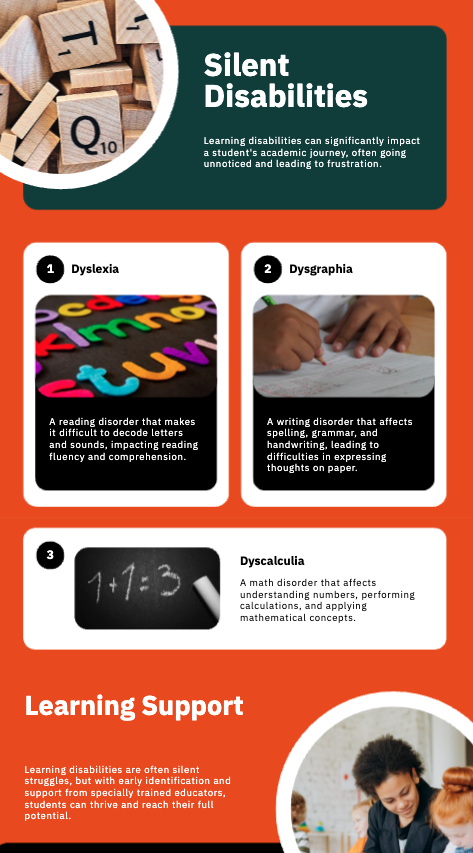
3 Silent Learning Disabilities: Dyslexia, Dysgraphia, and Dyscalculia
There’s nothing as heartbreaking as watching one of your most dedicated students try and fail to grasp a school subject. A student struggling with reading, writing, or math can be overwhelmed by feelings of frustration and embarrassment. They may feel helpless or avoid participating in class. They may even act out to draw attention away from their shortcomings. But what if their behavior is a response to an undiagnosed problem, one affecting one-third of students with disabilities?
A specific learning disability is a disorder of one or more psychological processes involved in language acquisition, manifesting as an “imperfect ability to listen, think, speak, read, write, spell, or do mathematical calculations.”
No wonder students with learning disabilities can have a hard time in class; their own psychological processes are working against them. Educators must be on the lookout for signs of the three types of specific learning disabilities: dyslexia, dysgraphia, and dyscalculia, which we explore in detail below.
#1 Dyslexia
Dyslexia impairs a person’s ability to decode, or associate letters and words with their corresponding speech sounds. Consequently, reading becomes slow and laborious, even for students who’ve mastered basic reading skills.
Dyslexia can also impair writing and spelling skills, and some students with dyslexia will mix up similar-looking letters like “b” and “d.” School-aged children with this learning disability may also struggle with:
Copying written language.
Expressing themselves in spoken language.
Noticing differences and similarities in letters and words.
Remembering sequences, such as the days of the week.
Sounding out unfamiliar words.
Living With Dyslexia
As a student, Daniel Britton was unable to read test questions and was forced to retake math and English courses multiple times, but he wasn’t lazy or a slow learner, as his teachers had suggested. He merely had a reading disorder.
Daniel went on to pursue a career as a graphic designer—a career he excelled at despite his condition—and gain international notoriety for designing a typeface that simulates reading with dyslexia. By removing about 40% of each letter, the typeface forces readers to slow down and experience the frustration and embarrassment a dyslexic person goes through with everyday reading.
Daniel believes that better learning conditions can be achieved if only there was greater empathy for people with dyslexia. “I would’ve liked to have had more options when I was younger,” he told CNN. “If it (my disability) was picked up earlier or treated correctly, who knows what I could’ve done.”
#2 Dysgraphia
Both dyslexia and dysgraphia are characterized by writing difficulties, but dysgraphia interferes with all aspects of writing, including spelling, grammar, and punctuation. Students with dysgraphia tend to write in an awkward position, gripping their pencil in a clenched fist.
For them, writing is a slow, frustrating, and sometimes painful experience. Their handwriting can be illegible—even to them—with inversed, reversed, incorrectly formed, or inconsistently spaced letters. Unable to organize and express their thoughts on paper, students with dysgraphia tend to run out of space on the page as their hand cramps and their words become scrawls.
Writing requires a broad range of skills, including phonemic awareness, fine motor coordination, and visual and auditory processing. These skills are acquired over a period of years, beginning in preschool with copying shapes and becoming automatic by the third grade.
School-aged children with dysgraphia who are unable to develop foundational writing skills due to the demands of letter formation will likely fall behind as writing assignments become increasingly complex. Deficient handwriting is associated with low self-esteem and poor social functioning, which can follow a student into adulthood.
#3 Dyscalculia
Referred to as “number dyslexia,” dyscalculia impairs a person’s ability to learn number-related concepts or perform calculations with symbols and functions. Without a clear understanding of numbers, students with dyscalculia must sometimes rely on finger-counting to perform even simple calculations. They may also struggle with:
Counting backward.
Memorizing basic calculations.
Performing mental math.
Recalling basic math facts.
Using math symbols.
Considering that most children receive their first smartphone (with a built-in calculator) around the age of 10, basic math skills may not seem as necessary as reading and writing skills. But dyscalculia impairs all areas where mathematical concepts are needed. Telling time, counting money, and remembering directions can puzzle and frustrate students with dyscalculia. Basic math skills are also needed when it comes to mastering complex mathematical concepts in higher grades, and like dysgraphia, dyscalculia can leave students disadvantaged in college and in their careers.
What do dyslexia, dysgraphia, and dyscalculia have in common?
Specific learning disabilities are associated with several comorbidities. Not only are students with a learning disability likely to exhibit symptoms associated with another, but they also have increased rates of behavioral and emotional problems.
The prevalence of comorbid psychiatric disorders makes it all the more important to diagnose learning disabilities as early as possible.
Accommodating Students With Learning Disabilities
Although specific learning disabilities cannot be cured, they can be treated with special education services. With the proper support and accommodations, students can focus on their strengths, adapt to their disability, and succeed in and out of school. They do, however, need a professional who can intervene at the first sign of a learning disability.
Pursue a Master of Arts in Special Education
Are you interested in enriching the lives of students as a special educator? The University of Texas Permian Basin offers two online programs for teachers interested in working with students with learning disabilities:
Master of Arts in Special Education: Gain the knowledge and skills needed to integrate universally designed instruction into the classroom and foster an inclusive learning environment for students with special needs.
Accredited by the prestigious Council for the Accreditation of Education Preparation (CAEP), our online programs will help you become a more well-rounded educator, capable of reaching a broader range of students as a classroom teacher or special education professional. Apply now to one of our online MA in special education programs for the chance to help all your students, disabled or non-disabled, achieve their highest potential.
Literacy education has changed over time as people have found new ways to teach reading and writing. These changes are shaped by advances in language, technology, and what we’ve learned about how students learn. Today, literacy education plays an important role in helping students succeed in school and beyond. Many modern approaches focus on meeting…
The United States is in desperate need of qualified teachers—so much so that schools have started hiring teachers from half a world away. School districts are searching for fully certified professionals, preferably those who are certified to teach two subjects, but what’s the purpose of dual certification if schools are going to such extremes to hire…
When the internet was first developed, it was nothing like it is today. With limited speed and bandwidth, the early internet was used exclusively by a few government agencies and, later, universities. In the 1990s the internet became a premium consumer service not unlike cable television. Internet access and the required devices—at first computers, then…
There’s at least one thing liberals and conservatives have in common: They care how their government spends their tax dollars. Facing intense pressure from all sides, the public sector is always innovating in the hopes of delivering effective, efficient services. As part of this effort, public and nonprofit organizations often adopt the competitive structure, culture, and management practices of private businesses. However, public sector innovation may benefit more from collaboration than competition.
What Does Innovation Mean for the Public Sector?
Public-sector innovation is a process through which “problems are defined; new ideas are developed and combined; prototypes and pilots are designed, tested, and redesigned; and new solutions are implemented, diffused, and problematized.” In this context, innovation is disruptive, breaking down barriers such as political oppositions, and leading to the adoption of new technologies and approaches. Improving an existing solution is not enough. To solve emerging and evolving problems, public and nonprofit organizations must be in a constant state of change.
While innovation is not a cure-all—integrated planning, resource allocation, and service improvements are all just as important—it can help governments make the most of limited resources. Here are several innovations that are transforming public and non-profit organizations.
Web 2.0
Web 2.0 tools provide numerous ways for governments to engage with the public—with admittedly mixed results. Twitter has become a go-to platform for politicians looking to rile up their bases. However, after an earthquake, hurricane, or other crisis, this same platform is used by the Federal Emergency Management Agency (FEMA) to gather real-time emergency information from community members that inform response efforts. Social media platforms, along with blogs, wikis, crowdsourcing, and other Web 2.0 tools, allow agencies to promote transparency while encouraging people to participate and collaborate in improving public services.
Co-Production
Co-production is a process in which government and non-government organizations collaborate to improve public services. For example, health departments performed contact tracing at the onset of the COVID-19 pandemic, engaging with communities to provide them with the resources and services they needed. Licensed healthcare professionals were later asked to volunteer to administer the COVID-19 vaccine in their communities. New, creative solutions emerge when people with different perspectives and experiences are brought together, and it’s yet another example of how collaboration breeds innovation.
Public-Private Partnerships
Public organizations may not operate like businesses, but they can reduce costs and manage risks by forming public-private partnerships (P3s). The U.S. happens to be one of the largest—if not the largest—P3 market in the world for infrastructure projects, and there are countless opportunities across the country for for-profit firms to take on a project’s design, construction, and maintenance. Minority- and women-owned businesses are often given priority during the procurement process, helping to foster a collaborative, innovative environment.
Public vs. Private
Achieving goals while operating within a budget is a priority for any public entity, but unlike private businesses, public institutions aren’t driven by profits. They exist for the sole benefit of citizens, delivering services like healthcare, infrastructure, public transit, and public education. Although red tape can be counterproductive, bureaucracy can actually promote innovation by safeguarding against waste, instability, and corruption. Policies can be rewritten. A risk-averse private business that favors short-term profits over creativity and collaboration? That can be a harder problem to solve.
Improving Access
Not everyone has access to public services, especially healthcare. About 20% of the U.S. population live in rural areas and tend to have higher rates of cancer, cardiovascular disease, chronic lung disease, and unintentional injury than their urban counterparts. Numerous factors contribute to the poor health outcomes of rural Americans, but the fact that only 11% of physicians practice in these areas doesn’t help. Telehealth has increased access to healthcare in rural and underserved areas, but government agencies must continue innovating if they are to provide equal access to these and other essential public services.
Innovation in Public and Nonprofit Organizations
The innovations we’ve discussed offer a glimpse at the focus of the UT Permian Basin course Innovation in Public and Nonprofit Organizations. This online course exposes students to innovative tools and practices, exploring such topics as performance measurement, collaborative innovation, and social entrepreneurship. By engaging with online lectures and discussions, students gain a deeper understanding of public-sector innovation in preparation for careers in emergency, financial, human resource, and public relations management, among others.
Earn Your MPA Online From UT Permian Basin
Innovation in Public and Nonprofit Organizations is offered as part of our online Master of Public Administration program. This 36-credit online program prepares students for leadership roles in public administration by teaching them how to address challenges in a practical, ethical, and politically savvy manner. In as little as one year, students can graduate with a career-enhancing graduate credential and an expanded skill set that will help ensure their success in fields including criminal justice, fine arts, healthcare, human services, public safety, or transportation.
The University of Texas Permian Basin’s MPA program is entirely online and features asynchronous elements, allowing you to pursue your master’s degree while you continue to work, care for your family, and balance your personal and professional life. We also offer a variety of elective courses, such as Marketing Management, Healthcare Management, and Cultural Diversity in Education and the Social Sciences, so you can gear your studies toward your professional interests. At UT Permian Basin, every measure has been taken to offer you an online MPA program with as much value as possible.
From the outside looking in, the role of a superintendent might seem hazy. They’re often seen as district managers or figureheads. Step inside the world of education leadership, however, and you’ll find they’re so much more.
Alongside teachers and fellow administrators, school superintendents are responsible for creating a safe, inclusive learning environment for students. Still, their role is often misunderstood.
While they manage the daily operations of a school district, superintendents are also visionary leaders striving to improve student achievement. They are advocates, collaborators, and trusted experts—shifting into whatever role their district and students need most.
What Is the Role of a Superintendent?
Superintendents are often defined by their ability to manage finances, personnel, and resources, but their role has become far more nuanced in recent years. Now, school boards and communities are seeing superintendents as community leaders and entrusting them to promote their district’s vision and values.
Many school boards and communities now expect superintendents to:
Act as the public face of the district
Build trust and relationships within the community
Advocate for the district’s mission, vision, and values
Engage with stakeholders, including parents, business leaders, and local government
Superintendents have, in essence, become the living embodiment of their school districts. Consequently, the role has become increasingly relationship-oriented, with superintendents needing to possess strong communication and interpersonal skills to rally entire communities behind a goal.
“Being a superintendent is about building relationships,” said Connecticut’s Superintendent of Schools at Region 12 Patricia Cosentino. “[Y]ou have to make connections with community members, outside organizations. You have to get your parents to buy in, your staff to buy in …” Inspiring others means wearing as many hats as needed to promote a shared vision, and it makes superintendency all the more difficult to define.
Below, we explore some of the many responsibilities that superintendents manage every day as they guide their communities.
Working With the Board
Superintendents are elected by school boards: groups of elected or appointed trustees. Together, they share responsibility for a school district. At board meetings, a superintendent will keep the board informed of current events and recommend initiatives.
Although a superintendent’s recommendations carry substantial weight, it’s ultimately up to the board whether a mandate is approved. Once approved, it falls to the superintendent to see a mandate carried out, so long as they adhere to the framework of policies adopted by the board.
Building Relationships in the Community
Award-winning superintendents agree: leadership, vision, and strategy matter, but communication is the thread that ties them together.
Community members, including parents, politicians, and business owners, are highly invested in the success of their district and bring a range of perspectives to the table. Many have or will have their own children in the schools. People care because they appreciate that quality education is one of the foundations of a strong community.
Add the transparency and media scrutiny that’s a given in any publicly funded endeavor and it’s easy to see why a superintendent needs to be a multitalented leader. They should be capable of identifying key avenues for collaborating with every encounter, building and promoting a community-wide shared vision with every handshake.
A superintendent is considered the primary instructional leader for a school district, but their work is tied to and dependent upon the work of principals, teachers, and support staff. Responsible for hiring and firing teachers and administrators, superintendents must surround themselves with capable professionals while communicating expectations, investing in professional development, and providing the resources they need to perform their roles effectively. Sharing leadership and fostering a culture of respect is essential if superintendents are to provide students with the best possible education.
Overseeing Day-to-Day Operations
Although superintendents are prized for their leadership skills, they must lean on their managerial abilities when allocating time, money, personnel, and resources. Coordinating short- and long-term goals means taking a system-wide approach, one that accounts for education policies and student achievement.
One of the more challenging aspects of being a superintendent is having to make hard decisions, such as cutting staff, when faced with conflicting goals. Providing sound guidance in district budgeting and operations while helping a school district realize its vision is no easy feat, but effective superintendents find a way to make it happen.
Adapting to a Dynamic Role
Administrators who step into the role of superintendent are rewarded with a career unlike any other, where no two days are alike. They could be touching base with board members and visiting classrooms one day and making an appearance at a school sporting event the next.
Unlike a typical 9-5 job, superintendency requires professionals to be much more frequently accessible, and at a moment’s notice. Still, for many administrators, the chance to create systemic change and increase their earning potential as a superintendent is too good to pass up.
Earn Your Superintendent Certification Through UT Permian Basin
Assistant principals and principals interested in becoming district leaders can enroll in The University of Texas Permian Basin’s online Superintendent Certification program. Throughout our online courses, students develop essential leadership and managerial skills while working toward meeting Texas’ certification requirements.
As one of the only four-course programs in the state that maintains a practicum experience throughout, our program also pairs students with a mentor who’ll ensure they’re ready to take on the role of district leader. At UT Permian Basin, we offer the convenience of online learning and the practicality of hands-on experience in a single program designed exclusively for aspiring superintendents.
Summer break hits differently when you’ve been running on fumes since January. That first week is sacred. Your priorities are (in no particular order) sleeping in, ignoring all emails, and reacquainting yourself with your old friend, the couch. You’ve earned it. But once the dust settles, summer becomes something else: a rare window where you’re not just reacting. No lesson plans due, no…
Texas teachers, here’s the reality: More than half of all K-12 students in the state are Hispanic, and nearly a quarter are enrolled in bilingual/ESL programs. That translates to over a million students who needed specialized language support throughout the 2023-2024 school year. Districts are struggling to find enough certified bilingual and ESL teachers. A critical shortage for schools? Absolutely. But…
You’re sitting at your desk after dismissal. The room is quiet (for once), and somewhere between grading essays and planning tomorrow’s lesson, you hear it again in the hallway: “My students are using ChatGPT for schoolwork.” Suddenly, you’re wondering: Is this cheating? This is the real question around AI in education. And as this technology…
Teachers and administrators often refer to their profession as a calling. A passion for teaching and a desire to make a difference in the lives of students is often what draws people to education, but that alone isn’t always enough to succeed in this field. Individuals working in education must envision a clear professional path; otherwise, they risk career stagnation.
As an education professional, you can fend off career stagnation by adopting a mindset of continual learning and seeking out new opportunities to grow. By clarifying your career options, we hope that you’ll continue to pursue your passion, share your knowledge with students, and never forget what drew you to education in the first place.
For Classroom Leaders
Career advancement can happen inside the classroom. For example, the Teacher Incentive Allotment (TIA) program was established in 2019 to make six-figure salaries a reality for Texas teachers. High-performing teachers can earn one of three designations: Recognized, Exemplary, and Master. Earning a designation generates annual teacher-focused allotment funding for a teacher’s school district. Depending on their campus of employment, a Master teacher can generate anywhere from $12,000 to $32,000 for their school district, with at least 90% of funding going toward teachers’ salaries.
Teachers with an active National Board certificate and active Texas teaching certificate can automatically earn a Recognized designation, but eligible teachers looking to earn their Master designation can do so by meeting performance standards and by applying to the Texas Education Agency (TEA). Teachers set on remaining in their current positions should consider pursuing a designation to realize their potential and earn a higher salary in the process.
For Aspiring School Leaders
Administrating is no less noble a pursuit than teaching. As they advocate for and support teachers and students, assistant principals and principals wear many hats throughout the school day. Principals are vital for overseeing operations, developing curricula, and improving student success. Even teachers who had never before considered these roles often find themselves excelling and thriving in them.
To become a Texas principal, you must meet TEA’s certification requirements:
Hold a master’s degree from an accredited university.
Have a valid classroom teaching certificate.
Have two years of creditable experience as a classroom teacher at an institution approved by TEA or another stage agency.
Complete an approved principal educator preparation program.
Chances are you already hold a valid classroom teaching certificate and have two years of creditable teaching experience under your belt, which just leaves earning a master’s degree, completing a preparation program, and passing the exam. Easier said than done, right? But what if you could meet these remaining certification requirements through a single master’s degree program? At The University of Texas Permian Basin, you can. And you can do so from the comfort of your own home.
Becoming a Certified and Experienced Principal
UT Permian Basin offers an online Master of Arts in Educational Leadership program aligned with the Texas SBEC Principal as Instructional Leader certification competencies. An approved principal educator preparation program, our master’s degree program will help you qualify for principal positions in Texas. Certification is, however, only a fraction of what’s needed to succeed as a school principal.
Under the guidance of our experienced and esteemed faculty, you’ll develop the diverse skill set needed to supervise school programs, build a team of passionate instructors, and foster a collegial school culture, all to ensure the delivery of high-quality education. Self-reflection is among the most important skills a principal can possess, which is why our program teaches the value of reflecting on performance, acting on feedback, and striving for improvement. In as little as one year, you can graduate with the experience and qualifications needed to step into an administrative role.
For Aspiring District Leaders
Any education professional can experience career stagnation—even assistant principals and principals. Like their students, they must become lifelong learners if they’re to realize their full potential. Administrators interested in making a significant impact in their life and the lives of students can pursue a career as a school superintendent. Responsible for overseeing entire school districts, superintendents must collaborate with principals, teachers, coaches, support staff, and members of their community to effectively advocate for their students.
Superintendents are remarkable people capable of thriving under extraordinary pressure. Developing the leadership, communication, and problem-solving skills needed for this role may seem daunting, but rest assured, they can be learned and mastered.
Designed for assistant principals and principals, our online Superintendent Certification program can help you not only meet TEA’s certification requirements but also gain the skills and experience needed to make the role your own. In our online courses, you’ll explore financing, safety, cultural diversity, and other essential public education topics. Our online program is also one of the only four-course programs in Texas with a practicum component throughout, giving you the chance to reflect on your learning as you work to transition into a district-level administration role. Earn your superintendent certification in as little as two semesters and open the door to new possibilities.
Propel Your Career Forward at UT Permian Basin
UT Permian Basin’s Master of Arts in Educational Leadership and Superintendent Certification programs are designed for education professionals interested in making the most of their career opportunities and reaching their full potential. UT Permian Basin’s College of Education also offers online education programs for teachers interested in earning their master’s degree and earning a dual certification. Learning is itself a noble pursuit: one that can empower you to find a rewarding career.
Take the next step on your career path. Apply to one of our online programs to change the trajectory of your life and career.
Nothing compares to seeing a student’s eyes light up as they lose themselves in a good book and share in the journey of a hero or heroine. An adventurous hobbit, a boy who lived, or a girl who fell down a rabbit hole could be compelling them to read on, and as they turn the page to see what happens next, they’re developing literacy skills that’ll serve them throughout life.
A student with such an affinity for reading would be considered an engaged reader: someone “motivated to read, strategic in their approaches to comprehending what they read, knowledgeable in their construction of meaning from text, and socially interactive while reading.” If you’re reading this, chances are you’re interested in helping your students become engaged readers who pursue reading not because they have to but because they want to.
Below are several tips to help you share your love of reading in the classroom. Although these tips are geared more for elementary-aged students, some will undoubtedly benefit readers of all ages and reading levels.
Encourage Discussion Through Shared Reading
When story time rolls around, teachers often pick up a book and begin reading aloud, and that’s perfectly fine. Any amount of reading can spark a child’s imagination, and reading aloud is especially helpful in the early stages of literacy development. However, reading aloud doesn’t present many opportunities to demonstrate reading strategies, and elementary-aged students need an intermediate step between being read to and reading independently.
Mimicking how parents and children share bedtime stories, shared reading involves having the entire class read along to enlarged text on a projector or big book. Here’s what it might look like in your classroom: After establishing where the class left off and explaining the purpose and goals of this particular reading, you’ll lead the reading and use prompts to encourage discussion (e.g., What’s going to happen next? What sound do these letters make? Is this word a noun, verb, or adjective?). Through shared reading, your students will improve their vocabulary, comprehension, and phonemic awareness and begin to understand how meaningful stories can be.
How Fiction Captures the Imagination
Reading in elementary school is one of the most important predictors of life success, especially when students read fiction. Around the age of four, children develop what is known as theory of mind: the ability to make mental models of others and consider different points of view. Works of fiction may not be real, but children can still develop a strong emotional connection with their favorite literary characters by empathizing with their hopes, dreams, trials, and tribulations. When stories come to life in a child’s mind, they’re engaging with theory of mind and developing social skills they can bring into the real world.
Mix Things Up With Differentiated Instruction
By now, you’ve probably identified some of your students’ reading strengths and areas for growth. Some students may be better readers, while others may struggle with listening. How can you make sure your entire class is on the same page? One way is with differentiated instruction: the process of adapting lessons to students’ individual strengths, needs, and interests. Giving each of your students the opportunity to discover the joys of reading means providing them with as many avenues to reading as possible.
Restock the Classroom Bookshelf
Part of the thrill of reading is feeling challenged, motivated by the understanding that you’re farther along today than you were the day before. If you have a classroom bookshelf, do your best to stock it with books of varying difficulty levels so that your students are always engaging with stories that excite and interest them. Schedule some independent reading time to give your students the freedom to choose what they want to read.
Flip Open a Picture Book
The adage “a picture is worth a thousand words” is as true as ever. Picture books and chapter books are great for engaging young readers, especially those who may be struggling with text-based books, and graphic novels can be a go-to for older students. Illustrations add another layer to stories while being less intimidating than a long-winded passage, providing additional means for students to interpret a text. A picture can also transcend language and sociocultural barriers that might prevent a student from enjoying a book.
Entertain With an Audiobook
Research has shown that words activate the same regions of the brain regardless of the medium, suggesting that listening to stories is as memorable and impactful as reading them. Playing audiobooks in the classroom helps all students, including those with reading disabilities like dyslexia, develop their literacy skills. This may not seem all that different from reading aloud to your class. However, as enthralling as your performance may be, audiobooks are often narrated by actors and multiple readers who can better capture imaginations with their distinct voices, flawless delivery, and effortless pronunciation.
Become a Reading Specialist Through UT Permian Basin
Hopefully, we’ve given you a few ideas for sharing your love of reading with your classroom. As helpful as these tips may be, however, there’s always more that can be done to help students, especially at-risk students, develop their literacy skills. If you’re interested in going above and beyond to make reading an integral part of your students’ lives, The University of Texas Permian Basin offers a CAEP-accredited online Master of Arts in Literacy that’s right for you.
Aligned with the Texas Education Agency (TEA)’s reading specialist certification, our MA in literacy program can help you advance your career and more effectively serve a broader range of students. Under the guidance of faculty with years of experience in Texas public education, you’ll learn to assess students’ reading strengths, create intervention plans, and assist administrators in improving literacy instruction.
Reluctant to leave the classroom? Don’t be. Our online program will enable you to continue teaching while you pursue your degree and certification. Upon graduating, you’ll be awarded a master’s degree and meet the requirements for reading specialist certification in Texas. Apply to UT Permian Basin’s online MA in literacy program to gain the skills and credentials needed to share your love of reading in any classroom, with any student.
For over 50 years, students have benefited from the affordable tuition, vigorous curriculum, and experienced mentorship offered by The University of Texas Permian Basin. Now, undergraduate and graduate students have the opportunity to enroll in virtual courses and receive the same exemplary education without ever having to set foot on campus.
UT Permian Basin offers over 30 online programs designed to empower students with the skills and knowledge needed to succeed in their chosen career fields. Our online programs are as praiseworthy as any found on campus, and we’ve taken every measure to ensure that commonplace barriers to education, such as misleading tuition costs or required standardized testing, have been mitigated or removed.
Let’s take a look at five reasons to join one of our West Texas online degree programs and see if we can’t make a Falcon out of you yet.
Undergraduate and graduate programs are online and asynchronous.
We know what you’re looking for: an online program that can accommodate your personal and professional commitments. You’re not alone. Many of our students are working professionals with the goal of maintaining and progressing in their current profession. That’s why the majority of our online programs are entirely online and asynchronous.
In these online and asynchronous programs, coursework can be completed on your own time, at your own pace. You’ll still be able to engage with your instructors and fellow students in 24-hour interactive discussion boards, but now you’ll have the freedom to choose when and where you study. An astronaut on the International Space Station could excel in one of our online programs, assuming they had a Wi-Fi connection.
Our programs that aren’t 100% online still feature online courses, but they require students to engage in a structured learning experience or enroll in practicum or clinical courses. For example, almost all of the programs offered by the College of Education place students in a school setting for a full semester, where they can gain hands-on experience under the watch of their University supervisor. Practicum requirement or not, our online programs are flexible and convenient for all students.
Graduates earn the same degree as their on-campus peers.
A concern many online students share is the quality of their degree. When a graduate of an online program receives their sheepskin, the last thing they want to see is their degree qualified by the word “online.” At UT Permian Basin, graduates receive the exact same degree as those awarded in our on-campus programs.
Earning a degree online is no longer a rarity; in fact, it’s becoming the norm. Rather than commute to class, students are continuing their education from the comfort and safety of their own homes. This shift has resulted in online degrees being widely regarded with the same respect as traditional degrees. UT Permian Basin graduates are awarded a degree that’s not only identical to a traditional degree but also just as credible to employers.
Online students are taught by the same faculty that teach on campus.
One of the greatest benefits of The University of Texas Permian is the fact that our online courses are taught by the same respected faculty who teach on campus. Many of our faculty members have years of experience as professionals and instructors in their respective fields. For example, students in our online Bachelor of Science in Criminology and Criminal Justice Studies program are taught exclusively by faculty who have extensive experience in the criminal justice field. Similarly, our online RN to BSN program is led by experienced educators—registered nurses and doctors of nursing practice—who have firsthand experience with the challenges facing nurses today.
Our admissions process is simple and welcomes all applicants.
In your research, you may have come across certificate or degree programs that require applicants to submit standardized test scores, such as the GRE. These requirements are meant to ensure that applicants are prepared for college-level coursework; however, these requirements can sometimes bar exceptional applicants who would perform far beyond what their test scores might suggest.
At UT Permian Basin, we recognize the value of standardized tests as a piece of the review process, but we want to give as many applicants as possible the chance to change their lives through higher learning. That’s why we try to review applicants on a holistic basis whenever possible.
Applying for admission to many of our online programs requires little more than your transcripts and a completed application. Moreover, many of our programs that do have GRE or GPA requirements have conditional admission requirements that would allow otherwise less qualified applicants to apply.
Our cost-effective tuition rates are some of the best in the country.
UT Permian Basin offers some of the most affordable online programs in the country. You can check out our estimated cost of tuition here. Regardless of location, on-campus and remote students pay the same affordable, competitive tuition rate within a program.
Affordable tuition rates aren’t the only financial benefit available to students in our online degree programs. Grants, scholarships, and financial aid options are available, depending on students’ level and program. We also offer payment plans for students unable to pay their tuition all at once. We strive to ensure that financial costs never get in the way of a student and their academic and career goals.
The cost of online learning will always be top of mind, and understandably so. Not all online programs provide the benefits of UT Permian Basin, but the long-term benefits of earning an online degree or certificate from our University far outweigh the immediate costs. By becoming a UT Permian Basin Falcon, you can earn credentials that can open doors to new opportunities, increase your earning potential, and secure a rewarding career. We think that’s well worth the price of admission, don’t you?
The Nurse Licensure Compact (NLC) allows eligible nurses to practice in multiple participating states with one multistate license. This often makes it easier to take travel assignments, provide telehealth services across state lines, and respond where care is needed most.
Yes, Texas is an NLC state. Texas nurses can be awarded a compact license, allowing them to practice in all NLC states, so long as they remain a Texas resident and do the following:
Apply for licensure with the nursing regulatory body (NRB) in Texas
Register with Pearson VUE
Pass the National Council Licensure Examination (NCLEX)
Earning a compact license is an accomplishment that can lead to a number of new, exciting opportunities in the nursing field, including the chance to become a travel nurse.
What Are the Benefits of Having a Compact License?
With the recent shortage of nurses, the demand for travel nurses has surged. To meet this need, many hospitals are offering significantly higher pay to attract skilled professionals from other states. As of March 2023, travel nurses earned an average of $2,588 per week, while permanent nursing staff earned $1,375 per week.
But the benefits of having a compact license don’t end there. With a compact license, a nurse can:
Provide nursing services via telehealth to patients across the country
Cross state borders and provide nursing services in the event of a disaster
Refrain from obtaining additional nursing licenses and save on costs
Teach via distance education in other NLC states
Which States Are Part of the Nurse Licensure Compact?
As of 2026, 43 jurisdictions are part of the Nurse Licensure Compact, though implementation status can vary by state or territory. Here’s an exact breakdown of each state currently in the Compact:
Alabama
Michigan
Pennsylvania
Alaska
Minnesota
Rhode Island
Arizona
Missouri
South Carolina
Arkansas
Mississippi
South Dakota
Colorado
Montana
Tennessee
Delaware
Nebraska
Texas
Georgia
Nevada
Utah
Idaho
New Hampshire
Virginia
Illinois
New Mexico
Vermont
Iowa
New York
Washington
Kansas
North Carolina
West Virginia
Kentucky
North Dakota
Wisconsin
Louisiana
Ohio
Wyoming
Maine
Oklahoma
Maryland
Oregon
How Can Nurses in NLC States Earn an Online BSN?
The University of Texas Permian Basin offers an online Bachelor of Science in Nursing program that prepares nurses for leadership and decision-making roles in patient care. Nurses who hold a current, unencumbered RN license and live in Texas or another NLC state can enroll in the program.
Designed with nurses’ demanding schedules in mind, our program is almost entirely online and asynchronous. Nurses can complete courses, view lectures, and participate in online discussions from any of the 43 NLC states. Our program does require two clinical courses, which can be conducted in your home state and with the preceptor of your choice. Through our program, you can:
Complete coursework online while you continue to practice
Save money with financial aid options and Texas’ affordable tuition costs
Increase your earning potential and open doors to new opportunities
Accredited by the Commission on Collegiate Nursing Education (CCNE), our online program delivers critical, comprehensive, and relevant healthcare training through the highest quality instruction. Courses like Transcultural Nursing, Theories and Issues in Professional Nursing &
Health Care, Management Concepts and Organizational Theory, and Clinical Leadership I and II train students to become tomorrow’s nursing leaders.
In addition to building valuable knowledge and skills, our graduates can also earn an optional Nurse Manager Certificate from Sigma Theta Tau Nursing Honor Society. With a compact license, BSN, and Nurse Manager Certificate, graduates are ready to succeed in the nursing field regardless of the state they’re in. If you’d like to expand your skill set and reach your full potential, apply to UT Permian Basin’s online BSN program.
Picture this: You’re in a hospital room, and a nurse walks in—flustered, but still smiling—with a chart in hand. This expert provider is checking your vitals, catching early warning signs, coordinating with doctors, reassuring your anxious family outside, and solving small healthcare crises in the hallway … all before lunch. Today, nurses are no longer…
Of the growing number of fields actively using artificial intelligence (AI) technology—including finance, manufacturing, marketing, and customer service—the field that arguably makes the most significant impact in our lives is healthcare. AI is supporting all healthcare sectors, simultaneously making nurses more efficient, elevating their level of care, and improving patient outcomes. Here we’ll examine some…
Every year, over 150,000 registered nurses (RNs) graduate from nursing school, ready and eager to make a difference in the lives of patients. They’ve spent up to four years preparing for this moment, poring over textbooks, completing clinicals, and mastering skills. But when it comes time to face the challenges on the hospital floor or…
Superintendents oversee virtually every aspect of a school district, from ensuring that its curriculum meets approved standards to meeting with parents regarding their child’s education. As leaders, superintendents can enact positive, lasting change that benefits the lives of students, teachers, and administrators. They must be able to set an example, inspire others, encourage teamwork, and celebrate successes and failures. Success as a superintendent depends on these qualities, qualities that are clearly not limited to any one race, gender, or professional background. And yet, one demographic remains underrepresented in superintendency in the State of Texas and the nation at large.
Despite the fact that the majority of K-12 educators are women, only 24% of superintendents are women. Why is the percentage of female superintendents so low, and how does gender impact leadership style? As we answer these questions, consider that informed, passionate educators and administrators are increasingly making inroads toward closing this gap, and every day brings us closer to parity in superintendency. We still have a long way to go, but the path to becoming a superintendent has never been clearer.
The Gender Gap in School Superintendents
The underrepresentation of women in superintendency can’t be attributed to any single barrier. Barriers between women and leadership roles lie in societal norms and beliefs—conscious and unconscious—regarding leadership. School board members and headhunters alike can question whether a woman can handle the demands of being a superintendent. These gatekeepers sometimes perceive women as wives, mothers, and caregivers before they are seen as leaders. Women are also more likely than men to set self-imposed barriers on their professional prospects, such as opting not to relocate because of their family or spouse, or assuming that they are underqualified for a role and therefore not applying.
The path to becoming a superintendent is another barrier separating women from leadership roles. While there are exceptions, prospective superintendents in Texas must hold a Principal certificate or equivalent issued by the Texas Education Agency. This certification requirement is common across the nation, as over 80% of superintendents were previously middle and high school principals. The problem? The majority of high school and middle school principals are male, whereas women make up the majority of elementary school principals.
It’s clear that women possess the training and experience necessary to succeed as superintendents, but they’re rarely given the opportunity to prove themselves, and the education field is the worse for it.
Women as Superintendents
When a woman does land the role of superintendent, she can still encounter challenges navigating a male-dominated workplace. Work harder, be stronger, look happier—female superintendents can sometimes feel that they are judged by a different standard than their male counterparts, and for good reason. Everything from their professional dress to their perceived family obligations is under scrutiny.
Female superintendents can be perceived as “emotional,” presumably leading with their hearts instead of their heads. This notion is reflected in a comparative study on gender bias within the superintendency. When asked about their experience as superintendents, female participants described having to be strategic in order to get their point across to men. According to one participant, female superintendents don’t have the luxury of waking up in a bad mood: “Especially for women, you have to self-talk, all the time; it never goes away. You have to put yourself in check all the time.”
All participants, however, shared a passion for their work and a commitment to improving school environments and fostering student learning. Male and female superintendents alike noted the importance of gaining self-knowledge, having a shared vision, and improving the lives of children. Female superintendents may face increased scrutiny where none is warranted, but their commitment to the field of education remains resolute.
Leadership Qualities
Women face an uphill battle becoming and being superintendents, which is a shame considering the unique leadership qualities they possess. A study conducted by Dr. Jessica Garrett, a recently retired associate professor at The University of Texas Permian Basin’s College of Education, looked at the leadership practices of female superintendents in Texas. Participants were asked to rate how frequently they exhibit the five practices of exemplary leadership:
Model the Way
Inspire a Shared Vision
Challenging the Process
Enabling Others to Act
Encourage the Heart
While all superintendents value these practices, everyone has their own strengths and weaknesses. Researchers found that female superintendents rated themselves higher in areas that have been shown to have the greatest positive impact on institutions: encourage the heart and inspire and share a vision. Superintendents who inspire a shared vision create a goal-oriented system where others are inspired to contribute to an envisioned future. Superintendents who encourage the heart recognize the gifts of others and celebrate their contributions.
Helping others feel not only valued for their unique qualities but also included in the pursuit of a common goal are some of the most important traits a leader can have. While women continue to be underrepresented in superintendency, entire school districts are missing out on individuals with qualities that can inspire students, teachers, and administrators to reach new heights. Moreover, administrators are most often mentored by male superintendents, meaning that the leadership practices that female superintendents excel at might not be passed down to new superintendents. As the number of female superintendents continues to rise, albeit gradually, the leadership qualities they possess can be passed down to new superintendents of either gender.
Becoming a Superintendent
The path to becoming a superintendent is fraught with challenges, but it remains a rewarding career like no other. As a superintendent, you can shape the future of your school district and ease the path towards superintendency for other female educators and administrators. At UT Permian Basin, we want to make your transition into the role of superintendent as smooth as possible. Our superintendent certification program is 100% online and designed to develop effective school leaders who are able to envision, articulate, and implement a vision of student success. Apply to our online Superintendent Certification program and become a leader in the Texas public school system.
Over five million students in American public schools are English language learners (ELL), students who are studying to become fluent English speakers. While Spanish is by far the most commonly spoken language by K-12 students with limited English proficiency, other common languages include Vietnamese, Chinese, Arabic, and Hmong. In total, over 400 different languages are spoken by ELLs in public schools across the United States.
The inclusion of ELLs into classrooms has transformed the education landscape for native and non-native English speakers alike. How to best accommodate the needs and diverse backgrounds of ELLs has been a challenge for the public education system for decades—and a growing challenge as the number of ELLs continues to rise. Let’s look at the impact immigration has had on bilingual/English as a second language (ESL) education and see how educators are learning to provide a more inclusive classroom environment for students of all backgrounds.
Enveloped by English
How does language affect immigrants? More often than not, America’s English-only mentality has had an adverse effect on immigrants. Within the past century alone, states repressed the use of foreign languages by passing laws requiring English-only instruction in public schools. In the early-to-mid 20th century, immigrants, especially Mexican children, were often segregated until they were taught English and “Americanized.” The level of education they received was subpar, and few immigrants went on to high school as a result. Due to the Naturalization Act of 1906, immigrants didn’t even have a chance of becoming United States citizens unless they learned English.
During the civil rights era of the 1960s, people began to accept that being ashamed of one’s own native language and culture is counterproductive to learning. Congress finally took note of the struggles facing immigrants and the advantages of bilingual education, passing the Bilingual Education Act in 1968 and the Equal Educational Opportunities Act (EEOA) in 1974. The EEOA, in particular, requires school districts to take appropriate action “to overcome language barriers that impede [ELL] students from participating equally in state and district educational programs.” What’s considered “appropriate action” remains a hotly debated topic to this day.
Throughout American history, foreign languages have largely been seen as nothing more than a problem for schools to solve. Hence, the goal of bilingual education has been to teach English rather than encourage biliteracy. This prevailing sentiment was the driving force behind the “English Language Acquisition, Language Enhancement, and Academic Achievement Act,” which passed in 2001. Replacing the Bilingual Education Act, this new legislation instead gave priority to English-only instruction.
Over 31 states have passed laws naming English the official language, with several states approving ballot measures to replace bilingual education with English-only education. Even now, our education system struggles with how to best help immigrants assimilate into American life while respecting their native culture and language. Teachers are often at the heart of this debate, helping students learn a new language while they themselves navigate a divisive, shifting educational landscape.
The Changing Profile of ELLs
Immigrants have had an incredible impact on bilingual education. However, immigrants are no longer the driving force behind changes to prominent bilingual education programs: their children are. As reported by the Pew Research Center, 72% of public school students between the ages of 5 and 17 who report speaking English “less than very well” are American citizens. Moreover, a number of foreign-born students are born abroad to American parents and naturalized citizens. Less than a quarter of ELLs between the ages of 5 are 17 are noncitizens, and that percentage is even lower for older public school students.
Dual Language Classrooms
The inclusion of ELLs into classrooms has a measurable impact on education, especially in dual language classrooms. These classrooms offer a bilingual experience in which all students—native English speakers and ELLs alike—are taught in English and a target language, usually Spanish. The goal is to help all students achieve biliteracy. In an article published by NPR, researchers looked at eight million student records and observed that dual language students had higher test scores, higher parent involvement, better attendance, and fewer behavioral problems when compared to students in English-only classrooms or in one-way immersion.
In inclusive classrooms, ELLs can build upon the language skills they already possess without abandoning their native language or feeling excluded. Dual language classrooms can help ELLs feel more accepted and allow non-English-speaking parents to participate more in their child’s education. “Maintaining a student’s native language is vital to their self-esteem, family heritage, and identity,” says See Pha Vang, a teacher with Minnesota’s Saint Paul Public Schools Office of Teaching and Learning. “German, French, Spanish … all native languages are critical to who we are as individuals.”
The advantages of bilingual education apply to native English speakers as well. Not only do native English speakers enjoy the same benefits as their English-learning peers in dual language classrooms, but they can also become more comfortable around people whose race, culture, and native language are different from their own. When the unique needs of ELLs are considered and provided for, all students benefit.
ESL Classrooms
This isn’t to say that ESL classrooms that provide English-only instruction are inherently bad. Far from it. The majority of bilingual education programs in the U.S. fall under this category and are able to serve any non-English speaking student. Both ESL and dual language education can help students learn English. Student success will depend on not only the type of program but also the teacher leading it, which is why the ongoing teacher shortage is so problematic.
Bilingual and ESL Teachers Are Needed
From sparking educational reform to enriching the lives of native English speakers, immigrants have had a profound impact on education. The public education system has struggled to address this impact and is now grappling with a shortage of bilingual teachers. As asylum seekers flee from Central America, demand for dual language education is growing, and with bilingual teachers retiring en masse, there simply aren’t enough qualified teachers to lead bilingual education programs effectively.
At The University of Texas Permian Basin, we offer an online Master of Arts in Bilingual/ESL Education program for teachers and administrators interested in educating immigrants and other ELLs. Whether English is your only language or you speak a foreign language fluently, you can make a much-needed difference in the lives of these students. Online courses like Cultural Diversity in Education and the Social Sciences can empower you with the knowledge and skills needed to foster inclusive classrooms where differences are celebrated and embraced. Apply to our online MA in bilingual/ESL education program and teach the next generation of ELLs.
When people think of liberal arts, they often think of subjects like history or literature. But a liberal arts education is much broader than that. Think: less about locking into one career, more about building skills you’ll use no matter where you land.
At its core, the liberal arts focus on building transferable skills that apply across industries and careers. Rather than training for one specific job, a liberal arts education prepares you to adapt to many possible career paths.
Where Did the Term “Liberal Arts” Come From?
The phrase “liberal arts”comes from the Latinliberales artes, meaning “education worthy of a free person.” In ancient Greece and Rome, this type of education wasn’t about learning a trade. It was about developing the mind.
Philosophers like Cicero believed these studies helped people reason, communicate, and participate in civic life. Later educators took the idea further, arguing that a liberal arts foundation made it easier to adapt as roles changed, whether someone became a politician, a teacher, or even a stone mason.
How Have Liberal Arts Evolved?
During the Middle Ages, liberal arts education centered on seven core subjects:
The Trivium – grammar, logic, rhetoric
The Quadrivium – arithmetic, geometry, astronomy, music
Today, these areas have evolved into broader disciplines. Modern liberal arts programs may include:
Literature and languages
Sociology and psychology
Natural sciences like biology, chemistry, and physics
Arts and humanities
This flexibility allows you to tailor your education. Interested in marketing but fascinated by psychology? Great, because a liberal arts pathway lets you combine both. Drawn to public service but curious about communication? That works, too.
What Does a Liberal Arts Degree Look Like Today?
A modern liberal arts degree offers a strong academic foundation while allowing room for exploration. One example is a Bachelor of Arts in Humanities, a program that focuses on several subjects, including:
History and philosophy
Literature and languages
Social sciences
Visual and performing arts
These programs also incorporate core general education subjects like English, math, and science, ensuring you graduate with a well-rounded skill set valued by employers.
What Can You Do with a Liberal Arts Degree?
Liberal arts degrees open doors to many career paths, including:
Marketing or communications
Human resources
Public relations
Nonprofit or public service roles
Journalism or writing
Education and advising
Many graduates also pursue advanced degrees in law, business, or education. The versatility of liberal arts is its greatest strength.
Earn a Bachelor of Arts in Humanities Online at UT Permian Basin
The online Bachelor of Arts in Humanities program at UT Permian Basin helps students build essential skills like communication, critical thinking, and social responsibility, all in a flexible online format.
You can choose up to two concentrations to personalize your degree, and with guidance from faculty advisors, you can create an individualized plan of study that aligns with your interests and career goals.
If you’re looking for a degree that values adaptability, creativity, and lifelong learning, a liberal arts education may be the right fit.
Studying classics helps us understand where many of our biggest modern questions came from, including who gets power, how societies define justice, and why humans keep telling the same stories in new outfits. A single, harmless question comes up a lot in humanities courses (usually from someone trying very hard not to care): Why does any of this matter? And…
Ever found yourself humming an earworm and suddenly wondering, “Where did this come from—and who created it?” Music is a universal language. It conveys memory, rebellion, grief, joy, and identity. Across centuries, women have used the language of sound in a world where they’ve been told, repeatedly, to stay invisible. Here are some of the…
Modern challenges like AI and global weather crises can stir up fear and controversy. But that’s for the scientists to sort out, right? Not exactly. The humanities play a powerful, often overlooked role in technology and science. Trends in these fields can create ethical, moral, environmental, and philosophical dilemmas. The humanities equip us to navigate…