Teachers, Here’s Why You Should Get Your Principal as Instructional Leader Certification
A principal’s day begins with greeting students in the morning. The rest of the day is spent visiting classrooms, meeting parents, and making sure the needs of students and teachers are met. At night, they might support students by attending a school play or football game before heading home and starting again the next day.
The job of a school principal is unlike any other, but you already knew that, didn’t you? Chances are you’re a teacher who’s had their eye on the role of assistant principal or principal for some time, but you’re not sure if it’s the right fit for you. We’re here to tell you that enrolling in a preparation program, earning your Principal as Instructional Leader certification, and becoming a school leader is 100% worth it.
Make a Difference
The number one reason why teachers transition to leadership roles is to have more control over key administrative decisions. As an assistant principal or principal, you’ll oversee all school operations and:
Allocate resources where they’re needed most.
Collaborate with parents and community members.
Foster a safe, supportive learning environment.
Support and help teachers grow as professionals.
Above all else, principals promote a shared vision of student success. Traditionally, principals were seen as little more than school managers, but this role has evolved over the past few decades, and many principals are now student advocates who set high standards and help young learners achieve their full potential.
The Profound Effect Principals Have on Students
Commissioned by the Wallace Foundation, a recent review looked at over 20 years of data involving over 22,000 principals to determine the connection between leadership and learning. Turns out, principals have a far greater and broader impact on the student experience than previously thought. Researchers found that effective principals have nearly as large an impact on student achievement as similarly effective teachers, largely through their hiring, development, and support of teachers.
Teachers are essential to student achievement, but their reach is often limited to a single classroom. Principals affect every student in every classroom on campus. “Principals really matter,” concluded researchers. “Indeed, it is difficult to envision an investment with a higher ceiling on its potential return than a successful effort to improve principal leadership.”
Advance Your Career
Elementary, middle, and high school principals earn an average median salary of $98,420, with top earners making over $153,520 per year. The chance to earn a six-figure salary while making a difference in students’ lives is enough of an incentive for most educators to pursue their principal certification, but the real financial reward may come long after a principal has left their mark on a campus.
Ensure a Cushy Retirement
Here in Texas, educators are part of the Teacher Retirement System of Texas (TRS). Working for TRS-covered institutions, educators contribute a percentage of their salary toward retirement: 8% as of September 1st, 2021.
As a Texas educator, you already make monthly contributions to TRS. You may even be well on your way to reaching your retirement goals. Unfortunately, Texas’ pension plans for educators leave a lot to be desired. Payments are not automatically adjusted for inflation, so inflation will erode the value of your pension with each passing year. Becoming an assistant principal or principal can significantly increase your annual salary, thereby boosting your retirement savings. This way, when you do crack open your nest egg, you’ll have enough saved to sustain your lifestyle.
Rise to the Challenge
Anyone familiar with the role of school principal knows how challenging it can be. A principal’s days are filled with incredible highs — watching students make significant academic gains — and incredible lows — realizing a student isn’t receiving the support they need at home. Most days are a mix of predictable and chaotic moments.
John King Jr., former U.S. Secretary of Education, described the job of school principal as an “exercise in love.” As the heart of their community, school principals form connections with students, parents, and teachers, celebrating their successes and sharing in their struggles. This is part of what makes the role of principal so demanding, but it’s also what makes it so rewarding. Something as simple as letting a student know that they’re cared for can be enough to make a difference in a young learner’s life.
Earning your Principal as Instructional Leader certification and stepping into the role of school leader won’t be easy, but if you’re up to the challenge, you’ll find a rewarding career like no other.
Become a School Leader Through UT Permian Basin
The University of Texas Permian Basin offers an online Master of Arts in Educational Leadership designed for aspiring K-12 principals. This program helps professionals meet the Texas Education Agency’s (TEA) principal certification requirements, which include earning a master’s degree, and prepare for the certification exams. (Aspiring principals outside of Texas should confirm with their state agency whether our program meets their state’s eligibility requirements.)
UT Permian Basin offers far more than a preparation program, however.
Our online MA in educational leadership program will introduce you to the diverse responsibilities of a school principal. Composed of online and practicum courses, our program will take you on an exploration of the theoretical aspects of the principalship while letting you apply what you’ve learned in a real-world setting. If you’re interested in taking on the role of school principalship, meeting the requirements isn’t enough; you need the knowledge and experience to inspire your students, teachers, and community.
An alarming 32% of fourth grade students in the United States lack basic reading skills. Nearly a quarter of eighth graders suffer from the same limitations, and the upheaval in education spurred by the COVID-19 pandemic has only exacerbated these deficits.
The ability to read is essential to every individual’s potential for living a productive, fulfilling life. Everything we do—from nurturing personal relationships to pursuing careers—involves that foundational skill. Those who are inspired to help future generations develop fundamental abilities and who are equipped with the right training and credentials have the power to change many lives for the better. A master’s degree in literacy can be the first step on the path toward many rewarding careers that share that common goal. Let’s consider a few of them now.
Careers That Empower Literacy Majors to Change Lives
With a master’s degree in literacy, you can guide people of all ages who are learning to read for the first time or help non-English speakers master the language. Potential careers include:
Reading Interventionist Help elementary school students understand basics such as the alphabet, pronunciation, and syllables.
Literacy Coach Assist other educators in developing effective reading curricula for their students.
Educational Writer Develop class curricula and author textbooks, articles, reading guides, and the like.
TESOL Teacher Prepare children and adults to thrive in an English-speaking culture with thorough instruction in the language.
Reading Specialist Work with groups of schoolchildren to refine their reading abilities.
Whatever professional path you follow with your MA in literacy, you bring with you the power to fundamentally change lives for the better.
Choose A Degree With So Much to Offer
If sharing the priceless gift of reading is your passion, UT Permian Basin’s online Master of Arts in Literacy can help you fulfill it. Offered through our acclaimed College of Education, this 30-credit program is led by educators with more than three decades of combined experience working in the Texas public education system. With their guidance, you’ll hone the expertise to:
Work with fellow educators, parents, and mental health professionals to establish needs-based reading programs.
Determine students’ reading strengths and weaknesses and develop suitable plans to help struggling or at-risk students.
Offer district officials suggestions about ways to enhance the quality of reading and language arts instruction.
Review Our Program’s Considerable Accolades
Some of the most respected organizations in education have acknowledged our program for its exceptional quality:
Reading/Literacy Specialist Preparation Program nationally recognized by the International Literacy Association (ILA)
Nationally accredited by the prestigious Council for Accreditation of Educator Preparation (CAEP)
State approved/accredited Accountability System for Educator Preparation (Texas Education Agency [TEA]/ASEP)
Start Your Degree With a Grant
Thanks to our association with the Teacher Education Assistance for College and Higher Education (TEACH) Grant program, you may qualify for a grant of up to $4,000 per year to put toward your UTPB master’s degree in literacy. Check here to determine if you may be eligible for a TEACH grant.
Experience the Advantages of Our Online Format
The online format of our literacy MA program provides tremendous flexibility for busy educators. Delivered asynchronously, our program enables you to complete coursework on your own schedule, around the work and personal responsibilities that require so much of your attention every day. What’s more, you can access all lectures, materials, and everything else from nearly anywhere on the planet. No campus visits are required.
Get the Most Out of Your Investment in Education
Earning a master’s degree is especially important for educators. However, that doesn’t mean the program requires an excessive investment of time and money. Take the recommended number of courses each semester and you can complete your MA in literacy in under two years. Our program is also affordable, with one of the most competitive tuition rates you can find from an accredited university of our standing.
Increase Your Earning Potential
Research published by the U.S. Bureau of Labor Statistics (BLS) shows that master’s degree holders typically earn more than bachelor’s degree holders—a median amount of about 18%. The same BLS chart reveals that master’s degree holders are more likely to remain employed than those with undergraduate degrees alone.
Advance Your Career With Reading Specialist Certification
Our program was created to meet certain requirements of the Texas Education Agency (TEA) reading specialist certification. If you plan to pursue certification in Texas after graduating from your MA in literacy program, you’ll already be partway there. For reading specialist certification requirements in another state, please consult the appropriate agency for that state.
See what our online MA in literacy can do for your career—and how you can use it to transform the lives of others!
Autism spectrum disorder (ASD) affects an estimated 1 in 68 school-aged children. Children with this neurodevelopmental disorder learn differently than nondisabled students and can experience hardships throughout their lives if unassisted by parents, teachers, and special educators.
As a teacher, you’ve likely encountered children with ASD and potentially students who’ve yet to be diagnosed. Spotting signs of autism early gives students every chance to develop alongside their peers and live happy, fulfilling lives.
The Signs of Autism
ASD is particularly difficult to diagnose. No medical test can detect it, and it’s unlikely to cause physical symptoms. Children of all races, genders, ethnicities, and economic backgrounds can be impacted by ASD, and being a spectrum disorder, ASD affects them in different ways and to varying degrees.
General educators must be mindful that students with ASD behave differently than their nondisabled peers. In particular, they struggle with communicating and interacting with others. According to the National Institute of Mental Health (NIH), people with ASD may struggle with:
Adapting to social situations.
Back-and-forth conversations.
Looking at or listening to anyone talking to them.
Making or maintaining eye contact.
Picking up on social cues.
Playing pretend and making friends.
Responding to their name.
Sharing interests with others.
Modulating their tone and facial expressions.
Understanding other people’s point of view.
Many children with ASD also exhibit restrictive or repetitive behaviors and are known to repeat words and phrases they hear, a phenomenon referred to as echolalia. Adhering to strict routines, they can become upset with small changes to daily life, and they can have a strong or muted reaction to lights, sounds, temperatures, and other sensory inputs.
Every Student Is Unique
ASD can have a serious impact on a child’s development, but it can also provide these young learners with intense focus and the ability to recall information with incredible detail. Visual and auditory learners, children with ASD often excel in the areas of math, science, music, or art, which goes to show that every student is truly unique and comes with their own strengths and challenges.
Hitting Developmental Milestones
The American Academy of Pediatrics recommends that children be screened for ASD at 9, 18, and 24 or 30 months of age. Children as young as 18 months can be diagnosed with ASD, and a reliable diagnosis can be made by age two. However, teachers are often the first to recognize the signs of autism in students.
In addition to signs and symptoms, educators should be mindful of missed developmental milestones that could indicate a student may have ASD. By the time they’re entering preschool—at three and four years of age—most children should:
Avoid danger, such as falls from a tall height.
Comfort others who seem sad.
Enjoy helping others.
Seek to play with other children.
Speak well enough to be understood.
When entering kindergarten, most students should be able to:
Answer simple questions about what they’ve read.
Count to 10.
Focus on activities for 5 to 10 minutes at a time.
Recite simple rhymes.
Tell a story with at least two events.
Fun in the Sun
Having your students play outside is one of the best ways to watch for social, emotional, and developmental milestones. Games like follow the leader; hide and seek; and duck, duck, goose let your students engage in developmentally appropriate play, giving you an opportunity to identify at-risk students. Check out the Go Out and Play! Kit offered by the CDC (Centers for Disease Control and Prevention) for a list of fun activities and additional resources you can use to monitor students’ development.
Intervening on Behalf of Students
If you suspect a student has ASD, your first step is to reach out to your school’s special education teacher, who can perform an initial evaluation. Depending on their findings, you may need to recommend that parents schedule a developmental screening for their child with a healthcare provider.
Parents trust you and look to you for insight into the development of their children, who spend most of the year in your classroom. No parent wants to hear that their child may be falling behind, but broaching the subject may be your best chance at ensuring a student with ASD undergoes a formal evaluation and receives the special education services they’re entitled to.
Making a Difference in Students’ Lives
The connections in a child’s brain, or neural circuits, are essential for learning and most adaptable in early life. Although there’s no cure for ASD, you can make a real difference in the lives of students through early intervention. With your help, they can learn and play alongside their friends, and as they grow older, they’ll have a better chance of avoiding depression and other behavioral problems commonly experienced by adolescents and adults with ASD.
Going Above and Beyond for Students With Disabilities
The University of Texas Permian Basin offers an online Master of Arts in Special Education, Autism Spectrum Disorders track that will empower you to enrich the lives of students on the autism spectrum. In as little as one year, you can graduate from this 36-credit online program with the knowledge and skills needed to:
Implement evidence-based practices for teaching students with ASD.
Create an inclusive classroom for students with disabilities, including ASD.
Communicate intervention strategies and develop intervention plans.
Accredited by the prestigious Council for the Accreditation of Educator Preparation (CAEP), our MA in special education, ASD track will help you overcome the challenges encountered in today’s classrooms. Whether you remain in your current role or pursue a new career in special education, this degree will enable you to reach a broader range of students and help the most vulnerable among them live their lives to the fullest.
Assistant principals and principals interested in advancing their careers face a reality familiar to their students: going back to school. Navigating the path to superintendency doesn’t have to pose an additional mental burden for educational leaders, however. Becoming a superintendent is a straightforward process, so long as candidates enroll in a certification program that takes into account their needs and expectations.
The University of Texas Permian Basin’s online Superintendent Certification program is designed for principals and assistant principals who want to strengthen their skills as school leaders and promote the success of all students in their district. This 16-credit program is affordable, accredited, and online, but those descriptors alone might not give a clear idea of what it’s like in our virtual classroom.
Let’s take a look at our online Superintendent Certification program and the experiences principals and assistant principals can look forward to within it.
What Are the Learning Objectives?
UT Permian Basin’s Superintendent Certification program is composed of online courses, each of which includes a practicum component. Through coursework and practicum, graduate students learn how to build relationships with school boards, promote a shared vision, and oversee day-to-day operations within a district.
Learning objectives are designed to help students meet the exemplary leadership standards established by the State Board for Educator Certification (SBEC) and include:
Managing a district’s budget, personnel, and resources.
Fostering an appropriate, effective, and safe learning environment.
Responding to political, social, economic, and legal challenges.
Understanding the sociocultural influences on campus policies.
What’s It Like in Our Virtual Classroom?
Courses are delivered through Canvas, our learning management system. Here you’ll find everything you need for your courses, including lectures, discussion boards, and syllabi. (We don’t have to tell you how it important it is to read the syllabus.) All online coursework is asynchronous, meaning it can be completed where and when it’s convenient for you. Watch a lecture on your lunch break, or wait until the weekend to dive into an assignment. At UT Permian Basin, we leave it to you to decide the pace of your education.
Students in our virtual classrooms aren’t faceless strangers: They’re active participants. Responding to discussion posts, receiving professional feedback, and communicating with students are all integral parts of our program. After all, superintendents are multitalented leaders able to build professional relationships with every encounter.
The College of Education’s dedicated faculty, all of whom have experience as educational leaders, will also be there to advise and assist you on every step of your journey. Our professors are still in touch with many of their former students, and they always respond to emails promptly, usually within 24 hours.
Course Spotlight: Superintendency & the School Board
Over a period of eight weeks, students in our online course Superintendency & the School Board explore the complex relationship between superintendents and school boards, attending at least two school board meetings in the process. By the end of this course, students will have a deeper understanding of how to:
Respond to diverse community needs.
Work with board members to achieve a district’s vision.
Promote collaborative decision-making and problem-solving.
Nurture a district culture that’s conducive to professional development.
What’s the Practicum Experience Like?
UT Permian Basin’s online Superintendent Certification program is one of the only four-course programs in the state that maintains a practicum experience throughout. This combination of theoretical and practical instruction ensures graduates are prepared for the rigors of superintendency, even those who already have extensive experience as educational leaders. Here’s how it works:
Each course includes a 40-hour practicum (internship) component. Assignments incorporate field experiences that, depending on the course, entail collaborating with your superintendent. By working with a mentor, you’ll learn how superintendents conduct themselves while addressing district matters, whether planned or not. This is an opportunity to reflect on your growth as you work toward becoming a district leader.
What Is the Process for Earning a Superintendent Certification?
UT Permian Basin’s online Superintendency Certification program does not certify Texas superintendents. Rather, it helps principals and assistant principals meet the certification competencies required by the Texas Education Agency (TEA).
If you’re a principal, you already meet most of TEA’s certification requirements, but assistant principals will have to submit a Superintendent Certification Application. Your next steps are to complete an approved superintendent educator preparation program, like ours, and pass the required exam. Although our program doesn’t specifically teach to the exam, the instruction delivered in our virtual classroom will prepare you nonetheless.
Within as little as two semesters, you can complete our program and gain the experience, knowledge, and skills needed to earn your superintendent certification.
Pursue Your Certification Through UT Permian Basin
UT Permian Basin’s online Superintendent Certification program offers a clear path to superintendency and, more importantly, provides graduates with the means to promote the success of all students within a district.
As a principal or assistant principal, you understand more than anyone how students, parents, and entire communities can be affected by a district’s policies. By becoming a superintendent, you can develop and propose new school policies to board members, promote a shared vision among stakeholders, and make sure everyone has a seat at the table, including your teachers and fellow educational leaders.
Ready to become a district leader? Apply now and find out for yourself how comprehensive and convenient our online Superintendent Certification program is.
Out-of-state candidates should contact Dr. Rodney Uzat to determine if UTPB’s online Superintendent Certification program will meet the requirements of their state.
There’s nothing as heartbreaking as watching one of your most dedicated students try and fail to grasp a school subject. A student struggling with reading, writing, or math can be overwhelmed by feelings of frustration and embarrassment. They may feel helpless or avoid participating in class. They may even act out to draw attention away from their shortcomings. But what if their behavior is a response to an undiagnosed problem, one affecting one-third of students with disabilities?
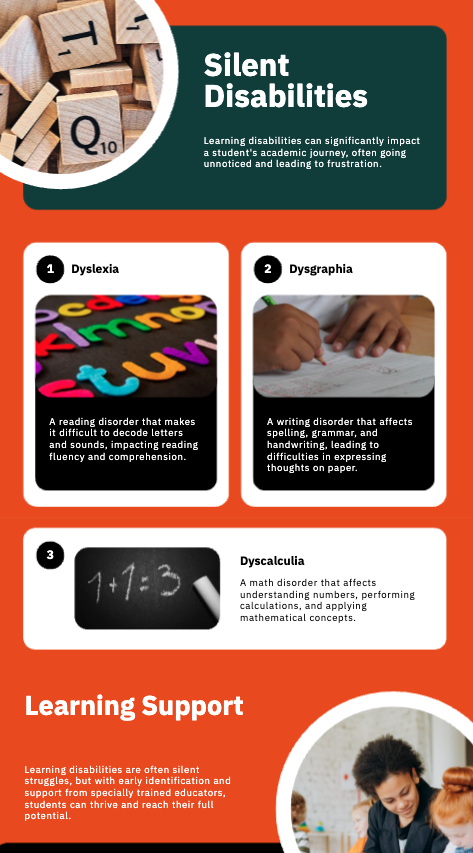
A specific learning disability is a disorder of one or more psychological processes involved in language acquisition, manifesting as an “imperfect ability to listen, think, speak, read, write, spell, or do mathematical calculations.”
No wonder students with learning disabilities can have a hard time in class; their own psychological processes are working against them. Educators must be on the lookout for signs of the three types of specific learning disabilities: dyslexia, dysgraphia, and dyscalculia, which we explore in detail below.
#1 Dyslexia
Dyslexia impairs a person’s ability to decode, or associate letters and words with their corresponding speech sounds. Consequently, reading becomes slow and laborious, even for students who’ve mastered basic reading skills.
Dyslexia can also impair writing and spelling skills, and some students with dyslexia will mix up similar-looking letters like “b” and “d.” School-aged children with this learning disability may also struggle with:
Copying written language.
Expressing themselves in spoken language.
Noticing differences and similarities in letters and words.
Remembering sequences, such as the days of the week.
Sounding out unfamiliar words.
Living With Dyslexia
As a student, Daniel Britton was unable to read test questions and was forced to retake math and English courses multiple times, but he wasn’t lazy or a slow learner, as his teachers had suggested. He merely had a reading disorder.
Daniel went on to pursue a career as a graphic designer—a career he excelled at despite his condition—and gain international notoriety for designing a typeface that simulates reading with dyslexia. By removing about 40% of each letter, the typeface forces readers to slow down and experience the frustration and embarrassment a dyslexic person goes through with everyday reading.
Daniel believes that better learning conditions can be achieved if only there was greater empathy for people with dyslexia. “I would’ve liked to have had more options when I was younger,” he told CNN. “If it (my disability) was picked up earlier or treated correctly, who knows what I could’ve done.”
#2 Dysgraphia
Both dyslexia and dysgraphia are characterized by writing difficulties, but dysgraphia interferes with all aspects of writing, including spelling, grammar, and punctuation. Students with dysgraphia tend to write in an awkward position, gripping their pencil in a clenched fist.
For them, writing is a slow, frustrating, and sometimes painful experience. Their handwriting can be illegible—even to them—with inversed, reversed, incorrectly formed, or inconsistently spaced letters. Unable to organize and express their thoughts on paper, students with dysgraphia tend to run out of space on the page as their hand cramps and their words become scrawls.
Writing requires a broad range of skills, including phonemic awareness, fine motor coordination, and visual and auditory processing. These skills are acquired over a period of years, beginning in preschool with copying shapes and becoming automatic by the third grade.
School-aged children with dysgraphia who are unable to develop foundational writing skills due to the demands of letter formation will likely fall behind as writing assignments become increasingly complex. Deficient handwriting is associated with low self-esteem and poor social functioning, which can follow a student into adulthood.
#3 Dyscalculia
Referred to as “number dyslexia,” dyscalculia impairs a person’s ability to learn number-related concepts or perform calculations with symbols and functions. Without a clear understanding of numbers, students with dyscalculia must sometimes rely on finger-counting to perform even simple calculations. They may also struggle with:
Counting backward.
Memorizing basic calculations.
Performing mental math.
Recalling basic math facts.
Using math symbols.
Considering that most children receive their first smartphone (with a built-in calculator) around the age of 10, basic math skills may not seem as necessary as reading and writing skills. But dyscalculia impairs all areas where mathematical concepts are needed. Telling time, counting money, and remembering directions can puzzle and frustrate students with dyscalculia. Basic math skills are also needed when it comes to mastering complex mathematical concepts in higher grades, and like dysgraphia, dyscalculia can leave students disadvantaged in college and in their careers.
What do dyslexia, dysgraphia, and dyscalculia have in common?
Specific learning disabilities are associated with several comorbidities. Not only are students with a learning disability likely to exhibit symptoms associated with another, but they also have increased rates of behavioral and emotional problems.
The prevalence of comorbid psychiatric disorders makes it all the more important to diagnose learning disabilities as early as possible.
Accommodating Students With Learning Disabilities
Although specific learning disabilities cannot be cured, they can be treated with special education services. With the proper support and accommodations, students can focus on their strengths, adapt to their disability, and succeed in and out of school. They do, however, need a professional who can intervene at the first sign of a learning disability.
Pursue a Master of Arts in Special Education
Are you interested in enriching the lives of students as a special educator? The University of Texas Permian Basin offers two online programs for teachers interested in working with students with learning disabilities:
Master of Arts in Special Education: Gain the knowledge and skills needed to integrate universally designed instruction into the classroom and foster an inclusive learning environment for students with special needs.
Accredited by the prestigious Council for the Accreditation of Education Preparation (CAEP), our online programs will help you become a more well-rounded educator, capable of reaching a broader range of students as a classroom teacher or special education professional. Apply now to one of our online MA in special education programs for the chance to help all your students, disabled or non-disabled, achieve their highest potential.
Psychology is the study of the biological, social, and environmental influences that affect how people think, behave, and learn. This last item has been the subject of great debate in the special education field, where educators strive to help students overcome achievement gaps. With about 14% of all public school students in the U.S. receiving…
Literacy is defined by the UNESCO Institute of Statistics as “the ability to identify, understand, interpret, create, communicate and compute, using printed and written materials associated with varying contexts.” Literacy has fundamentally and profoundly changed society. The rise of written communication has allowed us to share and document information and bind together communities like in…
Industries and fields worldwide are harnessing the power of artificial intelligence (AI) to drive efficiency, cut costs, boost profitability, and improve outcomes. An estimated 87% of businesses are using some form of AI technology, with healthcare, financial services, and manufacturing among the fields making the greatest use. Education, and special education in particular, stands to…
From the outside looking in, the role of a superintendent might seem hazy. They’re often seen as district managers or figureheads. Step inside the world of education leadership, however, and you’ll find they’re so much more.
Alongside teachers and fellow administrators, school superintendents are responsible for creating a safe, inclusive learning environment for students. Still, their role is often misunderstood.
While they manage the daily operations of a school district, superintendents are also visionary leaders striving to improve student achievement. They are advocates, collaborators, and trusted experts—shifting into whatever role their district and students need most.
What Is the Role of a Superintendent?
Superintendents are often defined by their ability to manage finances, personnel, and resources, but their role has become far more nuanced in recent years. Now, school boards and communities are seeing superintendents as community leaders and entrusting them to promote their district’s vision and values.
Many school boards and communities now expect superintendents to:
Act as the public face of the district
Build trust and relationships within the community
Advocate for the district’s mission, vision, and values
Engage with stakeholders, including parents, business leaders, and local government
Superintendents have, in essence, become the living embodiment of their school districts. Consequently, the role has become increasingly relationship-oriented, with superintendents needing to possess strong communication and interpersonal skills to rally entire communities behind a goal.
“Being a superintendent is about building relationships,” said Connecticut’s Superintendent of Schools at Region 12 Patricia Cosentino. “[Y]ou have to make connections with community members, outside organizations. You have to get your parents to buy in, your staff to buy in …” Inspiring others means wearing as many hats as needed to promote a shared vision, and it makes superintendency all the more difficult to define.
Below, we explore some of the many responsibilities that superintendents manage every day as they guide their communities.
Working With the Board
Superintendents are elected by school boards: groups of elected or appointed trustees. Together, they share responsibility for a school district. At board meetings, a superintendent will keep the board informed of current events and recommend initiatives.
Although a superintendent’s recommendations carry substantial weight, it’s ultimately up to the board whether a mandate is approved. Once approved, it falls to the superintendent to see a mandate carried out, so long as they adhere to the framework of policies adopted by the board.
Building Relationships in the Community
Award-winning superintendents agree: leadership, vision, and strategy matter, but communication is the thread that ties them together.
Community members, including parents, politicians, and business owners, are highly invested in the success of their district and bring a range of perspectives to the table. Many have or will have their own children in the schools. People care because they appreciate that quality education is one of the foundations of a strong community.
Add the transparency and media scrutiny that’s a given in any publicly funded endeavor and it’s easy to see why a superintendent needs to be a multitalented leader. They should be capable of identifying key avenues for collaborating with every encounter, building and promoting a community-wide shared vision with every handshake.
A superintendent is considered the primary instructional leader for a school district, but their work is tied to and dependent upon the work of principals, teachers, and support staff. Responsible for hiring and firing teachers and administrators, superintendents must surround themselves with capable professionals while communicating expectations, investing in professional development, and providing the resources they need to perform their roles effectively. Sharing leadership and fostering a culture of respect is essential if superintendents are to provide students with the best possible education.
Overseeing Day-to-Day Operations
Although superintendents are prized for their leadership skills, they must lean on their managerial abilities when allocating time, money, personnel, and resources. Coordinating short- and long-term goals means taking a system-wide approach, one that accounts for education policies and student achievement.
One of the more challenging aspects of being a superintendent is having to make hard decisions, such as cutting staff, when faced with conflicting goals. Providing sound guidance in district budgeting and operations while helping a school district realize its vision is no easy feat, but effective superintendents find a way to make it happen.
Adapting to a Dynamic Role
Administrators who step into the role of superintendent are rewarded with a career unlike any other, where no two days are alike. They could be touching base with board members and visiting classrooms one day and making an appearance at a school sporting event the next.
Unlike a typical 9-5 job, superintendency requires professionals to be much more frequently accessible, and at a moment’s notice. Still, for many administrators, the chance to create systemic change and increase their earning potential as a superintendent is too good to pass up.
Earn Your Superintendent Certification Through UT Permian Basin
Assistant principals and principals interested in becoming district leaders can enroll in The University of Texas Permian Basin’s online Superintendent Certification program. Throughout our online courses, students develop essential leadership and managerial skills while working toward meeting Texas’ certification requirements.
As one of the only four-course programs in the state that maintains a practicum experience throughout, our program also pairs students with a mentor who’ll ensure they’re ready to take on the role of district leader. At UT Permian Basin, we offer the convenience of online learning and the practicality of hands-on experience in a single program designed exclusively for aspiring superintendents.
Summer break hits differently when you’ve been running on fumes since January. That first week is sacred. Your priorities are (in no particular order) sleeping in, ignoring all emails, and reacquainting yourself with your old friend, the couch. You’ve earned it. But once the dust settles, summer becomes something else: a rare window where you’re not just reacting. No lesson plans due, no…
Texas teachers, here’s the reality: More than half of all K-12 students in the state are Hispanic, and nearly a quarter are enrolled in bilingual/ESL programs. That translates to over a million students who needed specialized language support throughout the 2023-2024 school year. Districts are struggling to find enough certified bilingual and ESL teachers. A critical shortage for schools? Absolutely. But…
You’re sitting at your desk after dismissal. The room is quiet (for once), and somewhere between grading essays and planning tomorrow’s lesson, you hear it again in the hallway: “My students are using ChatGPT for schoolwork.” Suddenly, you’re wondering: Is this cheating? This is the real question around AI in education. And as this technology…
Teachers and administrators often refer to their profession as a calling. A passion for teaching and a desire to make a difference in the lives of students is often what draws people to education, but that alone isn’t always enough to succeed in this field. Individuals working in education must envision a clear professional path; otherwise, they risk career stagnation.
As an education professional, you can fend off career stagnation by adopting a mindset of continual learning and seeking out new opportunities to grow. By clarifying your career options, we hope that you’ll continue to pursue your passion, share your knowledge with students, and never forget what drew you to education in the first place.
For Classroom Leaders
Career advancement can happen inside the classroom. For example, the Teacher Incentive Allotment (TIA) program was established in 2019 to make six-figure salaries a reality for Texas teachers. High-performing teachers can earn one of three designations: Recognized, Exemplary, and Master. Earning a designation generates annual teacher-focused allotment funding for a teacher’s school district. Depending on their campus of employment, a Master teacher can generate anywhere from $12,000 to $32,000 for their school district, with at least 90% of funding going toward teachers’ salaries.
Teachers with an active National Board certificate and active Texas teaching certificate can automatically earn a Recognized designation, but eligible teachers looking to earn their Master designation can do so by meeting performance standards and by applying to the Texas Education Agency (TEA). Teachers set on remaining in their current positions should consider pursuing a designation to realize their potential and earn a higher salary in the process.
For Aspiring School Leaders
Administrating is no less noble a pursuit than teaching. As they advocate for and support teachers and students, assistant principals and principals wear many hats throughout the school day. Principals are vital for overseeing operations, developing curricula, and improving student success. Even teachers who had never before considered these roles often find themselves excelling and thriving in them.
To become a Texas principal, you must meet TEA’s certification requirements:
Hold a master’s degree from an accredited university.
Have a valid classroom teaching certificate.
Have two years of creditable experience as a classroom teacher at an institution approved by TEA or another stage agency.
Complete an approved principal educator preparation program.
Chances are you already hold a valid classroom teaching certificate and have two years of creditable teaching experience under your belt, which just leaves earning a master’s degree, completing a preparation program, and passing the exam. Easier said than done, right? But what if you could meet these remaining certification requirements through a single master’s degree program? At The University of Texas Permian Basin, you can. And you can do so from the comfort of your own home.
Becoming a Certified and Experienced Principal
UT Permian Basin offers an online Master of Arts in Educational Leadership program aligned with the Texas SBEC Principal as Instructional Leader certification competencies. An approved principal educator preparation program, our master’s degree program will help you qualify for principal positions in Texas. Certification is, however, only a fraction of what’s needed to succeed as a school principal.
Under the guidance of our experienced and esteemed faculty, you’ll develop the diverse skill set needed to supervise school programs, build a team of passionate instructors, and foster a collegial school culture, all to ensure the delivery of high-quality education. Self-reflection is among the most important skills a principal can possess, which is why our program teaches the value of reflecting on performance, acting on feedback, and striving for improvement. In as little as one year, you can graduate with the experience and qualifications needed to step into an administrative role.
For Aspiring District Leaders
Any education professional can experience career stagnation—even assistant principals and principals. Like their students, they must become lifelong learners if they’re to realize their full potential. Administrators interested in making a significant impact in their life and the lives of students can pursue a career as a school superintendent. Responsible for overseeing entire school districts, superintendents must collaborate with principals, teachers, coaches, support staff, and members of their community to effectively advocate for their students.
Superintendents are remarkable people capable of thriving under extraordinary pressure. Developing the leadership, communication, and problem-solving skills needed for this role may seem daunting, but rest assured, they can be learned and mastered.
Designed for assistant principals and principals, our online Superintendent Certification program can help you not only meet TEA’s certification requirements but also gain the skills and experience needed to make the role your own. In our online courses, you’ll explore financing, safety, cultural diversity, and other essential public education topics. Our online program is also one of the only four-course programs in Texas with a practicum component throughout, giving you the chance to reflect on your learning as you work to transition into a district-level administration role. Earn your superintendent certification in as little as two semesters and open the door to new possibilities.
Propel Your Career Forward at UT Permian Basin
UT Permian Basin’s Master of Arts in Educational Leadership and Superintendent Certification programs are designed for education professionals interested in making the most of their career opportunities and reaching their full potential. UT Permian Basin’s College of Education also offers online education programs for teachers interested in earning their master’s degree and earning a dual certification. Learning is itself a noble pursuit: one that can empower you to find a rewarding career.
Take the next step on your career path. Apply to one of our online programs to change the trajectory of your life and career.
Nothing compares to seeing a student’s eyes light up as they lose themselves in a good book and share in the journey of a hero or heroine. An adventurous hobbit, a boy who lived, or a girl who fell down a rabbit hole could be compelling them to read on, and as they turn the page to see what happens next, they’re developing literacy skills that’ll serve them throughout life.
A student with such an affinity for reading would be considered an engaged reader: someone “motivated to read, strategic in their approaches to comprehending what they read, knowledgeable in their construction of meaning from text, and socially interactive while reading.” If you’re reading this, chances are you’re interested in helping your students become engaged readers who pursue reading not because they have to but because they want to.
Below are several tips to help you share your love of reading in the classroom. Although these tips are geared more for elementary-aged students, some will undoubtedly benefit readers of all ages and reading levels.
Encourage Discussion Through Shared Reading
When story time rolls around, teachers often pick up a book and begin reading aloud, and that’s perfectly fine. Any amount of reading can spark a child’s imagination, and reading aloud is especially helpful in the early stages of literacy development. However, reading aloud doesn’t present many opportunities to demonstrate reading strategies, and elementary-aged students need an intermediate step between being read to and reading independently.
Mimicking how parents and children share bedtime stories, shared reading involves having the entire class read along to enlarged text on a projector or big book. Here’s what it might look like in your classroom: After establishing where the class left off and explaining the purpose and goals of this particular reading, you’ll lead the reading and use prompts to encourage discussion (e.g., What’s going to happen next? What sound do these letters make? Is this word a noun, verb, or adjective?). Through shared reading, your students will improve their vocabulary, comprehension, and phonemic awareness and begin to understand how meaningful stories can be.
How Fiction Captures the Imagination
Reading in elementary school is one of the most important predictors of life success, especially when students read fiction. Around the age of four, children develop what is known as theory of mind: the ability to make mental models of others and consider different points of view. Works of fiction may not be real, but children can still develop a strong emotional connection with their favorite literary characters by empathizing with their hopes, dreams, trials, and tribulations. When stories come to life in a child’s mind, they’re engaging with theory of mind and developing social skills they can bring into the real world.
Mix Things Up With Differentiated Instruction
By now, you’ve probably identified some of your students’ reading strengths and areas for growth. Some students may be better readers, while others may struggle with listening. How can you make sure your entire class is on the same page? One way is with differentiated instruction: the process of adapting lessons to students’ individual strengths, needs, and interests. Giving each of your students the opportunity to discover the joys of reading means providing them with as many avenues to reading as possible.
Restock the Classroom Bookshelf
Part of the thrill of reading is feeling challenged, motivated by the understanding that you’re farther along today than you were the day before. If you have a classroom bookshelf, do your best to stock it with books of varying difficulty levels so that your students are always engaging with stories that excite and interest them. Schedule some independent reading time to give your students the freedom to choose what they want to read.
Flip Open a Picture Book
The adage “a picture is worth a thousand words” is as true as ever. Picture books and chapter books are great for engaging young readers, especially those who may be struggling with text-based books, and graphic novels can be a go-to for older students. Illustrations add another layer to stories while being less intimidating than a long-winded passage, providing additional means for students to interpret a text. A picture can also transcend language and sociocultural barriers that might prevent a student from enjoying a book.
Entertain With an Audiobook
Research has shown that words activate the same regions of the brain regardless of the medium, suggesting that listening to stories is as memorable and impactful as reading them. Playing audiobooks in the classroom helps all students, including those with reading disabilities like dyslexia, develop their literacy skills. This may not seem all that different from reading aloud to your class. However, as enthralling as your performance may be, audiobooks are often narrated by actors and multiple readers who can better capture imaginations with their distinct voices, flawless delivery, and effortless pronunciation.
Become a Reading Specialist Through UT Permian Basin
Hopefully, we’ve given you a few ideas for sharing your love of reading with your classroom. As helpful as these tips may be, however, there’s always more that can be done to help students, especially at-risk students, develop their literacy skills. If you’re interested in going above and beyond to make reading an integral part of your students’ lives, The University of Texas Permian Basin offers a CAEP-accredited online Master of Arts in Literacy that’s right for you.
Aligned with the Texas Education Agency (TEA)’s reading specialist certification, our MA in literacy program can help you advance your career and more effectively serve a broader range of students. Under the guidance of faculty with years of experience in Texas public education, you’ll learn to assess students’ reading strengths, create intervention plans, and assist administrators in improving literacy instruction.
Reluctant to leave the classroom? Don’t be. Our online program will enable you to continue teaching while you pursue your degree and certification. Upon graduating, you’ll be awarded a master’s degree and meet the requirements for reading specialist certification in Texas. Apply to UT Permian Basin’s online MA in literacy program to gain the skills and credentials needed to share your love of reading in any classroom, with any student.
14% of all public-school students received special education services in 2019. And yet, the misguided notion that special education students represent a statistically insignificant population persists. This is one of many misconceptions about special education that, while not always harmful, can leave the public misinformed about this pivotal branch of education—and at worst, can result in exceptional learners being left behind as a result of the well-meaning but mistaken intentions of parents and educators.
The three myths we’ll be discussing are by no means the only ones hindering educators in their mission to give students equal access to education, but they are some of the most pervasive. By dispelling these myths, we hope to help educators foster inclusive learning environments where students with disabilities are not only accommodated but welcomed.
Myth #1: All Disabilities Are the Same
Speaking with Education Week, Darya Iranmanesh recounted her struggles at the age of 9 to receive specialized instruction in her weekly dance class. “I had asked [the teacher] several times to place me in the front, but I remained in the back,” said Iranmanesh. “Learning the dance was nearly impossible with the view I had …” At a young age, Iranmanesh was diagnosed with Leber congenital amaurosis, a rare eye disorder that rendered her legally blind. Her inability to learn the dance was not due to laziness, as her teacher implied, but rather her teacher’s refusal to accommodate her disability.
The majority of students with disabilities experience cognitive difficulties, but every exceptional learner is unique, and many experience vision, hearing, ambulatory, self-care, or independent living difficulty. Regardless of their disability, these students are deserving of and entitled to a “public education that emphasizes special education and related services designed to meet their unique needs,” as declared by the Individuals with Disabilities Education Act (IDEA).
Myth #2: All Students With Disabilities Are Taught in a Special Education Classroom
Students with disabilities placed in self-contained classrooms can receive high-quality special education services (i.e., services specially designed to meet their unique needs), but this is contingent upon their teachers’ ability to provide individualized, small-group instruction. To create a truly inclusive classroom, aspiring special education teachers should pursue a master’s degree from an accredited college program.
Myth #3: Childhood Disability Is Easily Diagnosed
There’s no telltale sign that a student has a learning disability, and signs that do indicate the presence of a learning disability, such as difficulty reading, writing, staying organized, or telling time, can be subtle. For example, a student with dyslexia may have trouble expressing their thoughts, learning new words, or organizing written and spoken language, but it’s unlikely they’ll exhibit every sign associated with dyslexia. And while students with learning disabilities may share many of the same signs, struggles, and frustrations, every learning disability is unique.
Diagnosing learning disabilities is an involved process greatly assisted by parents, who can offer insight into their family history and child’s behavior, and teachers, who can report how their student is responding to instruction. Ultimately, the decision to diagnose a student is left to school psychologists, speech-language pathologists, and educational diagnosticians. These professionals use a process called “response to intervention,” which involves monitoring a student’s progress and moving them through tiers of increasing support. Individual and full evaluations can also be used to diagnose a child with a learning disability and determine their eligibility for special education services.
Become a Special Educator at UT Permian Basin
The special education field has grown both in scope and accuracy in the decades since the passage of IDEA in 1975. Yet the misconceptions surrounding special education continue to hinder the efforts of teachers and students, especially the assumption that all students with disabilities are less capable or less qualified than their nondisabled peers. Although they may be limited by physical, mental, or emotional conditions, most of these students can achieve the same level of success as other students if given equal access to education.
With a master’s degree in special education, you’ll be better able to support students with disabilities. The University of Texas Permian Basin offers three special education programs that can help you in this endeavor:
Our online programs will enable you to earn a master’s degree without having to leave your current position. As a graduate student, you’ll learn how to overcome special education challenges by removing barriers to education, assessing students’ needs, and fostering an inclusive learning environment. The knowledge and skills you’ll gain in our online classrooms will help you become a more effective, well-rounded educator. Alternatively, you can use your master’s degree to pursue a career as a special educator. A master’s degree in special education from UT Permian Basin can open the door to new opportunities for both you and your students.
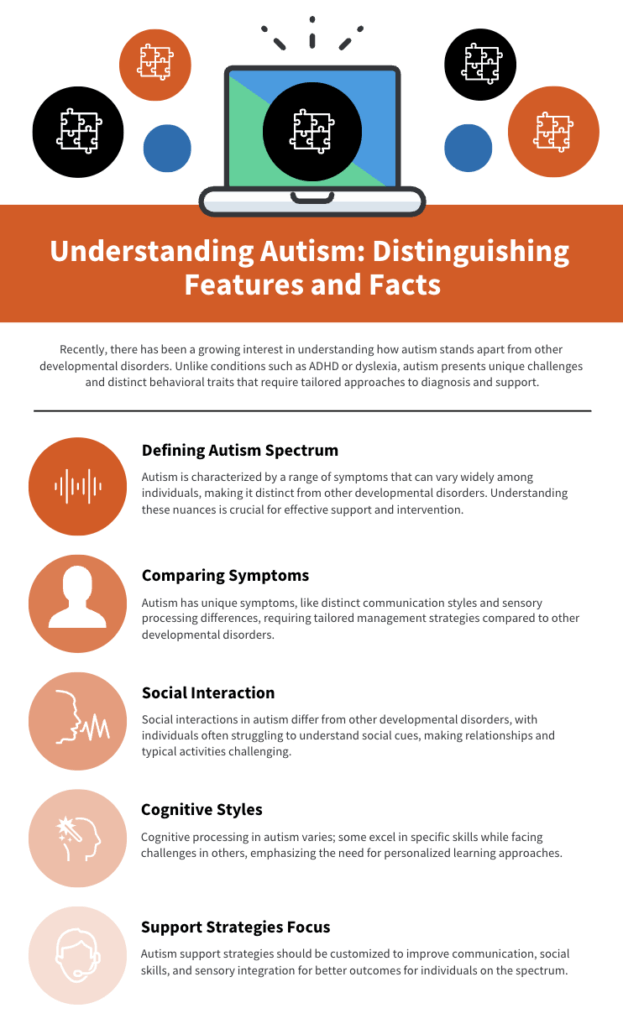
Yes, autism spectrum disorder, or ASD, is considered a developmental disability. It affects how a person communicates, interacts with others, learns, and behaves.
As autism diagnoses have become more common, more families and educators have started asking questions about what autism is, how it’s classified, and how it differs from other developmental conditions. According to data from the Centers for Disease Control and Prevention (CDC), about 1 in 31 8-year-old children were identified with ASD in 2022.
This article breaks down how autism is classified, how it differs from other disorders, and why early intervention matters.
Autism Is a Developmental Disability, but It’s Also a Spectrum
Autism is classified as a developmental disability because it affects development early in life, especially in areas like:
Communication
Social interaction
Behavior
But autism is also a spectrum disorder, which means symptoms and support needs can vary widely from person to person.
Some autistic children may have difficulty with eye contact, social communication, or adapting to changes in routine. Others may show repetitive behaviors or have very focused interests. Some communicate verbally, while others are nonverbal or communicate in other ways.
That range is part of what makes autism different from many other disorders: There’s no single “look” or profile.
How Autism Differs From Other Developmental Disorders
Autism can overlap with other developmental disabilities, which is one reason its diagnosis can be complex.
For example, autism and ADHD can both affect attention, communication, sleep, and impulse control. A child who struggles in the classroom may show signs that could fit one condition, the other, or both. In recent years, diagnostic guidelines have made it easier for clinicians to identify co-occurring autism and ADHD more accurately.
In short, autism is a developmental disability, but it’s not interchangeable with every other developmental disorder. It has its own diagnostic features and support needs.
How to Identify Autism
There’s no single medical test for autism. Instead, healthcare providers look at behavior and development over time.
The CDC says ASD can sometimes be detected as early as 18 months, and by age 2, a diagnosis by an experienced professional can be considered reliable. The American Academy of Pediatrics also recommends autism-specific screening at 18 months and 24 months.
A child may first go through developmental monitoring and screening, followed by a more formal developmental evaluation if concerns come up.
Why Early Intervention Matters
Early intervention can make a meaningful difference for children with autism. Because development moves quickly in the early years of life, support provided during that time can help improve a child’s communication and daily functioning.
Recognizing the signs of autism early and connecting families with the right services can have a lasting impact on a child’s long-term development.
Make a Difference in the Lives of Children With ASD
UT Permian Basin’s online Master of Arts in Special Education with Autism Spectrum Disorders track is built to help professionals support students with ASD.
Through flexible online coursework, you’ll learn about early signs of autism, evidence-based interventions, and strategies for meeting the needs of learners across the spectrum.
Put yourself in the best position to make a difference in the lives of students with ASD. Apply to UTPB’s online MA in special education, ASD track to learn how to better assess your students’ needs, whether or not they’re on the spectrum.
Many teachers are driven by the desire to impart the knowledge and skills that will help students thrive throughout their lives. However, some students have specialized education needs due to a disability or disorder, which means accomplishing this goal may require additional training. If you’re considering pursuing a graduate degree and eventual career in special…
Many young students dread stumbling across an unknown word while reading aloud to the class. Looking for context in pictures or surrounding sentences, students in this situation tend to guess and hope that they’ve landed on the correct pronunciation. The key to word recognition, however, lies not in contextual guessing but in decoding. By identifying…
The terms mainstreaming (integration) and inclusion are often used interchangeably. The careful implementation of these contrasting teaching approaches, however, can have a profound impact on the academic outcomes of students with disabilities. Knowing the difference between inclusion and mainstreaming can help you better reach students with and without disabilities, so we encourage you to join…