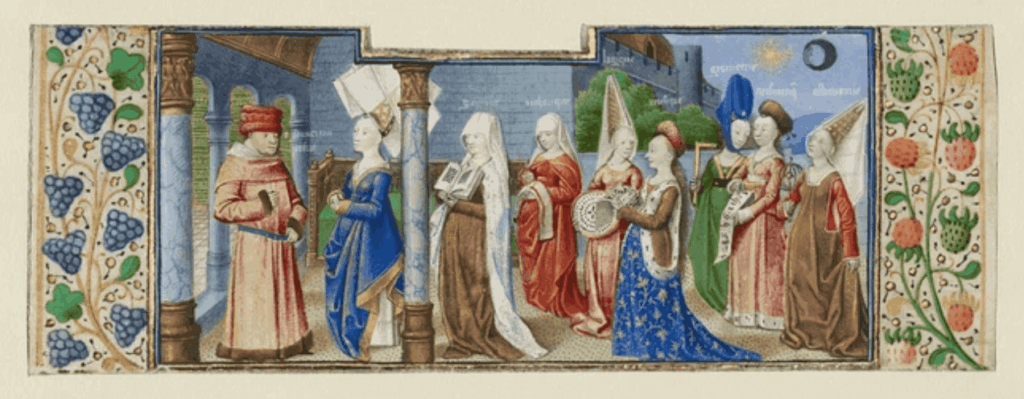
For students in highly specialized academic fields, the professional path that begins after graduation is often clear-cut. Individuals who earn an accounting degree, for example, generally go on to become accountants. Other students, however, prefer a broader academic focus that spans several disciplines, making them a natural fit for studying humanities. Since the term humanities refers not to a profession but rather a broad range of social and cultural studies, the value of a degree in this subject may not be immediately clear. Let’s look now at what we mean by humanities, the essential skills a degree in humanities helps you develop, and the professions for which a humanities degree is most valuable.
The Meaning of Humanities
Humanities encompass a range of disciplines including language, philosophy, history, literature, music, and other arts. One purpose of a humanities degree is to equip students with a well-rounded knowledge of human culture that will enable them to better understand the world around them. A humanities degree also enables students to enjoy greater personal enrichment and build the skills needed to experience a more rewarding career.
The Degree Helps You Build Broadly Applicable Skills
Let’s discuss those skills for a moment. A humanities degree instills students with what are commonly called “soft skills,” which major companies and the U.S. Department of Labor agree are among the skills nearly all employers are seeking in job candidates—not just for entry-level jobs, but for leadership positions as well. These skills include:
Communication: The ability to fully understand information conveyed by others as well as express yourself in a clear and intelligent manner, whether spoken or written.
Critical thinking: The ability to analyze a problem or situation and devise a new, creative way to solve it, either on your own or in collaboration with others.
Cooperation: The ability to work with others toward the achievement of a shared goal. Cooperation requires you to welcome, understand, and incorporate diverse perspectives. In the workplace, this is what’s meant by “teamwork.”
Empirical and quantitative reasoning: The ability to understand and apply numerical data to devise and produce informed decisions.
Personal responsibility: The ability to understand and take accountability for the effects that your choices have on others, as well as to adequately explain your rationale for making such choices.
Social responsibility: The ability to see how your choices affect society as a whole and to use that knowledge as the basis of ethical decisions.
Clearly, these skills—soft or not—can benefit nearly everyone, both personally and professionally. Through a carefully designed curriculum, a humanities degree can help students develop a broad set of these irreplaceable abilities.
The Degree Prepares You for Many Rewarding Careers
By developing a skillset so broadly applicable and marketable, humanities degree-holders are primed to pursue a variety of careers, including:
Advertising sales agent
Artist
Attorney
Clergy member
Counselor
Educator
Event coordinator
Military service member
Public relations professional
Travel agent
Writer
The Value of an Online Humanities Degree From UTPB
When you choose The University of Texas Permian Basin for your online Bachelor of Arts in Humanities, you’ll explore and consider some of the world’s most significant cultural works as you build the key skills that modern employers are seeking.
Our innovative online humanities degree program enables you to gear your studies toward the academic areas that most closely align with your passions. Rather than follow a fixed curriculum, you’ll work together with one of our faculty advisors to design an individualized study plan centered around a multidisciplinary theme, era, set of problems, specialization, or viewpoint. This is a unique configuration that you can’t experience by simply pursuing a major and a minor simultaneously. You’ll pick two to four areas of concentration from a list that includes art, English, Spanish, music, history, and communication, among others, for a total of 24 credit hours of specialized coursework.
In addition to this custom curriculum, our BA in humanities also offers a flexible learning experience through an asynchronous, fully online format that empowers you to complete coursework on your own schedule from virtually any location in the world. It’s the ideal way to earn a bachelor’s degree while fulfilling your professional and personal responsibilities. Need additional flexibility? You can begin your program at any of six annual start times. Once you begin, you’ll learn from the same renowned faculty who teach at the UT Permian Basin campus. When you graduate, you’ll receive the same respected degree as any campus-based student, with no indication that the program was completed online.
Can you see the value that our online Bachelor of Arts in Humanities program offers? Apply here or get more details about the program now.
For writers, narratives are often a synthesis of their real-life experiences and observations. While many writers have had struggles, be their personal tragedies, health issues, lack of acceptance, or economic disadvantages, African American writers have had a much steeper slope to climb. Slavery, racism, discrimination, segregation, and other forms of injustice have often created barriers that have kept Black works from reaching or being widely accepted by a public audience.
Fortunately, many notable African American writers have broken through and had their distinctive voices heard in ways that continue to reverberate to this day. Most have distinguished themselves in multiple ways. Let’s look at a few of these history-changing writers now.
As a girl in the mid-18th century, Phillis Wheatley was enslaved. Her “owners,” John and Susanna Wheatley, permitted her to learn to read and write alongside their daughters. At the age of 13, Phillis made history when her poem “On Messrs. Hussey and Coffin” was published in The Newport Mercury. The poem impressed many, though many more refused to believe a slave had written it. Recognizing an immense talent, the Wheatley family sought to have a book of Phillis’ work published. When they couldn’t find a willing publisher in the Colonies, they were able to secure a publisher in England. Her book “Poems on Various Subjects, Religious and Moral” was published in 1773.
Born into slavery in Maryland, Frederick Douglass, pioneering author, orator, and abolitionist, escaped to New York around the age of 20 and began life as a free man. During his time as a slave, he essentially taught himself to read and write, with some help from other children. He would go on to use those skills to write three acclaimed autobiographies (the first published in 1845, some 18 years before the Emancipation Proclamation) and found the abolitionist publication The North Star. Known for many historical “firsts,” Douglass was also the first African American to become a U.S. marshal.
Also an escaped slave, Brown published an autobiography recounting his experience two years after Douglass’ first autobiography. Six years later, with the publication of “Clotel,” Brown made history by becoming the first African American to publish a novel.
Hughes, a poet, playwright, and novelist, made history pioneering the use of jazz rhythms in poetry beginning in the 1920s. He was a key figure in the Harlem Renaissance, during which African Americans sought to recreate and define their own image through literature, music, and the performing arts.
Born in Harlem amidst the Harlem Renaissance, essayist, novelist, poet, and playwright James Baldwin first made a name for himself with the 1953 novel “Go Tell It on the Mountain,” which explored controversial themes of race, sexuality, and religion. Successive works would venture more deeply into taboo topics including homosexuality and interracial relationships. Baldwin is perhaps best known for his essay collections, including “The Fire Next Time” and “Nobody Knows My Name,” through which he became known as a major voice on civil rights. His work on issues of race inspired Time magazine to do a feature story on Baldwin, in which the publication stated of him: “There is not another writer … who expresses with such poignancy and abrasiveness the dark realities of the racial ferment in North and South.” Baldwin famously stood alongside Dr. Martin Luther King, Jr. during his “I Have a Dream” speech.
Maya Angelou was an acclaimed poet, civil rights activist, actress, and autobiographer. Perhaps the best-known and most influential of her autobiographies was “I Know Why the Caged Bird Sings,” which has both been praised and banned for its realistic depiction of Angelou’s traumatic experiences growing up in a racist, male-dominated society. In 1993, Angelou made history by becoming the first African American woman to recite poetry at a presidential inauguration—that of Bill Clinton.
Morrison was a renowned author and editor. During the late 1960s, she became the first African American female editor at Random House, the noted publishing company. Author of the celebrated novel “Beloved,” Morrison again made history in 1993 as the first Black woman from any country to receive the Nobel Prize in Literature.
Alice Walker is a civil rights activist and author known for the novel “The Color Purple,” which was also turned into an Academy Award-nominated film. She made history with the novel when she became the first African American woman to receive a Pulitzer Prize for Fiction (1982). She also led the first university course dedicated exclusively to female African American writers while teaching at Brandeis University.
Meet History’s Writing Pioneers Through Our 100% Online Program
Our 100% online Bachelor of Arts in English offers an exploration of the form and intricacy of the English language via fiction, drama, and poetry, including the works of pioneering African American writers. In addition to offering a profoundly enriching connection with the English language and the individuals who exemplify English literature and culture, our program helps you hone your ability to:
Think critically.
Write clearly and commandingly.
Solve problems.
Understand and appreciate differing viewpoints.
According to The Wall Street Journal, these soft skills are in high demand in the professional world, with about 90% of surveyed executives stating that such skills are of equal or greater importance than technical skills, yet are scarce among job candidates. Our BA in English program prepares you for careers in fields including, but not limited to:
Communication
Law (Our program curriculum prepares you for the LSAT.)
Teaching at the high school or junior college level
In addition, our program provides the groundwork for master’s and doctoral studies in English, should you wish to advance your education after completing your bachelor’s degree in English.
Quality, Affordability, and Convenience
Our online BA in English program offers exceptional quality and value, with competitive tuition rates and an asynchronous online format that gives you the freedom to learn on your own schedule, around your professional and personal commitments. What’s more, you can choose your own classroom, as our program is accessible from any location in the world with sufficient internet access.
Explore the works of the English language’s literary greats and gain valuable skills through our online BA in English!
When people think of history class, they might picture dusty textbooks, memorized dates, or a recurring nightmare of a multiple-choice question about the date of the Great Molasses Flood. (1919, for what it’s worth.)
But here’s what that reputation misses: History is one of the most practical subjects you can study. The skills it builds—critical thinking, research, writing, argumentation—are exactly what some employers say they can’t find enough of. And at the graduate level, a history degree can invite opportunities that might surprise you.
Why Is History Important?
History is important because it explains how our society arrived at our current moment. Every political system, social norm, economic structure, and cultural tension playing out today has roots somewhere in the past. Understanding those roots gives you scope, context, and a serious advantage over people who don’t. You’re better equipped to make sense of the present and think clearly about what comes next.
Historians and historically trained thinkers have shaped public policy, legal arguments, journalism, education, and leadership at every level. The ability to look at a complex situation, trace how it developed, and form a clear perspective is rare and valuable. It’s also exactly what a history education teaches you.
History degrees have launched some pretty varied careers (and we’re not afraid to name names):
JFK, FDR, and George W. Bush – all history majors before they became president
Elena Kagan – history degree from Princeton, first female dean of Harvard Law, Supreme Court justice
Susan Wojcicki – history and literature major at Harvard, former CEO of YouTube
Steve Carell – history and theatre degree from Denison University, beloved actor and comedian (proof that this degree is nothing if not versatile)
Why Study History at the Graduate Level?
Graduate-level history study goes much deeper than the survey courses most people remember from undergrad. Instead of covering centuries in a semester, you’ll spend careful, considered time on historic moments and topics of consequence.
One week you’ll be reading primary sources and wrestling with competing interpretations. The next, you’ll build your own arguments from the evidence. It’s less “here’s what happened” and more “here’s why it matters—and what we still don’t fully understand.”
At UTPB, the online MA in history covers topics including:
The American Revolution
The Civil War and Reconstruction
The Third Reich and Holocaust
World War I
That kind of focused, rigorous study builds skills that transfer directly to a wide range of careers. And that’s the question most prospective students want answered—what can you do with a history degree?
What Can You Do With a History Degree?
History degree jobs span a wider range than most people expect. Sure, a classic role as a history professor probably springs to mind first, but a master’s in history can take graduates down many different paths.
That’s because the degree signals a key message to employers: This person can read carefully, write clearly, think critically, and make a coherent argument. Those abilities show up again and again on the lists of skills employers are struggling to find.
Some common career paths for history graduates include:
Education: Teaching at the secondary or post-secondary level, curriculum development, and instructional design
Government and public policy: Research, analysis, communications, and advisory roles at local, state, and federal levels
Management and leadership: Operations, project management, and organizational leadership
Research and writing: Journalism, archival work, museum curation, and professional historian roles
Law enforcement and intelligence: Analytical and investigative roles that rely heavily on research skills
A master’s degree also carries a real earnings advantage. According to the U.S. Bureau of Labor Statistics, workers with master’s degrees had median weekly earnings of $1,840 in 2024, compared to $1,543 for bachelor’s degree holders. That’s a gap of about $300 a week, adding up to roughly $15,000 more per year.
Why Get a Master’s Degree in History Online With UTPB?
If the careers, skills, and famous alumni above haven’t sold you yet, here’s the practical part: UTPB makes it genuinely easy to earn your graduate degree in history. The program is fully online and asynchronous, which means you complete coursework on your own schedule. No commuting, no rigid class times, and no choosing between your degree and your job.
A few things worth knowing about our online MA in history:
There’s no GRE required for admission.
Thesis and non-thesis options are available.
Many students complete the program in as little as two years.
Courses are taught by the same distinguished faculty who teach the on-campus program.
If you’ve already completed a bachelor’s degree from an accredited institution, you may be closer to earning your master’s than you think. Explore UTPB’s online MA in history to learn more about the program and how to apply.
Imagine being told you can’t do something—by law, by tradition, by those close to you—and doing it anyway. Even today, women face greater barriers to recognition and authority than men. Yet throughout history, countless women stepped beyond traditional domestic roles, often at great personal risk. This article highlights nine of the countless important women who…
“Our country has deliberately undertaken a great social and economic experiment, noble in motive and far-reaching in purpose.” -Herbert Hoover Today, speakeasies are stylish bars hidden away behind bodegas, coffee shops, and laundromats. Ordering a cocktail is as easy as walking up to the bar, and while some places still require a password, you can…
At the iron gates of Auschwitz-Birkenau, one of the most infamous extermination camps of Nazi Germany, the chilling phrase “Arbeit macht frei” (“Work sets you free”) still casts a haunting shadow. These deceptive words led into one of history’s darkest chapters. Beyond that gate, more than a million lives were brutally ended. Auschwitz-Birkenau was just…
What Are Liberal Arts?
When people think of liberal arts, they often think of subjects like history or literature. But a liberal arts education is much broader than that. Think: less about locking into one career, more about building skills you’ll use no matter where you land.
At its core, the liberal arts focus on building transferable skills that apply across industries and careers. Rather than training for one specific job, a liberal arts education prepares you to adapt to many possible career paths.
Where Did the Term “Liberal Arts” Come From?
The phrase “liberal arts”comes from the Latinliberales artes, meaning “education worthy of a free person.” In ancient Greece and Rome, this type of education wasn’t about learning a trade. It was about developing the mind.
Philosophers like Cicero believed these studies helped people reason, communicate, and participate in civic life. Later educators took the idea further, arguing that a liberal arts foundation made it easier to adapt as roles changed, whether someone became a politician, a teacher, or even a stone mason.
How Have Liberal Arts Evolved?
During the Middle Ages, liberal arts education centered on seven core subjects:
The Trivium – grammar, logic, rhetoric
The Quadrivium – arithmetic, geometry, astronomy, music
Today, these areas have evolved into broader disciplines. Modern liberal arts programs may include:
Literature and languages
Sociology and psychology
Natural sciences like biology, chemistry, and physics
Arts and humanities
This flexibility allows you to tailor your education. Interested in marketing but fascinated by psychology? Great, because a liberal arts pathway lets you combine both. Drawn to public service but curious about communication? That works, too.
What Does a Liberal Arts Degree Look Like Today?
A modern liberal arts degree offers a strong academic foundation while allowing room for exploration. One example is a Bachelor of Arts in Humanities, a program that focuses on several subjects, including:
History and philosophy
Literature and languages
Social sciences
Visual and performing arts
These programs also incorporate core general education subjects like English, math, and science, ensuring you graduate with a well-rounded skill set valued by employers.
What Can You Do with a Liberal Arts Degree?
Liberal arts degrees open doors to many career paths, including:
Marketing or communications
Human resources
Public relations
Nonprofit or public service roles
Journalism or writing
Education and advising
Many graduates also pursue advanced degrees in law, business, or education. The versatility of liberal arts is its greatest strength.
Earn a Bachelor of Arts in Humanities Online at UT Permian Basin
The online Bachelor of Arts in Humanities program at UT Permian Basin helps students build essential skills like communication, critical thinking, and social responsibility, all in a flexible online format.
You can choose up to two concentrations to personalize your degree, and with guidance from faculty advisors, you can create an individualized plan of study that aligns with your interests and career goals.
If you’re looking for a degree that values adaptability, creativity, and lifelong learning, a liberal arts education may be the right fit.
Studying classics helps us understand where many of our biggest modern questions came from, including who gets power, how societies define justice, and why humans keep telling the same stories in new outfits. A single, harmless question comes up a lot in humanities courses (usually from someone trying very hard not to care): Why does any of this matter? And…
Ever found yourself humming an earworm and suddenly wondering, “Where did this come from—and who created it?” Music is a universal language. It conveys memory, rebellion, grief, joy, and identity. Across centuries, women have used the language of sound in a world where they’ve been told, repeatedly, to stay invisible. Here are some of the…
Modern challenges like AI and global weather crises can stir up fear and controversy. But that’s for the scientists to sort out, right? Not exactly. The humanities play a powerful, often overlooked role in technology and science. Trends in these fields can create ethical, moral, environmental, and philosophical dilemmas. The humanities equip us to navigate…
A 2019 research report from the acclaimed Mellon Foundation addressed the overall value of humanities, stating that they’re “useful to society in the preservation and curation of culture” and also that the humanities “contribute to the maintenance and health of democracy via teaching skills of critical reasoning, debate, and evaluation of ideas.”
Being part of a culture gives us an innate sense of the history, customs, and values of our own social group, but this scope is often limited. In the context of education, humanities can help bridge this gap in cultural knowledge. The focus of an education in the humanities is not just on mastering a broad range of academic disciplines but on introducing students to humanities on the global scale. Humanities expand our understanding of different human cultures and enable us to understand ways in which they’re similar and ways in which they differ, in the present and historically, delivering a broader perspective on the world in which we live.
The humanities encompass the full range of human thought and creativity, including history, literature, languages, religion, philosophy, music, theatre, and all of the performing arts and visual arts. In a formal educational setting, students may gain foundational knowledge in all of these but also be given the chance to learn more about specific subjects which appeal to them. This does more than strengthen an individual’s ability to identify from which era a piece of music originates or which art movement a particular painting exemplifies. It instills them with marketable, transferrable skills that can help them in their professional lives and beyond.
As the publication NH Business Review states in an article titled “The business case for humanities education”: “The humanities are part of an interconnected whole that yields a broad, deep education fostering 21st century career readiness and the ability to work with others to respond better to day-to-day work responsibilities, as well as life’s broader needs and challenges.”
Translating Humanities to Real-World Skills and Benefits
The truth is, studying humanities helps one develop skills that are beneficial in any role, in any field. Humanities studies are broad by design and the value of humanities in education is equally expansive. So, what humanities skills do employers seek? What kind of professions do humanities degree holders represent? What types of compensation do these roles offer?
The following skills—all introduced or strengthened through a humanities education—are among the skills and qualities today’s employers consistently value:
Critical Thinking
Teamwork
Communication
Empirical and Quantitative Reasoning
Personal and Social Responsibility
Recent U.S. Census Bureau data shows that graduates of bachelor’s degree programs in humanities commonly work in roles including management, office and administrative support, sales, business and financial operations, and the arts and media. That’s a fairly broad spectrum that doesn’t relegate degree holders to employment within one position or industry.
The same census data indicates that bachelor’s degree holders in the humanities earned an annual median compensation of $52,000. This amount is in clear contrast to the earnings of those with an associate degree or limited college experience, reported as $40,000 per year, and those with a high school diploma alone, reported as $34,000 per year.
Earning a Bachelor of Arts in Humanities Online
The University of Texas Permian Basin’s online Bachelor of Arts in Humanities program can help you develop career-enhancing skills and join the many graduates who’ve recognized the value of humanities in education.
Our immersive, affordable online BA in humanities program offers students a tremendous amount of flexibility. As a student, you won’t be expected to follow a predetermined path. Instead, the program empowers you to choose up to two concentrations that align with your personal areas of interest, including art, communication, English, history, or music, for a total of 24 credits of specialized coursework in these areas. Our faculty advisors collaborate with you to establish an individualized plan of study with an interdisciplinary theme, period, set of problems, specialization, or perspective. Degree programs that combine one major and one minor don’t offer you the same experience.
UT Permian Basin’s online BA in humanities program is presented 100% online and allows you to finish assignments at your own pace, any time of day, from any location with internet access. Additionally, you can choose from six start dates a year. Courses are eight weeks in duration, which allows for an accelerated degree completion time. Each course is taught by the same renowned faculty who teach them in person at the UT Permian Basin campus. When you graduate, you’ll receive the same degree that campus-based students receive, with no mention of “online” on your diploma.
The humanities are the study of how humans understand and express the world around them. They include disciplines such as art, language, history, philosophy, religion, and performance (all fields that examine human culture across time).
This need to understand and express the human experience is not new. Long before formal education existed, humans were already engaging in the humanities. From early cave art to literature and philosophy, our ancestors used creative expression to record their experiences and communicate ideas
As civilizations developed over centuries, these forms of expression have become more structured, forming what we now recognize as the humanities.
In this article, we’ll:
Trace the early origins of the humanities
Examine key periods of development
Explore how the evolution of the humanities became a formal field of study
Ancient Greece and the Foundations of Humanities
Between the time of the Neanderthals and what we call ancient Greece, art found its way onto practical objects such as vases and bowls. Languages developed. Religions were born. Even then, works that would make an enduring impact in the humanities were being created.
“The Odyssey” and “The Iliad,” both attributed to Homer, are some of the oldest surviving works of Western literature and are estimated to have been written in the eighth century B.C. They’re still widely read by secondary school and college students today.
Homeric scholarship, the study of Homer’s works, is one of the oldest subjects in education. Around the time Homer’s epics were written, various forms of arts, crafts, and writing in Greece were flourishing, coinciding with expanded trade with other countries, which exposed people to more diverse cultural influences.
In the fifth century B.C., democracy thrived in Athens, and the city essentially became the world capital for philosophy, drama, literature, art, and architecture. The Parthenon and some of the other famed Greek monuments date from around this time.
The Renaissance and the Rise of Humanism
The Renaissance (meaning “rebirth”) was a revival of classical scholarship and heralded a renewed interest in the study of ancient Greek and Roman civilizations, which in large part was a study of humanities. The Renaissance is said to have started in Italy as early as the 14th century B.C. and expanded throughout Europe in the following centuries.
During this period, fine art in particular grew in importance, with many influential paintings and sculptures stemming from this time. Some of the most notable figures from the Renaissance era include:
Philosopher Niccolò Machiavelli
Poet Francesco Petrarca (Petrarch)
Astronomer Galileo Galilei
Dramatist William Shakespeare
The exploration of lands outside the known world also began in earnest in the Renaissance, bringing new influences into Western culture. New inventions that would prove critical to education and the humanities, such as the printing press, also emerged during this time.
The development of humanism during the Renaissance played a key role in the rise of what would later be formally called the humanities. While philosophy and learning had previously been dominated by clerics, humanism (not to be confused with modern secular humanism) was started by secular (nonreligious) scholars and writers.
Humanism put the focus of art and other forms of expression on human nature and the human form. According to the Encyclopedia Britannica, it empowered men to “break free from the mental strictures imposed by religious orthodoxy, to inspire free inquiry and criticism, and to inspire a new confidence in the possibilities of human thought and creations.” Over time, the idea of humanism came to denote the humanities as we understand and use the term today.
How Humanities Education Expanded in the United States
Flash forward to the United States in the 20th century. World War II had a detrimental effect on higher education in the country, with many college-aged individuals leaving or foregoing college for military service.
Following the war, the U.S. made a concerted effort to help returning service members resume their studies. Furthermore, Congress completely revamped and expanded the higher education system through the enactment of a series of laws.
After this legislative overhaul, college-level education in humanities soared from the 1950s through the early 1970s, and it’s been enjoying its own type of renaissance in the 21st century as employers express demand for the skills that students of humanities develop.
Earn Your Bachelor of Arts in Humanities Online
The University of Texas Permian Basin’s online Bachelor of Arts in Humanities program can help you develop skills that will be valuable to you in any professional field.
As a student, you’ll follow your own path, choosing two concentrations that align with your personal areas of interest. Options include art, communication, English, history, and music.
Keep the humanities alive and see how they can positively impact you, both in your personal and professional endeavors. An online Bachelor of Arts in Humanities program is the first step.
Studying classics helps us understand where many of our biggest modern questions came from, including who gets power, how societies define justice, and why humans keep telling the same stories in new outfits. A single, harmless question comes up a lot in humanities courses (usually from someone trying very hard not to care): Why does any of this matter? And…
Ever found yourself humming an earworm and suddenly wondering, “Where did this come from—and who created it?” Music is a universal language. It conveys memory, rebellion, grief, joy, and identity. Across centuries, women have used the language of sound in a world where they’ve been told, repeatedly, to stay invisible. Here are some of the…
Modern challenges like AI and global weather crises can stir up fear and controversy. But that’s for the scientists to sort out, right? Not exactly. The humanities play a powerful, often overlooked role in technology and science. Trends in these fields can create ethical, moral, environmental, and philosophical dilemmas. The humanities equip us to navigate…
The humanities encompass the full range of human thought and creativity, including languages, religion, philosophy, and the broad spectrum of the arts (including the performing arts and the visual arts). Humanities education explores the commonalities and differences in self-expression that humans have exhibited through the ages and continue to demonstrate today. The humanities have always been and will continue to be the basis of human cultures and source of our perceptions of different cultures.
In the academic realm, a student may study any or all of the humanities as part of a formal degree program such as a Bachelor of Arts in Humanities. These programs expose students to diverse ideas from around the world, broadening their knowledge and developing their critical thinking abilities.
Are the Humanities Important?
People from all walks of life, across philosophical and political perspectives, agree on the importance of the humanities. Famed “Star Wars” director George Lucas said this of the humanities: “The sciences are the ‘how,’ and the humanities are the ‘why’—why are we here, why do we believe in the things we believe in. I don’t think you can have the ‘how’ without the ‘why.’”
Former President Ronald Reagan believed that, “The arts and humanities teach us who we are and what we can be. They lie at the very core of the culture of which we’re a part.” J. Irwin Miller, famed industrialist and civil rights proponent, also spoke to the transformative nature of the humanities when he stated, “The calling of the humanities is to make us truly human in the best sense of the word.”
The broadly applicable skills that the humanities offer also directly benefit individuals in their personal and professional lives. As American philosopher and law professor Martha Nussbaum notes, “Business leaders love the humanities because they know that to innovate you need more than rote knowledge. You need a trained imagination.”
What Skills Can You Gain by Studying Humanities?
Humanities expand our knowledge of human cultures and help us understand what binds us together and what differentiates us from one another. In addition to these high-level insights, however, they also provide practical applications that can enhance your professional skillset and give you a competitive edge. By studying humanities in a formal university-level program, you can acquire transferrable, marketable skills and qualities that will be an asset to you in your professional pursuits. What will you learn in a humanities program? Examples include:
Critical Thinking—The ability to receive and analyze knowledge and to use your creativity to develop innovative solutions to problems.
Communication—The ability to form unique viewpoints and to express yourself clearly and persuasively in both written and spoken forms.
Empirical and Quantitative Reasoning—The ability to comprehend and use numerical data to formulate and deliver educated decisions.
Teamwork—The ability to understand and accept the viewpoints of others and to work collaboratively with them to achieve common goals.
Personal Responsibility—The ability to see the consequences for your actions and take responsibility for and justify the choices you make.
Social Responsibility—The ability to see what’s best for society and the world as a whole and to act accordingly.
Employers want professionals who can come up with fresh approaches to solving problems, express themselves clearly, collaborate with others, and act in a responsible, ethical manner. These abilities are the foundation for nearly every career path, as well as many graduate-level programs. Equipped with these skills, you’ll be prepared to take on a diverse range of career paths, including:
Teacher
Writer
Public relations manager
Advertising sales agent
Travel agent
Counselor
Event organizer
Artist
Lawyer
Minister
Military service member
Why Earn Your Degree in Humanities From The University of Texas Permian Basin?
The University of Texas Permian Basin’s online Bachelor of Arts in Humanities program goes beyond discussions of the world’s great works of art and philosophies. This immersive, affordable program empowers you with the key skills today’s employers value most.
Our BA in humanities program is unique in that, as a student, you’re not given a preset path to follow; the program enables you to choose concentrations based on your personal areas of interest. Our faculty advisors work with you to develop an individualized plan of study with an interdisciplinary theme, period, set of problems, specialization, or perspective that you can’t get by combining a major and minor in the traditional way. You’ll choose a minimum of two concentration areas in art, communication, English, history, or music, totaling 24 credits of specialized coursework in these areas.
Our program is flexible not only in terms of what topics you may study but in how you complete your degree. The 100% online format allows you to complete coursework anytime, at any location with internet access. You can choose from six start dates a year and enjoy condensed eight-week courses and an accelerated completion time. All courses are taught by the same esteemed faculty who teach on campus at UT Permian Basin. When you’re ready to graduate, you’ll receive the same valued degree that campus-based students receive.