How AI Is Reshaping International Business Operations: 5 Case Studies
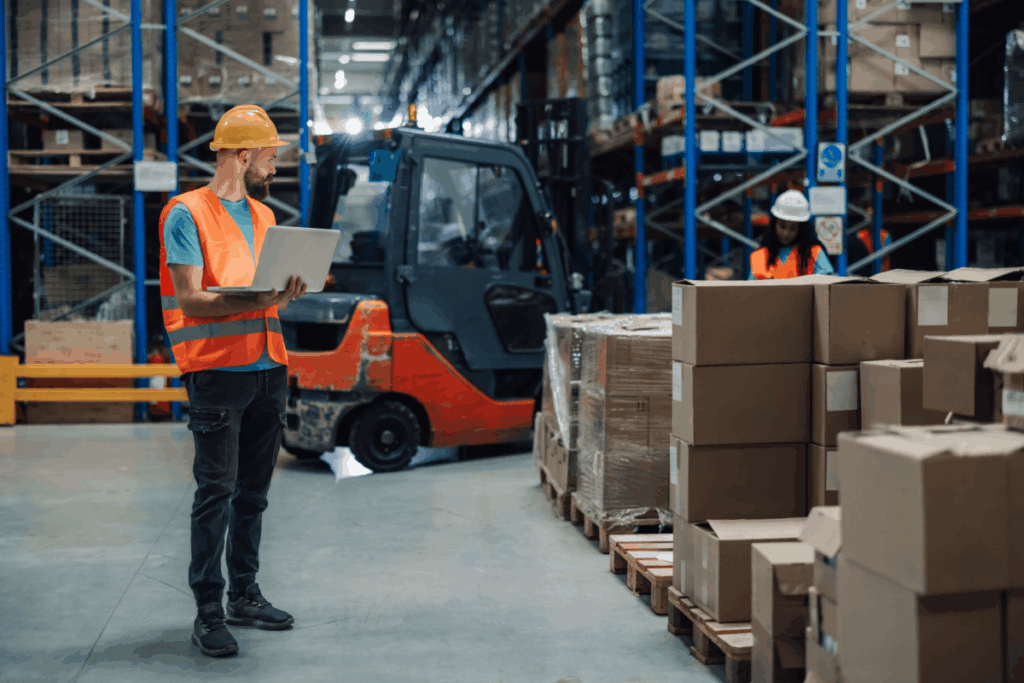
From warehouses to boardrooms, companies worldwide are using AI to reshape how they work. In international business operations, AI helps manage inventory, track fleets, prevent accidents, and analyze massive datasets.
Today’s business leaders need to understand supply chain management, customer engagement, and other critical operations—and how AI fits into them.
Here’s how five major companies are using AI to save billions and improve operations.
5 Companies Using AI to Transform International Operations
These international success stories show how AI is changing business operations for major companies. Each case study offers lessons for future leaders.
1. PepsiCo: AI-Powered Inventory Management
PepsiCo sells more than $90 billion worth of soft drinks and snack foods every year, and all those fizzy beverages and salty snacks move through a massive global warehouse network. Every site handles huge volumes of inventory that need to move smoothly from point A to B to C before reaching customers.
The problem? PepsiCo recently lost many of its most experienced warehouse managers, leaving operational gaps.
The fix? PepsiCo turned to AutoScheduler, a cloudbased, AIpowered warehouse orchestration platform that works with existing warehouse management systems. It syncs labor, inventory, equipment, and dock schedules in real time, keeping different parts of the operation aligned.
Increase hourly warehouse inventory movement by 12%
Automate scheduling decisions, freeing up employees for other tasks
2. Walmart: Smarter Stock Management
Retail giant Walmart operates across the Americas and Africa, with millions of daily shoppers visiting its brick-and-mortar stores. Customers expect everything from groceries to appliances to be available under one roof. When items are out of stock, shoppers go home disappointed.
The problem? Some Walmart stores had too many items while others didn’t have enough. To fix this, Walmart would need to predict demand for millions of products across thousands of stores—and get it right daily.
The fix? Walmart added an AI system that analyzes hundreds of factors in real time. By pulling in past sales, online search trends, weather, and local events, the system uses algorithms and predictive analytics to forecast demand with tremendous accuracy.
Save $2.3 billion in inventory costs during the first year alone
Reduce customer care resolution times by up to 40%
3. Werner: AI for Fleet Management
How do PepsiCo’s products get from the plant to retailers like Walmart? Via trucking companies like Werner. In 2024, however, Werner faced an issue that was costing them time and money—and decided to do something about it.
The problem? Trailers would regularly go missing from Werner’s fleet. In an industry where trucks keep an entire North American supply chain moving, lost trailers create major delays and financial hits.
The fix? Werner used GenLogs Truck Intelligence, an AIpowered system that uses roadside cameras to spot missing trailers or ones with faulty geolocators. This cut search times from weeks to just hours, helping the company quickly locate missing equipment.
Trucking has hazards beyond missing equipment. DHL, one of the world’s largest logistics providers, sends drivers across 220 countries and territories, making safety both crucial and complex.
The problem? DHL driver accidents caused injuries and racked up millions in damages. With a trucking fleet operating 24/7 in all weather and road conditions, however, reducing accidents was a challenging undertaking.
The fix? DHL is now using AI tools to keep drivers safe. AI-powered computer vision systems use facial recognition technology to spot tired drivers and alert them to take a break. AI-driven telematics systems help too—alerting drivers to blind spots and even automatically braking when needed.
JPMorgan is one of the biggest names in global finance. With that distinction comes a massive workload for its legal team.
The problem? Manually reviewing about 12,000 documents per year ate up 360,000 hours of legal team time.
The fix? JPMorgan built its own AI platform, Contract Intelligence (COiN), with natural language processing and machine learning algorithms. COiN scans legal documents, pulls key clauses, turns messy text into clean data, and keeps improving as it learns from past files.
COiN didn’t replace legal staff; it freed them up to focus on highervalue work like negotiations.
Prepare for Global Business Success With an International MBA
Across industries—from consumer goods to retail, transportation, and finance—artificial intelligence is changing international business operations.
These case studies show a clear trend: Companies need professionals who understand both traditional business fundamentals and how AI fits into operations. The skills behind these success stories—supply chain management, operations strategy, data analytics—are exactly what you’ll learn in an MBA program focused on international business.
Whether you’re planning to work in logistics, retail, finance, or another global industry, understanding how AI transforms business operations is increasingly important. Start mastering these essentials with UTPB’s online international business MBA program.
When companies expand into foreign markets, they face a fundamental question: Should they keep everything the same, or adapt to fit local customs? The answer usually involves two strategies—globalization and localization—and most successful businesses use both. Imagine you’re traveling abroad and, in a horrible twist of fate, your iPhone breaks. You buy a new one at a nearby Apple…
Amazon started as a small online bookstore in the 1990s. Over time, it added more merchandise and offered its services to third-party sellers until it grew into the global powerhouse we know today. Ever skipped the store and found yourself going straight to Amazon? You’re not alone—and it’s a glimpse into how e-commerce is reshaping…
Even before COVID sent millions of professionals home to work in their pajamas or athleisure, some companies offered work-from-home or hybrid options. Today, remote work has become increasingly popular with professionals: 97% of remote employees report wanting to work that way the rest of their careers. And fewer companies are posting office-only jobs. Currently, about…