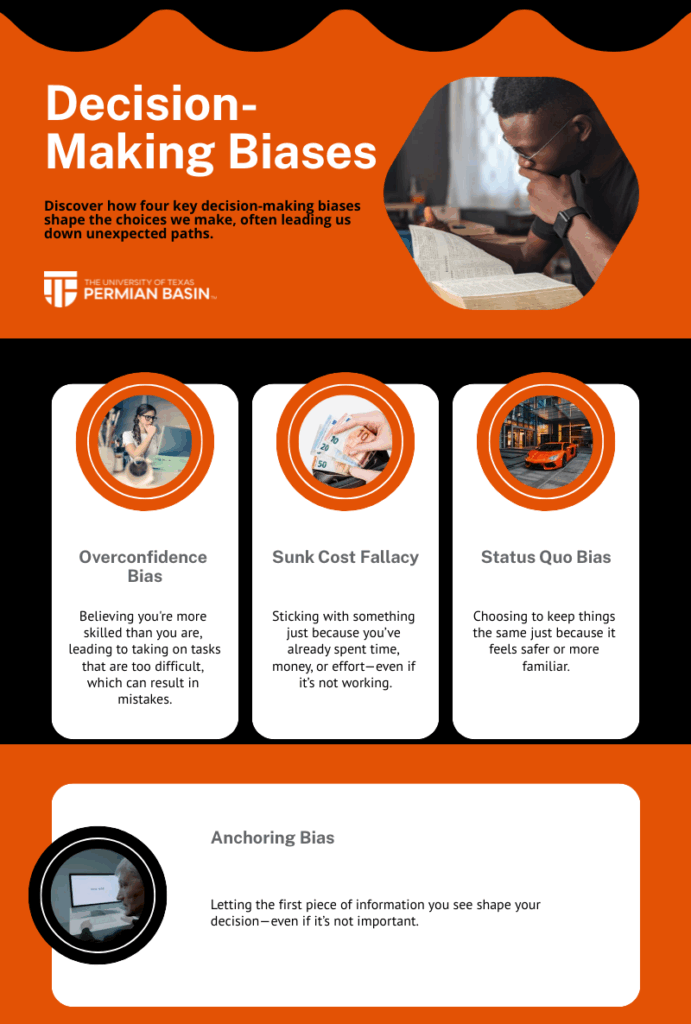
Every day, your brain processes an enormous amount of information. To keep up, it relies on mental shortcuts called cognitive biases to make decisions more efficiently. While these shortcuts can be helpful, they don’t always lead to the best outcomes.
One category, decision-making biases, affects how we choose between options, especially in uncertain or high-pressure situations. Here’s a closer look at what those biases are and four common types that can shape your daily choices.
What Is a Decision-Making Bias?
A decision-making bias is a type of cognitive bias that influences how we choose between options. These mental shortcuts help us make quicker decisions, but they can also lead us away from the most rational choice.
Sometimes, that’s harmless. You might default to your usual dinner order because it feels easy and familiar.
Other times, it can lead to less practical choices, like agreeing to run a 5K next week when your running shoes haven’t seen the light of day since “Tiger King” dropped.
4 Types of Decision-Making Biases
Here are four common decision-making biases that shape your choices throughout the day.
#1 Overconfidence Bias
Overconfidence bias happens when you overestimate your skills or judgment in a particular area.
Maybe you’ve watched enough “Top Chef” to feel ready for a gourmet dinner challenge. Suddenly, coq au vin seems totally manageable, even though you still check the pasta box directions every time. That inflated confidence can push you toward decisions that don’t quite match your actual ability.
#2 Sunk Cost Fallacy
The sunk cost fallacy happens when you keep investing in something because of the time, money, or effort you’ve already spent.
Say you buy a year-long gym membership in January. By spring, you dread going, but you keep showing up anyway because you already paid for it. Even when walking away would make more sense, your past investment keeps influencing the decision.
#3 Status Quo Bias
Status quo bias pulls you toward the familiar, even when a better option is available.
For example, your doctor may recommend a new medication with better benefits, but sticking with the one you already know feels safer. In that moment, familiarity can outweigh logic.
#4 Anchoring Bias
Anchoring bias happens when the first piece of information you see shapes the way you evaluate everything that comes after it.
Think about scanning a menu and spotting the most expensive entrée first. Once that number is in your head, the other dishes may start to seem more reasonable, even if they’re still pricey. That first number becomes the anchor, whether or not it should
Make the Decision That’s Right for You at UTPB
With The University of Texas Permian Basin’s online Bachelor of Arts in Psychology, your higher education decision is simple. Our program offers online students plenty of benefits, including networking, flexibility, and affordability—all on a timeline that works for your schedule.
Take the first step toward deciding your future and apply today!
Don’t miss part two of our series on cognitive bias, where we’ll discuss social biases and how they influence the way we behave and perceive ourselves and others.
Psychology is one of the broadest academic fields, and one of the most versatile. It spans everything from courtrooms to corporate offices, from childhood development to competitive sports. With so many specialties (and subspecialties), it can be tough to know where to even start. So exactly how many branches of psychology are there? The field is…
Ever reach for your phone and instantly face a barrage of messages, notifications, subscription reminders, and social media updates? You’re not alone. Scientists have estimated that the average person processes about 74 gigabytes of information daily: equivalent to watching 16 high-definition movies back-to-back in a single day. Cognitive overload is real. And over time, constant stimulation quietly changes how we think, focus, and feel. In this article, we’ll explore: What Does Cognitive Overload Mean? Cognitive overload happens when your brain receives more information than…
When someone struggles with depression, homelessness, or discrimination, who steps in to help? A psychologist? A social worker? A sociologist? These three fields all address human challenges, but they explore humanity from very different angles: one from society, one from the mind, and one from the front lines. So what are the similarities and differences between sociology, psychology, and social work? This guide clears up…
Did you know that there are approximately 33.2 million small businesses in America? About 46% of workers in the United States are employed by these tiny but very mighty companies. However, larger businesses employ numerous expensive marketing strategies to increase their visibility, customer base, and revenue, so how are small businesses supposed to keep up?
Enter social media marketing, a digital marketing strategy that has the potential to bring buyers to small businesses in droves. With 5 billion social media users worldwide, small businesses can use social media to reach a significantly higher number of potential customers (along with a slew of other worthwhile benefits).
Interested in learning more about how social media is revolutionizing the small business landscape? Sit back and relax as we discuss five positive impacts social media marketing can have on small businesses.
#1 It Increases Brand Awareness
If your small business isn’t leveraging social media, your ability to introduce yourself to potential customers decreases significantly. However, by incorporating various forms of social media marketing, such as content marketing, influencer marketing, and paid advertising, you can showcase your brand to individuals within your target market locally and globally.
So, how exactly does social media enhance brand awareness? It provides a popular platform to integrate multiple marketing strategies, including:
Sharing content that addresses your customers’ pain points.
Building connections with potential customers.
Communicating your unique selling points.
Encouraging users to share your content with others.
#2 It Drives Traffic to Your Website
Many small businesses use websites as a platform to showcase—and sell—their products or services. And with online shopping bringing in more than $800 billion in annual sales, we can understand why so many companies are joining the bandwagon. But without taking advantage of social media, they’re missing a huge opportunity to bring more traffic (a.k.a. potential customers) to their website.
Let’s imagine you own a crystal company, offering a variety of crystals from rose quartz to labradorite. Despite launching your website, you haven’t seen a significant increase in traffic. However, after a colleague suggests creating a business account on your target audience’s preferred social media platform, you begin to notice a rise in the number of people visiting your site.
As you incorporate customer testimonials, include links to your website in your social media posts, and actively engage with your audience, website traffic continues to grow. This increase ultimately leads to a boost in sales and revenue for your crystal company, proving that social media’s ability to increase traffic also translates to tangible success for your business.
#3 It Promotes Content
Social media provides an excellent opportunity to promote many types of content, including blog posts, videos, infographics, and podcasts.
Let’s say you wrote a brilliant listicle titled “Ten Healing Crystals That Will Change Your Life.” While you might attract some organic clicks via search engines, consider the potential for increased clicks if you promote it on one or more social media accounts. As your following increases, you’ll be creating a larger platform to showcase your content, simultaneously highlighting your industry expertise. It’s a win-win for your marketing strategy and your business.
#4 It Helps You Stay Ahead of Competitors
Once you jump on the social media marketing bandwagon, you’ll realize that you’re not the only crystal connoisseur out there. While you may have found a specific niche of customers to target your efforts towards, other small businesses selling similar products have also identified their own target audience and are implementing their own marketing strategies to attract potential customers to their content and website.
Social media provides valuable insights into your competitors’ activities and keeps you updated on current industry trends. By monitoring your competitors’ marketing strategies, you can identify what’s working for them and what isn’t, enabling you to adapt and refine your own marketing approaches accordingly.
Master Your Business and Marketing Prowess at UTPB
The impact of social media on small businesses can be profound, whether you’re implementing it for your own business or pursuing a marketing role where you offer your expertise to multiple small businesses. And social media is just the tip of the iceberg. There are numerous digital and traditional marketing strategies you can use to help small businesses grow.
The University of Texas Permian Basin offers an online Bachelor of Business Administration in Marketing that prepares you for all of the above, from social media and other digital marketing strategies to more traditional methods, such as print and broadcast advertising.
What’s more, we understand that many of our students are working professionals. That’s why we’ve created an online program that caters to adults with busy professional and personal lives. You can take the courses at a pace that’s convenient to you, earning a bachelor’s degree that will strengthen your marketing prowess and give you the tools to help you build businesses from the ground up.
Browse our course offerings, and when you’re ready, start the next chapter in your career by completing an application.
E-commerce has evolved from a niche online activity to a central part of everyday shopping and business. Since the 1990s, we’ve had major advancements in internet access, mobile technology, and digital marketing. These online upgrades have transformed how companies sell products and how consumers buy them. One early milestone came on April 3, 1995, when Amazon recorded its…
If you’re considering earning a Master of Business Administration (MBA), you may already be aware that adding an MBA to your resume can be a career-defining accomplishment. But what does that mean in terms of real-world benefits? If you’re earning an MBA from The University of Texas Permian Basin online, we can confirm that there…
A Bachelor of Business Administration (BBA) degree is your ticket to the world of business. A BBA provides a comprehensive overview of business, touching on foundational concepts like accounting, finance, marketing, and management. Typically, undergraduate students also choose the major that best aligns with their interests. This specialized focus allows students to explore a subject…
At the onset of the COVID-19 pandemic, the world’s perception of ‘normal’ underwent a rapid transformation. Suddenly, adults and students found themselves working from home, encountering shortages of essentials like toilet paper and sanitizer, and witnessing the widespread adoption of face masks in public spaces.
However, it wasn’t just children and parents adjusting to online meetings. In the healthcare industry, doctors and nurses were also adapting to treating their patients virtually. In the last week of March 2020 alone, telehealth visits saw a staggering 154% increase compared to the same period in the previous year.
While many industries have returned to in-person operations, telemedicine (including telenursing) has continued to surge in popularity since the beginning of the pandemic. Today, we’re exploring the ascent of telenursing and its potential future in the healthcare sector.
What Is Telemedicine, Exactly?
Before we dive into the role that nurses play in telehealth, let’s review what telemedicine is. Telemedicine, or telehealth, refers to the diagnosis and treatment of patients from a remote location. With the help of technology, medical professionals can evaluate, diagnose, and treat their patients from almost anywhere.
Typical forms of telemedicine include:
Video calls
Phone calls
Secure messaging platforms
What Role Do Nurses Have in Telemedicine?
Nurses are a critical part of in-person doctor visits, and they play an equally important role in telemedicine. While their daily responsibilities may differ depending on their area of expertise, their contribution is fundamental in ensuring patients receive high-quality care remotely and often includes:
Conducting patient assessments Telehealth nurses gather patient information through virtual consultations and use their clinical expertise to determine appropriate next steps, whether it’s recommending further evaluations, providing advice, or suggesting other courses of action.
Educating patients Just as they would in an in-person setting, telehealth nurses inform patients about their conditions, medication and treatment options, and care plans. Essentially, they’re responsible for providing them with the educational tools patients need to effectively manage their health from home.
Coordinating care Some patients require appointments with several physicians. In these situations, nurses collaborate with healthcare providers, specialists, and pharmacists to coordinate the appropriate care for those patients. This ensures each aspect of their treatment plan is completely aligned.
Documenting and charting During and after virtual meetings with patients, nurses maintain accurate electronic health records (EHRs) that contain explanations of telehealth encounters, assessment results, care plans, and more.
Advantages of Telehealth Nursing
If you’re considering a career in telehealth nursing, there are several benefits to consider that might tip the scales, such as:
Expanded career opportunities Rather than limiting yourself to traditional in-person nursing roles, you can work in a myriad of settings, including telehealth companies, healthcare settings, or insurance providers.
A flexible work schedule Whether you’re interested in part-time or full-time work, you can create a work schedule tailored to your lifestyle. You may even be able to find telehealth nursing jobs you can pursue from home, allowing you to spend more time with your family, prioritize self-care, and pursue hobbies or further education.
Reduced exposure to illnesses If you’ve been an in-person nurse for a while, you know all too well that when flu season comes knocking, all of the vitamin C in the world won’t rescue you from seasonal viruses. As a telehealth nurse, your virtual patient care significantly reduces the amount of time you’re exposed to contagious illnesses.
What Does the Future of Telenursing Look Like?
If the results of a recent NIH study are any indication, telenursing appears to have a very bright future. According to the study, 49% of emergency care nurses reported using telehealth services in their workplace. Another study regarding patient preferences found that 61% of participants were willing to utilize telehealth visits in the future. These numbers indicate a growing acceptance of the concept and application of telehealth services, by patients and healthcare providers alike.
UTPB: Providing Nurses With a Foundation in Technology-Based Practices
If you’re an RN looking to advance your career, UTPB offers a 30-credit online RN to BSN program that allows you to complete your coursework on your schedule. The majority of the courses are asynchronous, providing you with ample flexibility to work when it’s convenient for you. The remaining two courses take place in person with a local nurse preceptor of your choice, where you’ll gain more advanced skills and knowledge that’ll help you excel in your career in a multitude of specialties.
If you’re interested in pursuing a career in telenursing, our elective course Informatics and Innovation gives you the chance to explore several integral topics related to healthcare technology and telemedicine, including:
Technology’s impact on your workflow.
Legal and ethical considerations associated with select technology.
The impact of technology on the changing role of the provider.
With a BSN, your career possibilities expand exponentially. Whether you’re considering a leadership role, a career in telenursing, or exploring advanced clinical practice, let UTPB help you become one step closer to achieving your dreams.
Spanish is a Romance language, but that label has nothing to do with love stories or candlelit dinners. Romance languages are languages that evolved from Latin, the language of the Romans.
That shared Latin background helps explain why Spanish has so much in common with languages like French, Italian, and Portuguese. It also helps explain why Spanish can be such a practical language to learn for travel, communication, and career growth.
Here are five quick facts about Spanish and why it continues to be one of the world’s most useful languages to know.
5 Facts About Spanish as a Romance Language
#1 Spanish Comes From Latin
Spanish developed from Vulgar Latin, the everyday language spoken across the Roman Empire. When the Romans brought Latin to the Iberian Peninsula, it gradually blended with local languages and evolved into early Spanish.
That’s why Spanish is considered a Romance language: not because it sounds romantic, but because it comes from Rome’s linguistic legacy.
#2 Spanish Is Part of a Broader Language Family
Spanish shares its roots with other Romance languages, including:
Italian
French
Portuguese
Romanian
All of these languages grew out of Latin in different regions, which is why they still share similarities in vocabulary, grammar, and sentence structure.
#3 Spanish Often Sounds Musical
Spanish and other Romance languages are often described as melodic. Their flowing vowel sounds, clear syllables, and natural rhythm help create that effect.
That rhythm also makes Spanish relatively approachable for new learners. It feels expressive and easy on the ear, and the pronunciation tends to be consistent, so words often sound the way they’re spelled.
#4 Learning Spanish Can Make Learning Other Romance Languages Easier
Once you learn Spanish, picking up another Romance language may feel less intimidating. That’s because many of them share:
Related words
Similar verb patterns
Overlapping grammar concepts
So while learning Italian, French, or Portuguese still takes work, Spanish can give you a strong foundation for exploring other Latin-based languages later on.
#5 Spanish Can Help You Personally and Professionally
Learning Spanish can benefit more than just your language skills. It can also help you:
Communicate with more people
Travel with greater confidence
Qualify for bilingual roles in certain industries
Connect more effectively in diverse workplaces and communities
For many learners, Spanish is both practical and versatile. It can make your travel experiences feel more authentic, strengthen communication with coworkers and clients, and add value in professional settings such as education, healthcare, public service, and business.
Improve Your Spanish Skills With a Credential From UTPB
At The University of Texas Permian Basin, we understand how beneficial the Spanish language can be in your professional life. That’s why we offer several completely online programs tailored to your professional aspirations, including:
If you’re like most people, when you decide to learn Spanish to advance your career, you might reach for your phone. In 2023 alone, there were 231 million language learning app downloads. Social media, websites, and AI offer instant translations. But how good are these quick fixes? Is their content accurate? And can they actually…
About 41 million people speak Spanish in the United States. Worldwide, that number jumps to 595 million. It’s the official language of 21 countries and territories across four continents. How Can a Spanish Major Help Your Career? Spanish language skills are certainly handy for social situations and travel. But more importantly, Spanish fluency and cultural…
Did you know that Spanish is the second-most spoken language in the world? It comes in as a close second only to Mandarin Chinese. In the United States alone, about 42 million people speak Spanish as their first language, and it’s one of very few languages that can help you communicate across multiple continents. It…
Psychology permeates every human endeavor, and its rich field of study boasts many specialties that address psychological matters from varied perspectives. The American Psychological Association (APA) recognizes no fewer than 15 subfields, ranging from the individual to the organizational.
The University of Texas Permian Basin’s online Bachelor of Arts in Psychology program—ranked among U.S. News & World Report’s Best Undergraduate Psychology Programs—enables you to customize your degree to your interests with one of four optional focus areas drawn from the most popular specializations in the field. Each of these areas has a designated set of courses that give you deeper insight into the specialization:
Clinical psychology
Developmental psychology
Forensic psychology
Health psychology
Here we’ll look at each of these focus areas in greater depth to help you understand whether they align with your professional goals and desired psychological studies. We’ll also highlight why you may want to consider a career in psychology and why earning a BA in psychology may be a smart move no matter what career you intend to pursue.
Clinical Psychology
Clinical psychology is a multifaceted and intricate field within the broader scope of psychology. It deals with a wide array of mental, emotional, and behavioral issues, blending psychological science with strategies for preventing, evaluating, diagnosing, and addressing various complex human challenges. Clinical psychologists offer clinical or counseling assistance aimed at assessing and managing mental, emotional, and behavioral disorders. Their approach involves merging psychological science with problem-solving methodologies to foster positive changes.
Developmental Psychology
Developmental psychology is central to understanding the processes of learning, maturation, and adjustment in humans. Individuals undergo distinct developmental stages throughout their lives, and developmental psychologists examine how people evolve, develop, and adjust during these phases. Research in this field aims to help individuals reach their maximum abilities, such as investigating disparities in learning approaches between infants and adults. Developmental psychologists’ work encompasses physical, cognitive, social, intellectual, perceptual, personality, and emotional development.
Forensic Psychology
This emerging discipline utilizes psychological principles in forensic assessment. It offers a spectrum of in-demand services and specialized knowledge used by social welfare agencies, law enforcement agencies, the military, and judicial bodies. As often depicted in mainstream media, forensic and public service psychologists hold positions within public safety and legal frameworks, though they work in other sectors as well. They perform assessments that shape legal proceedings and may appear in court to testify and provide professional guidance to the proceedings.
Health Psychology
Health psychology investigates the impact of biological, social, and psychological elements on health and disease. Professionals in this field analyze the factors that empower individuals to stay healthy, reclaim their health following illnesses, or manage chronic conditions. They also endeavor to understand the motivation behind healthy lifestyle choices. Health psychologists work at the nexus of health and behavior and are sought-after members of healthcare teams, collaborating with other healthcare professionals to address individuals’ holistic needs.
The Wisdom of Psychology as a Degree and a Career
One fact that too few people understand is that a psychology degree provides a route to a wide variety of careers within psychology and beyond. A Bachelor of Arts in Psychology is so marketable and versatile because it helps you develop broadly applicable career skills, such as:
Communication
Critical thinking
Problem-solving
Collaboration
These are among the skills that authoritative sources including the Department of Labor, Forbes, and Indeed say today’s employers seek. Many employers consider soft skills to be more crucial than “hard” skills, yet they often have difficulty finding qualified job candidates. Developing these skills through our psychology program can give you an edge at hiring time for a diverse range of jobs.
If your ultimate goal is to become a psychologist, you’ll need additional education and licensure after completing this degree. The focus areas of our BA in psychology provide a strong foundation for both. By earning your BA in psychology, you’ll be on track to enter a rewarding career field that’s growing at a faster-than-average rate of 6% and has median annual pay of $85,330.
Put Your Mind at Ease With a Convenient, Flexible, Affordable Degree
Our online Bachelor of Arts in Psychology—available online exclusively from this UT System institution—is a valuable degree no matter what direction you may take professionally. Our asynchronous online format enables you to complete your degree from any location, on your own schedule, while maintaining your personal and professional commitments. And our tuition rates are acknowledged as some of the most affordable of accredited institutions.
With a staggering 457 million people claiming Spanish as their first language, the Spanish language emerges as a cultural powerhouse that’s influenced the fabric of societies worldwide. Its impact spans from literature to education, influencing diverse and vibrant literary traditions while integrating into academic curricula worldwide.
Today, we delve into the intricate interplay between language, culture, and the shared human experience that defines the profound impact of the Spanish language.
The History of the Spanish Language
Originating over 700 years ago from traditional spoken Latin, the Spanish language emerged in the Iberian Peninsula, encompassing present-day Spain and Portugal. Its roots can be traced to the Castile region of Spain, leading to its alternate name, Castilian.
As Spanish conquerors and missionaries embarked on global journeys, they carried their language across continents, spreading it to Africa, the Americas, and Asia. Therefore, it’s unsurprising that while the Spanish language maintains a core unity globally, there exists significant social and geographical variation.
Below, we explore how the Spanish language has influenced our everyday world.
#1 Expanding the Cultural Unity of Spanish-Speaking Countries
Roughly 10% of the world’s countries (21, to be exact) recognize Spanish as their first language. These countries span the globe from Latin America to Europe. While nations like Spain and Chile boast distinct topographies, cuisines, musical preferences, architectural influences, and cultural celebrations, the common thread that binds them together is the Spanish language.
Serving as a unifying force, their shared language enables communication, cultural exchange, and understanding among all Spanish-speaking nations. The connection of a language creates a sense of belonging, strengthening a unique bond that extends past geographical and cultural differences.
#2 Producing Influential Literary Works of Art
The legacy of Spanish literature is vast, with an impact noticeable across the global literary landscape. For example, consider Miguel de Cervantes’ novel “Don Quixote.” Published in the early 17th century, many consider it one of the first modern European novels. Authors of today still draw on the novel’s central character, Don Quixote, who teeters between delusion and reality.
Moving forward to the 20th century, we find the modern musings of Pablo Neruda’s passionate poetry. Neruda was a Chilean Nobel Prize-winning poet, renowned for his verses that explore themes of love, politics, and the human experience, and his works are beloved by people across the world.
As it stands, the Spanish language itself has left a permanent mark on global literature. Many contemporary authors incorporate Spanish phrases, idioms, or cultural references into their works, reflecting the linguistic and cultural diversity inspired by the Spanish-speaking world.
#3 Contributing to Global Entertainment
Have you ever caught yourself tapping your foot to the enchanting beats of Latin music? Perhaps you stumbled upon a Spanish-speaking television series and found yourself captivated by the romantic twists and turns on the screen. Whatever the scenario, the Spanish language has left a considerable mark on countless artforms, providing a glimpse into its profound cultural influence.
Below, we discuss examples of how the Spanish language has influenced global media:
Music
Salsa, reggaeton, and flamenco—these vibrant genres provide a glimpse into the rhythmic world that Spanish-speaking communities have popularized globally. Renowned musical artists like Enrique Iglesias and Shakira have played a pivotal role in introducing Latin music to an international audience, weaving a rich cultural narrative into their captivating melodies.
Television
The Spanish equivalent of American soap operas, telenovelas are renowned for their dramatic, romance-inspired storylines. Shows like “Yo Soy Betty La Fea” and “La Reina del Sur” have garnered international acclaim, appealing to both Spanish speakers and non-Spanish speakers alike.
Beyond their entertaining dramatic flair, telenovelas offer a window into the cultural nuances and storytelling styles of Spanish-speaking regions, captivating audiences with a rich blend of drama and cultural exploration.
Expand Your Spanish-Speaking Skills with UTPB
The influence of the Spanish language goes beyond entertainment and literature; it extends into your professional life. One in three people are expected to speak Spanish in the United States by 2050, and it has become a language widely used in various industries for communication with employees and clients.
Regardless of your current proficiency in Spanish, UTPB offers several online programs specifically designed to meet your professional needs:
Certificate in Spanish for First Responders
Clear communication is critical in crisis scenarios. Our online Certificate in Spanish for First Responders was created to deliver a solid foundation in oral and written medical Spanish. After completing the 9-credit online program, you’ll gain the competency to work effectively with Spanish-speaking individuals in emergency situations.
Master of Arts in Spanish
Whether you’re an aspiring educator, researcher, or scholar, our online Master of Arts in Spanish is meticulously curated for individuals aiming to deepen their knowledge of the Spanish language, literature, culture, linguistics, and language teaching methodology. In today’s diverse job market, proficiency in Spanish has emerged as a highly sought-after skill, enhancing your versatility and value. Whether you aspire to advance within your current career or explore new professional horizons, our program equips you with the expertise needed for success.
Graduate Certificate in Spanish
Our 12-credit online graduate certificate provides condensed academic training in several aspects of the Spanish language, including its culture, literature, and linguistics. Earning this credential will complement your other degrees by providing new knowledge while improving your Spanish fluency to help you in a variety of careers and work settings.
Not even a week has passed since you stored away your Christmas decorations, and signs of the next big holiday are already on the rise. Pink and red heart-shaped boxes and a plethora of lovestruck stuffed animals line the shelves in every store.
It’s official: Valentine’s Day is approaching. Thanks to several well-planned marketing strategies, companies far and wide are promoting the upcoming cuddlefest event of the year, hoping to entice you to join the 52% of Americans who, on average, spend $192 on the holiday.
Grab your box of chocolates as we explore five of the top Valentine’s Day marketing ideas used for this sugary, sweetheart-filled holiday and expand on what makes those tactics so successful.
#1 Target the Valentine’s Day Procrastinators
There’s nothing quite like the excitement of organizing an unforgettable Valentine’s Day for your special someone, your family, or even your friends—especially when you wait until the last minute. According to a survey by the NPD Group, that’s exactly what the majority of consumers do, with approximately 78% of people completing their V-Day shopping a week or less before the holiday. Fortunately for them, plenty of businesses cater to these last-minute shoppers and reap the monetary benefits.
There are several ways companies can capitalize on final-hour buyers:
Create a website countdown timer. Timers help create a sense of urgency and can motivate potential buyers to make quicker purchasing decisions.
Offer digital gift certificates. They’re easy to purchase because consumers can purchase them online and send them directly to the recipient. Individuals who are on the fence about purchasing may also be persuaded by gift card discounts.
#2 Create Limited Edition Products
The strategy of developing and presenting limited edition products adds a must-have touch to exclusive products, especially for shoppers with FOMO. This approach is especially impactful for well-established brands, as devoted customers often pursue the exclusivity of being among the select few to snag a seasonal product for their beloved. Whether it’s an intricately designed insulated cup adorned in pink sparkles or a limited-edition floral-scented fragrance from a renowned perfume brand, this tactic caters to the desire for special and distinctive offerings.
#3 Implement User-Generated Marketing on Social Media
Many people love to show off their Valentine’s Day goodies to, well, anyone who’s willing to watch. That makes user-generated content (UGC) a prime Valentine’s Day marketing strategy. Instead of having the brand market itself, UGC highlights content created by customers, including images, videos, testimonials, and reviews of a brand’s products.
There are several ways you can implement UGC for Valentine’s Day, including:
Storytelling Your brand can ask consumers to share their special Valentine’s Day moments related to your brand’s products. Once shared, you can feature the stories on your website or social media platforms.
Collaborative content You can also collaborate with social media influencers to create topical Valentine’s Day content that showcases your brand’s products.
Interactive content Try creating quizzes or challenges that encourage users to engage and share their results on your social media platforms.
#4 Offer Personalization Options
When you think of personalization, you might recall the classic customized coffee mug that explicitly expresses your partner’s love for you. While personalized marketing is not quite the same thing, it is a highly effective marketing tool.
Personalized marketing involves tailoring your marketing based on the data you’ve collected from your target audience, including their age, interests, purchase history, and more. With that data, you can create various forms of tailored marketing that often make consumers feel special and understood, including:
Customized messages
Targeted ads
Personalized gift recommendations
#5 Be Inclusive of Every Relationship Status
Just because it’s Valentine’s Day doesn’t mean every person will have someone to send heartfelt cards and gifts to—and that’s okay. Approximately half of the population identifies as single, and many plan to celebrate the holiday, solo or otherwise.
That’s why it’s essential to tailor your marketing efforts to multiple audiences for the holiday, including couples, people looking to buy a special gift for friends or family members, and individuals who aspire to break the mold and treat themselves the well-deserved gift of self-care.
Amp Up Your Marketing Skills at UTPB
Thanks to effective marketing strategies, American consumers collectively spent $23.9 billion on Valentine’s Day-related shopping in 2022. If you aspire to emulate the success of the marketing professionals behind such significant figures, you’ve come to the right place. The University of Texas Permian Basin provides several entirely online marketing programs, all accredited by the AACSB, that cater to different points in your career and align with your aspirational goals:
Bachelor of Business Administration in Marketing
Our online Bachelor of Business Administration in Marketing equips you with the skills to promote businesses using both digital and traditional strategies. In your core courses, you’ll analyze demographics and consumer behavior to build marketing strategies and explore the challenges that occur during the marketing lifecycle.
Undergraduate Certificate in Digital Marketing
If you’d like to add a few skills in digital marketing to your resume while pursuing an undergraduate degree in a different field, consider our Undergraduate Certificate in Digital Marketing. With this credential, you’ll gain specialized knowledge in social media marketing tactics, learn the fundamentals of Google Analytics, and more.
MBA with Emphasis in Marketing
This online master’s program, ranging from 33 to 42 credits, goes beyond your existing skillset, equipping you with the tools to enhance your leadership capabilities, all with a specialized focus on marketing management.
With three unique paths to choose from, there are plenty of opportunities to bring your career goals to life. When you’re ready, jump-start your journey and apply to the program that’s right for you.
Whether you enjoy football, basketball, or another sport entirely, you know one thing to be true—a person’s allegiance to their favorite sports team runs deep. Whether you’re an unwavering Houston Texans supporter or your devotion lies with the red, gold, and white of the Kansas City Chiefs, most fans stand by their team regardless of its season’s victories (or quickly accruing losses).
And if you dare to challenge these fans by suggesting your team is somehow superior to theirs? There’s a solid chance that the discussion will end in a heated debate. But what fuels these passionate sports rivalries? Enter group polarization, a phenomenon that sheds light on the existence of these heated conflicts.
So, grab your ball caps, sports fans, while we explain what group polarization is and how it plays a role in decades-long sports rivalries.
What Is Group Polarization?
Group polarization describes how individuals in a group can develop more extreme views and opinions on a particular topic based on the influence of others in the group. In the realm of sports rivalries, the existence of group polarization is as clear as the freshly washed windowpanes of a luxury suite.
Let’s say you’re a lifelong Dallas Cowboys fan. You grew up watching their games every Sunday night with your family, and as you got older, you became friends with fellow Cowboys enthusiasts. Now, you have a group chat that lights up incessantly on game days. You share stories, statistics, and the occasional frustration as you argue against a ref’s bad call.
As the text thread continues, individuals in the group begin adopting more extreme views about how incredible their team is. So, regardless of how perfect or disappointing their season may be, nearly every person in the group chat believes that the Cowboys are the best team in the NFL. If you were to express any opposing thoughts on the matter, they would likely respond with strongly formed opinions as to why you’re incorrect.
How Does Group Polarization Factor Into Team Rivalries?
You might be wondering exactly how group polarization plays into team rivalries. We’re so glad you asked. Below, we’re diving into the psychology behind how this phenomenon manifests in sports rivalries.
In-Group Bias
When you belong to a group, like a passionate bunch of sports fans who love the same team, you share a sense of belonging. The more you discuss your team’s skills and performance with your group, be it a virtual or in-person gathering, the collective agreement usually becomes more extreme in your team’s favor. This is one factor that contributes to group polarization.
Out-Group Hostility
On the flip side, group polarization can also give rise to heightened hostility toward fans of opposing teams, particularly rivals. Fans from other leagues may be seen as an ‘other,’ making it easier for your group to capitalize on the superiority of your team over theirs. This dynamic not only provides an opportunity to cultivate a negative attitude toward rival fans but also enhances the affection for your team, implicitly positioning it as superior.
Confirmation Bias
Confirmation bias is a cognitive bias that involves believing information that confirms a person’s existing beliefs. It also lends itself to ignoring information that contradicts those beliefs. In terms of sports rivalries, let’s say you’re a Boston Celtics fan. As they’re playing the L.A. Lakers, you and your friends applaud the referee when their decision benefits your team. In contrast, you’re the first person to clap back on a ruling against the Celtics.
Social Comparison
Who doesn’t love comparing something they love against something they, well, don’t? Sports teams are a great example. In a group setting, fans relish the heated discussions that compare their team’s achievements and players against those of rival teams. These comparisons can lead individuals in the group to form even more extreme opinions about the greatness that is their team—and the inferiority of rivals.
Emotional Amplification
When you reminisce on the moment you were in the stadium watching the quarterback throw the final ball that secured your team’s Super Bowl victory, it can amplify the emotions of other members of your group. These shared emotional experiences help forge stronger bonds within the group, which can lead to extreme emotional responses against rival teams.
When It Comes to Your Education, There Is No Rival
While group polarization may play a hefty role in influencing some of the biggest sports rivalries, your educational journey should be defined by the pursuit of a degree that aligns with your career aspirations. At The University of Texas Permian Basin, we understand the importance of realizing your professional goals.
Explore our online Bachelor of Arts in Psychology, a program designed to be your initial step toward turning your dreams into reality. Ranked among the Most Affordable Online Psychology Degrees by STEPS and #11 in Top Online Bachelor of Psychology Degree Programs by TopCounselingSchools.org, our degree provides a quality education that is both accessible and esteemed.
As a virtual student at UTPB, you can benefit from the flexibility of asynchronous courses, allowing you to complete your coursework at your convenience. And with rolling admissions, you have the flexibility to start your educational journey when it suits you best. Take the next step in achieving your academic and career aspirations by applying to The University of Texas Permian Basin today.
The FBI reported that in 2017, violent crimes occurred every 24.6 seconds in the United States, including a murder every 30.5 minutes, a rape every 3.9 minutes, and a robbery every 1.7 minutes. Not to be overlooked are property crimes, which were happening at an astonishingly rapid rate—every 4.1 seconds.
So, what drives individuals to commit such heinous acts? Is it their upbringing, a mental disorder, or perhaps trauma endured during childhood?
To gain a deeper understanding of why offenders engage in violent activities, we must look beyond their motivations. Instead, analyzing their psyche becomes key to unlocking what truly motivates them.
How Is Psychology Related to Criminal Behavior?
The field of psychology focuses on analyzing the mind and behavior of individuals. Professionals in psychology-related careers, such as forensic psychologists and correctional psychologists, leverage this analytical mindset to make important contributions to the fields of criminology and criminal justice.
When we examine the behaviors of specific offenders and the underlying motivations that drive their criminal conduct, we move closer to understanding why these crimes occur—and closer to developing early intervention strategies that could help prevent some of these crimes in the future.
Psychological Factors That Contribute to Criminal Acts
When someone commits a crime, there’s often one or more psychological factors contributing to their negative behavior. Below, we’ll explore some common psychological elements associated with criminal offenders:
Personality Disorders
In 2017, researchers conducted a study involving a random sampling of 228 prisoners, composed of 114 women and 114 men. Among the test subjects, 87.3% of the women and 83.3% of the men had a personality disorder at the time they committed their crime. While numerous personality disorders can impact a person’s likelihood of committing a crime, the following disorders are most often seen in people who’ve committed crimes:
Major Depressive Disorder
Dependent Personality Disorder
Antisocial Personality Disorder
Borderline Personality Disorder
Trauma
Is there a direct correlation between childhood trauma and criminal behavior? Studies show that when a child undergoes a life-altering experience, such as physical abuse, neglect, or witnessing the death of a friend or family member at the hands of another, the repercussions can be long-lasting.
Sometimes, symptoms of trauma such as hostility and paranoid ideation persist into adulthood and can lead victims to engage in criminal activities. The likelihood increases with continued traumas, such as when an adolescent experiences repeat violence in their community.
Furthermore, the National Institute of Justice states that individuals are more likely to become repeat criminal offenders if they’ve experienced prolonged trauma and have adopted emotional detachment as a coping mechanism. By disconnecting from their emotions, they may be able to intentionally disconnect from the emotional impact of past traumas as well as the feelings associated with committing a crime.
Substance Abuse and Addiction
In 2015, there were approximately 1.3 million individuals behind bars in the United States. A significant proportion of that number were serving sentences primarily for non-violent crimes and drug-related offenses.
So, why are so many people with substance abuse issues getting incarcerated?
Addiction affects the brain and changes its functionality, causing people to change how they think, perceive the world, and behave. Sometimes a person’s addiction leads them to committing harmful and illegal actions, such as domestic violence and theft.
Choose Your Adventure: Career Edition
Psychology and criminal behavior are closely intertwined. Understanding the relationship between the two can help professionals in both fields address, treat, and prevent criminal behavior. The question is, which field interests you professionally?
Once you’ve chosen the right program for you, consider enhancing your expertise by selecting a minor that complements your major. For example, if you pursue a BA in psychology, you have the option to earn a minor in criminology and criminal justice studies, or vice versa. This flexibility ensures you can tailor your education to meet your unique interests and career objectives.
Regardless of which path you choose, our programs are entirely online, giving you the flexibility to complete coursework on your schedule. In addition, we offer affordable tuition regardless of your location and provide start dates year-round, so you can begin this next chapter in your life when it’s right for you.
Not sure where to start? Contact us, and when you’re ready, your application is only a click away.
Most of us are diligent when it comes to handwashing, whether it’s after using the bathroom or before chopping veggies for dinner.
Funny thing, though—it wasn’t always like that, and most certainly not in the medical world. Believe it or not, we can thank Florence Nightingale for making it commonplace to wash hands before interacting with a patient, saving numerous lives of wounded British soldiers—and countless others in the years since.
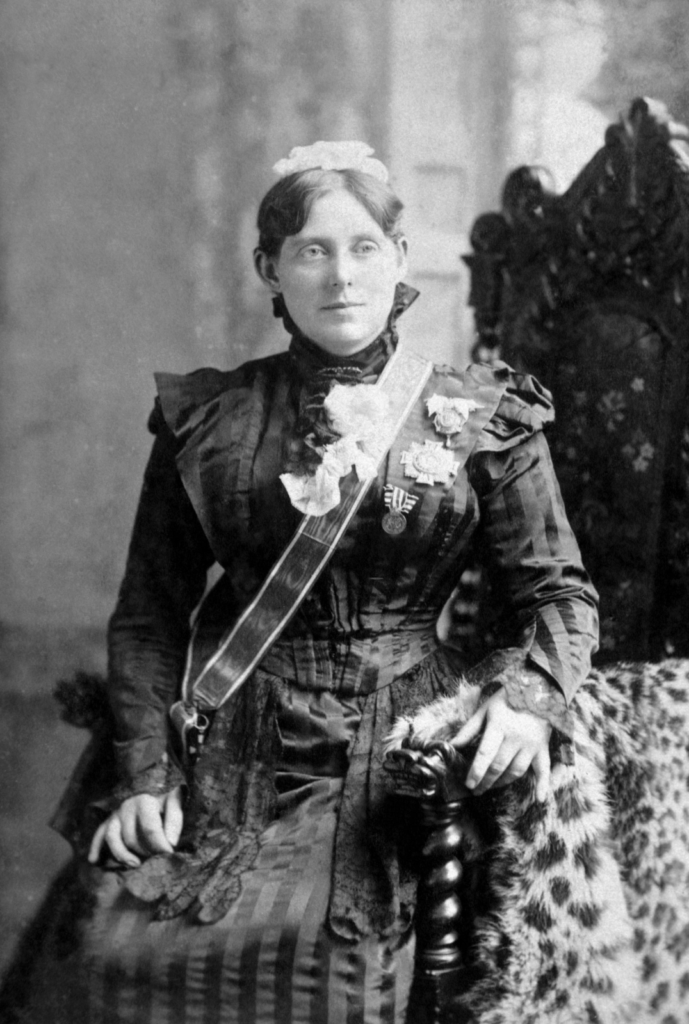
Nightingale is just one of many esteemed nurses who’ve shaped the world of nursing as we know it today. Join us as we celebrate three nurses famous for their contributions to the science of nursing.
#1 Florence Nightingale (1820-1910)
Named after the city she was born in, Florence came from an affluent family who anticipated her following the traditional path of marriage and family life, in line with societal expectations. Much to their surprise, she conveyed that she felt a calling from God to assist the poor and sick. Despite her parents’ initial reluctance, they eventually supported her calling and sent her to study at Pastor Theodore Fliedner’s hospital for Lutheran Deaconesses.
She continued her training for years before joining a group of nurses to treat British soldiers who had been fighting in the Crimean War in 1854. Nightingale immediately took note of the overcrowded and unsanitary conditions at the camp and switched into nurse mode, bringing nutritious food and sanitary measures to the military hospital. She introduced the concept of washing hands with soap and water before working with patients and saved many soldiers’ lives, decreasing the death rate from 40% to 2% because of her team’s hard work.
Nightingale made several other contributions to modern medicine, including:
Becoming a pioneer in statistics, using her data to create pie charts documenting the causes of soldiers’ deaths during two years of war in Crimea.
Spreading safer medical practices at the Army Medical College in Chatham.
Publishing a book called Notes on Nursing: What it is, and What it is Not.
Becoming a pioneer in statistics, using her data to create pie charts documenting the causes of soldiers’ deaths during two years of war in Crimea.
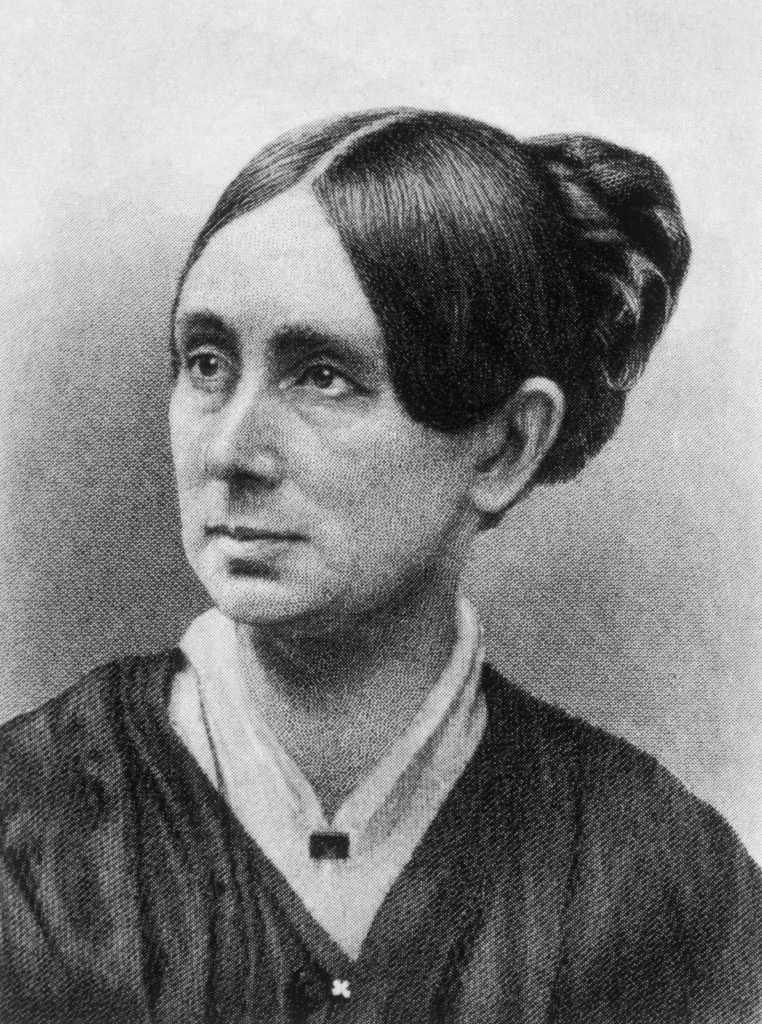
#2 Dorothea Dix (1802-1887)
Dorothea Dix made a profound impact on healthcare through her efforts to substantially enhance conditions within institutions that cared for the mentally ill. Born in 1802, she relocated to Boston at the age of 12 to live with her grandmother, engaging in formal education and later founding several schools with a curriculum of her own design. As she matured, recurring bouts of illness inspired her to undertake a journey to England with friends.
While in England, Dix encountered a group of reformers dedicated to changing how society treated and cared for the mentally ill. Upon her return to the United States, she toured numerous mental health hospitals, meticulously documenting the deplorable conditions, including floggings, starvation, physical and sexual abuse by caretakers, and inadequate sanitation.
Presenting her findings to the Massachusetts legislature, she urged a significant overhaul of the institutions. The legislature responded by allocating resources for the expansion and improvement of the state mental hospital. Dix continued her advocacy, achieving similar successes in Rhode Island, New York, and various European countries.
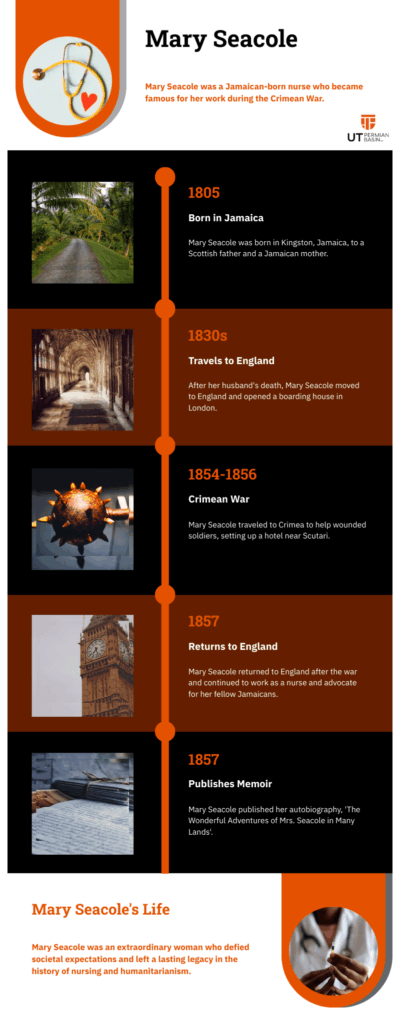
#3 Mary Seacole (1805-1881)
Like Florence Nightingale, Mary Seacole played a crucial role in providing vital care to wounded soldiers during the Crimean War. Born in Jamaica to a British Army officer father and a well-known Jamaican ‘doctress’ mother, Seacole studied reading, writing, and the healing arts of Jamaican medicine at a young age.
Balancing her training in traditional Caribbean herbal medicine, Seacole also learned about European medicine during a year-long visit to relatives in England at the age of 15. In 1853, having previously treated patients during a cholera outbreak in Panama, she learned about the conflict in Crimea. While in England a year later, she saw advertisements in need of hospital nurses in Crimea.
Officials initially rejected her, discriminating based Seacole’s skin color and citing all positions as filled. Undeterred, in 1855, she and a relative of her deceased husband opened the British Hotel, a haven for soldiers to recover. Despite adversity, Seacole often tended to wounded soldiers on the battlefield, earning the nickname “Mother Seacole” for her compassion and dedication to her patients.
Make History and Unlock Your Potential With UTPB’s Online RN to BSN Program
Are you ready to take your nursing career to new heights and become a nurse known for making lasting contributions to the healthcare industry? Elevate your skills and impact by advancing from an RN to a BSN, opening doors to leadership roles and a heightened level of patient care.
Explore UTPB’s 30-credit online RN to BSN program, designed to help students achieve a healthy work/life balance. In our virtual classroom, you’ll gain a deeper understanding of evolving challenges in nursing, the intricacies of organizational culture, and the importance of patient-centered care. Our practical approach ensures you’ll have the ultimate skills needed to advance your career.
Seize the opportunity to join a program that aligns with your career goals and gain the expertise to become a nursing leader who drives positive change. Apply to UTPB’s online RN to BSN program and embark on a journey of professional growth and enhanced patient care.
Imagine being told you can’t do something—by law, by tradition, by those close to you—and doing it anyway. Even today, women face greater barriers to recognition and authority than men. Yet throughout history, countless women stepped beyond traditional domestic roles, often at great personal risk. This article highlights nine of the countless important women who…
“Our country has deliberately undertaken a great social and economic experiment, noble in motive and far-reaching in purpose.” -Herbert Hoover Today, speakeasies are stylish bars hidden away behind bodegas, coffee shops, and laundromats. Ordering a cocktail is as easy as walking up to the bar, and while some places still require a password, you can…
At the iron gates of Auschwitz-Birkenau, one of the most infamous extermination camps of Nazi Germany, the chilling phrase “Arbeit macht frei” (“Work sets you free”) still casts a haunting shadow. These deceptive words led into one of history’s darkest chapters. Beyond that gate, more than a million lives were brutally ended. Auschwitz-Birkenau was just…