Digital Humanities: A New Way to Study the Classics
What do virtual historical sites, AI-powered poetry analysis, and digital art galleries have in common? They’re all part of the growing world of digital humanities, where technology meets the study of human culture.
From history and literature to art and beyond, digital tools are reshaping how we explore and connect with the past. Curious about how digital humanities can make an impact in your education, or even your future career?
In this article, we explore how digital humanities is transforming the way we study and apply history, art, and culture. We’ll also highlight real-world careers that blend creative thinking with cutting-edge technology.
What Is Digital Humanities?
Digital humanities is an interdisciplinary field that combines the humanities with the ever-evolving digital tools that shape our world.
On one hand, you have the humanities, which are the classical studies of human culture and expression through lenses like:
Language
Art
Religion
History
Philosophy
On the other hand, you have technological advancements, such as:
Virtual reality
AI-powered text analysis
Augmented reality
Machine learning
Used together in an academic context, these tools can enhance how we study, teach, and share human culture across the globe.
Simply put, digital humanities uses technology to explore and understand the humanities in new, immersive, collaborative ways.
How Digital Tools Are Changing the Study of History and Art
To put it into context, we’ve compiled a few unique ways digital humanities is changing the way students and professionals study the classics.
Reimagining History Through Digital Archives and Virtual Reality
Whether you’re a history student, public historian, or educator, your imagination can only take you so far when reading about events that happened centuries—or even millennia—ago. But with digital tools like online archives and virtual reality, distant stories and civilizations can come to life in vivid, immersive ways.
Virtual Reality
Imagine you’re a history professor diving into a unit on daily life in Pompeii. What could help your students visualize ancient Roman life better than a virtual reality (VR) experience?
With just a smartphone, an app, and a five-dollar cardboard viewer, you could take your class on a virtual field trip back in time. Students can walk through reconstructed city streets, view Roman homes and marketplaces in 360 degrees, and witness Pompeii as it was, far beyond what textbook images alone can offer.
Projects like Rome Reborn: Pompeii or A Day in Pompeii provide these kinds of experiences, using archaeological data and VR technology to reconstruct the ancient world.
Digital Archives
Digital archives offer instant access to millions of historical documents and artifacts. The best part? No travel required.
From Civil War photographs to handwritten letters from soldiers and abolitionists, platforms like the Smithsonian’s Digital Collection and the Library of Congress make it easy to explore primary sources with just a few clicks.
These tools help students go beyond surface-level learning, offering a deeper and more personal connection to history. Whether you’re researching the Reconstruction Era or building a timeline of world events, digital archives help you expand your knowledge of history through efficient, searchable records.
Exploring Art with Augmented Reality and Digital Preservation
If you love art, it’s one thing to scroll past a famous painting on your phone. But to see it up close, no matter where you are? That is an experience worth taking advantage of.
Thanks to augmented reality (AR) tools like Google Arts & Culture and interactive museum exhibits, you can explore masterpieces from around the world without ever leaving your couch. Want to gain a deeper understanding of an artist’s technique? Simply zoom in to see the tiniest of details, like an artist’s brushstrokes or the texture of the canvas.
But digital tools aren’t just helping us view art. They’re helping us preserve it. Platforms like CyArk are using LiDAR and photogrammetry to capture entire structures in incredible detail.
One of CyArk’s recent projects took place in Mumbai, India, where archivists digitally documented the 1,500-year-old Elephanta Caves: a UNESCO World Heritage Site filled with carved elephant deities and intricate stone sculptures. The site faces threats from erosion and urbanization, but advanced scanning technology has helped create a detailed 3D model of the caves.
You can now explore the cave system and its ancient carvings from a phone or computer. In a world where cultural heritage can be lost to time, climate, or modernization, these digital tools give us a useful way to protect and share art.
Digital Humanities Careers: Where Tech Meets Culture
Digital humanities isn’t just helping students learn more. It’s also creating new and unexpected career pathways. With more digital tools in education, research, and public programs, graduates with a bachelor’s degree in humanities now have more opportunities than ever to work where technology and culture meet.
Here are a few humanities-related roles where digital skills make a real difference:
Digital archivist: Use tools like metadata tagging and content management systems to preserve historical documents and make them accessible through online platforms.
Public historian (with a focus in VR): Design digital exhibits, interactive timelines, and virtual tours for museums and cultural institutions to help people connect with the past in more immersive ways.
UX designer: Use knowledge of human behavior and visual communication to create meaningful digital experiences for users, like designing accessible museum websites or interactive exhibition guides.
Create the Foundation for Your Future at UTPB
At UT Permian Basin, we believe education should be flexible and forward-thinking. That’s why our fully online BA in humanities meets you where you are, offering convenient remote learning without sacrificing quality or depth.
With a variety of electives (including topics like Virtual Reality) and core courses that span literature, art, history, and philosophy, you’ll have the freedom to tailor your studies to your interests and career goals. Plus, with competitive tuition and year-round start dates, you can start building your future on your schedule.
Ready to turn your passion for human culture into a career that evolves with the digital age?
Ever found yourself humming an earworm and suddenly wondering, “Where did this come from—and who created it?” Music is a universal language. It conveys memory, rebellion, grief, joy, and identity. Across centuries, women have used the language of sound in a world where they’ve been told, repeatedly, to stay invisible. Here are some of the…
Remember when Roman numerals were taught in school? Or when knowing how to read an analog clock was a necessity? These skills may seem trivial today, but there was a time when they were critical. Let’s explore five life skills that have nearly disappeared, and why learning the skills that last is more important than…
For students in highly specialized academic fields, the professional path that begins after graduation is often clear-cut. Individuals who earn an accounting degree, for example, generally go on to become accountants. Other students, however, prefer a broader academic focus that spans several disciplines, making them a natural fit for studying humanities. Since the term humanities…
A young single mother waits nervously outside her clinic, juggling work, childcare, and bills—and she’s just missed her appointment for food vouchers. Instead of being stuck on hold, she reschedules through an app and is instantly linked to support, without ever stepping foot in an office.
The digital world has its flaws, but in social work, technology is revolutionizing the way we get help to those who need it. With one in seven people now working in health or social services—and demand still rising—technology is rapidly transforming this field.
So: what do these rapid technological advances mean for social workers? Let’s take a closer look.
How Do Social Workers Use Technology?
Contrary to stereotypes, social workers aren’t always found in traditional offices anymore. Over 50% of U.S. social workers use telehealth to connect with clients through video calls, secure messaging, and chatbots. By meeting remotely, these professionals can reach people who can’t (or won’t) come into an office, whether due to mobility issues, mental health, childcare struggles, or difficulty commuting from remote areas.
Here’s are some of the ways digital technology is transforming social work:
• Teletherapy and remote sessions • Digital case management • Mobile apps for tracking progress and sending reminders • AI tools that reduce administrative work • Online training and supervision that doesn’t require relocation
But what does all this look like in real life? Let’s break it down.
Technology’s Impact on Case Management
About one in six Americans has been helped by a social worker … sometimes without even realizing it. These professionals are the backbone of safety net programs like Social Security and key players in today’s civil rights efforts.
Case management is how social workers help clients navigate tough challenges—by assessing needs, making plans, connecting resources, and supporting their clients throughout the process.
So how does technology help them manage it all?
• Secure online records: Electronic health records aren’t perfect, but many social workers will tell you it beats drowning in paperwork. • Encrypted communication: To follow HIPAA regulations, encryption keeps things private and professional. • Mobile systems: Digital notes and updates mean less busywork and more time with clients.
For social workers, these tools are more than just time-savers. They make space for what matters most: people. Analytics and real-time data help social workers spot trends and respond quickly to community needs.
Real-Time Help During Crises
The COVID-19 pandemic proved the impact technology can make for social workers. It allowed practitioners to quickly switch to remote counseling and digital support groups, especially in times of acute need.
AI systems can even now scan social media for crisis signals, analyzing language, tone and behavior patterns that point to emotional struggle—like negative words, frequent in-person posts and sudden changes in activity. This enables practitioners to step in before escalation.
How Is AI Technology Changing Social Work?
This leaves us with the question everyone’s asking: How will AI reshape the future? Some social workers see AI as a crucial way to reduce paperwork and free up time for human connection. Others are raising red flags about data privacy and the risk of flawed algorithms making biased decisions.
In Columbus, Ohio, practitioners are already putting AI technology to the test. In partnership with the nonprofit RISE Together Innovation Institute, city officials are piloting a $5 million AI-powered case management app. It pulls together client data—from housing to income disparities to transit access—to help match individuals with the right services faster and more efficiently.
But AI isn’t perfect. Algorithms can miss the mark, especially when they overlook issues like systemic racism, income inequality, or gender bias. A 2024 University of Washington study found AI resume screeners favored white male candidates over women and candidates of color, revealing deep flaws in some algorithms.
AI will shape the future of social work, but only when used carefully—and with plenty of human oversight.
Ethics and Safety in Social Work Technology
With the right standards and regulations, using digital technology in social work can help workers reach more people, faster. The National Association of Social Workers (NASW) lays out clear guidelines for tech use, reminding practitioners to assess digital access, reduce exclusion, and stay current with ongoing training.
What’s Next for Social Work Technology?
The future of social work isn’t standing still, and neither are the people behind it. Whether helping a victims of a natural disaster find emergency housing or guiding a teenager through trauma on a video call, social workers today can meet people where they are. Many are mastering or even developing AI-powered resources, while others are exploring virtual reality.
At the VA Puget Sound Health Care System in Washington, for example, social workers are using virtual reality headsets to walk veterans through their trauma in a controlled setting, allowing them to heal through immersive technology.
Through it all, one value stays constant: empathy. No matter how advanced technology gets, social work remains deeply personal.
Key Takeaways: What We’ve Learned
Let’s recap the main insights:
Access to digital tools increases reach but doesn’t replace empathy.
Efficient systems free up more time for human connection.
Real-time data empowers smarter interventions.
Ethical standards and training are essential.
AI and digital tools are expanding social work’s impact.
Help Shape the Future of Social Work With a UTPB Credential
In a world that moves fast and doesn’t always play fair, social workers are using technology to make sure no one gets left behind. Smarter tools mean faster help, clearer communication, and care that reaches further.
If you’re ready to take upgrade your career, The University of Texas Permian Basin’s entirely online Master of Social Work (MSW)*is designed for the realities of today’s tech-driven world. You can study on your schedule, from anywhere, and graduate with the skills to lead and make a lasting difference in people’s lives.
Social work isn’t about paperwork or platforms: It’s about people. And the best way to help them? Stay human. Stay current. And when you’re ready to move forward, we’re here to help you take that next step.
It often starts quietly: A student hesitates before clicking “submit” on a campus counseling form. A parent waves off their anxiety as “just stress.” A veteran avoids therapy because they don’t want to seem weak. These moments share a common thread: stigma. It’s the belief that struggling with your mental health is something to hide—or…
When the final “ber” months roll around, the world wraps itself in holiday cheer. Families make travel plans, calendars fill with festive gatherings, and store shelves overflow with stocking stuffers and seasonal treats. But behind the twinkle lights and snow-covered commercials, the holidays can be a stressful time. According to the American Psychological Association, 41%…
A young single mother waits nervously outside her clinic, juggling work, childcare, and bills—and she’s just missed her appointment for food vouchers. Instead of being stuck on hold, she reschedules through an app and is instantly linked to support, without ever stepping foot in an office. The digital world has its flaws, but in social…
Not all heroes wear capes. Sure, doctors and surgeons wear scrubs—the unofficial capes of modern medicine—but what about the people working behind the scenes? The ones making sure our hospitals, clinics, and healthcare systems runs smoothly every day?
They might not always get the glory, but they’re far from undervalued, especially in today’s job market. Healthcare management and administrator roles are on the rise, with a projected growth rate of 29% through 2033: nearly 25% faster than the average for all occupations.
So, which healthcare management position is right for you? Only you can decide, but information is power, and this guide will give you the insight you need to find a path that fits your strengths and goals.
Why Choose a Career in Healthcare Management?
A career in healthcare management offers strong job growth, competitive salaries, and the opportunity to make a meaningful impact in hospitals and healthcare systems. But if you’re looking for the why behind the what, here’s a closer look at the benefits of choosing a path in this rapidly growing field:
Demand: The outlook is bright for healthcare management careers. In fact, the Bureau of Labor Statistics (BLS) projects more than 160,000 new jobs through 2033 (and that’s just for health service managers), making this one of the fastest-growing fields in the country.
Salary: While earnings can vary by role, location, and experience, the BLS reports that medical and health services managers earn an impressive average annual salary of $117,960.
Purpose: You know what they say: If you love what you do, you’ll never work a day in your life. If you’re passionate about healthcare but prefer to work behind the scenes rather than in a patient-facing role, healthcare management is the perfect fit.
Education: Becoming a doctor or physician assistant requires years of postgraduate education. In contrast, many healthcare management roles are accessible with just a four-year degree, making this field more attainable—and faster to enter—than many clinical careers.
4 Career Paths in Healthcare Management
Below, we explore four distinct career paths in healthcare management. For each path, you’ll find:
A general overview of the role
Typical work environments
Key skills needed for success
Sample careers
Let’s dive in.
#1 Hospital Administrator
Have you ever pictured yourself working in a bustling hospital, just an arm’s length away from the action? That’s the world of hospital administration, where you’ll play a vital role in keeping the entire facility running efficiently.
With your guidance, hospital staff will get the support and resources they need to deliver efficient, high-quality care while staying compliant with healthcare regulations.
Work Settings
Hospital administrators work in environments that require strong leadership and coordination across departments. You can typically find them in:
Hospitals
Outpatient clinics
Long-term care facilities
Rehabilitation centers
Group practices
Key Skills
To succeed in hospital administration, you’ll need a mix of business acumen, leadership, and healthcare knowledge:
Leadership and personnel management: Oversee diverse teams (including medical, administrative, and support staff), set workplace expectations, and foster a positive work environment.
Budgeting and financial oversight: Manage departmental or facility-wide budgets, monitor expenditures, and identify cost-saving opportunities without compromising care.
Operations and facilities management: Coordinate day-to-day operations to ensure all departments run smoothly and patients receive high-quality care.
Strategic decision-making: Use data, insight, and the organization’s goals to guide long-term planning, problem-solving, and resource allocation.
Careers in Hospital Administration
Graduates in management and healthcare management might pursue roles like:
Hospital administrator
Clinical manager
Director of patient services
Health services manager
#2 Healthcare Consulting
Healthcare organizations don’t run on patient care alone. Behind the scenes, consultants play a critical role in optimizing operations, keeping costs within budget, and navigating complex regulations.
As a healthcare consultant, your goal is to improve the internal functions of healthcare organizations. That can include:
Streamlining daily operations
Increasing efficiency across departments
Implementing technology that enhances patient care and simplifies workflows
Work Settings
Healthcare consultants work in environments where strategic analysis and improvement are key, such as:
Healthcare consulting firms
Large health systems
Health insurance companies
Independent or freelance consulting
Key Skills
Success in healthcare consulting requires a mix of analytical thinking, communication skills, and healthcare industry knowledge:
Regulatory compliance: Understand and apply healthcare laws to keep facilities compliant.
Risk management: Identify and minimize legal and operational risks that could impact patient care or business outcomes.
Policy development: Help clients create internal policies that meet legal requirements and industry best practices.
IT expertise: Apply cutting-edge technology to improve care delivery and administrative efficiency, from electronic health records (EHRs) to cybersecurity and data privacy.
Careers in Healthcare Consulting
Healthcare consulting offers a range of career opportunities for those passionate about improving systems and policies, including:
Legislative liaison
Research associate
Program evaluator
Independent consultant
#3 Health Informatics
Not all roles in healthcare management involve overseeing entire facilities or advising large systems. Some career paths take a more technical or policy-driven approach, but they still make a significant impact.
Health informatics, for example, brings together technology, data, and healthcare to improve how facilities store, access, and use patient information. Professionals in this field often work in hospitals, tech companies, and government health agencies to ensure systems run smoothly and securely.
Key Skills
Health informatics roles require foundational skills in healthcare management, along with specialized technical expertise like:
Data analysis and management
Familiarity with EHR systems
Understanding of HIPAA and data privacy
Communication between clinical and technical teams
Careers in Health Informatics
If you’re interested in using data and technology to improve healthcare delivery, here are a few roles to consider:
Health informatics specialist
Clinical data analyst
EHR implementation manager
#4 Healthcare Policy Analysis
If you’re passionate about shaping the future of healthcare, consider policy analysis. You’ll evaluate systems, recommend improvements, and influence legislation in a critical role that puts the “health” in healthcare. Professionals in this field play a vital role in aligning healthcare practices with public needs, often working in government, nonprofit, or academic settings.
Key Skills
Success in healthcare policy analysis relies on strong communication, critical thinking, and a solid understanding of the healthcare landscape, along with:
Research and policy evaluation
Written and verbal communication
Knowledge of healthcare law and public health systems
Careers in Policy Analysis
If you’re drawn to advocacy, research, or systems-level change, consider roles such as:
Health policy analyst
Public health advisor
Legislative liaison
Prepare For your Dream Role with an Online Degree from UT Permian Basin
Whether you’re drawn to shaping public policy or leading hospital operations as a health services manager, the right degree can help turn your career goals into reality. At UT Permian Basin, we offer two fully online programs designed to support your success, on your schedule:
BAAS in Healthcare Leadership With just 60 credit hours, this degree is perfect for transfer students or those with an associate degree. You can transfer up to 60 previously earned credits and dive right into core classes that emphasize real-world healthcare leadership. With over 15 electives to choose from, you’re able to tailor your degree to match your career goals.
Take the next step toward a career that makes a difference. Whether you’re just starting out or ready to level up, UTPB’s online programs give you the flexibility to learn while you work—and the foundation to lead in the healthcare industry.
When we consider a healthcare professional’s role in the patient experience, we might be inclined to picture a patient-facing individual such as a nurse or a patient care technician. These professionals have an incalculably beneficial effect on patients’ health and well-being. But apart from having the proper skills and disposition required to do their jobs…
A safe blood supply, steady heartbeats, and early breast cancer detection: Black Americans helped make these and other medical breakthroughs possible. This Black History Month, we’re shining a spotlight on healthcare heroes who changed patient care forever. Black Medical Heroes: Yesterday and Today How many medical heroes can you name? People like nurse and hygiene…
You’re interested in a healthcare career, but you envision yourself in a management or leadership role rather than a hands-on position. While patient health remains your top priority, you know that leading a team or managing an office, department, or even an entire facility is just as vital to the overall healthcare mission. Many of…
What compels someone to commit a violent crime—or repeatedly break the law? Is it a mental illness, unresolved childhood trauma, or something else entirely?
TheFBI reported that in 2017, violent crimes occurred every 24.6 seconds in the United States, including a murder every 30.5 minutes, a rape every 3.9 minutes, and a robbery every 1.7 minutes. Meanwhile, property crimes were happening at an astonishingly rapid rate—every 4.1 seconds.
To truly understand what motivates this kind of behavior, we have to go beyond the surface. Instead of just asking why people commit crimes, psychology encourages us to ask what’s happening inside the mind of the offender.
How Psychology Helps Us Understand Criminal Behavior
Psychology is the study of the human mind: how we think, feel, and behave. It also plays a critical role in criminology. Whether it’s through profiling offenders, conducting forensic assessments, or supporting rehabilitation efforts, psychology professionals play an essential role in understanding and addressing the root causes of crime.
Psychology graduates can explore various career paths related to criminal behavior, including roles in forensic psychology, correctional counseling, and victim advocacy. And for those who want to take it a step further, a psychology degree can be a strong foundation for a graduate program in social work, opening the door to licensed counseling or therapy careers.
Common Psychological Factors Behind Criminal Behavior
When someone commits a crime, there are often one or more psychological factors contributing to their negative behavior. Below, we’ll explore some common psychological elements associated with criminal offenders:
Personality Disorders
In 2017, researchers conducted a study involving a random sampling of228 prisoners, composed of 114 women and 114 men. Among the test subjects, 87.3% of the women and 83.3% of the men had a personality disorder at the time they committed their crime.
While numerous personality disorders can impact a person’s likelihood of committing a crime, thefollowing disorders are most often seen in convicted criminals:
Major depressive disorder
Dependent personality disorder
Antisocial personality disorder
Borderline personality disorder
These conditions can alter how individuals perceive consequences, relate to others, and manage emotions, all of which may influence criminal behavior.
Trauma
Is there a direct correlation between childhood trauma and criminal behavior?Studies show that when a child undergoes a life-altering experience, such as physical abuse, neglect, or witnessing the death of a friend or family member at the hands of another, the repercussions can be long-lasting.
Sometimes, symptoms of trauma such as hostility and paranoid thoughts persist into adulthood and can lead victims to engage in criminal activities. The likelihood increases with continued traumas, such as when an adolescent experiences repeated violence in their community.
TheNational Institute of Justice states that individuals are more likely to become repeat criminal offenders if they’ve experienced prolonged trauma and have adopted emotional detachment as a coping mechanism. By disconnecting from their emotions, they may be able to intentionally disconnect from the emotional impact of past traumas as well as the feelings associated with committing a crime.
Substance Abuse and Addiction
In 2015, there were approximately 1.3 million individuals behind bars in the United States. A significant proportion of that number were serving sentences primarily for non-violent crimes and drug-related offenses.
So, why are so many people with substance abuse issues getting incarcerated?
Addiction affects the brain and changes its functionality, causing people to change how they think, perceive the world, and behave. Sometimes a person’s addiction leads them to committing harmful and illegal actions, such as domestic violence and theft.
Explore a Psychology Degree at UTPB
Psychology provides critical insight into the behaviors and motivations that drive criminal acts. And if you’re fascinated by the connection between mental health and criminal justice, a psychology degree can help you turn that curiosity into a meaningful career.
Explore topics like abnormal psychology, developmental psychology, and behavioral science
Learn from experienced faculty who understand both clinical practice and research
Prepare for careers in mental health, social services, rehabilitation, or graduate studies
Want to work more directly with individuals as a counselor or therapist someday? Many students use their psychology degree as a launchpad into a Master of Social Work (MSW)*or a related graduate program in counseling or clinical psychology.
Whether you’re drawn to understanding what drives criminal behavior or passionate about helping others heal and find purpose, psychology is a powerful place to begin.
Psychology is one of the broadest academic fields, and one of the most versatile. It spans everything from courtrooms to corporate offices, from childhood development to competitive sports. With so many specialties (and subspecialties), it can be tough to know where to even start. So exactly how many branches of psychology are there? The field is…
Ever reach for your phone and instantly face a barrage of messages, notifications, subscription reminders, and social media updates? You’re not alone. Scientists have estimated that the average person processes about 74 gigabytes of information daily: equivalent to watching 16 high-definition movies back-to-back in a single day. Cognitive overload is real. And over time, constant stimulation quietly changes how we think, focus, and feel. In this article, we’ll explore: What Does Cognitive Overload Mean? Cognitive overload happens when your brain receives more information than…
When someone struggles with depression, homelessness, or discrimination, who steps in to help? A psychologist? A social worker? A sociologist? These three fields all address human challenges, but they explore humanity from very different angles: one from society, one from the mind, and one from the front lines. So what are the similarities and differences between sociology, psychology, and social work? This guide clears up…
Renewable energy has officially left the “alternative” category and entered the mainstream. And the numbers? They back it up. Renewable energy sources now generate 32% of the world’s electricity, up from just 20% in 2011.
Solar is leading the charge, and the pressure to decarbonize the grid isn’t letting up, regardless of who’s setting policy.
What Are the Current and Future Trends in Renewable Energy?
Right now, renewables are booming. Global energy from renewables is projected to increase 60% by 2030, with solar and wind as the main drivers of this growth. In fact, renewables are poised to overtake coal as the largest source of global energy generation in mid-2026. Solar makes up about half of this increase, and wind makes up about 30%. That’s a seismic shift in the energy landscape.
But to keep the lights on 24/7, we’ll need more than just solar panels and wind turbines. Here are some emerging renewable technologies that are helping to bridge the energy gap:
Green Hydrogen
Green hydrogen is made by splitting water molecules. It’s fueling cleaner transport, like Germany’s new hydrogen-powered passenger trains.
Battery Storage Systems
Large-scale battery systems, like California’s Tesla Megapacks, store excess energy for use during energy shortages or outages.
Smart Grids
Modern “smart” electricity grids use sensors, automation, and real-time data to optimize the delivery of electricity. Utility companies in Florida are already installing smart meters.
As investments pour into renewables, opportunities to explore other natural sources of energy are emerging. So, with so much potential, what are investors doing to support the future of renewable energy?
Investments in Clean Energy: Who’s Fueling the Transition?
Clean energy is attracting serious attention—and serious funding. Global clean energy investment reached a record $2.1 trillion in 2024—more than double 2020 levels. Here’s where the money is going:
Global Growth
Renewable energy sources like solar and wind are now the fastest-growing power sources globally, drawing $728 billion in investments.
Venture Capital and Private Investment
Major tech companies worldwide are acquiring clean tech firms and funding energy storage and hydrogen at a growing pace.
Is the World Investing Enough in Clean Energy?
Despite record investment, experts say it’s still not enough. BloombergNEF estimates that current investment is at just 37% of the levels required to reach net-zero emissions by 2050, meaning the world would need to nearly triple today’s investment by 2030 to stay on track.
The renewable energy industry needs professionals who understand both energy and economics: People who can shape smart policy, attract funding, and move projects from concept to impact.
Clean energy is growing fast—but there’s no straight path to a greener grid. While the market profits from innovation, it’s also challenged by policy shifts, outdated infrastructure, and supply chain issues.
Let’s unpack some of the key elements influencing how the market moves:
Shaky Supply Chain
There’s an oversupply of solar modules but a shortage of wind turbine components. Battery materials are still volatile. In short, supply and demand is a global balancing act.
Permitting Delays
Projects often get stalled by complex permitting and interconnection processes, especially in countries like the United States.
Aging Power Grids
Smart grids and new transmission lines are being built, but many countries can’t upgrade infrastructure fast enough to keep pace.
Uncertain Policies
While long-term trends favor renewables, short-term political shifts create uncertainty for investors. Meanwhile, big energy companies are acquiring smaller developers, making competition fierce.
Pricing Inequalities
Solar and wind are now the cheapest sources of new electricity in many regions, even with inflation. This is driving more investment into these sectors.
The bottom line: The renewable energy sector is mainstream, capital-intensive, and globally competitive. But determining whether the market will grow or stall depends less on technology and more on:
Stable policy
Modern infrastructure
Resilient supply chains
That’s why the industry needs experts who can navigate disruption, build flexible systems, and deliver scalable, reliable solutions that move as fast as climate demands.
Key Takeaways
Renewable energy is scaling fast—and it’s reshaping how the world powers up:
Renewables now generate about 32% of global electricity—and that share is rising.
Solar and wind will dominate power production by 2030.
Green hydrogen, battery storage, and smart grids are closing the reliability gap.
Global investment is at record levels, but infrastructure and policy remain key hurdles.
Market forces now favor speed, adaptability, and innovation.
The energy transition is happening. The real question:Will you help lead it? Programs like The University of Texas Permian Basin’s energy business credentials can help you get started.
Shape the Future of Energy at UT Permian Basin
Curious where you fit into all this momentum? Whether you’re eyeing a future in clean tech, policy, or grid modernization, UTPB’s 100% online energy business programs are built for the new energy economy.
Gain the strategy, finance, and market knowledge driving this global shift. If you’re ready to be part of what comes next, explore UTPB’s online energy business programs and find the right fit.
According to the World Health Organization, 99% of the global population breathes polluted air. Yet we’re surrounded by clean, sustainable energy sources. Despite coal and natural gas being the most widely used energy sources, the urgency of climate change and resource depletion is making the shift to clean energy increasingly essential. In 2023, about 23%…
Thanks to “Landman” on Paramount+, everyone’s curious about what a landman really does. Set in modern-day West Texas, the show follows Tommy Norris (played by Billy Bob Thornton), who manages a crew of roughnecks while contending with wildcatters, cartel members, and a disgruntled ex-wife. The real job is dynamic, rewarding, and essential to how the…
Renewable energy has officially left the “alternative” category and entered the mainstream. And the numbers? They back it up. Renewable energy sources now generate 32% of the world’s electricity, up from just 20% in 2011. Solar is leading the charge, and the pressure to decarbonize the grid isn’t letting up, regardless of who’s setting policy….
Only a few decades ago, stopwatches, whistles, clipboards, and a coach’s sharp eye were the main tools used in sports training. But oh, what a difference 30 years can make.
Today, those simple tools have been replaced by advanced technology like GPS wearables and AI-powered trackers that do far more than clock a sprint. Sports technologies that were once “nice-to-have” gadgets have now evolved into training essentials. But what kind of impact is this technology really having on athletes?
In this article, we’ll look at five game-changing technologies that are reshaping sports training and explore ways they’ll impact the future of performance, recovery, and injury prevention.
#1: Wearable Tech for Real-Time Performance Tracking
In the early 2000s, fitness trackers started gaining traction with everyday fitness enthusiasts and athletes alike. Today, roughly 1 in 5 people wear fitness trackers—not just to count steps, but also to monitor many aspects of their health.
For athletes, performance trackers like watches and chest straps go even further. These devices provide continuous, real-time data on key areas of performance, including:
Heart rate and heart rate variability
Distance, speed, and acceleration
Calories burned and overall energy output
Sleep quality and recovery time
Training load and physical strain
This data allows athletes and coaches to adjust training plans on the fly, reduce injury risk, and improve long-term performance.
#2: Motion Capture Improves Form and Prevents Injury
Imagine you’re the performance specialist for a baseball team, and one of your players can’t seem to nail the correct throwing mechanics. It might be time to try motion capture, also known as mocap.
Using high-speed cameras and sensors placed on key points of the body, mocap tracks movement with exceptional precision. But what’s the real value behind all that data?
Coaches, physical therapists, and athletic trainers can use mocap to assess key elements of movement efficiency, including:
Posture
Balance
Technique and joint alignment
By spotting subtle issues like uneven weight distribution, poor form, or joint misalignment, motion capture helps professionals correct technique before it becomes a performance-limiting habit or a source of injury.
In our pitching example, mocap could flag an irregular shoulder rotation or elbow angle and prompt targeted drills to ensure the player is moving safely and efficiently.
Many programs pair mocap systems with force plates, which measure ground reaction forces, and electromyography (EMG), which tracks muscle activation in real time. Together, these tools provide a full-body performance snapshot, helping teams fine-tune training regimens and ensure athletes are operating at their best.
#3: VR Sports Training Builds Skills Without Risk
Virtual reality (VR) may have started as entertainment, but it’s quickly becoming an essential part of modern sports training. VR systems immerse athletes in realistic, simulated game environments—without ever stepping onto the field or court.
So, how does it work? Wearing a headset, athletes enter a game-like scenario and practice key skills such as decision-making, reaction time, and spatial awareness. The best part? They can do it all without the physical toll of a live match.
Reducing wear and tear on the body by limiting physical strain during practice
Aiding recovery through interactive, low-impact exercises
Providing a controlled environment for skill development and game strategy
Improving mental preparedness by simulating high-pressure scenarios
Enabling repetition and reviewing of plays or movements from different angles
For coaches and kinesiology professionals, VR offers new ways to train smarter, not harder.
#4: AI and Data Analytics Power Smarter Workouts
Powerful AI chatbots can generate a healthy recipe or a month-long workout plan in seconds (if you know the right questions to ask). But in the world of sports, coaches, physicians, and athletes are taking AI several steps further.
With machine learning, algorithms can analyze athletes’ health and performance to predict outcomes like injury risk or readiness to compete. AI can be used to assess:
Performance metrics
Injury history
Training workload
Biometric trends (e.g., heart rate variability and recovery scores)
But AI doesn’t stop at predictions. It also enables coaches to build customized training plans using data from wearables, video analysis, training logs, and even game-day stats. The result? Smarter, more personalized training that adapts in real time.
#5: Recovery Tech Speeds Healing and Reduces Fatigue
Even with advanced tools and training methods, athletes still push their bodies to the limit. Recovery is now a critical part of every athlete’s routine, and technology is playing a growing role in helping athletes heal.
Today’s recovery tools help speed the healing process, prevent overtraining, and extend athletic careers. Popular methods include:
Compression therapy devices: Commonly used on the legs and arms, these devices help flush out lactic acid and improve circulation for faster recovery.
Cryotherapy chambers: By exposing the body to extremely cold temperatures (around -200°F) for short periods, cryotherapy chambers help reduce inflammation and muscle fatigue.
Electrical stimulation devices (e-stim): Using small electrical impulses to activate muscles, these devices can be used for pain relief, muscle recovery, or rehabilitation after injury.
Together, these tools reflect a shift in mindset: Recovery isn’t a break from training; it’s a key part of it.
Frequently Asked Questions About Technology in Sports Training
As sports science evolves, so will the role of technology in athletic development. Here are answers to a few common questions about how these tools are changing how athletes train, recover, and perform.
What technologies are most commonly used in sports training today? Wearable devices, motion capture systems, AI-based data analytics, virtual reality (VR), and recovery tools like cryotherapy and compression gear are among the most widely used technologies. These tools help athletes monitor performance, prevent injuries, and fine-tune training.
How does AI help athletes improve performance? AI analyzes biometric and performance data to predict injury risk and personalize training plans. It uses the data from wearables, video footage, and training logs to help coaches make decisions that support long-term performance.
Is virtual reality truly effective for sports training? Yes, VR training allows athletes to practice real-game scenarios in a risk-free, immersive environment. It’s particularly useful for improving decision-making, reaction time, and mental focus, all while minimizing wear and tear on the body.
Take Your Passion for Sports Science to the Next Level
From AI-driven insights to wearable tech and VR, technology is transforming how athletes train, recover, and perform. But to use these tools effectively, you’ll need more than just curiosity.
In UT Permian Basin’s online Master of Science in Kinesiology, you’ll dive into topics like exercise physiology, biomechanics, and performance analysis, all taught by our expert faculty with real-world experience. Designed with working professionals in mind, this fully online program gives you the flexibility to balance your education with your career, training, or personal life.
Whether you want to level up your coaching, move into a leadership role, or prepare for doctoral study, UTPB’s online kinesiology program helps you move forward on your schedule. Contact us to learn how our program can work for you.
Are you ready to take the next step in pursuing your passion for sports, exercise, or health and wellness? If so, why not consider studying kinesiology? Kinesiology is the study of movement or physical activity, encompassing areas such as exercise for health improvement, skill acquisition, and participation in daily activities, work, sport, dance, and play….
“As young adults, I think we feel invincible. We sometimes forget to take care of ourselves. And as women, we are often taking care of everyone else. We put our health at the bottom of the to-do list.” —Shannon Miller, Olympic gold medalist and artistic gymnast Female gymnasts often take on a challenging regime at…
Have you ever seen wheelchair rugby players slam into each other at full speed? How about sitting volleyball players, as they cover the court with explosive movement generated entirely from their upper bodies and core? These are serious athletes doing serious athletic work. And behind a lot of that performance is a science: kinesiology, the study of human movement. Kinesiology…
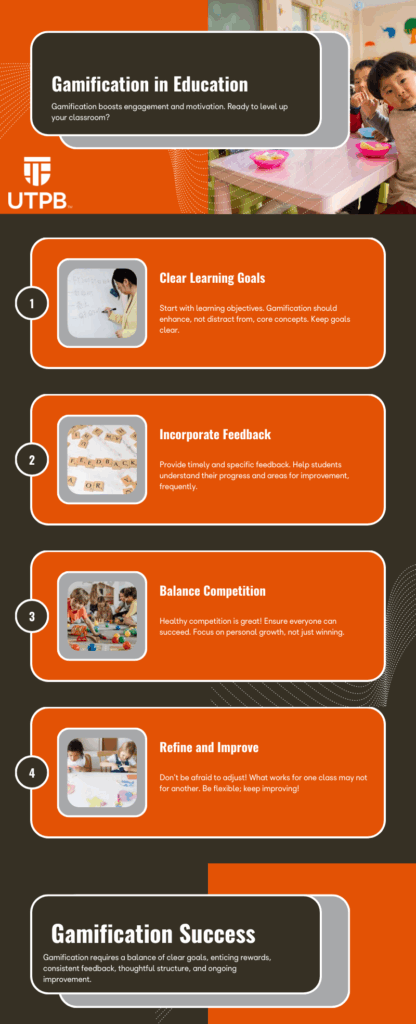
Gamification in education uses game-like elements such as points, badges, challenges, and leaderboards to make learning more engaging and motivating for students. By bringing familiar features from games into the classroom, educators can encourage participation and support stronger student buy-in.
From elementary school to college classrooms, you can use gamification in different ways depending on students’ needs and learning goals. In this article, we’ll look at:
Gamification in education refers to integrating game mechanics into the learning environment. By incorporating elements like badges, points, leaderboards, challenges, and progress bars, gamification taps into students’ familiarity with gaming to boost classroom engagement and motivation.
Here’s a deeper dive into these key components:
Badges As they complete tasks, students earn badges, giving them a sense of achievement and progress. For example, a student could earn a “Math Master” badge for mastering a set of problems.
Points A simple yet powerful motivator, teachers can award points for participation, completing assignments, or achieving specific milestones.
Leaderboards Displaying a class’s progress and ranking allows students to tap into their competitive drive, encouraging them to strive for top positions.
Challenges Challenges transform assignments into exciting quests or missions, like turning a research project into a “mystery-solving” adventure.
Progress Bars These provide a visual representation of students’ progress, making their achievements clear and motivating them to reach their goals.
These elements of gamification help create an interactive and dynamic learning experience. By tapping into students’ natural desire for achievement and competition, gamification fosters both motivation and accountability.
What Are the Benefits of Gamification in Education?
Gamification can lead to a range of benefits in the classroom. According to one study, gamification can lead to an 89% increase in student performance. But that’s just the start.
Here are a few more ways it can transform learning:
Boosting motivation When learning feels like play, students are more likely to show up and give their best effort. Gamification taps into intrinsic and extrinsic motivation by making lessons feel rewarding, encouraging even hesitant learners to give new concepts a try.
Increasing engagement Student buy-in is one of the biggest hurdles in education. But when students are motivated, they’re more engaged. For example, earning points for listening attentively, participating in discussions, or completing worksheets adds layers of interactivity that make the lesson feel less like a chore and more like a challenge.
Promoting a growth mindset Many gamified systems allow students to try again when they don’t succeed the first time. Think of it like reattempting a level in a game. This helps students reframe setbacks as opportunities to learn and improve, reinforcing the message: “I haven’t mastered this yet, but I will.”
Making progress visible In traditional classrooms, it’s not always easy for students to track their growth. Gamification tools like progress bars or journey maps let students see what they’ve accomplished and what still lies ahead, making progress tangible and goal-setting more intuitive.
Potential Drawbacks of Gamification
While gamification can offer a range of benefits, it’s not without its challenges. Here are a few potential drawbacks to keep in mind:
Overreliance on extrinsic motivation Visible rewards like points, badges, or class rankings can definitely boost engagement. But if students come to rely solely on these external motivators, their intrinsic drive to learn may suffer. Without consistent gamified rewards—or when transitioning to a classroom that doesn’t use them—some students might struggle to stay motivated or perform at their best.
Increased pressure and competition Tools like leaderboards can inspire some students, but they may have the opposite effect on others. Seeing their name near the bottom of the list, especially in front of peers, can lead to anxiety, embarrassment, or disengagement. Not all students thrive in competitive environments, and some may feel discouraged rather than driven.
Examples of Gamification in the Classroom
The type of gamification that works for first graders might not entice, say, 11th graders. Below, we explore some real-world examples of how educators can bring game elements into their classrooms at every level:
Elementary School Students earn badges and points for completing reading logs, participating in class discussions, or mastering multiplication tables. A classroom “treasure map” shows their collective progress toward a group goal, like a pizza party or a special theme day.
Middle School A science teacher turns a unit on ecosystems into a “mission” game where students complete challenges (like building a food web) to earn points and unlock new “levels” of the game. Leaderboards encourage friendly competition and collaboration.
High School In an English class, students engage in a debate tournament, earning points for preparation, participation, and rebuttals. Badges are awarded for creativity, teamwork, and research skills. A progress bar shows how close each student is to completing a full “debate mastery” achievement.
College A business course uses a simulated startup challenge. Students work in teams to “launch” a product, completing weekly quests like budget planning, marketing pitches, and risk analysis. Points and feedback fuel continuous improvement, and a final leaderboard highlights top teams based on performance and creativity.
4 Best Practices for Gamification in Education
There are countless ways to bring gamification into your classroom. You don’t have to reinvent the wheel—just a few gamified tweaks to your existing lesson plans can make a big difference in student participation and learning outcomes.
Here are a few best practices to get started:
4 Best Practices for Gamification in Education
You don’t have to overhaul your teaching strategy to use gamification in your classroom. In fact, just a few gamified tweaks to your existing lesson plans can make a big difference in student participation and learning outcomes.
Here are a few best practices to get started:
#1 Create a Clear Objective
You likely already have objectives aligned to your state standards. The key is to make those goals understandable and attainable for students.
When students know what they’re working toward, each step of the learning process feels purposeful, and every small milestone gives them a reason to celebrate.
#2 Determine Your Point System
Points can be awarded for just about anything, depending on your goals. If classroom management is the focus, give points for raising hands, staying on task, or helping others.
In addition, if you’re targeting mastery of a specific concept, award points for correct answers, insightful questions, or completing extension activities. The point system should reflect the behaviors and outcomes you want to reinforce.
#3 Set Time Limits
Adding a time element keeps students focused and adds a subtle sense of urgency. Whether it’s cleaning up or completing an activity, use a visible timer to let students know how much time they have left. This works especially well with challenges, encouraging students to work efficiently and stay on task.
#4 Offer Meaningful Rewards
The reward doesn’t always have to be tangible. It could be earning a new avatar accessory, choosing the next class activity, or unlocking a bonus challenge. The key is to make rewards feel exciting and age-appropriate while reinforcing learning goals.
DTake Your Career to the Next Level with a Graduate Credential From UTPB
Whether you’re ready to bring gamification into your own classroom or you’re working at the district level to boost student engagement across schools, deepening your expertise through advanced education can make a lasting impact.
At UT Permian Basin, we offer several education-focused graduate programs tailored to help you meet your career goals:
Texas teachers, here’s the reality: More than half of all K-12 students in the state are Hispanic, and nearly a quarter are enrolled in bilingual/ESL programs. That translates to over a million students who needed specialized language support throughout the 2023-2024 school year. Districts are struggling to find enough certified bilingual and ESL teachers. A critical shortage for schools? Absolutely. But…
Can speaking multiple languages boost your salary? Make travel easier? Even help prevent dementia? The answer is yes. But multilingual societies also face real challenges, from schools struggling with resources to entire languages disappearing. Whether you’re considering learning a second language or wondering how multilingual communities work, this guide covers what you need to know….
Bilingualism can come in handy for travel, work, and personal conversations. But did you know bilingual brains function better and longer? Bilingual people: Impressed yet? Let’s explore the cognitive advantages of a bilingual brain. How Does Being Bilingual Benefit Your Brain? Delayed Cognitive Decline People can stay sharp as they age by reading, playing word…
How many times a day do you unlock your phone to scroll through your favorite feed? Ten? Twenty? Lost count after breakfast? You’re not alone. The average American checks their phone 205 times a day and spends about two and a half hours of that time on social media.
Whether you’re catching up on family updates, laughing at relationship memes, or just doomscrolling out of habit, it’s clear: Social media is deeply woven into our daily lives. But how is it affecting our relationships?
Let’s pause the scrolling and take a closer look at how social media is reshaping the way we connect.
What Is the Impact of Social Media in Modern Romantic Relationships?
Social media has redefined how modern couples express affection, communicate, and navigate trust in their relationships. They love me, they love me not has never felt more relevant than it does in the digital age. Gone are the days when love letters and landlines did the heavy lifting. Now, romance unfolds across multiple platforms—texts, DMs, tagged photos, and the occasional cryptic story post.
Social media has become the new public square for modern love, and while it can bring couples closer, it also opens the door to some digital dilemmas.
Tips for Healthy Social Media Use in Relationships
Social media can be both a love language and a landmine, so how do you find the right balance? Like most things in life, it comes down to clear communication, boundaries, and some intentional screen-free time.
Here are a few practical ways couples can keep social media from interrupting their connection:
Set digital boundaries Talk openly about what feels respectful and what crosses the line. Are you both comfortable with public posts? What about liking other people’s selfies? Avoid assumptions and be clear about expectations.
Discuss your comfort levels Everyone’s tolerance for social media looks different. What feels like a casual interaction to one person might feel like flirting to another. Create space for occasional check-ins as your relationship grows.
Schedule tech-free quality time Pick a few times a week (or even just an evening) when devices stay in another room. Without the glow of a screen, you might be surprised how much stronger your conversations and connection become.
Does Social Media Impact Families?
Yes, social media shapes how families communicate, share experiences, and spend time together. It can strengthen bonds across generations, but it also risks replacing in-person interaction with passive scrolling.
From grandparents commenting on vacation photos to toddlers sneaking glimpses of TikToks over a parent’s shoulder, social media isn’t just for the kids anymore. Today, families of all ages are online, often under one roof and on separate screens. While social platforms can create closeness, they also raise new challenges in how families connect (or don’t) in the digital age.
Let’s look at how social media is shaping family life, for better or worse.
How Social Media Brings Families Closer
Social media can be a bridge, especially for families separated by distance or time zones. With platforms like Facebook, it’s easy to stay in touch with relatives near and far. Here are a few ways families reinforce real-world bonds via social media:
Sharing life updates
Commenting on photos
Tagging each other in memes
While Gen Z might be more into Snapchat or TikTok, older generations favor Facebook. A 2024 survey found that 29% of Facebook users are Baby Boomers and 26% are Gen Xers, making it a multigenerational meeting ground for families who want to stay in touch. For many, it’s a lifeline to feeling involved in each other’s lives, even across states or continents.
Challenges Social Media Poses for Families
Even though social media platforms are technically restricted to users 13 and older, younger children often get early exposure. When the whole household is immersed in screen time, meaningful family interaction can take a hit.
Excessive scrolling—even when you innocently intend to just “check your messages”—often means missed opportunities for dinner conversations, bedtime check-ins, or those spontaneous car-ride chats.
This goes for kids and adults alike. As individual screen time increases, quality shared family time decreases—and that shift can reshape everything from emotional support to household communication patterns.
Tips on Using Social Media in the Age of Tech-Savvy Kids
It’s not about banning screens. It’s about building healthy habits. Here’s how families can find a better balance:
Establish screen-free time
Create routines where phones stay out of reach: Think dinner, game night, or the hour before bed. These unplugged moments help everyone stay more grounded and connected.
Supervise children’s accounts
Just because a child is old enough for an account doesn’t mean they’re ready for the emotional rollercoaster of likes, comments, and comparison culture. Stay involved to help kids navigate social media with more confidence and less confusion:
Co-view content: Watch videos or scroll through posts together to understand what your kids are seeing and start meaningful conversations.
Check your privacy settings: Review account settings regularly to ensure your child only shares information with people they know and trust.
Keep talking: Ongoing conversations help kids feel comfortable bringing up anything confusing or upsetting that they find online.
Study Sociology Online at UT Permian Basin
From staying close with loved ones abroad to stirring up tension at the dinner table, social media has its perks and pitfalls. It helps romantic partners, families, and friends stay connected in real time, but it can also spark jealousy, reduce quality time, and complicate communication.
Want to dive deeper into how tech is reshaping human behavior, relationships, and society? Explore the online Bachelor of Arts in Sociology program at UTPB and turn your curiosity into career-ready insight.
After completing your general credits, you’ll focus in on sociological themes like:
Human interactions
Diversity of cultures
How social identities impact how people are viewed by society.
And with over 15 elective courses (also all online), you can zero in on the exact skills and knowledge needed for your career path, from social work to policy analysis.
Ready to start making an impact? Learn more or apply today to begin your journey in understanding and shaping the world around you.
Lunar eclipses don’t happen often, but when they do, everything seems to slow down. People step outside. Neighborhoods get quieter, tuned in to the skies above. Suddenly, something outside of our control brings us all together for a shared moment of collective awe. Eclipses remind us that we’re all living under the same moon, no…
Called “the most binding and central concern of sociology,” social stratification is a topic of intense study among sociologists. But what does this lofty term mean? At the simplest level, stratification refers to the formation of layers, or strata. From a sociological perspective, this term can also be used to refer to the divisions separating…
As of 2024, the average American spends 279 minutes—over four and a half hours—on their smartphones each day. This constant checking of texts and scrolling through social media can be distracting for adolescents, especially in school. However, there may be a positive side to Gen Z’s technological savvy. Digital platforms and social media can be…
Have you ever woken from a dream that felt a little too real? Maybe it was one you desperately wanted to fall back into—or one so intense that you splashed water on your face just to avoid drifting back to sleep. Dreams have a way of pulling emotions to the surface: nostalgia, love, regret, fear.
While many dreams reflect our individual life experiences, some are nearly universal. Have you ever dreamed your teeth were falling out? Or that you were suddenly naked in front of a crowd? What do these seemingly random dreams mean—and why do we dream at all?
In this article, we’ll dive into the hidden meanings behind seven common dreamsand explore what they might reveal about your waking life.
Why Do We Dream? (According to Sleep and Psychology Research)
Short answer: We don’t fully know why we dream, but most sleep researchers agree dreams help your brain process emotions, store important memories, and work through unresolved stress. In other words, dreaming is your mind’s overnight filing system.
Think of it like this: All day long, your brain collects information—conversations, worries, tiny moments you barely remember. At night, it finally gets a chance to sort through the mental clutter. Some of that “sorting” shows up as strange, symbolic, or hyper-emotional dream scenes.
Several leading theories explain why this happens:
Emotional processing Your brain replays emotionally charged experiences so you can make sense of them the next day.
Memory consolidation Sleep helps your mind decide what to keep, what to toss, and what matters enough to store long-term.
Stress rehearsal Some scientists believe dreams function like simulations, helping you mentally “practice” for real-world challenges.
Creative problem-solving Freud wasn’t wrong about everything. reams can blend logic and imagination in ways that help you connect dots you might miss when you’re awake.
So, while dreams may feel random, they’re usually anything but. They’re your brain’s way of taking what’s messy, emotional, or unresolved and giving it shape.
Looking for a quick cheat sheet that explains what each dream could represent? Here’s a brief review that explores the possible causes behind each common dream:
Dream
Core Emotion
What It May Represent
When It Usually Appears
Falling
Anxiety, instability
Fear of failure, losing control
During transitions or high stress
Being Chased
Fear, avoidance
Dodging responsibilities, unresolved emotions
When avoiding conflict or decisions
Flying
Confidence or frustration
Freedom, ambition, or feeling stuck
When craving change or pushing limits
Teeth Falling Out
Vulnerability, insecurity
Appearance or communication concerns
During social change or self-doubt
Naked in Public
Exposure, embarrassment
Fear of judgment, new beginnings
When feeling seen or evaluated
Being Late
Pressure, overwhelm
Fear of missing out or falling behind
During busy seasons or life transitions
Taking a Test
Self-doubt, pressure
Feeling evaluated or unprepared
During career or personal milestones
7 Common Dreams (and What We’re Really Asking When We Have Them)
Most of us don’t wake up from a dream and think, “Ah yes, classic subconscious symbolism.” Instead, we roll over and immediately ask, “Wait—what did that mean?” The truth is, almost every common dream pattern comes with a question attached to it.
Each section below unpacks the dream itself and the bigger question your mind may be trying to answer.
#1 Why Do We Dream About Falling?
Falling dreams often surface during times of uncertainty or emotional overwhelm. They tend to mirror situations where something in your life feels shaky—whether from stress, pressure, or a sense that you’re not fully grounded.
And few dreams capture that shaky feeling more than this one: One moment you’re going about your day, and the next you’re plummeting through the sky. Whether you fall through the floor, into water, or off a cliff, the sensation is often so intense that it jolts you awake.
In psychology, falling dreams are typically linked to:
A fear of failure: You may worry about underperforming or disappointing others.
Loss of control: This could relate to stress at work, in relationships, or with finances.
Guilt or insecurity: You might be wrestling with something unresolved or buried in your subconscious.
In the early 1900s, Freud saw falling dreams as symbols of giving in to sexual temptation, but modern interpretations focus more on anxiety and vulnerability.
#2 What Does It Mean When You Dream About Being Chased?
Short answer: Dreams about being chased often surface when you’re under emotional pressure or dealing with unresolved tension. Instead of addressing the stress directly, your mind may turn it into a feeling of being pursued.
If you’ve ever had this dream, you know exactly how intense it feels. Running for your life—whether from a person, animal, or something unidentifiable—is an adrenaline-spiking experience.
Psychologists often interpret chase dreams as signals of:
Avoidance: You might be dodging a problem in your waking life that needs your attention.
Unprocessed trauma: Sometimes the thing “chasing” us in dreams is a repressed memory or feeling demanding resolution.
According to Jungian psychology, your pursuer might represent a “shadow” aspect of yourself: an obstacle you must confront.
#3 Why Do I Dream About Flying?
Short answer: Flying dreams often symbolize freedom, ambition, or the desire to break away from something holding you back. How your flight unfolds—smoothly or with struggle—usually reflects how you’re navigating challenges in real life:Soaring comfortably: You’re breaking free from past limitations, like self-doubt or external pressures. You may feel empowered or in control.
Struggling to fly: Emotional blocks or responsibilities may be weighing you down.
Unable to take off: You might feel stuck despite trying to progress emotionally, professionally, or personally.
From a psychological standpoint, flying often symbolizes aspiration, control, and the desire to rise above life’s obstacles.
#4 Why Do People Dream About Their Teeth Falling Out?
Short answer: Dreams about losing teeth often connect to moments when you’re feeling unsure about appearance, communication, or confidence. Because teeth are tied to self-expression, these dreams tend to surface when something feels “off.”
If you’ve ever had this dream, you know just how jarring it can be: one minute everything is normal, and the next you’re suddenly toothless. Should you try to put them back in? Call a dentist? Does the tooth-in-milk trick actually work?
This dream is both bizarre and remarkably common: It’s one of the most-reported dreams after snakes.
According to dream research, this imagery might stem from:
Aging anxiety: As a child, losing teeth symbolized growth. As an adult, it can reflect fears about aging or losing vitality.
Appearance or communication anxiety: Teeth are part of how we present ourselves. Dreaming of losing them could reflect self-esteem issues or a fear of saying the wrong thing.
#5 Why Do We Dream About Being Naked in Public?
Short answer: Public nudity dreams often highlight vulnerability or fear of being judged. They tend to appear during moments when you feel exposed—emotionally, socially, or professionally.
We’ve all been there (in our dreams): suddenly realizing you’re stark naked in front of a crowd. Why, subconscious, why?Dreams with public nudity can represent:
Fear of exposure: You may worry others will see your true self and judge you for it.
Vulnerability: Starting something new, like a job or a move, can make you feel emotionally “unclothed.”
Confidence: If you feel calm or proud in the dream, it may symbolize self-acceptance and personal authenticity.
Psychologically, this dream often ties into self-image and identity.
#6 Why Do I Keep Dreaming About Being Late?
Short answer: Dreams about being late usually reflect overwhelm, pressure, or fear of missing out on something important. They often appear when life feels fast-paced or when you’re juggling multiple expectations.
If you’ve had this dream, you know the exact sensation: You’re rushing but just can’t make it on time—for an exam, a flight, or something important. The dream might even loop or repeat.Common interpretations include:
Anxiety about deadlines: You might be feeling overwhelmed with commitments or fearful of underperforming.
Fear of missed opportunities: Your subconscious may be nudging you to pursue goals you’ve been putting off.
This dream is especially common among high achievers and those going through transitions.
#7 What Does It Mean When You Dream About Taking a Test?
Short answer: Test-taking dreams often reflect pressure, self-doubt, or the sense that you’re being evaluated—at work, at home, or during major life changes. They surface when you’re measuring yourself against expectations.
And the dream itself does a great job capturing that pressure. You made it to the exam on time, but now you’re sitting there, completely unprepared. Cue feelings of inadequacy and performance anxiety.Test-taking dreams can point to several things:
Self-doubt: You may be questioning your abilities or feeling unqualified.
Fear of failure: Perhaps there’s a personal or professional milestone you’re aiming for—landing a promotion, being a great parent, buying your dream home—and deep down, you’re worried you might fall short.
Imposter syndrome: Even if you’re capable, you may fear being “found out” as unworthy or unprepared.
For adults, this dream often reflects work-related stress. Although it mimics a school setting, the emotional undertone translates to real-world pressures like meeting deadlines, achieving goals, or proving your worth in high-stakes situations.
FAQs: Understanding Common Dreams
Dreams can feel otherworldly or eerily familiar—but what do they truly mean? Here are answers to a few of the most common questions about dreaming:
Why do so many people have the same types of dreams? Some dreams, like falling, being chased, or losing teeth, tap into shared human emotions like fear, anxiety, or vulnerability. Psychologists believe these dreams reflect universal concerns and are shaped by both personal experience and collective unconscious patterns.
Do dreams really mean anything, or are they just random? It depends on the theory. Some experts, like Freud and Jung, believe dreams have symbolic meaning, while others view them as the brain’s attempt to make sense of random signals during sleep.
What does it mean if I keep having the same dream? Recurring dreams often signal unresolved emotions, stress, or ongoing situations in your waking life. They may be your mind’s way of urging you to pay attention to something important or to process a specific issue.
Study the Mind, Shape the Future at UTPB
Psychology offers more than insight: It opens doors. At UT Permian Basin, our fully online Bachelor of Arts in Psychology program empowers you to understand the mind and apply that knowledge in meaningful, real-world ways.
Whether you’re aiming for a career in social work or marketing or plan to become a licensed psychologist, this flexible program lets you seamlessly balance life and learning. And while many universities charge almost $500 per credit hour, UTPB keeps quality education accessible at just $362.34 per credit hour, offering a smart investment in your future.
Curious if psychology is the right path for you? Connect with us today to explore your options, get your questions answered, and take the first step toward a rewarding career.
Psychology is one of the broadest academic fields, and one of the most versatile. It spans everything from courtrooms to corporate offices, from childhood development to competitive sports. With so many specialties (and subspecialties), it can be tough to know where to even start. So exactly how many branches of psychology are there? The field is…
Ever reach for your phone and instantly face a barrage of messages, notifications, subscription reminders, and social media updates? You’re not alone. Scientists have estimated that the average person processes about 74 gigabytes of information daily: equivalent to watching 16 high-definition movies back-to-back in a single day. Cognitive overload is real. And over time, constant stimulation quietly changes how we think, focus, and feel. In this article, we’ll explore: What Does Cognitive Overload Mean? Cognitive overload happens when your brain receives more information than…
When someone struggles with depression, homelessness, or discrimination, who steps in to help? A psychologist? A social worker? A sociologist? These three fields all address human challenges, but they explore humanity from very different angles: one from society, one from the mind, and one from the front lines. So what are the similarities and differences between sociology, psychology, and social work? This guide clears up…
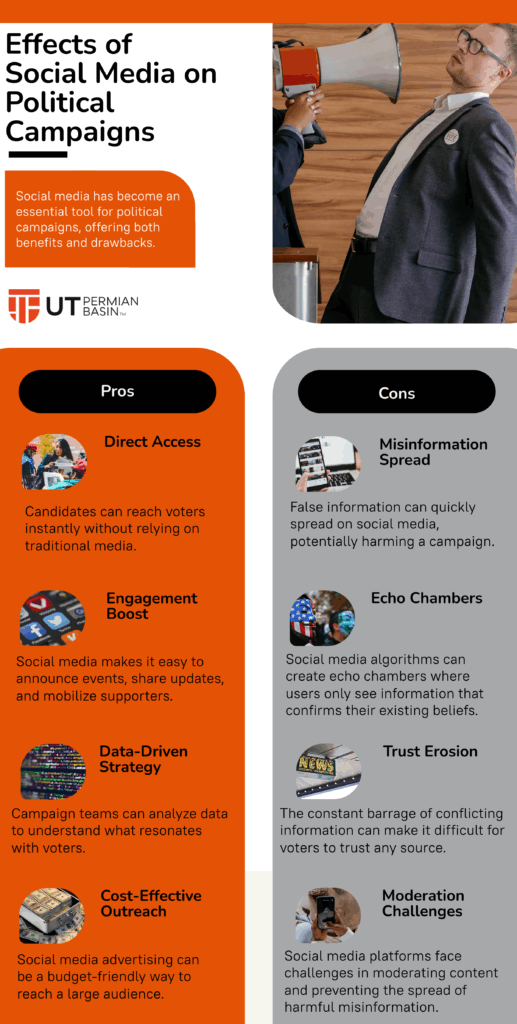
Social media has turned politics into a constant conversation.
Not long ago, campaigns relied on TV ads, newspaper coverage, and door-knocking to reach voters. Now, candidates can post directly to millions of people before the evening news even airs.
That access is powerful. It can help campaigns mobilize voters, respond quickly, and make political participation feel more immediate. But it can also spread misinformation, fuel outrage, and push people deeper into political echo chambers.
Let’s look at the benefits, drawbacks, and growing influence of social media in politics.
The Rise of Social Media in Political Campaigns
Just two decades ago, politicians had to rely on press conferences and news outlets to get their message out. These traditional methods are quickly becoming relics of the past. Today, social media offers candidates a direct line to voters through tools like:
Tweeting campaign updates and hot takes
Livestreaming rallies or casual Q&As
Sharing behind-the-scenes moments via Instagram reels or Facebook stories
With social media platforms, candidates can respond to criticism instantly, post unfiltered thoughts (for better or worse), and build a personal brand that resonates with supporters—something that static newspaper ads simply can’t do.
Take President Donald Trump, for example. During the 2016 presidential primaries, he used Twitter (now X) to share controversial views and policy stances, often bypassing traditional media entirely. His tweets dominated news cycles, increased his media visibility, helped energize a loyal base, and drew public attention on his terms.
Benefits of Social Media in Politics
The upsides of using social media on the campaign trail are hard to ignore, from immediate access to voters to outreach strategies that don’t break the bank.
Here’s a closer look at the key advantages:
Unfiltered access to voters Candidates can post directly to their feeds, controlling their own narrative and image without the spin of traditional media.
Higher engagement and voter mobilization Social platforms make it easy to announce rallies, share key dates, or rally supporters to the polls. For example, Stacey Abrams’ 2022 gubernatorial campaign used Instagram to drive turnout among Gen Z and Black voters in Georgia: two groups historically underrepresented at the ballot box.
Real-time data to guide strategy With built-in analytics, campaign teams can see what’s working (and what’s not) in real time. If a video flops or a post goes viral, they can adjust on the fly based on clicks, comments, and shares.
Cost-effective outreach Compared to pricey TV spots, social ads are a budget-friendly way to get the word out. And if a post gains traction organically? Even better. A viral tweet or trending hashtag can go further than a million-dollar commercial ever could.
Drawbacks of Social Media in Politics
Of course, social media isn’t all rainbows and butterflies. Like any tool with perks, there are bound to be pitfalls, and social media is no exception. Below, we explore some of the most pressing drawbacks.
Social Media, Misinformation, and Political Trust
Misinformation can spread like wildfire, often faster than factual content. While social media can be wielded for good (think: educating voters, mobilizing communities), it can just as easily be used to mislead and manipulate.
Here are some core misinformation concerns that campaign teams should watch for:
The speed of false information From false claims of election fraud to doctored headlines designed to stoke outrage, misinformation thrives on platforms engineered for engagement over accuracy. By the time fact-checkers catch up, the damage is often done.
Bots and fake accounts Remember the Russian troll farms from the 2016 election? They used fake Facebook profiles to stir division, inflaming tensions around hot-button topics like race, gun control, and immigration. These coordinated disinformation campaigns flooded voters’ feeds, warping perceptions during a crucial election cycle.
Moderation and accountability challenges Platforms like Meta and X have tried implementing fact-checking programs, but many users viewed them as inconsistent or politically biased.
In 2025, Meta officially retired its fact-checking initiative, placing the responsibility for flagging misinformation on users. CEO Mark Zuckerberg admitted the change could let “more bad stuff” slip through the cracks, but he argued it was a necessary trade-off to reduce censorship and rebuild public trust.
Eroding trust in truth When voters see nonstop conflicting claims, it becomes harder to discern what’s true. That confusion can lead to skepticism, apathy, or worse: accepting misinformation as fact.
Algorithms, Echo Chambers, and Political Polarization
Your social media algorithm knows you a little too well. Cat lovers are flooded with silly feline videos, while health-food enthusiasts are served endless reels of vegan meal prep inspiration. The same goes for political content.
Your feed reflects your past likes, shares, and clicks, reinforcing your existing views. Over time, this can lead to echo chambers: online spaces where people mostly encounter opinions that mirror their own. When that happens, meaningful political discourse can take a hit.
Here’s how:
Personalized feeds reinforce biases To keep you engaged, algorithms serve up more of what you’ve interacted with before. If you regularly engage with left- or right-leaning posts, your feed will be shaped accordingly, making it harder to see opposing views.
Polarization gets amplified Echo chambers deepen divides. When you only see one side of an issue, it’s easy to view the other side as misinformed or malicious, fueling mistrust between political groups.
How Social Media Shapes Public Opinion
Social media does more than spread campaign messages. It can shape which issues people notice, which stories gain traction, and which voices get heard.
A viral video can make an issue feel urgent overnight, and a meme can simplify a political argument. That doesn’t mean one post changes every voter’s mind. But repeated exposure matters. The more often people see certain messages, the more those messages can influence what they pay attention to and who they trust.
For voters, this makes media literacy more important than ever. For political professionals, it shows why digital communication, public opinion, and political behavior are so closely connected.
Want to Understand the Bigger Picture? Study Political Science at UTPB
If you’re fascinated by how social media is reshaping politics—and you’re ready to dive into the forces that influence public opinion, policy, and power—UT Permian Basin’s online Bachelor of Arts in Political Science is a wise next step.
Whether you see yourself as a future policy analyst, campaign staffer, lawyer, political scientist, or diplomat, this program gives you the foundation to succeed in a wide range of roles. And with 100% online courses, you’ll have the flexibility to complete your degree on your own time—without putting your work or personal life on hold.
Ready to explore where a poli sci degree can take you? Reach out today—or take the leap and apply now.
From Congress to the White House to the Supreme Court, America’s political institutions shape every part of our lives. They decide how much you pay in taxes, whether your vote counts, and what rights you have. But are they working the way they’re supposed to? What Is a Political Institution? Political institutions are the organizations…
When people picture women who reshaped American politics, Ruth Bader Ginsburg often comes to mind first—and for good reason. RBG changed how the law sees gender equality from the inside of the Supreme Court. But here’s the thing: she wasn’t in Congress. Long before women were reliably winning elections—long before it was even legal for…
Ever wonder how elections actually work? The answer lies in electoral systems. Not to be confused with the Electoral College, an electoral system is a set of rules for casting and counting votes and determining who wins. Different countries use different methods to choose their leaders. Some systems can declare a winner with just 34%…