What the Fourth Industrial Revolution Means for the Future of Nursing
Any sufficiently advanced technology is indistinguishable from magic.
—Arthur C. Clarke
Imagine a 19th-century nurse stepping foot in a modern-day hospital. Although knowledgeable for her time, this nurse would be at a loss for what to do with commonplace technologies like defibrillators, ventilators, and vital signs monitors. Medical culture would perhaps feel familiar, but every modern medical routine would seem like science fiction to our displaced nurse.
This is what being a nursing professional may very well feel like after the Fourth Industrial Revolution (Industry 4.0), an ongoing technological revolution that’s blurring the lines between the physical and digital world. Society is changing, accelerating in response to 3D printing, autonomous cars, quantum computing, and other emerging technologies, and this is only the beginning.
How Technology Is Changing Patient Care in Modern Medicine
Healthcare is a technology-driven industry, and innovations that can improve the quality of patient care are often rapidly embraced. Consider the disruptive nature of health information technology (health IT). The shift from paper to electronic health records enabled doctors to access patient information at all hours, share up-to-date information with specialists, and write out prescriptions electronically. This transition forever changed how nurses and physicians administer care, and it was well underway before the start of the Fourth Industrial Revolution.
The entire world is standing at the edge of the precipice that is the Fourth Industrial Revolution, and healthcare may be the first field to go over.
How IoT and Wearables Are Transforming Patient-Centered Care
The coming years will usher in a revolution in patient-centered care as medical devices are connected through the internet of things (IoT), wireless networks of devices that collect and share data. If you have an Apple Watch or Fitbit, you’re already familiar with how this technology can be used to track your steps and monitor your heart rate. However, the potential for wearables goes far beyond helping people achieve their fitness goals. The IoT will enable wearables to communicate directly with medical devices, sharing biodata that can be used to inform clinical decisions, reduce misdiagnoses, and predict disease.
For a look at how this technology can be used to find novel medical solutions, check out Abilify MyCite. Approved for the treatment of some mood disorders, this pill has a built-in sensor the size of a grain of sand that transmits data via a wearable patch to a patient’s smartphone, allowing them to track the ingestion of medication and their adherence to medication regimens.
Reducing Misdiagnosis with AI and Machine Learning
Most people will receive an incorrect or late diagnosis at least once in their life, and by one estimate, 12 million patients are misdiagnosed annually. Diagnostic errors can and do result in patient harm and death, which is why the use of artificial intelligence (AI) to diagnose disease is so promising.
In a study published by the Annals of Oncology, researchers pitted 58 dermatologists from around the world against a deep learning convolutional neural network (CNN). On average, the dermatologists accurately identified 86.6% of melanomas. And the AI that was trained on over 100,000 images of malignant melanomas? CNN detected melanomas with 95% accuracy.
AI is no substitute for experience and empathy, but it’s an incredible tool that’ll assist medical professionals in ways that may surprise you. Chatbots have been shown to significantly reduce symptoms of depression, personalized medications are being developed by scanning patient health and genetic records with AI, and coma patients are being given a second chance at life thanks to AI that can predict when and if they will awaken.
Genetic Engineering and Gene Therapy in the Future of Healthcare
Biotechnology harnesses cellular and other biological processes to develop new technologies, essentially using living organisms to solve problems. Genetic engineering, the manipulation of an organism’s genetic material, is the most prominent area of biotechnology and consists of:
Gene therapy: replacing a faulty gene to cure or fight disease.
Gene editing: making targeted changes to a genetic code.
Exon skipping: splicing a gene to skip genetic mutation.
For example, ADA-SCID is a rare, potentially fatal inherited immunodeficiency disorder that leaves children highly susceptible to severe infections. Through the use of an experimental gene therapy, researchers were able to insert a normal copy of the ADA gene into a patient’s blood-forming stem cells and restore lasting immune functions in 48 of 50 children. Genetic therapy and engineering may cure this and many other genetic diseases as the Fourth Industrial Revolution continues to unfold.
The Revolution Is Here: What Nurses Need to Know
Medical innovations like those brought on by the Fourth Industrial Revolution may seem like science fiction, but they’re becoming more and more of a reality with each passing day. We take an in-depth look at this topic in Informatics and Innovation, an online course offered as part of The University of Texas Permian Basin’s online RN to BSN program.
Accredited by the Commission on Collegiate Nursing Education (CCNE), our online RN to BSN program is designed to provide aspiring nursing leaders like you with a deeper understanding of evidence-based practice and patient-centered care. Through our program, you’ll study essential topics in nursing, including the impact of technology on patient care, and in as little as one year, you can graduate with a bachelor’s degree and an expanded skill set that will prove invaluable throughout your career.
Picture this: You’re in a hospital room, and a nurse walks in—flustered, but still smiling—with a chart in hand. This expert provider is checking your vitals, catching early warning signs, coordinating with doctors, reassuring your anxious family outside, and solving small healthcare crises in the hallway … all before lunch. Today, nurses are no longer…
Of the growing number of fields actively using artificial intelligence (AI) technology—including finance, manufacturing, marketing, and customer service—the field that arguably makes the most significant impact in our lives is healthcare. AI is supporting all healthcare sectors, simultaneously making nurses more efficient, elevating their level of care, and improving patient outcomes. Here we’ll examine some…
Every year, over 150,000 registered nurses (RNs) graduate from nursing school, ready and eager to make a difference in the lives of patients. They’ve spent up to four years preparing for this moment, poring over textbooks, completing clinicals, and mastering skills. But when it comes time to face the challenges on the hospital floor or…
Earning a higher education credential from an accredited institution is a crucial milestone. It’s the gateway to career opportunities, a feeling of well-deserved pride, and personal and professional fulfillment. The University of Texas Permian Basin, the federal government, private lenders, and many other organizations offer various types of payment assistance so you can pursue higher education and enjoy all these benefits.
Let’s take a look at what the financial commitment of earning an educational credential online from UT Permian Basin is like and review some of the financial aid and scholarship options that may be available to you.
Save Money by Paying Less
UT Permian Basin’s tuition and fee structure is among the most affordable you’ll find in higher education, due in part to the fact that we don’t charge online students out-of-state tuition rates. (In some cases, out-of-state rates can more than double the amount a student pays for their education.) Online students benefit from other savings as well, as they don’t need to pay for the parking permits, gas, tolls, and other expenses related to commuting to campus. You’re already saving money just by choosing online learning!
Look to Uncle Sam
All Americans share a common interest in helping cultivate educated and productive members of society. For this reason, the federal government offers various student loans to eligible individuals for qualifying programs. Some of these, such as Direct Subsidized Loans, are awarded due to financial need, while others, such as Direct Unsubsidized Loans, don’t require demonstration of financial need.
For undergraduate students, federal loans generally range between $5,500 and $12,500 per year. This could potentially cover 100% of a qualified student’s annual cost for some bachelor’s degrees. Graduate students may borrow as much as $20,500 each year for their education. The total tuition for UT Permian Basin’s graduate programs starts at about $10,000, and many programs range from approximately $13,000 to $16,000. Considering that some online graduate programs last one year, a federal loan may cover all or most of the tuition costs for qualified students. In addition to these loans, Direct PLUS Loans help graduate students, professional students, and parents of dependent undergraduates cover related expenses that financial aid does not.
If you’re interested in applying for federal student aid, you should first apply to a UT Permian Basin online program. Once you’ve been accepted and have registered for classes in that program, visit this website to complete a Free Application for Federal Student Aid (FAFSA). When filling out a FAFSA, be sure to use the UT Permian Basin school code, 009930.
Apply for a Grant
Various federal, state, and private agencies offer grants to students with demonstrable financial need. Grants do not have to be repaid. Notable examples include Federal Pell Grants and Teacher Education Assistance for College and Higher Education (TEACH) Grants, but many others are available, and students are encouraged to do their own research.
Take Out a Private Loan
Individuals apply for private loans through banks, credit unions, and other financial institutions to help them cover the cost of a new home, a new car, and even their college education. Private loans must be repaid.
Get a Scholarship
Scholarships are awarded based on need, academic achievement, or other criteria and do not have to be repaid.r the cost of a new home, a new car, and even their college education. Private loans must be repaid.
Pay in Installments
UT Permian Basin enables you to split your total tuition cost into four separate payments, with the first due at enrollment and the rest during subsequent months. Get more details on our payment plans here.
Take Advantage of Your Employer’s Education Benefits
Many employers will help cover a portion of the cost of educational programs that are relevant to their industry. Speak with your company’s human resources department to see if such benefits might be available.
Use Your Veteran and Military Benefits
UT Permian Basin proudly participates in several VA education programs, including:
Post 9/11 GI Bill® (Chapter 33)
Montgomery GI Bill® (Chapter 30)
Montgomery GI Bill® Selective Reserve (Chapter 1606)
Dependents’ Educational Assistance (Chapter 35)
Vocational Rehabilitation and Employment (Chapter 31)
Hazlewood Act (Texas Veterans)
For more information about your eligibility for these programs, please contact Military and Veteran Student Services at veterans@utpb.edu.
Reach Out to Us
We’ve touched on several ways to ease your financial responsibility for online UT Permian Basin programs. The above list is not exhaustive, however, and there are other options available. Some students qualify for several types of financial aid, and the combined funds cover most or all of their annual education expenses, though this varies by individual. We’d be happy to help you sort through these options and determine which will work best for you. Reach out to our financial aid office for assistance at any time.
See how affordable our online degree and certificate programs can be with financial aid!
From ancient Greece to modern America, feminist authors have used their words to rewrite history. Through poetry, fiction, and fearless essays, these word-wielding pioneers challenged patriarchy, inspired generations, and proved that literature can be a powerful tool for equality. (All in a day’s work for these trailblazing women.)
From sixth-century poet Sappho to 20th-century icon Maya Angelou, here are five famous feminist writers who changed not only the literary canonbut the course of culture itself.
Sappho was a poet and songwriter born in Greece in the sixthcentury B.C. She was considered the greatest lyric poet of her time in a world dominated by men, and known as “the Tenth Muse”: an ode to her unparalleled creativity.
Her works celebrated the sensuality of people of all genders and her fearless identification as a lesbian. Sappho’s life and work were considered scandalous until recent times. In the 11th century, the Church burned most of her poems and songs. Thankfully, some of her poetry survived, and its rediscovery opened the doors to many more generations of feminist literature.
Another famous feminist author, Mary Wollstonecraft, was an 18th-century English writer, advocate, and feminist philosopher. She produced critical works like, “A Vindication of the Rights of Woman.” This particular piece asserted that women deserved the same educational, economic, and political rights as men.
Wollstonecraft’s revolutionary sentiment earned her a prominent place in feminist literature. She even influenced her own family to think ahead of their time: Her daughter Mary Shelley was the author of “Frankenstein,” a novel that would also change history.
#3 Jane Austen: The Novelist Who Rewrote Society’s Rules
“Sense and Sensibility” and “Pride and Prejudice” are literary classics still beloved by modern readers, and so is their novelist, Jane Austen. Her many books explored female characters that were independent and able to accomplish much on their own.
While their depiction may seem tame by modern standards, it was extraordinary in 19th-century England, which was governed by a patriarchal society with strict status quos. Her voice led the way for newer generations to address inequalities. Austen herself remained unmarried and chose to write books instead, also challenging 19th-century norms.
#4 Virginia Woolf: The Modernist Who Gave Women a Room of Their Own
Virginia Woolf was an English novelist and modernist who explored stream of consciousness as a narrative device and pioneered the idea of women as emancipated individuals. One of her most striking works is “Orlando,” which explored the idea of gender fluidity.
Her essay “A Room of One’s Own”argued for female writers to have equal opportunities to express themselves artistically. This included the private physical space that creative thought often requires. While suffering from mental illness and the trauma caused by her sexual abuse, Woolf still managed to produce work that deeply explored the human condition and continues to inspire many readers today.
#5 Maya Angelou: The Poet Who Spoke Truth to Power
Maya Angelou was a 20th-century poet, screenwriter, and activist. Despite living in a time when African American women were deeply oppressed, she spoke out bravely through her work. Her famous autobiographical novels, such as “I Know Why the Caged Bird Sings,” garnered national attention by addressing women’s issues during segregation, racial discrimination, and sexism.
Angelou went on to become the first African American female director in Hollywood, writing award-winning screenplays that addressed the oppression of women—especially women of color. She won the Presidential Medal of Freedom in 2010, four years before her death. In addition, her 1975 poem “Alone Together” rode a wave of popularity as a viral rallying cry during the COVID-19 pandemic.
Get Inspired by History’s Greatest Feminist Writers in Our Online BA in English Program
Ready to dive deeper into some of the best feminist writers who shaped culture? Through UT Permian Basin’s online BA in English, you’ll explore everything from early feminist literature to contemporary creative writing. Learn from history’s greatest authors while developing your own unique voice.
At UTPB, our 100% online classes provide students with high-quality, cost-effective, and convenient education on par with our in-person classes. What’s more, you can enrich your knowledge of English language and culture from anywhere in the world!
Rated by U.S. News & World Report as having some of the best online bachelor’s programs, UT Permian Basin can provide you with a critical literary foundation that will allow you to successfully pursue an English master’s or doctoral degree.
Careers that students will be poised to pursue with our BA in English include:
Copywriter
Editorial assistant
Teacher
Journalist
Publishing copyeditor/proofreader
Research analyst
Grant writer
Librarian
Explore the timeless literature of historical greats and gain valuable knowledge and skills through our online classes. Join UT Permian Basin’s online BA in English program and start your journey today.
Studying classics helps us understand where many of our biggest modern questions came from, including who gets power, how societies define justice, and why humans keep telling the same stories in new outfits. A single, harmless question comes up a lot in humanities courses (usually from someone trying very hard not to care): Why does any of this matter? And…
Monsters have been with us since the beginning of storytelling. Before novels, there were myths. Before myths, there were campfire stories about things lurking just outside the firelight. Something about the human brain is wired to conjure creatures (and compelled to write entire books about them). But literary monsters have never just been about scaring people. The…
“I took the road less traveled by, And that has made all the difference.” Even if you don’t know the entire poem, you may recognize the closing words from Robert Frost’s “The Road Not Taken.” They’re quoted at graduations, shared during moments of change, and used to describe the quiet courage of choosing your own path. So why have these simple words endured across generations? The power of…
You don’t need to love spreadsheets to succeed in accounting (but it does help). Behind every balance sheet and tax return, however, is a professional who’s strategic, detail-oriented, and trusted to keep finances on track.
So, what makes a great accountant? Whether you’re aiming for the CPA exam or stepping into business finance, here are the top six skills that can shape a thriving accounting career.
#1 Tech-Savvy Accounting Tools & Platforms
Modern accounting has moved far beyond pen, paper, and calculators. Today’s professionals rely on powerful, computer-based accounting systems and specialized software to manage everything from data entry and reporting to auditing and forecasting.
Cloud accounting, in particular, is transforming how firms operate—offering real-time access to financial data, increased collaboration, and enhanced security. To stay competitive in the field, accountants must be comfortable adopting new technologies that drive accuracy, efficiency, and insight.
#2 Strategic Business Insight
Accountants working within organizations need more than number-crunching skills. They need a clear understanding of how the business operates as a whole.
As cross-functional collaboration becomes more common, employers increasingly expect accountants to communicate with multiple departments and align their financial expertise with broader organizational goals. A strong grasp of overall business strategy gives accountants the insights to support smarter decision-making across the company.
#3 Sector-Specific Accounting Expertise
Accountants who wish to work in a specific field such as healthcare or residential housing may increase their employment potential by expanding their expertise through courses focused on that particular field.
For instance, within each sector, there are distinct financial regulations, reporting standards, and challenges. Specialized knowledge allows accountants to deliver more accurate and strategic guidance. This added layer of expertise not only makes you more marketable but can also position you as a valuable, niche expert in your field.
#4 Problem-Solving
When problems arise, whether they’re regulatory concerns for a business or a complex tax scenario, accountants must be able to think on their feet and devise effective, timely solutions. Strong problem-solving skills don’t just prevent mistakes; they build trust and long-term value.
#5 Time Management
Accountants juggle multiple priorities on any given day, and during peak times like tax season, their calendars can feel like a high-stakes game of Tetris.
Strong time management skills are essential for several reasons, including:
Staying organized
Meeting strict deadlines
Keeping projects moving without compromising accuracy.
Falling behind can lead to missed filings, reporting errors, or unhappy clients, so the ability to prioritize and plan effectively is key to thriving in this fast-paced profession.
#6 Clear and Effective Financial Communication
Accounting may be rooted in numbers, but success in the field also depends on how well you communicate them. Whether you’re explaining a tax issue to a client or presenting a budget forecast to leadership, the ability to translate complex financial information into clear, understandable language is critical. Strong written and verbal communication builds trust, reduces confusion, and ensures that clients and colleagues can act confidently on your advice—even if they’ve never opened a spreadsheet in their life.
How to Build These Skills: Online Accounting Degree Options
If you’re ready to turn these essential skills into a lasting career, the right education can make all the difference. The University of Texas Permian Basin offers online bachelor’s and master’s degree programs for aspiring accountants through our AACSB-accredited College of Business. These skill-driven programs prepare you for numerous rewarding roles within the accounting profession.
Where available, we’ve provided earnings information from the U.S. Bureau of Labor Statistics (BLS) for careers associated with these degrees below.
BBA in Accounting Haven’t earned your bachelor’s yet? Our online BBA in Accounting is a smart first step.
Our program provides the foundational skills to analyze and resolve accounting problems within specialized areas, including healthcare, governmental and non-profit organizations, energy, and other important sectors of the economy using the latest tools.
Our program gives you the flexibility to choose from one of two tracks to align with your professional aspirations:
The CPA track is intended for students who intend to pursue a public accounting career.
The non-CPA track consists of general accounting studies and is designed for students who wish to work in a related business role.
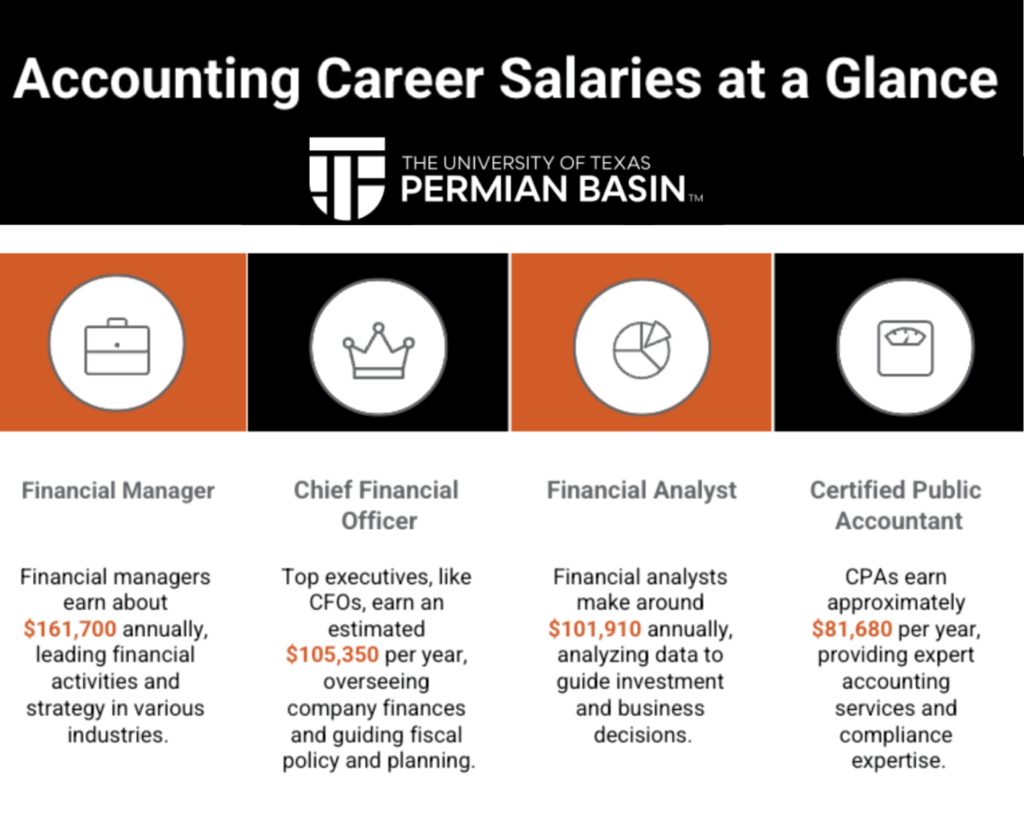
Many students complete our accounting MBA program in as little as four semesters and go on to work in a variety of careers. Potential career paths include financial manager (BLS annual earnings estimate: $161,700) and financial analyst (BLS annual earnings estimate: $101,910). Having a master’s degree can also help you compete for leadership positions.
Master of Professional Accountancy If you’ve completed a bachelor’s degree and are certain you want to achieve CPA certification, our online Master of Professional Accountancy is your program. Online courses cover all the CPA exam topics, making it essential for exam preparation.
Many students finish our professional accountancy master’s program in 2 to 4 years and graduate with the potential to become a certified public accountant (BLS annual earnings estimate: $81,680) or even chief financial officer (BLS annual earnings estimate: $105,350). According to the BLS, some employers prefer candidates who’ve earned a master’s degree, and with the added credential of a CPA license, there’s no telling where your career can take you.
Earn Your Degree, On Your Terms
Each of our online accounting degree programs features the same curriculum as its campus-based version and is taught by the same distinguished faculty and CPAs.
Our programs are delivered asynchronously, which enables you to complete coursework on your own schedule, around any professional or personal responsibilities you might have. And since they’re presented online, you can access our programs from any location in the world with internet access. Distance is never a barrier to you earning an accounting degree from UT Permian Basin.
Learn the skills you need to succeed as an accountant or in a related field with a respected degree from UTPB!
When you hear the word “accountant,” who comes to mind? Someone balancing spreadsheets and filing taxes? If so, you’re on the right track. But there’s more to it. Within the field of accounting, one credential stands apart: the Certified Public Accountant (CPA). While both accountants and CPAs manage finances, advise clients, and ensure the accuracy…
Picture this: You’re a junior accountant, and your manager asks you to tweak a report to make the numbers look better. The request sounds harmless enough—just a small tweak—but you know it’s not above board. Now you’re stuck. Do you follow orders and risk crossing an ethical line, or do you push back and risk…
You’ve always been an analytical thinker. A problem solver. Maybe a math whiz, too. There’s a career that matches your strengths. Certified Public Accountants—or CPAs—excel in these qualities. Let’s explore why a CPA is no ordinary accountant and what it takes to become one. Want to Be a CPA? Here’s What You Need to Know …
For students in highly specialized academic fields, the professional path that begins after graduation is often clear-cut. Individuals who earn an accounting degree, for example, generally go on to become accountants. Other students, however, prefer a broader academic focus that spans several disciplines, making them a natural fit for studying humanities. Since the term humanities refers not to a profession but rather a broad range of social and cultural studies, the value of a degree in this subject may not be immediately clear. Let’s look now at what we mean by humanities, the essential skills a degree in humanities helps you develop, and the professions for which a humanities degree is most valuable.
The Meaning of Humanities
Humanities encompass a range of disciplines including language, philosophy, history, literature, music, and other arts. One purpose of a humanities degree is to equip students with a well-rounded knowledge of human culture that will enable them to better understand the world around them. A humanities degree also enables students to enjoy greater personal enrichment and build the skills needed to experience a more rewarding career.
The Degree Helps You Build Broadly Applicable Skills
Let’s discuss those skills for a moment. A humanities degree instills students with what are commonly called “soft skills,” which major companies and the U.S. Department of Labor agree are among the skills nearly all employers are seeking in job candidates—not just for entry-level jobs, but for leadership positions as well. These skills include:
Communication: The ability to fully understand information conveyed by others as well as express yourself in a clear and intelligent manner, whether spoken or written.
Critical thinking: The ability to analyze a problem or situation and devise a new, creative way to solve it, either on your own or in collaboration with others.
Cooperation: The ability to work with others toward the achievement of a shared goal. Cooperation requires you to welcome, understand, and incorporate diverse perspectives. In the workplace, this is what’s meant by “teamwork.”
Empirical and quantitative reasoning: The ability to understand and apply numerical data to devise and produce informed decisions.
Personal responsibility: The ability to understand and take accountability for the effects that your choices have on others, as well as to adequately explain your rationale for making such choices.
Social responsibility: The ability to see how your choices affect society as a whole and to use that knowledge as the basis of ethical decisions.
Clearly, these skills—soft or not—can benefit nearly everyone, both personally and professionally. Through a carefully designed curriculum, a humanities degree can help students develop a broad set of these irreplaceable abilities.
The Degree Prepares You for Many Rewarding Careers
By developing a skillset so broadly applicable and marketable, humanities degree-holders are primed to pursue a variety of careers, including:
Advertising sales agent
Artist
Attorney
Clergy member
Counselor
Educator
Event coordinator
Military service member
Public relations professional
Travel agent
Writer
The Value of an Online Humanities Degree From UTPB
When you choose The University of Texas Permian Basin for your online Bachelor of Arts in Humanities, you’ll explore and consider some of the world’s most significant cultural works as you build the key skills that modern employers are seeking.
Our innovative online humanities degree program enables you to gear your studies toward the academic areas that most closely align with your passions. Rather than follow a fixed curriculum, you’ll work together with one of our faculty advisors to design an individualized study plan centered around a multidisciplinary theme, era, set of problems, specialization, or viewpoint. This is a unique configuration that you can’t experience by simply pursuing a major and a minor simultaneously. You’ll pick two to four areas of concentration from a list that includes art, English, Spanish, music, history, and communication, among others, for a total of 24 credit hours of specialized coursework.
In addition to this custom curriculum, our BA in humanities also offers a flexible learning experience through an asynchronous, fully online format that empowers you to complete coursework on your own schedule from virtually any location in the world. It’s the ideal way to earn a bachelor’s degree while fulfilling your professional and personal responsibilities. Need additional flexibility? You can begin your program at any of six annual start times. Once you begin, you’ll learn from the same renowned faculty who teach at the UT Permian Basin campus. When you graduate, you’ll receive the same respected degree as any campus-based student, with no indication that the program was completed online.
Can you see the value that our online Bachelor of Arts in Humanities program offers? Apply here or get more details about the program now.
Ask someone what a drone is used for and you’re likely to receive any number of responses. A photographer might tell you they’re great for shooting aerial footage, while a farmer might share how they use agricultural drones for targeted pesticide spraying. Someone might even mention hearing about a fleet of experimental delivery drones.
You’re also sure to hear from detractors, many of whom only are only familiar with drones’ military or surveillance uses.
So, which is it? Are drones a plaything for hobbyists or a conveyance for precision-guided munitions? Are they used for good or evil?
Like all technology, drones are not inherently good or evil. How our society uses drones is what matters, and lately, they’ve been used to accomplish some incredible things. We’ll be taking an in-depth look at drones and some of their more novel uses. Who knows? Maybe you’ll find a use for drone technology in your own profession.
What Is a Drone?
Drones are unmanned aerial vehicles (UAV) that are remotely piloted or follow a preprogrammed flight path, and their development dates back to World War I. Developed in secret in 1918, the Kettering Aerial Torpedo was the first functioning UAV, although it was little more than a cobbled-together wooden biplane turned bomb.
The “Bug,” as it came to be known, was designed to shed its wings and plummet onto its target once a predetermined number of engine revolutions were reached. Alas, the war ended before the Bug could see battle.
Why Do Drones Have a Bad Reputation?
Drones are lighter and more efficient than traditional aircraft, requiring no systems to support an onboard pilot, so it was only a matter of time before world militaries began using them in earnest.
The U.S. began deploying military drones for surveillance and reconnaissance beginning in the early 1980s, and by 1990, they were equipped with antitank missiles. Predator drones have since become a symbol of 21st-century warfare, especially in connection to the war on terror.
The MQ-9 Reaper is the U.S. Air Force’s latest unmanned combat aerial vehicle, and with a wingspan of 66 feet, it’s hard to imagine how it could have anything in common with the recreational drone sitting on your local store shelf.
How Are Drones Used for Good?
Drone strikes have been heavily criticized for misidentifying targets and killing innocent civilians, giving rise to the notion that drones are inherently harmful. However, the same technology behind military drones has been refined and miniaturized into the lightweight, battery-operated drones we see today.
Able to reach remote areas with little time or effort, drones are being adopted across industries as more businesses realize their untapped potential.
A Data-Driven Industry
One industry that’s benefiting from drone technology is geospatial science. Geospatial data refers to information about objects, events, and other details attributed to a location on Earth. When you see a hurricane map showing areas of rainfall, flooding, and lightning, you’re seeing this data visualized in a Geographic Information System (GIS).
This data also powers geospatial intelligence (GEOINT), which involves using imagery and geographic information to support national security, disaster response, urban planning, and more.
GEOINT in Action: The Cuban Missile Crisis
For a demonstration of the power and influence of geospatial data, you only need to look at the Cuban Missile Crisis. The intelligence gained from aerial surveillance photography not only revealed the presence of Cuban missile installations to President John F. Kennedy but also provided the evidence he needed to demand for their immediate removal during a televised speech. The ensuing 13-day political and military standoff ended with a deal struck between the U.S. and Soviet Union. If not for GEOINT, who knows how these events would have played out.
Why Are Drones Essential for Data Collection?
Geospatial data influences everything from urban planning to biodiversity conservation to disaster management, but collecting it isn’t easy. Drones play a crucial role in this industry, where a GIS lives and dies by up-to-date data.
While there are many modern survey tools, including GPS, their level of precision can’t compete with UAVs, which can be:
Deployed with ease
Operated automatically or remotely
Used to collect data in all sorts of environments while reducing risk to persons or property
If you’re pursuing a career in geoscience, environmental science, public health, business management, or social analytics, you may soon find yourself using drones and other GIS technologies.
Reach New Heights at UT Permian Basin
The University of Texas Permian Basin offers an online GIS and Geospatial Certificate program that will provide the experience you need to apply GIS and geospatial science and technology in your career. Throughout our program, you’ll work with ArcGIS online tools, GIS maps, and geographic data, all while learning how data can be visualized to inform decisions and solve problems.
Mapping and Cartography is a course that may be of particular interest to you, as it explores how geospatial data, such as the data derived from drones, can be used to create 2D maps and 3D scenes to convey issues, events, and themes.
Courses are entirely online and asynchronous, enabling you to complete coursework on your own time, at your own pace. Maintain your current position while gaining real-world skills and preparing for a career in geology, cartography, geography, or one of the many other industries that rely on geospatial data.
Modern video games can recreate the real world with stunning precision, and GIS technology is what makes that possible. In fact, when fire ravaged Notre-Dame Cathedral in Paris in 2019, a detailed digital model built for the video game “Assassin’s Creed Unity” surfaced as a potential reconstruction reference. GIS is rapidly reshaping what it means to play video games today. This article examines: What Is GIS? …
On December 26, 2004, a massive earthquake struck beneath the Indian Ocean and sent a wall of water nearly 100 feet high outward. It barreled into South Asia at 30 miles an hour, wiping out communities before most people even knew what was coming. By the time the waves crossed the ocean, nearly 230,000 lives had…
Imagine you’re commuting to work and your Google Maps loses signal. Suddenly, the little blue dot stops moving and you don’t know where you are. Panic ensues (for some of us). Modern devices constantly broadcast our location through GPS, Wi-Fi, cell towers, and apps. We’re basically walking beacons of sensitive data. But here’s the flip side:…
Yes, autism spectrum disorder, or ASD, is considered a developmental disability. It affects how a person communicates, interacts with others, learns, and behaves.
As autism diagnoses have become more common, more families and educators have started asking questions about what autism is, how it’s classified, and how it differs from other developmental conditions. According to data from the Centers for Disease Control and Prevention (CDC), about 1 in 31 8-year-old children were identified with ASD in 2022.
This article breaks down how autism is classified, how it differs from other disorders, and why early intervention matters.
Autism Is a Developmental Disability, but It’s Also a Spectrum
Autism is classified as a developmental disability because it affects development early in life, especially in areas like:
Communication
Social interaction
Behavior
But autism is also a spectrum disorder, which means symptoms and support needs can vary widely from person to person.
Some autistic children may have difficulty with eye contact, social communication, or adapting to changes in routine. Others may show repetitive behaviors or have very focused interests. Some communicate verbally, while others are nonverbal or communicate in other ways.
That range is part of what makes autism different from many other disorders: There’s no single “look” or profile.
How Autism Differs From Other Developmental Disorders
Autism can overlap with other developmental disabilities, which is one reason its diagnosis can be complex.
For example, autism and ADHD can both affect attention, communication, sleep, and impulse control. A child who struggles in the classroom may show signs that could fit one condition, the other, or both. In recent years, diagnostic guidelines have made it easier for clinicians to identify co-occurring autism and ADHD more accurately.
In short, autism is a developmental disability, but it’s not interchangeable with every other developmental disorder. It has its own diagnostic features and support needs.
How to Identify Autism
There’s no single medical test for autism. Instead, healthcare providers look at behavior and development over time.
The CDC says ASD can sometimes be detected as early as 18 months, and by age 2, a diagnosis by an experienced professional can be considered reliable. The American Academy of Pediatrics also recommends autism-specific screening at 18 months and 24 months.
A child may first go through developmental monitoring and screening, followed by a more formal developmental evaluation if concerns come up.
Why Early Intervention Matters
Early intervention can make a meaningful difference for children with autism. Because development moves quickly in the early years of life, support provided during that time can help improve a child’s communication and daily functioning.
Recognizing the signs of autism early and connecting families with the right services can have a lasting impact on a child’s long-term development.
Make a Difference in the Lives of Children With ASD
UT Permian Basin’s online Master of Arts in Special Education with Autism Spectrum Disorders track is built to help professionals support students with ASD.
Through flexible online coursework, you’ll learn about early signs of autism, evidence-based interventions, and strategies for meeting the needs of learners across the spectrum.
Put yourself in the best position to make a difference in the lives of students with ASD. Apply to UTPB’s online MA in special education, ASD track to learn how to better assess your students’ needs, whether or not they’re on the spectrum.
Many teachers are driven by the desire to impart the knowledge and skills that will help students thrive throughout their lives. However, some students have specialized education needs due to a disability or disorder, which means accomplishing this goal may require additional training. If you’re considering pursuing a graduate degree and eventual career in special…
Many young students dread stumbling across an unknown word while reading aloud to the class. Looking for context in pictures or surrounding sentences, students in this situation tend to guess and hope that they’ve landed on the correct pronunciation. The key to word recognition, however, lies not in contextual guessing but in decoding. By identifying…
The terms mainstreaming (integration) and inclusion are often used interchangeably. The careful implementation of these contrasting teaching approaches, however, can have a profound impact on the academic outcomes of students with disabilities. Knowing the difference between inclusion and mainstreaming can help you better reach students with and without disabilities, so we encourage you to join…
What does the year ahead hold for marketing? For starters, some changes spurred by the pandemic and others born from technological and/or sociological evolution. Let’s look at a few anticipated marketing trends for 2022 now:
Tossing the Cookies
Cookies have always left a bad taste in the mouths of some internet users who didn’t appreciate being “followed” around the internet. Google is removing third-party tracking cookies from its Chrome browser in 2023 (postponed from 2022) and doesn’t plan to replace them with an alternate feature. Other major web browsers have already banned these cookies, which track users from website to website and deliver ads that align with users’ interests based on those sites. The new 2023 target date means marketers will spend a good portion of 2022 ramping up alternative tactics such as first-party cookies, which eliminate privacy concerns by enabling users to opt in.
Offering Artificial Assistance for Real People
The use of artificial intelligence in the customer service experience is on the rise. This shift doesn’t replace customer service agents, but rather helps them complete their jobs more efficiently.
Sticking (Mostly) to Virtual Events
Webinars and other types of virtual events have been around for years, but the COVID-19 pandemic helped illustrate the value and cost-savings of these events. Individuals and organizations can save significant money on airfare, lodging, rental space, and other costs related to holding in-person events when a virtual option is feasible. With some people preferring in-person events and others opting for virtual attendance, marketers can please both audiences by holding hybrid events.
Shrinking Influence
While using influencers for marketing is not new, their price tag and credibility have come under increasing scrutiny. Many marketers are considering moving to micro-influencers whose follower bases are more compact but typically very loyal.
Making a Difference With Nonprofits
Philanthropy is becoming increasingly important to consumers. Marketers are taking note of this trend and aligning their efforts with organizations and causes that matter to their targeted consumers.
Moving From a Funnel to a Flywheel
The traditional “sales funnel” approach, which focuses on getting individual customers through the sales cycle, is being replaced by a reengagement model known as Flywheel, which puts more value on keeping customers once they are acquired.
Posting More Shorts
With short-form video finishing out 2021 as a major attraction for social media users, marketers are expected to increase their video content output.
Becoming More Inclusive
Marketing efforts will more clearly speak to multiple demographics in an increasingly diverse consumer pool.
Stay Ahead of Marketing Trends Through Online Learning
The University of Texas Permian Basin’s AACSB-accredited College of Business offers two online programs that can keep you abreast of the latest marketing trends and position you to prosper in a related career:
Today’s marketing is data driven. When you earn an online Bachelor of Business Administration in Marketing from UT Permian Basin, you’ll look at data about consumer behavior and demographics to help you develop targeted, effective marketing strategies. Our undergraduate degree prepares you to market a product or service using traditional (direct mail, print ads, broadcast media, etc.) and digital (social media, email, SEO, influencer) channels. Along the way, you’ll hone communication and strategic thinking skills that can help you excel in many professional roles.
Digital or internet-based marketing has become essential to the success of just about every organization. Compared to most traditional marketing methods, digital marketing can save an enterprise money, hit the public eye more quickly, and target a specific audience more easily. To meet the growing need for digital marketing proficiency among today’s business and marketing professionals, UT Permian Basin has developed a 12-credit online, undergraduate digital marketing certificate program. As a student, you’ll explore digital marketing’s unique advantages and learn how to use the latest tools of the trade.
Add Two Career-Enhancing Credentials to Your Resume
All the courses that comprise our stand-alone digital marketing certificate are also available as electives for the BBA in marketing degree. Choose your electives carefully and you can earn both the certificate and the degree in the same amount of time it takes to complete just the degree! You can then apply that combined expertise in many marketing specialties, including:
Brand management
Digital marketing/social media marketing
Marketing research
Product management
Sales management
Advertising & promotion
Earn Your Credentials on Your Schedule
Our BBA in marketing degree and digital marketing certificate are delivered in a 100% online, asynchronous format that enables you to complete coursework at your own pace from practically anywhere in the world. We offer the flexibility to earn important education credentials as you continue to meet your professional and personal obligations. You can finish most individual courses in just eight weeks!
UT Permian Basin’s online marketing programs prepare you to be a successful marketer no matter what trends may lie ahead. Apply today!
For writers, narratives are often a synthesis of their real-life experiences and observations. While many writers have had struggles, be their personal tragedies, health issues, lack of acceptance, or economic disadvantages, African American writers have had a much steeper slope to climb. Slavery, racism, discrimination, segregation, and other forms of injustice have often created barriers that have kept Black works from reaching or being widely accepted by a public audience.
Fortunately, many notable African American writers have broken through and had their distinctive voices heard in ways that continue to reverberate to this day. Most have distinguished themselves in multiple ways. Let’s look at a few of these history-changing writers now.
As a girl in the mid-18th century, Phillis Wheatley was enslaved. Her “owners,” John and Susanna Wheatley, permitted her to learn to read and write alongside their daughters. At the age of 13, Phillis made history when her poem “On Messrs. Hussey and Coffin” was published in The Newport Mercury. The poem impressed many, though many more refused to believe a slave had written it. Recognizing an immense talent, the Wheatley family sought to have a book of Phillis’ work published. When they couldn’t find a willing publisher in the Colonies, they were able to secure a publisher in England. Her book “Poems on Various Subjects, Religious and Moral” was published in 1773.
Born into slavery in Maryland, Frederick Douglass, pioneering author, orator, and abolitionist, escaped to New York around the age of 20 and began life as a free man. During his time as a slave, he essentially taught himself to read and write, with some help from other children. He would go on to use those skills to write three acclaimed autobiographies (the first published in 1845, some 18 years before the Emancipation Proclamation) and found the abolitionist publication The North Star. Known for many historical “firsts,” Douglass was also the first African American to become a U.S. marshal.
Also an escaped slave, Brown published an autobiography recounting his experience two years after Douglass’ first autobiography. Six years later, with the publication of “Clotel,” Brown made history by becoming the first African American to publish a novel.
Hughes, a poet, playwright, and novelist, made history pioneering the use of jazz rhythms in poetry beginning in the 1920s. He was a key figure in the Harlem Renaissance, during which African Americans sought to recreate and define their own image through literature, music, and the performing arts.
Born in Harlem amidst the Harlem Renaissance, essayist, novelist, poet, and playwright James Baldwin first made a name for himself with the 1953 novel “Go Tell It on the Mountain,” which explored controversial themes of race, sexuality, and religion. Successive works would venture more deeply into taboo topics including homosexuality and interracial relationships. Baldwin is perhaps best known for his essay collections, including “The Fire Next Time” and “Nobody Knows My Name,” through which he became known as a major voice on civil rights. His work on issues of race inspired Time magazine to do a feature story on Baldwin, in which the publication stated of him: “There is not another writer … who expresses with such poignancy and abrasiveness the dark realities of the racial ferment in North and South.” Baldwin famously stood alongside Dr. Martin Luther King, Jr. during his “I Have a Dream” speech.
Maya Angelou was an acclaimed poet, civil rights activist, actress, and autobiographer. Perhaps the best-known and most influential of her autobiographies was “I Know Why the Caged Bird Sings,” which has both been praised and banned for its realistic depiction of Angelou’s traumatic experiences growing up in a racist, male-dominated society. In 1993, Angelou made history by becoming the first African American woman to recite poetry at a presidential inauguration—that of Bill Clinton.
Morrison was a renowned author and editor. During the late 1960s, she became the first African American female editor at Random House, the noted publishing company. Author of the celebrated novel “Beloved,” Morrison again made history in 1993 as the first Black woman from any country to receive the Nobel Prize in Literature.
Alice Walker is a civil rights activist and author known for the novel “The Color Purple,” which was also turned into an Academy Award-nominated film. She made history with the novel when she became the first African American woman to receive a Pulitzer Prize for Fiction (1982). She also led the first university course dedicated exclusively to female African American writers while teaching at Brandeis University.
Meet History’s Writing Pioneers Through Our 100% Online Program
Our 100% online Bachelor of Arts in English offers an exploration of the form and intricacy of the English language via fiction, drama, and poetry, including the works of pioneering African American writers. In addition to offering a profoundly enriching connection with the English language and the individuals who exemplify English literature and culture, our program helps you hone your ability to:
Think critically.
Write clearly and commandingly.
Solve problems.
Understand and appreciate differing viewpoints.
According to The Wall Street Journal, these soft skills are in high demand in the professional world, with about 90% of surveyed executives stating that such skills are of equal or greater importance than technical skills, yet are scarce among job candidates. Our BA in English program prepares you for careers in fields including, but not limited to:
Communication
Law (Our program curriculum prepares you for the LSAT.)
Teaching at the high school or junior college level
In addition, our program provides the groundwork for master’s and doctoral studies in English, should you wish to advance your education after completing your bachelor’s degree in English.
Quality, Affordability, and Convenience
Our online BA in English program offers exceptional quality and value, with competitive tuition rates and an asynchronous online format that gives you the freedom to learn on your own schedule, around your professional and personal commitments. What’s more, you can choose your own classroom, as our program is accessible from any location in the world with sufficient internet access.
Explore the works of the English language’s literary greats and gain valuable skills through our online BA in English!
Spanish culture—enthralling bullfights, trancelike flamenco dancing, and picaresque novels—is heavily influenced by history. Similarly, Latin American culture—relatable telenovelas, percussion-based salsa music, and spirited football (soccer) games—would not be what it is today were it not for the triumphs celebrated and hardships endured by past generations.
To truly appreciate these cultures, we need to look at the historic events that shaped life in Spain and Latin America. Let’s explore these events and the incredible works of music, film, and literature they inspired. You may very well gain a new perspective on your relationship with Spanish culture.
The Spanish Civil War
The Spanish Civil War has been called “the opening act of World War II.” Historians cite the Spanish general election held on June 28, 1931, which resulted in the creation of a democratic government and the exile of Spanish King Alfonso XIII, as a catalyst for the conflict. Liberal parties were elected into power in 1936, much to the chagrin of Francisco Franco. He and a large group of army officers rose up in revolt to restore the Spain of old.
Following two and a half years of conflict and millions of lives lost, Franco and nationalist forces won the war on March 28, 1939. Franco ruled over Spain as a dictator for almost 40 years, controlling the population through tribalism and terror. Franco and his dictatorship died in 1975, but the impact of his regime can still be felt today, and Spanish culture is influenced by a collective desire to never allow another dictator to take power.
Spanish Culture in Film
Spain’s painful, necessary metamorphosis from dictatorship to a republic is expressed effortlessly in Guillermo del Toro’s 2006 film “Pan’s Labyrinth.” This dark fairy tale follows Ofelia, a young girl who meets a mythical, mysterious faun who promises to whisk her away from her fascist oppressors. All Ofelia must do, she is assured by her new friend, is journey through a labyrinth. “[A] labyrinth is essentially a place of transit, an ethical, moral transit to one inevitable centre,” explained del Toro. “You think of the transit of Spanish society from the 1940s to the incredible explosion of the post-Franco period. The 1980s in Spain were like the 1960s in the rest of the world!”
Pan’s Labyrinth is one of several films covered in Novelists of Post-War Spain, an online course offered in The University of Texas Permian Basin’s online Master of Arts in Spanish program. This course explores the social and literary development in Spain after the Spanish Civil War, with an emphasis placed on novels and films from the 1940s onward.
The Argentine Revolution
Looking at the Plaza de Mayo, a swatch of greenery and red bricks at the heart of Buenos Aires, you wouldn’t think that so many of Argentina’s most significant historic events took place there, but they did. This trend continues to this very day. Each and every Thursday, the Mothers of the Plaza de Mayo gather here wearing white scarves and brandishing signs with the names of their kidnapped children.
As part of a series of political coups—backed by the United States—the Argentine military overthrew the government of Isabel Perón, the world’s first female president, in 1976. The military dictatorship, or junta, waged what came to be known as the “Dirty War,” not against an outside force but against the Argentinian people. Dubbed “terrorists,” left-wing activists were kidnapped and killed by the thousands and came to be known as “the missing” or desaparecidos. Among the desaparecidos were pregnant women, whose children were delivered to orphanages, sold on the black market, or given to families in favor of the regime.
The junta relinquished power by agreeing to democratic elections in 1983. However, its Dirty War has forever changed the Mothers of the Plaza de Mayo, who continue searching for the 30,000 desaparecidos.
Latin American Culture in Music and Literature
20th Century Spanish American Prose is a course offered in our online MA in Spanish program that delves into the complex relationship between Latin American countries and their dictators through the analysis of novels, songs, and films. Through this course, students gain a deeper understanding of what it takes to overcome the trauma caused by violence and oppression.
“Kiss of the Spider Woman,” written by Molina Puig in 1976, is one such novel, taking students on a trip through the minds of two Argentinian prisoners. Valentin is a political prisoner and revolutionary, while Molina is a gay window dresser. Lacking a traditional narrator, Kiss of the Spider Woman employs dialogue and stream of consciousness to depict the unlikely bond that forms between these prisoners.
Musician Rubén Blades’s song “Desapariciones” is yet another work that focuses on the disappearances that took place throughout Latin America in the 1970s and 1980s, and it does so head-on. Blades sings of wives, siblings, and parents in search of lost family members, injecting minute details of their lives to drive home that real people were snatched from their homes. “Where do the disappeared go,” sings Blades in the English translation. “Look in the water and in the bushes. And why is it that they disappear? Because we’re not all the same.”
Explore Spanish and Latin American Culture at UT Permian Basin
Out of the hardships endured by Spain and Latin American countries was born a proud, vibrant culture that endures. Gaining a deeper understanding of this culture is essential for anyone wishing to work closely with Spanish-speaking communities. However, to succeed in graduate school and beyond, aspiring professionals must also learn how to look at language and literature through the lens of Spanish culture, and they can do so by pursuing an online MA in Spanish.
UT Permian Basin’s online MA in Spanish provides a comprehensive overview of Spanish language, literature, and culture. Throughout our program, you’ll explore Spanish teaching methodology and learn how to apply the methodological approaches to the linguistic analysis of Spanish literature, preparing you for challenges and opportunities encountered in graduate school and related professions, such as translator or ESL/bilingual teacher. Courses are entirely online and taught exclusively in Spanish, and you’ll be joined (virtually) by fellow graduate students who share your passion for Spanish linguistics. Upon graduating, you’ll be awarded a prestigious degree and have gained a specialized skill set that’ll prove invaluable in your career.
There’s an entire world to be discovered. Apply to our online MA in Spanish program to gain a new cultural perspective, expertise, and specialized knowledge that will help open the door to new opportunities in your career. Haven’t yet completed a bachelor’s degree? Consider our online Bachelor of Arts in Spanish—the only online program of its kind in the UT System!