Careers for Spanish Majors (and In-Demand Language Skills To Master)
If you have a passion for learning languages and are fascinated by other cultures, have you considered turning those interests into a career? As a Spanish major at UTPB, you’ll not only dramatically improve your Spanish-speaking abilities but also sharpen other must-have language skills that are highly sought-after in today’s job market.
Join us as we explore some of the most rewarding careers available with a bachelor’s or master’s degree in Spanish and discuss some of the language skills employers will be excited to see on your resume.
Trending Careers for Spanish Majors
With a degree in Spanish, you’ll be one step closer to unlocking careers in a diverse range of industries, including education, business and communication. Below, we’re exploring some of the most esteemed careers for Spanish majors to help you decide which might be the best fit for you.
Translator As a translator, you’ll convert written material from one language to another. From articles and books to websites and legal documents, translators ensure the translated text accurately reflects the original material in context, tone, and meaning.
Interpreter A lot of people use the terms translator and interpreter interchangeably, when in fact they’re two entirely different careers. Interpreters work with spoken language, converting speech from its original language to another language. Interpreters are used in many industries, whether they’re interpreting for patients in healthcare settings, assisting law enforcement agencies as they interview non-English-speaking individuals, or conveying discussions during business negotiations.
Foreign language teacher If you’re drawn to the classroom environment, you can leverage your Spanish skills as a language instructor across different age groups. As an ESL teacher, your proficiency could greatly assist English language learners (ELL) in adapting to life in a new country and mastering English. Alternatively, you could teach Spanish at the college level, sharing your passion for languages and cultures with students eager to learn.
The career options don’t stop there. While some may require additional schooling, there are other impactful roles to consider that might better align with your interests, including:
Diplomatic agent
Healthcare professional (such as a doctor, nurse, or therapist)
Social worker
Public relations specialist
Foreign exchange trader
Journalist
Immigration specialist
In-Demand Language Skills for Spanish Majors
When asked about the most in-demand language skill for Spanish majors, most people would answer fluency in Spanish—and they wouldn’t be wrong. But that’s not the only skill that employers are looking for.
People who major in Spanish can master several other enviable skills that help their resume stand out. Some of these skills include:
Cultural competence In fields such as healthcare and hospitality, it’s important to have a thorough understanding of the customs and societal norms of Spanish-speaking countries. This cultural sensitivity can help you create an inclusive environment and better cater to the needs of people who don’t speak English.
Communication skills As a Spanish speaker, you’ll likely be putting those speaking skills to use frequently in whatever role you’re in. Because of that, it’s beneficial to have strong verbal and written communication skills in English and Spanish, allowing you to ensure all messages are understood by each party.
Problem-solving Whether you’re in education, healthcare, or another industry, you’re sure to come across daily challenges that need to be solved. With problem-solving skills, you can quickly develop innovative, inclusive solutions and address any cultural misunderstandings efficiently and effectively.
Find The Career Path That’s Right For You at UTPB
Spanish is the native language for approximately 456 million people worldwide, providing a significant advantage in the workforce for those who are proficient. No matter which career path you choose, The University of Texas Permian Basin is dedicated to providing you with the skills you need to excel in your career.
Whether you’re just starting your career or you’re a seasoned veteran looking to advance in your role, UT Permian Basin has several entirely online programs to help you achieve your goals:
Bachelor of Arts in Spanish The online BA in Spanish provides a comprehensive foundation in both the Spanish language and Spanish literature and culture. Core courses focus on developing reading, writing, speaking, and active listening skills, along with essential soft skills like critical thinking and problem-solving.
Master of Arts in Spanish Our 30-credit online MA in Spanish offers an extensive background in Spanish literature, culture, linguistics, and language, with all core courses taught exclusively in Spanish. Graduates will gain an in-depth understanding of the Spanish language, preparing them to thrive in various industries as bilingual professionals.
Certificate in Spanish for First Responders This 9-credit online certificate program provides a solid foundation in oral and written medical Spanish, as well as the cultural competence needed to effectively assist the Spanish-speaking population in emergency situations.
Find the online program that aligns with your goals and apply today!
Picture this: The year is 2022. The number of COVID-19 cases is tapering off. Many work-from-home employees are being called back to the office, and intercontinental vacations are on the rise again. It seems like life is finally returning to its pre-pandemic normal.
Except, you notice that an alarming number of establishments have one not-so-typical thing in common: They all have signs on their front doors that say, “Now Hiring” in big, bold letters. From the signage at your favorite local coffee shop to the printed poster at the bank’s teller window, everyone needs new employees—but why?
Enter the Great Resignation, a period that began in 2021, during which approximately 47 million employees in the United States quit their jobs. While many Americans didn’t immediately notice resignation rates rising, within a year, it was clear that people were leaving their positions en masse in favor of better work opportunities and an improved work-life balance.
Today, we’re discussing the causes of the Great Resignation and how it’s impacted the United States economy in the months and years since.
What Caused the Great Resignation?
There’s no one particular catalyst for the Great Resignation. Rather, people left their jobs for myriad reasons, including:
Pandemic-related factors In 2021, the health concerns surrounding COVID-19 were still considerable. So, when companies began asking their employees to return to work, many didn’t feel safe enough to work in such close proximity to others. In addition, many people enjoyed working from home and the work-life balance that it often provided. Some employees who wanted to continue working from home chose to resign from their jobs in search of other remote positions.
Job dissatisfaction Another cause of the Great Resignation is that of low wages and a lack of benefits. According to a survey by Microsoft Corporation in 2022, 43% of workers said they were somewhat or extremely likely to consider changing employers that year. Many employees did so because they found similar positions that paid a higher salary or offered more substantial benefits.
Shifts in workforce demographics The Great Resignation saw an increase in retiring baby boomers, with many opting for early retirement rather than returning to work after COVID-19. However, it wasn’t the baby boomers leading the charge in the alarming rate of resignations. Instead, millennials and Gen Z were at the forefront. The number of people aged 30 to 45 (millennials) who have quit their jobs has increased by 20% since 2020. In addition, job transitions by people under age 30 (Gen Z) have increased by 80% since the start of the pandemic.
Childcare responsibilities Amidst virtual schooling and daycare closures, many parents had to exit the workforce to prioritize caring for their families. This was especially prevalent for mothers and single parents.
Short and Long-Term Impacts of the Great Resignation on the Economy
Since the start of the Great Resignation, there have been numerous short- and long-term implications for the U.S. economy, including:
Labor shortages Integral industries like healthcare, education, retail, and manufacturing were hit particularly hard by the pandemic. This resulted in a shortage of employees and companies that were desperate to fill empty positions.
Wage inflation With labor shortages increasing, many businesses began introducing more competitive benefits packages, such as higher starting salaries, signing bonuses, and impressive health and vacation plans. However, to offset these added costs, many businesses increased the prices of their products and services, contributing to the average inflation rate of 8% in 2022.
Supply chain disruptions As industries such as transportation and manufacturing saw a decrease in employees, delays and shortages in goods became more prevalent.
Shifts in types of employment Gone are the days of the mainstream salaried worker. In their place have risen freelance workers who have either resigned from their full-time positions or added freelance work to their busy to-do lists. A recent study from the Upwork Research Institute showed that 64 million people in the U.S. took part in freelance work in 2023: a stark increase from 4 million the year prior.
Your Career in Finance Begins at UTPB
Whether you’re interested in helping individuals with their personal finances or you’d rather work with businesses on a corporate level, The University of Texas Permian Basin offers several programs tailored to working professionals. Each program is 100% online, so you can complete the courses in a time frame that aligns with your schedule.
Depending on what stage of your career you’re in, we have three online programs to choose from, including:
Bachelor of Business Administration in Finance Our online BBA in finance is an excellent choice for those just starting their careers in the financial sector. The core courses will help you develop a well-rounded financial management skill set, and a wide selection of electives gives you the ability to customize the program toward your professional goals.
Master of Business Administration in Finance If you want to focus on the business and financial aspects of your growing career, our online MBA in finance provides strategic thinking and management skills that you can apply to real-world scenarios in several industries.
Master of Science in Finance This 30-credit online master’s degree focuses heavily on financial management, building on the executive decision-making skills needed to thrive in the corporate world and finance industry.
Once you’ve chosen a program that aligns with your interests and aspirations, apply today to begin paving the path to your future.
When COVID-19 struck in 2020, the world as we knew it was thrown into complete chaos. Suddenly, many of us couldn’t leave our homes to complete simple tasks like grocery shopping or even taking a walk. Countless parents became tutors to their children, who were learning via Zoom calls. And when someone showed symptoms of the virus, they were encouraged to isolate themselves even further to avoid spreading the illness to others.
While some were able to heal at home, many faced COVID-related complications, such as pneumonia, sepsis, and Acute Respiratory Distress Syndrome, which often required medical care. With patient beds dwindling and an unforeseen surge of patients being admitted to hospitals, healthcare management had to quickly adjust its protocols in favor of innovative and flexible solutions.
Today, we’re exploring some of the lessons that healthcare management has learned in the wake of COVID-19 and how it’s continued to change to be more prepared for any medical challenges the future brings.
Lessons Learned During the Pandemic
Numerous factors ensure a healthcare facility runs smoothly. During the peak of COVID-19, many of those standard practices were abandoned as the needs of patients and medical staff evolved with the virus. Fortunately, those in healthcare management roles acted quickly, adjusting protocols and policies to ensure the safety and best health outcomes for everyone involved, including:
Shifting the Delivery of Available Healthcare
Before COVID, if you wanted to see a healthcare provider for an illness or health condition, your options were often limited to scheduling an appointment and seeing a doctor in person. However, with the six-feet rule in place, and with the rate of infection being so high, healthcare management quickly adopted another form of healthcare for patients: telehealth visits.
With telehealth appointments, patients could receive care from medical professionals without ever having to leave their homes. This minimized the risk of transmission and also made healthcare more accessible to those in rural areas and individuals with mobility issues.
Catering to Flexible Staffing Models
In January 2021, there were over 126,000 COVID-19-related cases in hospitals across the United States: a staggering figure when compared to the 31,000 cases reported in January 2024. When caseloads become too high to easily manage, many hospitals resorted to flexible staffing models to handle the surges in patient volume. This included:
Cross-training staff.
Utilizing travel and temporary staff members.
Reallocating staff from less affected regions and sending them where needed.
Utilizing Data Analytics
With the help of data analytics, healthcare systems more easily leveraged several types of data that helped management predict critical information, such as:
Infection trends.
Potential admission numbers.
Fluctuations in resource needs.
Access to real-time data helped healthcare management teams better prepare for logistical challenges, including allocating critical supplies such as ventilators, personal protective equipment, and ICU beds.
Healthcare Management: Adaptations and Future Preparedness
Living in a post-pandemic world, there are numerous adaptations that healthcare facilities worldwide have made in preparation for another potential pandemic, including:
Incorporating more technology From providing access to telehealth visits to finding innovative ways to include artificial intelligence and big data analytics, healthcare leaders are taking advantage of the benefits that technology can bring to healthcare. In particular, electronic health record (EHR) systems have been improved to simplify care coordination and share COVID-19-related data at the click of a button.
Addressing healthcare inequalities With a firm grasp of the disparities exacerbated by the pandemic, forward-thinking healthcare managers have created updated policy interventions and strategies aimed at improving access to healthcare services. Some of these changes include expanding community health programs and providing financial assistance for low-income patients.
Strengthening healthcare infrastructure Many health management teams are investing in the renovation of current facilities so they can treat patients more effectively. They’re updating ICU units, building new wings, and allocating funds to procure state-of-the-art medical equipment that they may not have had access to during the pandemic, such as diagnostic machines, ventilators, and advanced treatment technologies.
Your Career in Healthcare Management Begins at UTPB
The University of Texas Permian Basis offers two unique online programs designed to give you the skills needed to excel as a leader in the healthcare industry. Below, we discuss each healthcare management degree program to help you determine which best aligns with your current skillset and interests:
BAAS in Healthcare Leadership
Our online Bachelor of Applied Arts and Sciences in Healthcare Leadership is perfect if you already have some experience in healthcare and have an associate degree in applied science. This accelerated online bachelor’s program will provide strategies and skills for complex problem solving, project management and forecasting, and overcoming common constraints in the workplace.
BBA in Healthcare Management
The online BBA in Healthcare Management is ideal for those entirely new to the healthcare field. The program consists of 120 credits: a combination of general education courses and major-related courses that will provide skills in several key areas, based on your professional goals, such as:
Both of our programs are designed with working professionals in mind. Flexible and cost-effective, these degrees can be completed at your own pace. Once you’ve selected the program that’s right for you, take the next step and apply today!
Summer isn’t just about vacations and sunshine (though we appreciate those irreplaceable aspects, too). It’s also when some of the most important historical events and global milestones took place. From the birth of a nation to a cultural revolution and even a journey to the moon, these three historical events happened during the summer months and changed the world forever.
#1 Independence Day and the Revolutionary War (Summer 1776)
The preamble to the Declaration of Independence states, “We hold these truths to be self-evident, that all men are created equal, that they are endowed by their Creator with certain unalienable Rights, that among these are Life, Liberty and the pursuit of Happiness.”
When the Continental Congress adopted the Declaration of Independence on July 4, 1776, the Revolutionary War was already well underway. While the document didn’t start the war, it did give voice to the colonies’ decision to break permanently with Britain. It gave a moral and political justification for independence, rallied support, and helped shape the vision of the United States as a country founded in liberty and self-government.
In the context of summer, Independence Day has inspired many cherished summer traditions. Watching fireworks at the city square, hosting family barbecues, and donning patriotic attire to celebrate the Fourth of July are all traditions that stem from this significant event.
#2 The 1967 Summer of Love and Social Revolution
The 1960s marked a period of revolution and social upheaval in the United States, with significant issues coming to the forefront and reaching a climax during the Summer of Love.
But what exactly was the Summer of Love?
It was a pivotal moment in the counterculture movement, representing a shift that emphasized artistic expression, the rebellion of youth, and the exploration of alternative lifestyles, psychedelic drugs, and spirituality.
The epicenter of this cultural phenomenon was the Haight-Ashbury neighborhood of San Francisco, California, in 1967. Approximately 100,000 young people gathered there to embrace these ideals and support causes such as:
Opposition to the Vietnam War Individuals in the counterculture movement advocated for peace and love, protesting the U.S.’s military involvement in the Vietnam War and promoting non-violent alternatives to conflict.
Civil rights Many young people actively campaigned for racial equality and justice, working to end discrimination and segregation against African Americans.
Gender equality The counterculture challenged traditional gender roles that imposed specific expectations based on sex and encouraged women to embrace their passions and sexuality.
Music was a driving force in the Summer of Love, and it served as a powerful tool to express feelings of social and cultural reform. Just two years later, the Woodstock Music and Art Fair took place in New York, a festival that continues to influence many of today’s summer music festivals.
#3 The 1969 Apollo 11 Moon Landing: A Summer Space Milestone
If the Declaration of Independence marked the start of political freedom for the U.S., the Apollo 11 Moon Landing in the summer of 1969 symbolized human exploration and technological advancement. The idea was born in 1961 when President Kennedy proposed that the U.S. would perform the world’s first manned lunar landing before the decade’s end.
However, the U.S. wasn’t the only country with ambitious plans to reach the moon first; the Soviet Union also vied for the title. After eight years of effort, however, the American Apollo 11 lunar module safely landed on the moon’s surface on July 20, 1969. It was that day that Neil Armstrong became the first man to set foot on the craterous lunar surface, famously proclaiming, “That’s one small step for man, one giant leap for mankind.”
Similar to Independence Day, the moon landing created a sense of unity and pride among United States citizens. It symbolized the ingenuity of NASA and the spirit of exploration and established the U.S. as a leader in space innovation. Today, the legacy of the moon landing lives on in summer activities like space camps, which inspire young minds, and in the countless stargazers who look to the sky during the warm summer nights, dreaming big about their future.
FAQs About Historical Events That Occurred During the Summer
Curious about how summer has played a role in shaping U.S. and world history? Below are answers to some commonly asked questions about the season’s most impactful events.
What important historical event happened on July 4, 1776? The Declaration of Independence was adopted on July 4, 1776, formally marking the American colonies’ decision to separate from British rule and sparking the Revolutionary War.
What was the Summer of Love? The Summer of Love took place in 1967 and was a turning point in the U.S. counterculture movement, with thousands of young people gathering in San Francisco to promote peace, protest war, and champion social change.
When did the Apollo 11 moon landing happen? The Apollo 11 mission landed on the moon on July 20, 1969, making it one of the most significant technological achievements in U.S. history and a major milestone of the summer season.
Take Your Knowledge of History to New Heights
From adding to your skillset as a post-secondary educator to becoming a historian who archives materials in museums and historical sites, there’s a range of careers that let you embrace your passion for history while also making a living. At The University of Texas Permian Basin, we offer a 30-credit online program tailored to working professionals interested in developing valuable historical context while advancing their careers.
In as little as two years, you can complete your Master of Arts in History 100% online. This degree not only equips you with advanced knowledge on a wide range of topics in American and world history but also provides the opportunity to pursue more advanced roles and earn a higher salary.
With year-round start dates, affordable tuition, and thesis and non-thesis program options, what’s stopping you from beginning the next chapter in your career?
Imagine being told you can’t do something—by law, by tradition, by those close to you—and doing it anyway. Even today, women face greater barriers to recognition and authority than men. Yet throughout history, countless women stepped beyond traditional domestic roles, often at great personal risk. This article highlights nine of the countless important women who…
“Our country has deliberately undertaken a great social and economic experiment, noble in motive and far-reaching in purpose.” -Herbert Hoover Today, speakeasies are stylish bars hidden away behind bodegas, coffee shops, and laundromats. Ordering a cocktail is as easy as walking up to the bar, and while some places still require a password, you can…
At the iron gates of Auschwitz-Birkenau, one of the most infamous extermination camps of Nazi Germany, the chilling phrase “Arbeit macht frei” (“Work sets you free”) still casts a haunting shadow. These deceptive words led into one of history’s darkest chapters. Beyond that gate, more than a million lives were brutally ended. Auschwitz-Birkenau was just…
Principals, curriculum directors, and other school administrators each have an integral role to play within the school system, overseeing responsibilities essential to the success of their staff and students. From navigating budget constraints to signing off on the approvals of newly hired employees, if you’re a current or aspiring school administrator, your daily to-do lists can feel never-ending. However, the reward of witnessing children being taught by supported and empowered teachers is deeply fulfilling.
Still, balancing your administrative duties and personal life can present challenges. Achieving a work-life balance is essential in ensuring your well-being and effectiveness both inside and outside of the school’s walls.
Today, we’re exploring four strategies to help school administrators achieve a harmonious work-life balance.
#1 Set Realistic Goals
As a school administrator, it’s easy to become overwhelmed with the numerous responsibilities you conquer daily. But by setting realistic goals, you can cohesively focus your efforts while also prioritizing your tasks more effectively. So, rather than trying to tackle everything at once, consider breaking down your long-term objectives into smaller, achievable steps.
For example, if your goal is to improve your school’s overall academic performance, start by identifying specific areas of focus, such as core subjects like English and math. Collaborate with other administrators and teachers to develop targeted intervention strategies and instructional approaches that you can roll out throughout the school year and beyond. By breaking down your goal into manageable tasks that you, other administrators, and teachers can complete each month, you can make steady—and realistic—progress while avoiding burnout.
#2 Delegate Responsibilities
At home and on the job, collaboration and delegation reign supreme. Need help picking up the kids from school? Great, ask a friend or loved one. Looking for someone who can conduct thorough conduct classroom observations so you can manage this quarter’s budget? Wonderful, reach out to a fellow administrator.
Once you acknowledge that it’s nearly impossible to handle every minute task on your own, you’ve unlocked a new realm of possibilities. From there, you can begin assigning tasks to team members that align with their strengths and provide support as needed.
Not only does this take some of the pressure off of your workload, it also fosters a sense of ownership amongst members of your staff. By delegating tasks, you can utilize the talents of teachers and other employees, empowering them to take initiative and increasing their confidence in their abilities.
#3 Establish Boundaries
As a school administrator, knowing when to disconnect from work priorities, particularly outside of office hours, can be challenging. However, what starts as responding to ‘just one more email‘ or spending ‘a few minutes’ reviewing proposed documents during personal time can quickly escalate into a flood of emails and an hour of skimming extraneous work-related documents. Over time, this can exacerbate feelings of burnout.
To mitigate this, establish designated periods for attending to work tasks while also allocating separate times for personal endeavors. This ensures a clear boundary between work and personal life.
During your dedicated personal time, make a concerted effort to adhere to these boundaries, rewarding yourself with self-care activities when you successfully disconnect from work-related devices and enjoy time at home. This practice promotes a healthier work-life balance and guards against the encroachment of work-related stress into your personal time.
#4 Incorporate Self-Care Practices
Did someone say self-care? The practice of replenishing your mental, emotional, and physical energies is essential for maintaining well-being, and it’s one of the most important ways to achieve a more fulfilling work-life balance when you’re off duty. It’s also a practice that has the potential to reduce your stress levels, increase your energy, and lower the likelihood of getting sick.
So, on the weekend or after you get home from work, set aside time for activities that rejuvenate you, such as:
Meditating
Exercising
Participating in one of your favorite hobbies
Treating yourself to a balanced (and tasty) meal
Connecting with your family and friends
With a busy family and work life, sometimes it’s hard to make yourself a priority. We get it. Instead, try to think of self-care as an imperative task of vital importance on your to-do list: an item that’s crucial to the success of both your professional and personal life.
Become a Leader in Education With a Master’s Degree From UTPB
Whether you’re a seasoned educator seeking to advance your career in school administration or a newcomer to education, The University of Texas Permian Basin offers an online Master of Arts in Educational Leadership that prepares students to become qualified principals in a K-12 setting.
In as little as one year, you can complete this 30-credit program, gaining the skills and knowledge needed to provide leadership, build effective instructional teams, ensure a high-quality and safe educational experience for students, and more.
UTPB offers affordable tuition, rolling admissions, and the flexibility to complete the coursework on your own timeline. Check out our site’s page to learn more, and when you’re ready, apply for a spot in our program!
What if your neighborhood stayed powered through the next hurricane? That’s exactly what happened in Babcock Ranch: America’s first solar-powered city. Built with sustainability and storm resilience in mind, this Florida town is changing the future of energy and urban design.
Why Was Babcock Ranch Built This Way?
If you’ve ever lived in Florida or watched news coverage of hurricanes hitting its coastlines, you understand the state’s vulnerability to these storms. In 2004, Florida endured four hurricanes (Charley, Frances, Ivan, and Jeanne) in the span of a little over a month. Hundreds of thousands of residents lost power, with only 17.5% relying on portable generators to sustain basic appliances.
More recently, in 2022, Hurricane Ian wreaked havoc in southwest Florida, causing widespread destruction and leaving 2.7 million people without power. Some endured a week or more without electricity, braving extreme heat and humidity.
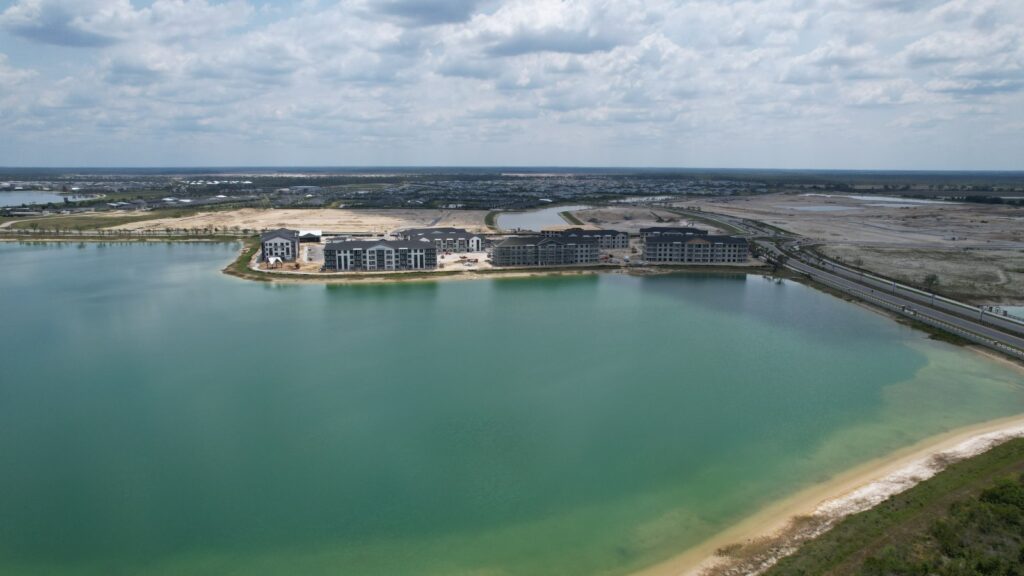
Despite facing the same powerful 155-mile-per-hour winds as neighboring towns, a community near Ft. Myers called Babcock Ranch emerged unscathed. Thanks to meticulous planning and reliance on solar panels for electricity, all 2,000 homes in the neighborhood retained power.
But what is Babcock Ranch—and how did it come out nearly unscathed when surrounding towns were left flooded, damaged, and without power?
Let’s take a closer look.
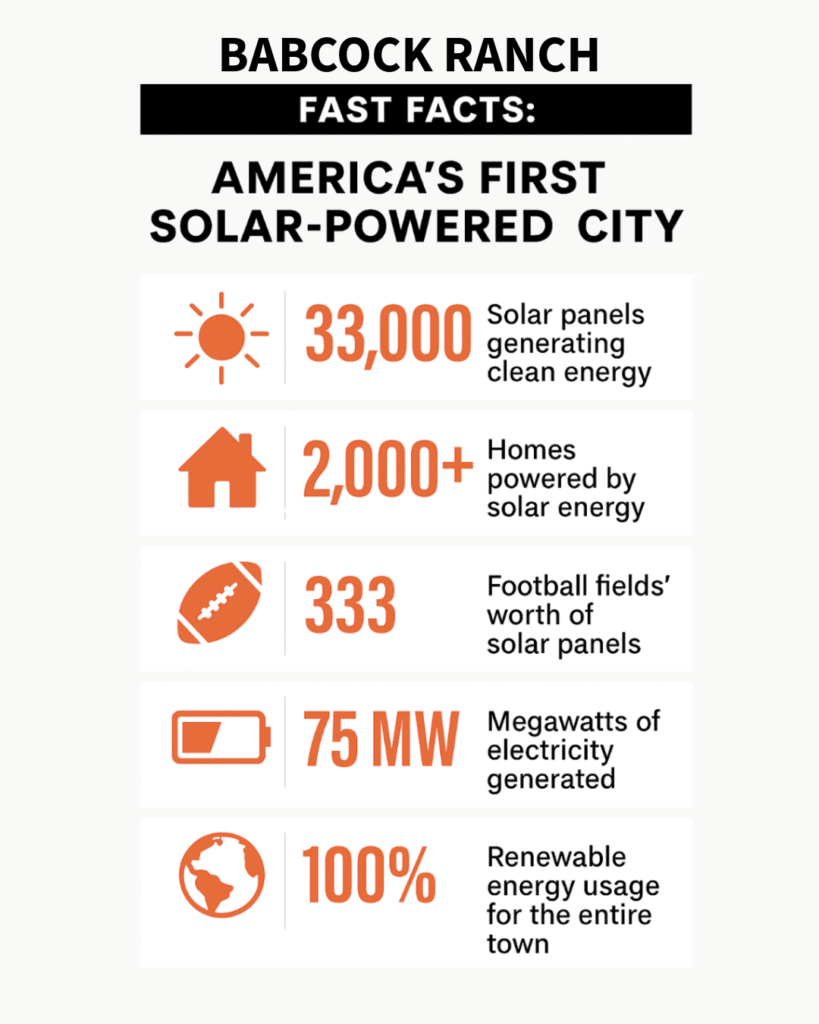
Fast Facts: America’s First Solar-Powered City
Before we explore what makes Babcock Ranch a sustainability success story, here’s a snapshot of how this innovative town is making waves—powered entirely by the sun.
Babcock Ranch: A Sustainable Dream Turned Into Reality
As with most grand plans, the beginning of Babcock Ranch began with a simple vision by its founder, Syd Kitson. According to VOA News, Kitson wanted to build a city that worked hand-in-hand with the environment. In 2015, his dream was realized as they broke ground on its construction, and Babcock Ranch was born.
The town, which spans over 18,000 acres of land, has become a series of distinct neighborhoods, schools, restaurants, nature trails, and more amenities that make it a desirable place to live. But what really sets it apart from other towns is the fact that it runs entirely on
So how does Babcock Ranch power 2,000 (and growing) residences and additional commercial spaces at once? Partnered with Florida Power and Light, Babcock Ranch houses a solar energy center on 440 acres of land.
Not sure what that looks like? Picture this: 333 football fields, filled with approximately 33,000 solar panels soaking up the sun’s energy all day long. Together, those panels generate about 75 megawatts of clean energy. To put this in perspective, one megawatt produces enough electricity to power approximately 200 homes. So, there’s plenty of solar energy to go around—and even some left over to serve customers living outside of Babcock Ranch.
Why Babcock Ranch Survived Hurricane Ian While Other Towns Didn’t
Many of Babcock Ranch’s current residents moved there because of its potential to withstand hurricane damage. But how did its builders ensure the town’s safety ahead of the devastation wrought by Hurricane Ian on neighboring cities?
A few strategies they implemented when developing the town include:
Building it on high ground that could endure storm surges.
Crafting homes that were made to resist hurricane-force winds.
Burying power lines underground, shielding them from heavy winds and bad weather.
Digging retention ponds to protect homes from flooding.
Paving streets that are designed to remove excess water.
Thanks to the careful planning involved in constructing the solar-powered town, Babcock Ranch emerged relatively unharmed from the havoc Hurricane Ian caused in Ft. Myers, Sanibel Island, and other nearby cities. Apart from minor damage like fallen trees, the town maintained power throughout and after the storm, proving that America’s first solar-powered town is, indeed, the place you want to be when a hurricane hits.
Earn an Online Graduate Credential in Energy Business at UTPB
Whether you aspire to become a chief sustainability officer or a climate change policy analyst in emerging sustainable cities, The University of Texas Permian Basin offers several online graduate credentials in energy business, including:
Graduate Certificate in Energy Business During this 100% online, 12-credit program, you’ll gain the accounting, finance, management, marketing, and business law skills needed to join ranks in the energy industry.
MBA with Certificate in Energy Business With a heavy focus on business and the energy industry, this 36- to 45-credit online program provides an array of knowledge and leadership skills, preparing you to work in a diverse range of roles in energy-related fields.
MS in Energy Business Designed for energy industry professionals, the MS in Energy Business is an online 30-credit program that offers an in-depth study of the energy industry and its operations, concentrating on the current and future demands of the field.
All of our programs offer year-round start dates and affordable tuition rates and are AACSB accredited. Whether you’re new to the energy industry or interested in advancing your role, find the program that’s right for you and apply today!
According to the World Health Organization, 99% of the global population breathes polluted air. Yet we’re surrounded by clean, sustainable energy sources. Despite coal and natural gas being the most widely used energy sources, the urgency of climate change and resource depletion is making the shift to clean energy increasingly essential. In 2023, about 23%…
Thanks to “Landman” on Paramount+, everyone’s curious about what a landman really does. Set in modern-day West Texas, the show follows Tommy Norris (played by Billy Bob Thornton), who manages a crew of roughnecks while contending with wildcatters, cartel members, and a disgruntled ex-wife. The real job is dynamic, rewarding, and essential to how the…
Renewable energy has officially left the “alternative” category and entered the mainstream. And the numbers? They back it up. Renewable energy sources now generate 32% of the world’s electricity, up from just 20% in 2011. Solar is leading the charge, and the pressure to decarbonize the grid isn’t letting up, regardless of who’s setting policy….
When financial records don’t add up, forensic accountants are often the ones called in to figure out why.
Forensic accounting is the practice of reviewing financial records to investigate fraud, embezzlement, money laundering, and other financial crimes. These professionals combine accounting knowledge with investigative skills to uncover what really happened.
Fraud examination is closely related to forensic accounting, but it has a narrower focus. While forensic accounting covers a wide range of financial investigations, fraud examination centers specifically on identifying, investigating, and helping prevent fraud. In practice, the two fields often overlap.
What Do Forensic Accountants Do?
Forensic accountants examine financial records for irregularities, inconsistencies, and signs of misconduct. Depending on the case, their work may include:
Analyzing financial statements and transactions
Tracing funds and assets
Identifying suspicious patterns or discrepancies
Interviewing people connected to the case
Preparing reports for legal or regulatory proceedings
Working with attorneys, law enforcement, or compliance teams
Testifying as expert witnesses in court
Some forensic accountants work for accounting firms, corporations, insurance companies, or financial institutions. Others work with government agencies or law enforcement.
What Are Common Types of Financial Crimes?
One reason forensic accounting appeals to many students is that the work can vary so much from case to case. Forensic accountants may investigate crimes such as:
Fraudulent financial reporting – when a company or individual falsifies records to mislead investors, lenders, or regulators
Asset misappropriation – the theft or embezzlement of company funds or resources
Money laundering – disguising where illegally obtained money came from
Insurance fraud – false or exaggerated claims made for financial gain
Other types of financial crimes include:
Tax evasion
Bribery
Securities fraud
Hidden assets
Forensic Accounting and Fraud Examination FAQs
Wondering what it takes to become a forensic accountant or how they help solve financial crimes? We’ve got answers to the most common questions about this field below:
What’s the difference between forensic accounting and fraud examination? While the two are closely related and often overlap, forensic accounting is a broader field that involves the investigation of financial discrepancies and disputes, often for legal purposes. Fraud examination is a more specialized area that focuses on detecting, investigating, and preventing fraud. Many professionals are trained in both areas.
What qualifications do you need to become a forensic accountant?
Many forensic accountants hold a Certified Public Accountant (CPA) license and some also pursue a Certified Fraud Examiner (CFE) credential. A bachelor’s degree in accounting or a related field is typically required, and many forensic accountants pursue a master’s degree in accounting or business to deepen their expertise and advance their careers.
Where do forensic accountants typically work?
Forensic accountants work in a wide range of settings, including public accounting firms, law enforcement agencies, insurance companies, government organizations, and large corporations. Some also work as independent consultants or expert witnesses in court.
What types of crimes do forensic accountants investigate?
They investigate financial crimes such as embezzlement, insurance fraud, money laundering, tax evasion, bribery, securities fraud, and corporate misconduct. Their work often plays a critical role in legal proceedings and regulatory actions.
Advance Your Accounting Career at UTPB
Whether you’re interested in forensic accounting or another accounting path, The University of Texas Permian Basin offers online programs designed to help students build strong accounting knowledge and career-ready skills. Options include:
When you hear the word “accountant,” who comes to mind? Someone balancing spreadsheets and filing taxes? If so, you’re on the right track. But there’s more to it. Within the field of accounting, one credential stands apart: the Certified Public Accountant (CPA). While both accountants and CPAs manage finances, advise clients, and ensure the accuracy…
Picture this: You’re a junior accountant, and your manager asks you to tweak a report to make the numbers look better. The request sounds harmless enough—just a small tweak—but you know it’s not above board. Now you’re stuck. Do you follow orders and risk crossing an ethical line, or do you push back and risk…
You’ve always been an analytical thinker. A problem solver. Maybe a math whiz, too. There’s a career that matches your strengths. Certified Public Accountants—or CPAs—excel in these qualities. Let’s explore why a CPA is no ordinary accountant and what it takes to become one. Want to Be a CPA? Here’s What You Need to Know …
Once upon a time, renewing your driver’s license meant sacrificing a precious half-day off work, enduring the chaos of an overcrowded Department of Motor Vehicles, and patiently awaiting your turn as they called out your name. You’d then go through the ritual of proving your identity with a physical ID and completing a cumbersome paper-based application. Fortunately, those days have made way for more streamlined digital solutions.
Despite these advancements, certain aspects of government operations still lag in the digital age. Shockingly, only a mere 2% of government forms have transitioned to digital formats, resulting in inefficiencies and decreased accessibility. Additionally, a staggering 45% of government websites remain incompatible with mobile devices.
As our government’s public administrators endeavor to keep pace with the ever-evolving technological landscape, it’s crucial to consider the numerous benefits that a comprehensive digital transformation could bring to their administrative processes.
What Is a Digital Transformation in Government Services?
A digital transformation aims to provide more transparent and citizen-centric services at the local and national levels. This encompasses a spectrum of initiatives, from deploying smart infrastructure solutions such as intelligent transportation systems and smart grids to digitizing social welfare programs for easier access by those in need.
This shift from paper-based procedures to digital platforms not only enhances the experience for citizens nationwide but also empowers public administrators to adapt and thrive in an increasingly digital environment.
4 Potential Benefits of Embracing Digital Transformation in Public Administration
With the adoption of digital processes, citizens and public administration personnel alike can benefit from the following advantages:
#1 Improved Service Delivery
Thanks to online portals and mobile apps, several government services have become easier for users to access, whether you’re paying taxes or applying for healthcare benefits. Rather than going to an in-person location, you can complete many of these tasks from the comfort of your home with the help of a Wi-Fi connection and a mobile device or computer.
Not only are certain government-related processes easier to complete, they’re also much more efficient than their paper-based counterparts. Digitization creates automated workflows and reduces the amount of data entry needed to complete simple tasks. Plus, storing data on the cloud gives public administrators real-time access to documents, allowing them to make informed decisions at a quicker pace.
#2 Increased Transparency
With more information and records available online, the public has increased access to government data, such as budgets, spending, and ongoing policy updates. This transparency between citizens and the government can foster trust and empower citizens to become more active in democratic processes.
From a public administration standpoint, a digital transformation of processes eliminates the hoarding of information amongst departments. Instead, the digital era of interconnectivity promotes collaboration between government departments.
#3 Data-Driven Decision-Making
With so much information available at the click of a button, government officials can use advanced analytics and predictive modeling techniques to sort and analyze large amounts of data. This helps them to identify trends and predict outcomes more accurately and efficiently.
For example, incorporating more data-driven strategies could better allocate healthcare resources based on each community’s health needs or identify areas with higher crime rates.
#4 Streamlined Administrative Processes
Long gone are the days of storing hundreds of thousands of paper files, alphabetized or arranged chronologically. Instead, digital technology has streamlined numerous administrative processes in government, ranging from record-keeping to document retrieval.
With the help of workflow management systems and electronic document management, government officials can collaborate, coordinate, and communicate their tasks to one another more efficiently.
Other benefits of streamlining public administration processes include:
Eliminating redundant tasks.
Reducing the amount of paperwork.
Lowering the cost of storage space and necessary paper materials.
Increasing overall employee productivity.
Enhancing accountability with the addition of audits and the ability to track changes made to documents.
The Path to Public Administration Starts With UTPB
At The University of Texas Permian Basin, you can elevate your career in public administration with our Master of Public Administration program. This comprehensive 36-credit program is offered entirely online, catering to the needs of busy working professionals who are eager to advance in the public or nonprofit sector.
Recognizing the diverse landscape of public administration, we provide flexibility by offering 15 credits of elective courses. This allows you to tailor your education to align with your professional goals and interests. Our robust course list enables you to refine your skills with specialized offerings, such as:
MPAL6303 Analytical Techniques Learn about research methods and data analysis used in public and nonprofit administration, applying the techniques to understand and solve real-world issues.
MPAL6382 Innovation in Public and Nonprofit Organizations Explore innovative tools and practices used in the public and nonprofit sectors, diving into topics such as performance measurement, collaborative innovation, social entrepreneurship, and leveraging social media for public engagement.
But the advantages don’t stop there. As a virtual student, you’ll enjoy:
Year-round start dates.
Affordable tuition rates.
The opportunity to design a course schedule that supports your career objectives.
Flexibility to complete coursework on your schedule (with the option to finish within 12 months!).
Take the first step towards unlocking your potential in public administration. Apply today!
When you think of adding artwork to your walls of your home, you might envision the iconic graphics of pop art or the nature-inspired strokes of impressionist pieces. No matter the style of art you’re after, you’re sure to find something to express yourself in the deep catalog of works available to the modern masses.
However, 500 years ago, this was not the case. In the 15th and 16th centuries, only royalty and the extremely wealthy had access to art, which typically depicted — well, themselves.
So, how did we progress from exclusive portrayals of the privileged few to inclusive representations of daily life? Join us as we explore the evolution of artistic focus from the elite to the everyday man and woman.
Art in the 15th and 16th Centuries
As a commoner during this period, obtaining a piece of artwork to adorn your walls was not just a luxury but often an unattainable dream. If by some stroke of luck you could afford such a luxury, the artwork itself would likely be a portrait of a nobleman, gazing imperiously at you from the expanse of the wall.
But why was art so inaccessible to the average person?
There were two main causes: the steep cost of commissioning artwork and the scarcity of available artists to undertake such work. The high cost associated with acquiring art was impossible for most, narrowing its availability to the realm of the elite. Art quickly became a symbol of status and power, prompting well-to-do individuals to commission artists who could immortalize their likeness in portraits. These portraits were not only decorative but also served as conspicuous displays of their wealth, further elevating their social standing.
The Renaissance and the Shift Towards Inclusivity
During the time of the Renaissance, from the 14th to 17th centuries, society gradually revived its interest in Greek and Roman culture. This fostered an appreciation of philosophy, science, and creativity, laying the groundwork for a transformation of artistic expression.
Thus, artists in the 1600s began to focus more heavily on the human experience and the many layers of human emotions. They began creating artwork that reflected the individuality of all people, regardless of their wealth and status.
Additionally, the numbers of the middle class grew and became more capable of buying artwork that aligned with their own experiences. These pieces often reflected the lives of ordinary people. Famed Renaissance artist Pieter Bruegel the Elder was known for painting compositions that captured the everyday lives of rural and village life, from daily routines to annual festivities.
The Rise of Realism and the Everyman
Following the dominance of Romanticism in the 1800s, Realism emerged as a powerful and influential artistic movement, captivating both artists and art enthusiasts alike. Realism sought to portray life authentically, encapsulating its beauty as well as its brutality. And what better subjects to convey the truth of the era than the ordinary men and women engaging in everyday activities?
From “The Elder Sister,” a tender depiction of a girl gently rocking a baby to sleep against a backdrop of lush greenery, to “The Gleaners,” an evocative portrayal of three women laboring in a wheat field, Realism offered viewers a window into the lives of people from all walks of life. Gone were the days of art reserved exclusively for the elite. Instead, Realism democratized art, making it accessible to a wider audience and reflecting the diverse experiences of humanity across the globe.
Modern Art and the Celebration of Diversity
As society progressed into the 20th century and beyond, art continued to evolve, reflecting the ever-changing artistic landscape of human society. Throughout the past century, numerous artistic styles have flourished, from the abstract expressionism of esteemed artists like Jackson Pollock to the surrealism of luminaries such as Salvador Dalí.
Now, whether your artistic appreciation dwells in the geometric shapes of Cubism or the subconscious symbolism that encapsulates surrealism, you can find a diverse array of art from landscape to minimalist available at the click of a button.
Ignite Your Passions With a BA in Humanities From UTPB
A degree in humanities offers far more than just an appreciation for art and an understanding of world civilizations. At The University of Texas Permian Basin, our online Bachelor of Arts in Humanities provides a comprehensive grasp of human culture, history, literature, and the arts. Additionally, it equips you with essential skills in critical thinking, problem-solving, and communication, which are invaluable for success in a wide range of industries.
As an online student, you’ll have the flexibility to complete your work on your timeline. During your lunch breaks? Great! Prefer working on the weekends? That works for us, too.
Forge a path toward a career that aligns with your passions. Start the next chapter in your life—apply today!
Have you ever wondered how a particular TikTok trend goes viral so quickly? How about why we never take the blame when something goes wrong, but we’re the first to take credit after a personal victory?
Cue the social biases, a subset of cognitive bias that shapes how we view—well, everything. From relationships and workplace dynamics to healthcare and politics, social biases color our perception of almost every aspect of our lives.
Join us as we dig into four of the social biases that have shaped us on both an individual and societal level.
#1 Bandwagon Effect
Most of us have heard the phrase “jumping on the bandwagon” before, but what does it really mean? Let’s use the Taylor Swift phenomenon as an example. With sold-out concerts all over the world and songs that consistently top the charts week after week, it’s clear that T. Swift is beloved by fans worldwide.
While many fans have loved Taylor from her very first era, others are just now jumping on the bandwagon because everyone else is, too—whether they’re true Swifties or not.
The bandwagon effect can occur in all areas of our lives, from politics to the food we eat and everything in between. But what is the psychology behind the bandwagon effect? Below, we dissect some of the root causes driving this “herd mentality”:
Conformity For many, it feels good to fit in with the crowd. A shared passion, a built-in discussion point—what’s not to love? Others conform because they don’t want to be isolated from others.
Heuristic A heuristic, or mental shortcut, helps us create opinions, especially when we need to make a decision quickly. For example, if all of your friends are voting for a particular politician, you may simply assume they’re a trustworthy candidate and vote in favor of them.
#2 Self-Serving Bias
If you make it to work on time, it’s because you’re a punctual person. But, if you’re late, it’s due to unforeseen circumstances, like the person in front of you who was driving 10 miles under the speed limit. Or maybe you were unlucky enough to hit every red light. Whatever the reason, the cause was definitely an external force.
That’s a self-serving bias, a predisposition that affects how you perceive your achievements and failures. Many people will gladly take credit for their successes while attributing their failures to outside factors.
But why do we all rely so heavily on this bias in our daily lives? Mostly, we find it essential to protect our self-esteem. It hurts our confidence to take responsibility for something that went wrong at work or school. So, instead of recognizing our failures as a natural part of life, it’s easier to blame something else to avoid humiliation.
#3 Actor-Observer Bias
Like the self-serving bias, the actor-observer bias involves attributing internal and external factors to the behavior of others as well as yourself. However, this bias explains the reasoning for other people’s actions as a result of negative internal factors.
For example, let’s say you notice a car weaving in and out of traffic. Instead of wondering if the driver has an emergency and is taking someone to the hospital (i.e., an external cause for their behavior), you assume they’re a careless and reckless driver, attributing the behavior to their personality (i.e., internal factors).
#4 Authority Bias
Have you ever placed your trust in someone simply because they had an impressive job title? For example, let’s say you recently participated in an important company-wide meeting in which the CEO was presenting data. Whether their information was accurate or not, you’re more likely to believe them simply because they hold a position of power. However, if a colleague with a similar job title as yours were presenting the same data, you may be more inclined to question the accuracy of the information.
Authority bias has been instilled in us since childhood. Our parents instructed us to listen to authority figures, like our teachers, and public service officials like police officers. While it’s engrained in us to trust what people in authoritative positions say, it’s important to challenge this bias by thinking for yourself and questioning someone when you have doubts or concerns, no matter their title.
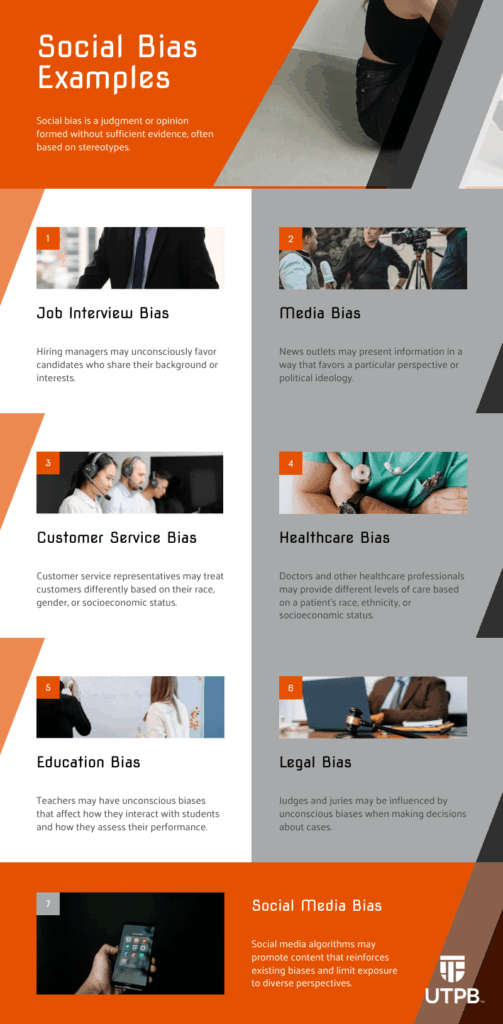
Examples of Social Bias in Everyday Life
Curious how social bias shows up in the real world? Here are seven everyday scenarios that you might recognize—or may have experienced yourself.
Frequently Asked Questions About Social Bias
Understanding social bias can feel a bit overwhelming at first, especially because it often operates under the surface. This quick FAQ clears up some common questions and helps break things down in a straightforward way.
What is social bias? Social bias refers to the tendency to favor or disfavor certain people or groups based on stereotypes, assumptions, or cultural norms—often without realizing it.
Is bias always intentional? Not necessarily. Many biases are unconscious, meaning we might act on them without being aware. That’s why awareness is such a key first step toward change.
How does social bias affect decision-making? Social bias can influence how we perceive others, how we interact, and even the choices we make (like who we trust, hire, or include), often in ways that aren’t fair or logical.
Can social bias be unlearned? Yes. It takes effort, but by slowing down, questioning assumptions, and engaging with different perspectives, we can start to reduce bias over time.
What’s the difference between social bias and prejudice? Prejudice usually refers to strong negative feelings toward a group, while social bias can be more subtle and unintentional. Both can be harmful, but bias is often harder to spot.
How to Start Recognizing Social Bias in Yourself
Recognizing social bias starts with paying closer attention to your thoughts, decisions, and interactions. Here are a few ways to become more aware:
Notice your snap judgments. Ask yourself: Why did I assume that? or Where did that impression come from?
Reflect on patterns. Are there certain types of people you tend to trust more, interrupt less, or give the benefit of the doubt to?
Slow down decisions. Whether you’re choosing a coworker for a project or forming an opinion, pausing gives you time to think critically instead of relying on instinct.
Stay curious. Seek out different perspectives, especially from people with backgrounds or experiences different from yours.
Welcome feedback. Being open to gentle correction or insight from others can reveal unintentional blind spots.
No one is completely free from bias, but noticing it is the first step toward making more fair, inclusive, and thoughtful choices.
Earn Your BA in Psychology From UTPB
As a student in The University of Texas Permian Basin’s online Bachelor of Arts in Psychology program, you can learn more about how social biases affect our perceptions of ourselves and others. These perceptions play a role in our everyday decisions, from the music we blast on the way to work to the politicians we vote for in elections.
Some of the exciting courses you can expect to take in our online psychology program include:
PSYC 3311: Social Psychology Examine how and why people are influenced by their social environment with topics including social perception, eyewitness identification, social influence, cognitive dissonance, aggression, and prejudice.
PSYC 3350: Positive Psychology Discover how human behavior allows for success in life, empowers our performance, and demonstrates resilience in the face of the adversities of life.
Learn more about our online bachelor’s in psychology program and make a decision that could positively impact your entire future. Apply today!
Psychology is one of the broadest academic fields, and one of the most versatile. It spans everything from courtrooms to corporate offices, from childhood development to competitive sports. With so many specialties (and subspecialties), it can be tough to know where to even start. So exactly how many branches of psychology are there? The field is…
Ever reach for your phone and instantly face a barrage of messages, notifications, subscription reminders, and social media updates? You’re not alone. Scientists have estimated that the average person processes about 74 gigabytes of information daily: equivalent to watching 16 high-definition movies back-to-back in a single day. Cognitive overload is real. And over time, constant stimulation quietly changes how we think, focus, and feel. In this article, we’ll explore: What Does Cognitive Overload Mean? Cognitive overload happens when your brain receives more information than…
When someone struggles with depression, homelessness, or discrimination, who steps in to help? A psychologist? A social worker? A sociologist? These three fields all address human challenges, but they explore humanity from very different angles: one from society, one from the mind, and one from the front lines. So what are the similarities and differences between sociology, psychology, and social work? This guide clears up…