You know that feeling right after a good workout? The addictive mix of pride, exhaustion, and the sudden realization that climbing stairs is a “tomorrow problem”?
Most of us think workout recovery ends with a quick stretch and a protein shake. But in kinesiology, recovery isn’t the end of your workout. It’s where the real transformation begins.
Muscles repair. The nervous system resets. The cardiovascular system redistributes oxygen and nutrients.
The better you understand what’s happening in this window, the smarter (and more effective) your recovery becomes. Below, we’ll break down the core recovery essentials, along with kinesiology-backed techniques that allow your body to work its hardest for you every time you train.
Why Recovery Matters: A Look Inside the Body
When you go for a run or push through a challenging high-intensity interval training (HIIT) session, your body is pushed into exercise-induced stress. Think of it as a short-term overload your muscles and nervous system are built to adapt to.
During this time, a lot of things happen at once:
Muscles develop tiny microtears that kickstart the muscle repair process.
Your neuromuscular system—the communication network between your brain and muscles—fatigues (even before your muscles are fully exhausted).
In athletic recovery, your body is like an airport after a busy wave of flights. The planes (your muscles) need repairs and maintenance. The control tower (your nervous system) needs to recalibrate. And the ground crew (your cardiovascular system) needs to clear out waste and restock for the next departure.
The Recovery Basics That Matter Most
These are the foundational pieces of smart recovery. They may seem simple, from the perspective of a kinesiologist, each one plays a crucial role in how the body rebuilds and adapts.
Sleep Quality
During deep sleep, hormones involved in tissue repair and muscle protein synthesis are at their peak. This means your body finally gets the uninterrupted time it needs to rebuild, repair, and prepare for the demands of your next workout.
While you’re asleep, your nervous system also resets, which is crucial for regaining coordination and power.
Nutrition & Hydration
After a workout, your body is primed to use nutrients more efficiently. Protein supports muscle repair, while carbohydrates replenish glycogen. Consider eating within one to two hours after exercise to maximize muscle protein synthesis.
And don’t forget about staying hydrated! Hydration and electrolytes also play a major role in relieving soreness after workouts by improving muscle function and restoring fluid balance.
Active Recovery
Slow-paced walking, light cycling, or gentle yoga can be some of the most effective methods for relieving soreness after workouts. These light movements increase circulation, remove metabolic waste, and maintain mobility.
5 Kinesiology-Backed Techniques for Smarter Workout Recovery
To take your recovery a step further, here are five techniques rooted in kinesiology that explain not just what to do, but why each method helps your body bounce back.
#1 Foam Rolling & Myofascial Release
Foam rolling works on the fascia—the connective tissue web surrounding your muscles. When your fascia is tight, it can limit your range of motion and contribute to stiffness. Foam rolling helps:
Reduce neural tension
Increase blood flow
Improve short-term mobility
#2 Compression Gear
Compression garments create gentle, consistent pressure that helps blood move back to the heart more efficiently. Research shows this simple mechanism can lead to several recoverybenefits, including:
Reduced delayed onset muscle soreness (DOMS)
Less muscle fatigue after high-intensity exercise
Improved circulation and lymphatic return
Faster overall recovery as waste products clear more efficiently
#3 Cold and Heat Therapy
Cold therapy reduces inflammation and numbs soreness. It’s especially helpful within the first 24 hours after intense or unfamiliar exercise.
Heat therapy, on the other hand, increases blood flow and mobility, making it a perfect way to treat stiffness the day after a workout.
A quick rule:
Use cold right after hard workouts
Use heat 24+ hours later
#4 Kinesiology Tape (KT Tape)
Kinesiology tape creates a gentle lifting of the skin that can enhance lymphatic flow and improve proprioception, or your body’s sense of position and movement. Some studies suggest it may reduce soreness and swelling.
#5 Nervous System Reset Techniques
Your autonomic nervous system has its own recovery timeline. Slow breathing, mindfulness, and heart rate variability (HRV)-centered cool-downs (which track the variation between your heartbeats) may help shift your body from stress mode to restorative mode.
When your nervous system recovers, it primes the rest of your body for swift recovery, including muscle repair and energy levels.
A Simple Guide to the Best Post-Workout Recovery
Not all workouts demand the same recovery strategy. Here’s a simple kinesiology-based guide to the best recovery workouts and methods based on your activity:
Workout Type
Best Recovery Methods
Why It Helps
Strength Training
• Protein + carbs • Foam rolling • Light active recovery • Cold therapy for soreness
Supports muscle repair, reduces stiffness, and helps manage inflammation after heavy mechanical stress
Replenishes fluids, enhances circulation, and restores mobility after long-duration cardiovascular efforts
High-Intensity Interval Training (HIIT)
• Prioritize sleep • Contrast therapy (hot/cold) • Breathwork • Low-intensity movement the next day
Calms the nervous system, improves circulation, and restores energy after high neuromuscular and metabolic stress
Ready to Go Deeper Into How the Body Works?
Smart recovery isn’t just about using the right techniques. It’s about understanding how the body responds and rebuilds.
When you know how to interpret these unique cues, you can support athletes, clients, and students more effectively. And if you’re someone who loves understanding the “why” behind movement and performance, The University of Texas Permian Basin’s online Master of Science in Kinesiology takes you even deeper.
In as few as 30 credits, you can level up your expertise in sports performance, fitness, coaching, and wellness. Choose from one of three study tracks aligned with your long-term goals:
Teaching, Coaching, and Administration
Psychology of Sport
Exercise Physiology
Where does your future lie? Explore the program and connect with us if you have questions.
Have you ever seen wheelchair rugby players slam into each other at full speed? How about sitting volleyball players, as they cover the court with explosive movement generated entirely from their upper bodies and core? These are serious athletes doing serious athletic work. And behind a lot of that performance is a science: kinesiology, the study of human movement. Kinesiology…
You know that feeling right after a good workout? The addictive mix of pride, exhaustion, and the sudden realization that climbing stairs is a “tomorrow problem”? Most of us think workout recovery ends with a quick stretch and a protein shake. But in kinesiology, recovery isn’t the end of your workout. It’s where the real…
When you think of a great athlete, you might picture strength, speed, or agility. But what often separates the good from the great is more than physical skill; it’s the ability to stay focused under pressure, recover from setbacks, and trust in hard-earned preparation. That mental edge comes from sports psychology. This key area within…
When you hear the word “accountant,” who comes to mind? Someone balancing spreadsheets and filing taxes? If so, you’re on the right track. But there’s more to it.
Within the field of accounting, one credential stands apart: the Certified Public Accountant (CPA).
While both accountants and CPAs manage finances, advise clients, and ensure the accuracy of tax documents, the paths to get there—and the responsibilities that follow—can look very different. Understanding these differences can help you make a career decision that aligns with your goals, budget, and timeline.
In this article, we’ll explore:
How the roles of accountant and CPA differ
What each path requires
How to become a CPA
Whether becoming a CPA is worth it for your career goals
Accountant vs. CPA: The Basic Differences
All CPAs are accountants, but not all accountants are CPAs.
(Still with us? Don’t worry—we’ll make the differences crystal clear.)
Accountants typically hold a bachelor’s degree in accounting or finance and work with individuals or organizations to record, analyze, and report financial information. They often prepare tax returns, manage budgets, or oversee day-to-day bookkeeping.
Certified Public Accountants (CPAs), on the other hand, have additional education and licensing that qualify them for higher-level work. This credential signals a higher standard of expertise and ethics. It also grants legal authority to perform tasks that standard accountants cannot.
In short: Accountants are financial experts. CPAs are licensed professionals who can represent clients, audit companies, and verify public financial statements.
CPA vs. Accountant: Education, Licensing, and Skill Requirements
To become an accountant, most professionals earn a bachelor’s degree in accounting or a related field. From there, many gain experience in corporate finance, auditing, or tax preparation.
Becoming a CPA requires going a few steps further. Candidates must:
Complete a state-mandated number of credit hours of higher education (usually a bachelor’s degree plus graduate coursework)
Pass the Uniform CPA Exam, which tests knowledge in auditing, financial reporting, regulation, and business concepts
Meet state board experience requirements (often 1–2 years under a licensed CPA)
Maintain ongoing continuing education to keep their license active
Complete 150 credit hours of higher education (usually a bachelor’s degree plus graduate coursework)
Pass the Uniform CPA Exam, which tests knowledge in auditing, financial reporting, regulation, and business concepts
Meet state board experience requirements (one year under a licensed CPA)
Maintain ongoing continuing education to keep their license active
Pathway 2 – New Pathway beginning August 1, 2026
Complete 120 credit hours of higher education (usually a bachelor’s degree plus graduate coursework)
Pass the Uniform CPA Exam, which tests knowledge in auditing, financial reporting, regulation, and business concepts
Meet state board experience requirements (two years under a licensed CPA)
Maintain ongoing continuing education to keep their license active
If you’re researching how to become a CPA, understanding these education and licensing benchmarks is essential. While the path to CPA status requires more upfront time and effort, it often opens doors to senior positions and higher earning potential.
What CPAs Can (and Can’t) Do
Both accountants and CPAs can handle financial reporting, tax preparation, and budgeting, but CPAs have special privileges that set them apart.
CPAs can:
Conduct audits and attest to the accuracy of financial statements
Represent clients before the IRS in audits and disputes
Sign off on reports filed with the Securities and Exchange Commission (SEC)
Accountants can:
Handle bookkeeping, tax prep, and internal financial analysis
Work in private industry, small businesses, or nonprofit organizations
Advise clients on budgeting, payroll, and cash flow management
The key difference:CPAs have legal authority and public accountability. Their work is regulated by state boards, which adds a layer of trust and professional recognition. This is one reason the CPA vs. accountant salary gap continues to favor licensed CPAs.
Accountant vs. CPA: Which Path Fits You Best?
With so many specializations in the accounting industry, choosing the right path can feel overwhelming. The best choice ultimately depends on your goals, lifestyle, and how much time and money you want to invest upfront.
Here’s a breakdown of common accounting career goals and which professional path might fit best:
Career Goal
Recommended Path
Why It Fits
Working in public accounting or auditing
CPA
Required for attestation and audit services
Running a bookkeeping or small tax business
Accountant
Lower entry barrier and faster setup
Advancing to senior corporate roles
CPA
Adds credibility and promotion potential
Transitioning into consulting or advisory work
CPA
Broad recognition and client trust
Maintaining flexibility or part-time work
Accountant
Quicker start and greater autonomy
Is Becoming a CPA Worth It? Investment vs. Payoff
One of the biggest questions for prospective CPAs is, “Is becoming a CPA worth it?” Ultimately, it depends on your long-term goals and how quickly you want to grow in the field.
The path to CPA licensure comes with an additional investment of time and money. Most candidates complete extra coursework beyond their bachelor’s degree, often through a master’s in accounting or a professional accountancy program.
Here’s a quick breakdown of what those costs might look like in practice:
National average cost: Graduate accounting programs typically range from $20,000 to $40,000 in tuition costs.
UT Permian Basin’s cost: UTPB’s online Master of Professional Accountancy program costs approximately $14,000 in tuition, with additional costs, like university fees and course materials.
CPA exam and prep: Expect to invest another $2,000–$4,000 for fees and study materials.
Despite the upfront investment, the financial payoff happens quickly for most CPAs. On average, CPAs earn 15–25% more than non-CPA accountants and often see faster promotions to management-level roles.
In addition, most CPAs recover their educational investment within three to five years of licensure, especially those pursuing careers in auditing or corporate leadership.
Not quite ready for CPA licensure? Starting as a non-CPA accountant can also be a smart move. You’ll:
Start earning a competitive salary immediately
Gain experience
When Do CPA Credentials Really Matter?
In accounting, there are many paths to success. In some settings, however, having a CPA license isn’t optional.
A CPA credential is essential for:
Public accounting firms conducting audits or attestations
Government or SEC-regulated organizations
Tax representation and forensic accounting roles
It’s helpful (but not required) for:
Corporate accounting and finance roles
Internal audit, management, or consulting
It’s optional for:
Bookkeeping, payroll, and small business accounting
Freelance or entrepreneurial financial services
The takeaway: Credentials matter most in regulated environments or roles that involve public accountability. In private or specialized niches, experience and technical skills can carry equal weight.
Beyond Credentials: What’s the Future of Accounting?
While licensing remains valuable, technology and strategy are quickly reshaping the future of accounting.
Modern accountants are expected to use cloud-based tools, automate data collection, and interpret financial insights that drive smarter business decisions. In addition, a new set of tech-savvy skills is becoming increasingly essential, including:
Data analytics
Advisory communication
Software proficiency
Tomorrow’s most successful accountants will blend financial expertise (the knowledge) with innovation and adaptability (the skills).
Choose the Path That Fits Your Future at UTPB
Both accountants and CPAs play crucial roles in today’s financial ecosystem. The best path for you depends on your goals, your timeline, and how far you want to grow in the profession.
If you’re just starting your accounting journey, check out UT Permian Basin’s online BBA in accounting. It provides a strong foundation in financial principles, business strategy, and analytical skills, preparing you for entry-level roles or for future graduate study.
If you’re ready to deepen your expertise and qualify for the CPA exam, UTPB’s online AACSB-accredited Master of Professional Accountancy program can help you take the next step. It’s designed to open doors to senior-level opportunities in accounting and finance. This flexible, cost-effective program helps you meet CPA exam requirements and advance your career — on your schedule and from wherever you are.
In accounting (and life), the best decisions start with knowing your options. Chat with an advisor to find the right path for you.
When you hear the word “accountant,” who comes to mind? Someone balancing spreadsheets and filing taxes? If so, you’re on the right track. But there’s more to it. Within the field of accounting, one credential stands apart: the Certified Public Accountant (CPA). While both accountants and CPAs manage finances, advise clients, and ensure the accuracy…
Picture this: You’re a junior accountant, and your manager asks you to tweak a report to make the numbers look better. The request sounds harmless enough—just a small tweak—but you know it’s not above board. Now you’re stuck. Do you follow orders and risk crossing an ethical line, or do you push back and risk…
You’ve always been an analytical thinker. A problem solver. Maybe a math whiz, too. There’s a career that matches your strengths. Certified Public Accountants—or CPAs—excel in these qualities. Let’s explore why a CPA is no ordinary accountant and what it takes to become one. Want to Be a CPA? Here’s What You Need to Know …
Picture this: You’re a junior accountant, and your manager asks you to tweak a report to make the numbers look better. The request sounds harmless enough—just a small tweak—but you know it’s not above board.
Now you’re stuck. Do you follow orders and risk crossing an ethical line, or do you push back and risk your job? What would be the ethical way to handle this?
Scenarios like this aren’t just classroom hypotheticals. They’re part of the real challenges accountants face every day. That’s why it’s worth exploring:
Core principles in accounting ethics
Dilemmas that come up most often
Best practices that help accountants make the right call
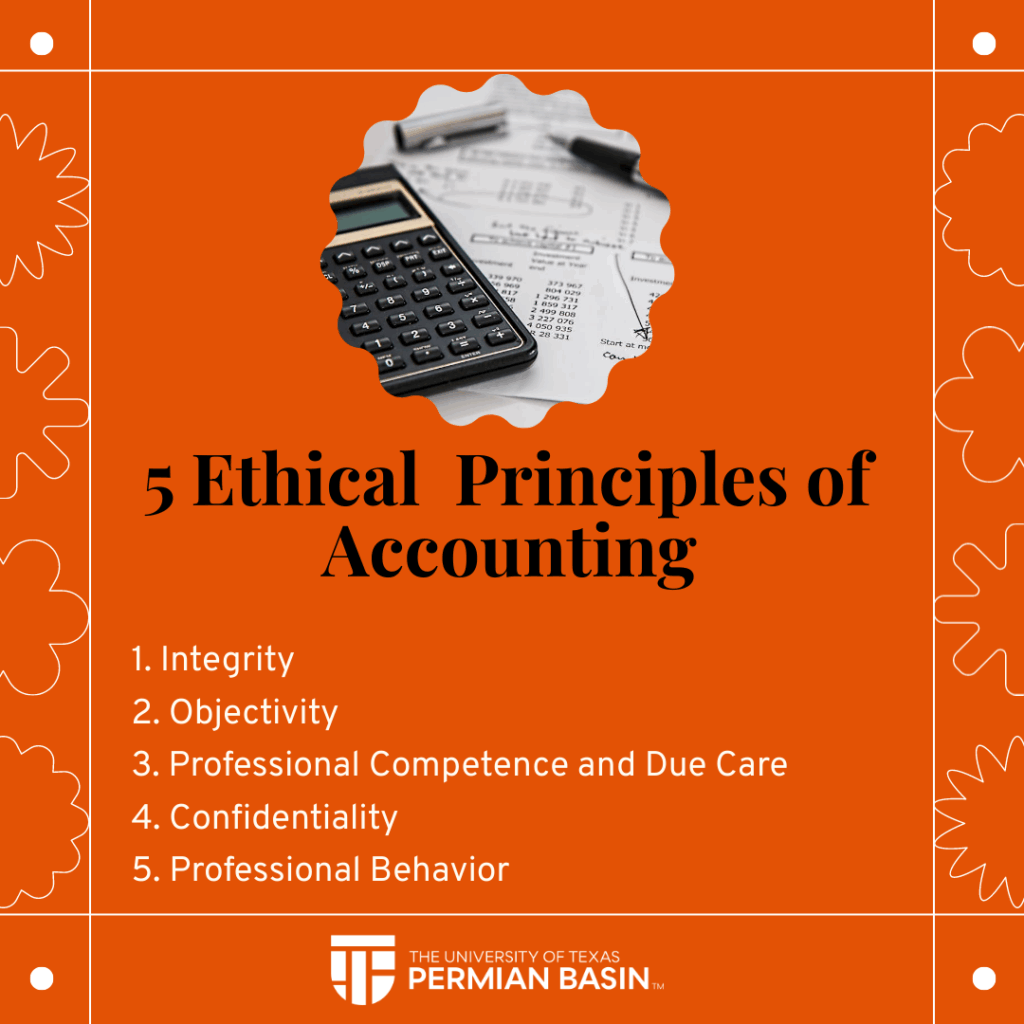
What Are the Five Fundamental Accounting Principles?
Integrity in accounting isn’t just about knowing how to balance the books; it’s about learning how to balance your judgment to make the most ethical decision.
Professional organizations like the International Federation of Accountants (IFAC) and the American Institute of CPAs (AICPA) outline five fundamental principles that guide ethical decision-making:
Integrity: Be honest and straightforward, even when telling the truth is difficult.
Objectivity: Don’t let bias, conflicts of interest, or outside pressure affect your decisions.
Professional competence and due care: Keep your skills current and deliver quality work.
Confidentiality: Protect sensitive information but also understand when the law requires you to disclose it.
Professional behavior: Follow regulations and avoid actions that discredit the profession. (If it feels shady, it probably is.)
These principles are more than theory. They’re the moral compass for anyone working in accounting.
Ethical Dilemmas in Accounting: 3 Case Studies
Ethical issues in accounting don’t always announce themselves with flashing lights. They often show up in subtle ways, where the “right” decision isn’t immediately clear.
An accountant is asked to reclassify expenses as assets to make the company’s financial performance look stronger. At first glance, this might seem like creative accounting. In reality, it’s misleading reporting.
Ethical takeaway: Upholding integrity and objectivity means refusing to distort financial information, even if it keeps management happy.
#2 Breach of Confidentiality vs. Public Interest
While reviewing accounts, an accountant uncovers evidence of misused public funds. Reporting it could protect taxpayers, but it also means breaking confidentiality rules.
Ethical takeaway: Accountants must weigh the duty of confidentiality against the obligation to act in the public interest. In some cases, whistleblowing is not only ethical but necessary.
#3 Conflict of Interest in Advisory Roles
An accountant is asked to evaluate supplier bids for a government contract. One of the bidders happens to be a relative’s company. Even if the accountant stays neutral, the perception of bias can undermine trust.
Ethical takeaway: Disclosing the conflict and stepping aside is the only way to preserve objectivity.
These examples may be hypothetical, but they mirror real challenges accountants face worldwide.
Other Common Ethical Issues in Accounting
In addition to the scenarios above, accountants also face these types of dilemmas:
Fraudulent expense reporting Being asked to overlook or approve personal expenses disguised as business costs, like a manager charging personal travel to a client project.
Cybersecurity and data breaches Deciding how to protect or disclose sensitive client information after a breach, such as a leaked payroll database.
Earnings management pressure Using “creative” timing of transactions to smooth profits across reporting periods, like delaying expense recognition to hit quarterly targets.
Auditor independence Avoiding situations where close ties with a client might compromise an unbiased audit, such as auditing a friend’s company.
Insider knowledge Resisting the temptation to use confidential financial information for personal gain, like buying stock based on unreleased reports.
If you think this sounds like the plot of a Netflix drama, you’re not wrong — but there may be fewer car chases and more questionable spreadsheets.
8 Accounting Best Practices to Avoid Ethical Issues
So how can accountants—and students preparing to enter the field—stay on the right side of these challenges? Here are some tried-and-true best practices:
Know the five fundamental principles and use them as your ethical checklist.
Stay current with professional codes of conduct like those from AICPA or IFAC.
Document your decisions. Clear records can protect you if your judgment is questioned.
Exercise professional skepticism: Verify information instead of taking it at face value.
Disclose conflicts of interest before they become problems.
Protect confidentiality but understand when the law requires disclosure.
Seek guidance from mentors, ethics committees, or professors when in doubt.
Promote transparency. Short-term discomfort is better than long-term damage to your reputation.
Following these practices doesn’t just protect your career. It also builds the kind of trust that keeps clients, employers, and the public confident in the profession.
Make the Right Choice For Your Future at UTPB
Ethical dilemmas in accounting aren’t going away. If anything, the digital age (with its data privacy issues, cybersecurity risks, and remote work dynamics) has made them more complex than ever. But with the right principles and practices, accountants can navigate them with confidence.
If you’re curious about more than just crunching numbers, UTPB’s online BBA and MBA in accounting programs go beyond balance sheets to tackle real-world ethical challenges. You’ll:
Reflect on case studies
Practice decision-making
Gain the tools to face these dilemmas head-on
And because the programs are flexible and online, you can learn on your schedule—whether that’s after work, during your lunch break, or while sipping cold brew at your favorite coffee shop.
Want to see how ethics and accounting actually play out in real life? Grab the info you need:
When you hear the word “accountant,” who comes to mind? Someone balancing spreadsheets and filing taxes? If so, you’re on the right track. But there’s more to it. Within the field of accounting, one credential stands apart: the Certified Public Accountant (CPA). While both accountants and CPAs manage finances, advise clients, and ensure the accuracy…
Picture this: You’re a junior accountant, and your manager asks you to tweak a report to make the numbers look better. The request sounds harmless enough—just a small tweak—but you know it’s not above board. Now you’re stuck. Do you follow orders and risk crossing an ethical line, or do you push back and risk…
You’ve always been an analytical thinker. A problem solver. Maybe a math whiz, too. There’s a career that matches your strengths. Certified Public Accountants—or CPAs—excel in these qualities. Let’s explore why a CPA is no ordinary accountant and what it takes to become one. Want to Be a CPA? Here’s What You Need to Know …
When the final “ber” months roll around, the world wraps itself in holiday cheer. Families make travel plans, calendars fill with festive gatherings, and store shelves overflow with stocking stuffers and seasonal treats.
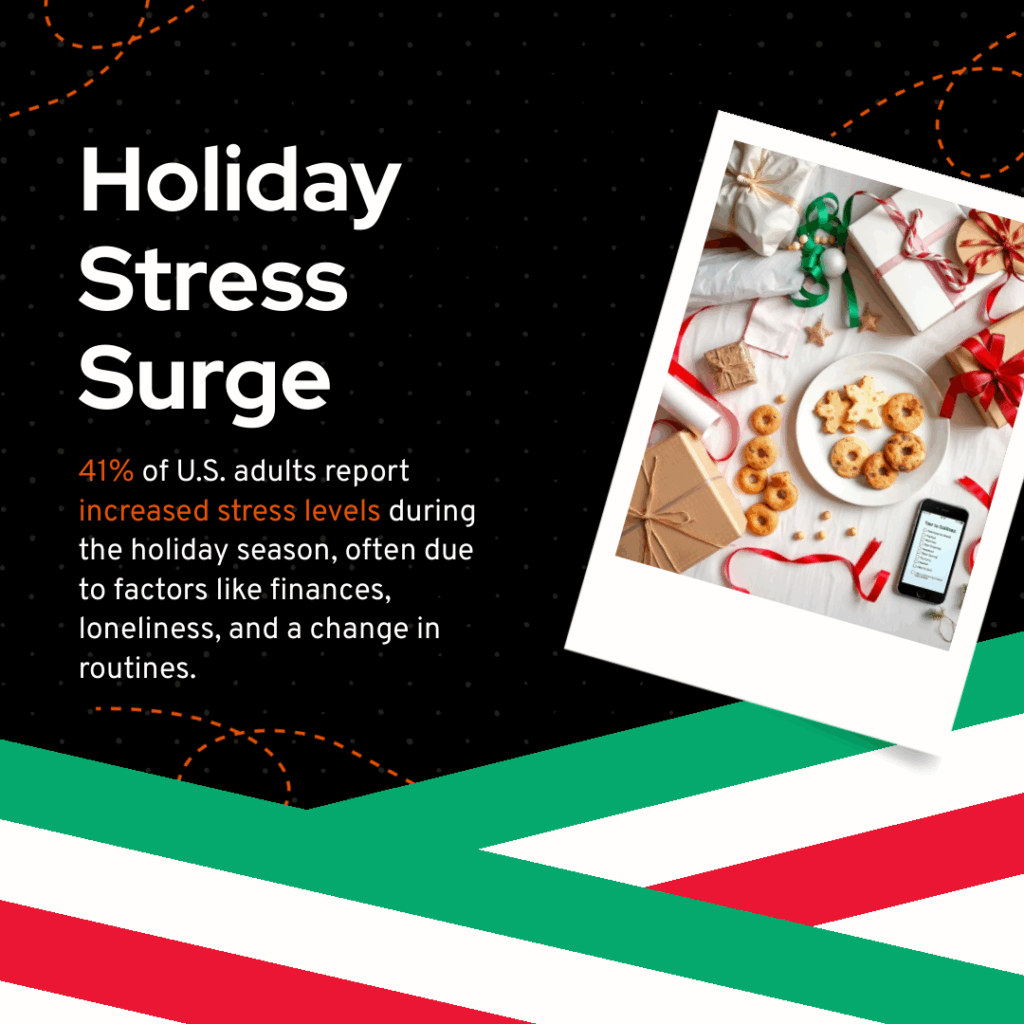
But behind the twinkle lights and snow-covered commercials, the holidays can be a stressful time. According to the American Psychological Association, 41% of U.S. adults said their stress levels rise during the holiday season.
So, if you find yourself feeling anxious or overwhelmed this time of year, you’re definitely not alone. We’ve put together a simple checklist of holiday self-care strategies to help you protect your mental health during the holidays—and carry those healthy habits into the new year.
Why Is Mental Health During the Holidays So Important?
The holidays can be joyful (who doesn’t love the nostalgic smell of gingerbread cookies baking?), but they can also amplify stress, grief, and financial strain.
Here are a few common reasons why mental health during the holidays often needs extra attention:
Grief and loneliness Holiday traditions can bring up memories of loved ones who are no longer with us, leaving many feeling isolated.
Financial pressure Americans spend an average of $1,000 on Christmas gifts. Often, that money comes from credit cards or stretches our budgets for essentials like groceries or utilities.
Unrealistic expectations Social media and commercials can make it seem like everyone else is living a picture-perfect holiday, adding pressure to keep up.
Family conflict Old tensions can resurface when families gather, making celebrations feel stressful instead of festive.
Disrupted routines Parties, travel, and packed schedules often mean less sleep, irregular meals, and skipped workouts, all of which can affect mental health.
Seasonal affective disorder (SAD) Some people experience feelings of depression triggered by the shorter days and reduced sunlight of the winter months.
Recognizing these challenges is the first step to creating a holiday season that supports both joy and well-being.
10 Tips for Managing Holiday Stress and Protecting Your Mental Health
Holiday to-do lists can take over quickly, but your mental health deserves space on the calendar, too. These 10 simple strategies can help you stay grounded, reduce stress, and really enjoy the season.
#1 Acknowledge Your Feelings
It’s okay if the holidays bring up sadness, stress, or loneliness. Allow yourself to feel without judgment, and know that mixed emotions are completely valid.
#2 Set Realistic Expectations
The holidays don’t have to look like a movie scene. Focus on the traditions and moments that matter most, and let go of the pressure for perfection. (Behind the scenes of every perfect Christmas movie is a full crew managing the chaos you never see.)
#3 Create Boundaries
Protect your time and energy by:
Setting a budget for gifts and sticking to it
Saying no to events or conversations that drain you
#4 Stick to Your Routines
Your schedule may feel off during November and December, but you can still keep your body on a familiar rhythm. Aim for your usual sleep, meal, and exercise habits, even if that means shortening a workout or bringing some healthy snacks with you.
#5 Prioritize Holiday Self-Care
Self-care doesn’t have to mean a spa day with friends. During the holidays, it might look like taking a walk outside, reading by the fire, or enjoying a quiet cup of tea. Small breaks can help prevent burnout from busy schedules or challenging family dynamics.
#6 Stay Connected
On the flip side, you may not have family or friends nearby during the holidays. Reach out to loved ones, community groups, or neighbors if you’re feeling isolated. Even a quick phone call or video chat can help you feel closer, no matter the distance.
#7 Plan Ahead
Lists, meal plans, and early gift wrapping can prevent last-minute stress. Delegating tasks also lightens the load—for instance, asking each family member to bring a dish for the holiday dinner instead of cooking everything yourself.
#8 Practice Gratitude
Noticing the small joys of the season can shift your mindset. Try writing down one or two things you’re thankful for each day. At the end of each week, take a few minutes to read and acknowledge everything you were grateful for, big and small.
#9 Limit Triggers
Be mindful of what causes stress, whether it’s scrolling through social media or overscheduling. Step back from what doesn’t serve your well-being.
#10 Give Yourself Grace
Remember that you don’t have to do it all. Allow yourself to rest, reset, and celebrate the holidays in a way that feels right for you.
Your Next Move Starts Here
Wondering why some people seem to handle holiday stress with ease? Understanding how humans cope, build resilience, and navigate social pressures isn’t just interesting. It’s a practical skill set you can use every day.
With UTPB’s online Bachelor of Arts in Psychology or Master of Social Work* programs, you can dive into what makes people tick, explore mental health strategies, and learn how to support others in meaningful ways. If turning your curiosity about human behavior into real-world impact sounds like your kind of thing, exploring these programs could be your next move.
Find the program that fits your vibe. Need a little guidance before the heavy lifting? Take our Choose Your Path quiz to see which undergraduate programs match your interests and strengths.
Psychology is one of the broadest academic fields, and one of the most versatile. It spans everything from courtrooms to corporate offices, from childhood development to competitive sports. With so many specialties (and subspecialties), it can be tough to know where to even start. So exactly how many branches of psychology are there? The field is…
Ever reach for your phone and instantly face a barrage of messages, notifications, subscription reminders, and social media updates? You’re not alone. Scientists have estimated that the average person processes about 74 gigabytes of information daily: equivalent to watching 16 high-definition movies back-to-back in a single day. Cognitive overload is real. And over time, constant stimulation quietly changes how we think, focus, and feel. In this article, we’ll explore: What Does Cognitive Overload Mean? Cognitive overload happens when your brain receives more information than…
When someone struggles with depression, homelessness, or discrimination, who steps in to help? A psychologist? A social worker? A sociologist? These three fields all address human challenges, but they explore humanity from very different angles: one from society, one from the mind, and one from the front lines. So what are the similarities and differences between sociology, psychology, and social work? This guide clears up…
Gen Z and younger millennials haven’t just entered the consumer marketplace. They’re reshaping it.
According to a 2024 survey, 20% of U.S. consumers made purchases on a social media platform at least weekly. This means Gen Z and millennials are setting the tone for how future generations will discover and buy from brands.
These digital natives expect more than traditional marketing approaches. They want digital content that engages, informs, and aligns with their values.
And how do they want it delivered?
Through bite-sized videos, authentic stories, and mobile-friendly formats.
In this article, we’ll explore five proven strategies to help brands grab attention and turn authentic connections into lasting conversions.
Why Is Content Marketing Important?
Content marketing builds trust and fosters long-term relationships by delivering valuable, non-salesy content that resonates with audiences. To understand how it works, let’s first look at the difference between digital marketing and content marketing.
Digital marketing covers any effort that uses electronic channels to promote products or services. Think email campaigns, paid search ads, or social media ads.
In contrast, content marketing is a type of digital marketing that focuses on creating valuable, relevant content designed to spark interest in a brand. While traditional content marketing methods often relied on blogs and online articles, today’s content spans several other channels, including:
Videos
Podcasts
Social media interactions
Interactive tools
So, why is content marketing important in today’s digital world?
Content marketing strategies attract audiences organically, build trust, and engage consumers without feeling overly promotional. In a crowded digital landscape, understanding the difference between digital marketing vs content marketing is essential for connecting with your audience and encouraging long-term loyalty.
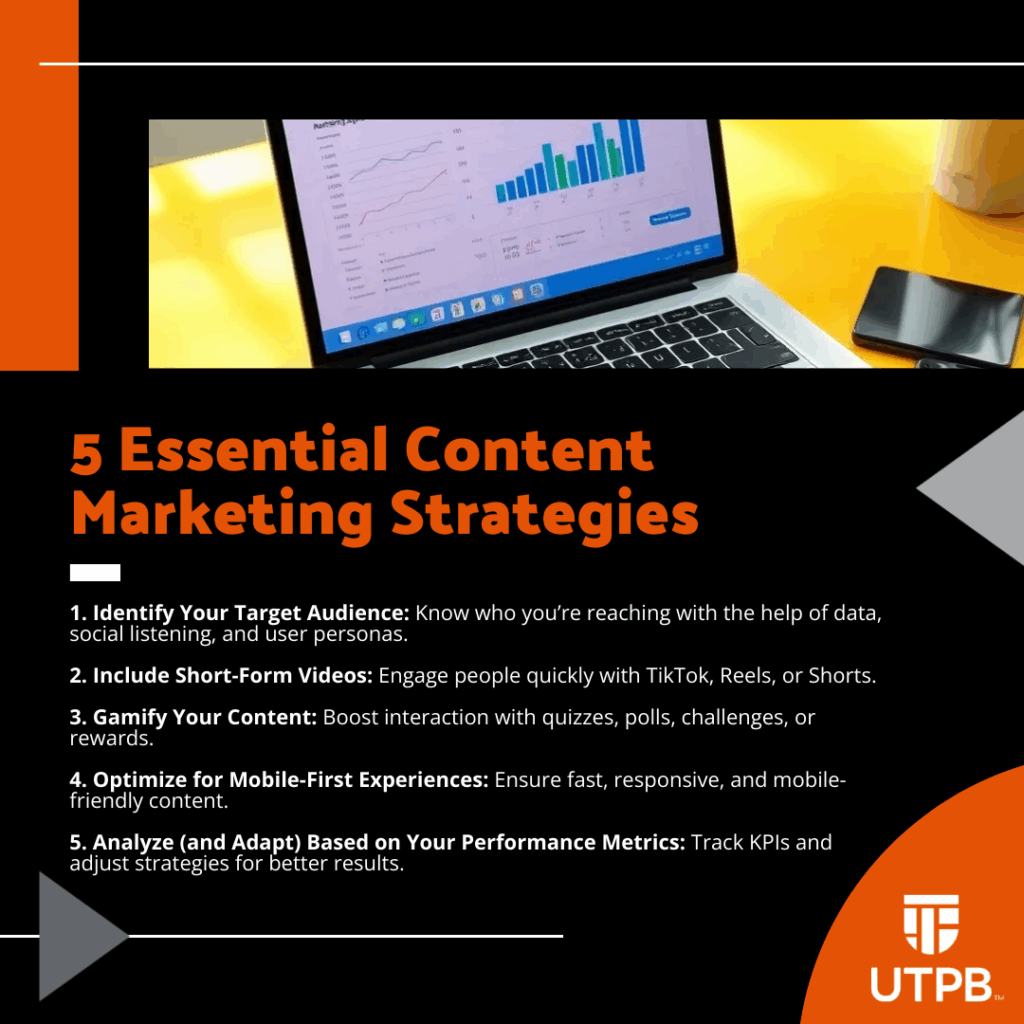
5 Content Strategies for Digital Marketing Success
Creating great content is just the first step. To truly engage your audience, you need strategies that capture attention, encourage interaction, and keep people coming back.
Here are five approaches to elevate your digital marketing and make your content work harder for your brand.
#1 Identify Your Target Audience
You might create catchy copy for your brand, but if you’re writing it for the wrong audience (or a general audience), even the best content won’t reach the right people. One of the first steps in crafting a content strategy that engages your audience is identifying exactly who you want to reach.
Here’s how to identify your target audience:
Analyticstools Analyze website traffic, engagement metrics, and conversion data through platforms like Google Analytics and Google Search Console to understand who interacts with your brand.
Social listening Monitor conversations on social media to discover what your audience talks about, shares, and values.
Customer personas Create detailed profiles of your ideal customers—including demographics, interests, pain points, and online behavior—to guide your messaging.
Meet your audience where they are with short-form videos on platforms like TikTok, Instagram Reels, and YouTube Shorts. These videos showcase your products in low-stakes, value-driven ways, such as:
Sharing behind-the-scenes moments Give your audience a peek into your brand’s personality or production process.
Highlighting customer testimonials Showcase positive experiences to build trust and authenticity.
Giving tips related to your products or services Offer helpful content that naturally connects back to your brand. For instance, a food brand might share a quick 15-second recipe that drives traffic to a longer blog post or YouTube tutorial, gently nudging the audience closer to a buying decision.
#3 Gamify Your Content
Gamification means adding game-like elements to your marketing content to create interactive experiences. This approach boosts engagement and encourages users to spend more time on your site. They may even return for another visit or share the experience with friends.
Here’s how you can gamify your content to make your audience’s experience more engaging:
Quizzes: Let users test their knowledge or discover personalized recommendations.
Polls: Encourage participation and collect valuable feedback.
Challenges: Motivate users to complete tasks for fun or recognition.
Rewardsystems: Offer points, badges, or incentives to encourage ongoing interaction.
For example, a skincare brand could run a 7-day “Glow Challenge” where participants sign up via the brand’s website. Each day, they receive an email with a tip, mini-task, or challenge related to skincare routines.
#4 Design for Mobile Users First
In 2023, Semrush noted that users were significantly more active on their mobile devices, visiting sites 313% more often on mobile than on desktop. So, what does that mean for content marketers?
We need to create content that caters to the user experience people want, and for most people, that’s mobile viewing.
Here’s how to optimize your content marketing strategies toward mobile-friendly experiences:
Ensure fast load times: Minimize delays to keep users engaged.
Create a responsive design: Make sure content displays well on screens of all sizes.
Offer mobile-friendly formats: Use vertical videos, short paragraphs, bullet points, and easy-to-read layouts for quick consumption.
#5 Track Performance Metrics and Make Changes
One of the most effective ways to determine whether your content marketing strategies are working is to analyze performance data from tools like Google Analytics, Search Console, or any other platform you use to collect insights.
Measuring results isn’t just about looking back; it’s about staying flexible. In today’s fast-moving digital world, what’s popular one month might shift the next, which is why it’s important to track key performance indicators (KPIs) like:
Engagement rates: Are users interacting with your content?
Conversion rates: Are your efforts leading to desired actions, like sign-ups or purchases?
Bounce rates: Are visitors leaving quickly without engaging?
Once your data shows what worked and what didn’t, you can use A/B testing to refine your strategies. For instance, if your blog content underperformed but your webinar content drove most of your leads last quarter, you can shift resources to produce more webinar content while experimenting with new formats or topics for your blog.
Lead the Way in Marketing with a Degree From UT Permian Basin
As digital marketing evolves, having a strong foundation in content marketing strategies can set you apart. With a Bachelor of Business Administration in Marketing from UT Permian Basin, you’ll gain practical skills and insights that help you:
Understand your audiences
Create engaging content
Analyze performance metrics effectively
Plus, with flexible electives, you can tailor your degree to match your career goals, whether that’s diving deeper into digital branding, e-commerce, analytics, or social media. This flexibility allows you to carve a path designed specifically for your ambitions, giving you the knowledge and confidence to lead no matter where your career takes you.
Interested in learning more? Explore UTPB’s online BBA in marketing today.
Gen Z and younger millennials haven’t just entered the consumer marketplace. They’re reshaping it. According to a 2024 survey, 20% of U.S. consumers made purchases on a social media platform at least weekly. This means Gen Z and millennials are setting the tone for how future generations will discover and buy from brands. These digital…
Honoring and celebrating our mothers has been a global tradition throughout history. Although Mother’s Day was officially declared a U.S. holiday in 1914, its origins date back centuries. People have honored their mothers across cultures and time periods through festivals, religious observances, and communal gatherings. Understanding the historical significance of holidays like Mother’s Day provides…
Many of us feel the invigorating sense of fresh starts and second chances that New Year’s brings. On January 1st, we’re often eager to embrace a healthier, polished version of ourselves—and we’re not alone. According to a 2024 Forbes Health poll, 48% of participants said improving their fitness was their top priority, 36% cited improving…
Flu season is here again, with all its aches, pains, and fevers. But scientists have a powerful tool to fight back.
The GPS technology used to plot your rush-hour route home? It also powers GIS (Geosciences Information System) tools that help public health officials pinpoint infectious disease outbreaks, limit their spread, and spot gaps in healthcare access. Whether it’s flu, COVID-19, or emerging diseases, GIS technology helps responders provide timelier and more effective care.
Let’s take a closer look at how public health officials use GIS technology to keep populations healthy.
What Is GIS in Public Health?
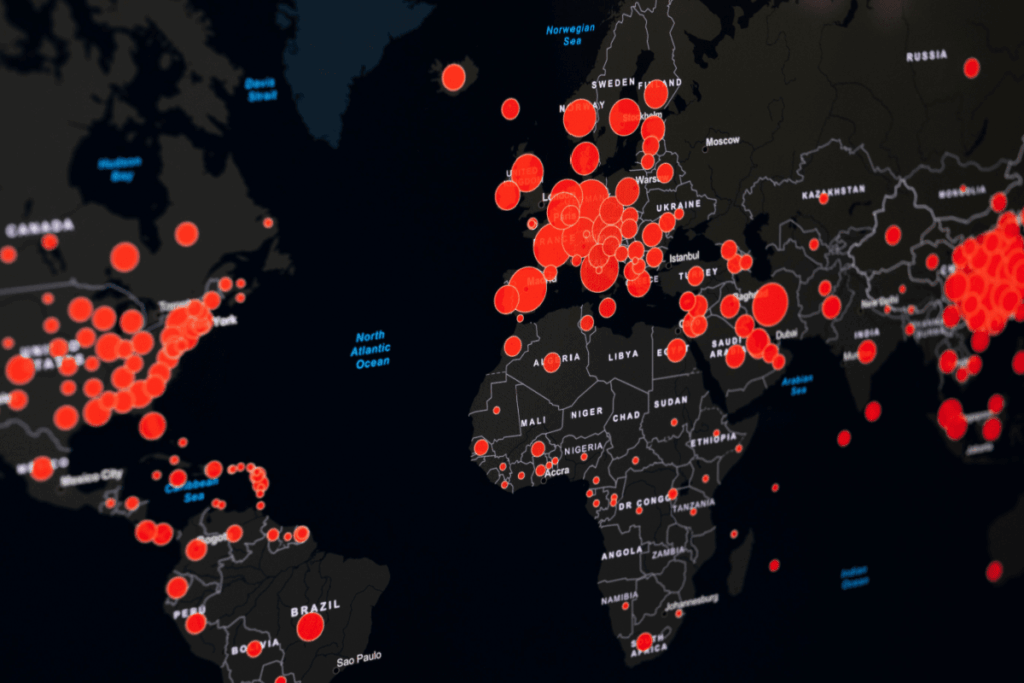
GIS tools help public health officials collect and analyze data to make informed decisions about health threats. These tools turn location data into visual maps that show:
Where diseases are spreading
Who might be at risk
Where healthcare resources are needed most
Let’s dig deeper into these three key ways public health professionals use GIS.
#1. Hotspot Mapping: Locating Disease Outbreaks
What’s a hotspot? In public health, it’s a geographic area where many cases of an infectious disease are concentrated. Hotspot mapping helps health officials use geographical and other data to identify these areas. Armed with this information, they can target their efforts and resources, whether they’re dealing with the flu or another disease.
Public health officials collect data from sources like:
Health departments
Hospitals
Electronic health records
Health information exchanges
These officials then anonymize the data to protect patient privacy and convert address details into map coordinates (a process called geocoding). GIS tools and spatial analysis software use special algorithms to quickly analyze massive quantities of location data.
Public health departments put this technology to work during the COVID-19 pandemic. For example, a specialized GIS-based mapping tool gave St. Louis, Missouri, public health officials a street-level picture of cases based on positive test result data. This helped them identify hotspots and determine patient demographics to better direct their prevention and treatment efforts.
#2. Contact Tracing: Identifying Who’s Been Exposed
After mapping hotspots, officials move to the next critical task: identifying everyone who’s been exposed.
Contact tracingidentifies people who’ve recently been near someone with an infectious disease. After testing positive, the patient lists where they’ve been and who they’ve seen. Health officials then:
Notify those at risk of infection
Provide safety tips to those individuals
Monitor them for symptoms over the disease’s incubation period
Contact tracing debuted in the 1930s during a syphilis outbreak in New York. It was also used, though controversially, during the AIDS epidemic. But traditional contact tracing relied on patients to remember everywhere they went and everyone they saw—and memory isn’t always reliable.
During the COVID-19 pandemic, sophisticated GIS-based tools transformed contact tracing. These location analytics tools use location data to track where infected people traveled and identify others who were in those same places at the same times. This person-to-person-to-place approach lets public health officials notify and advise far more potentially exposed individuals than traditional methods ever could.
#3. Healthcare Planning: Ensuring Equal Access to Care
Identifying outbreaks and tracing contacts is crucial—but what happens if people can’t reach medical care? Where are the hospitals, testing, and vaccination sites? Can everyone access them? Are more needed?
Public health officials must know where all available medical facilities are, especially when an infectious disease is involved. COVID-19, the most consequential infectious disease event in recent memory, showed us why this matters.
ICUs worldwide strained to meet demand during the pandemic. Yet for many, ICU access wasn’t even an option. In response, the Pan American Health Organization (PAHO), part of the World Health Organization (WHO), developed an online hub to share information across multiple countries in the Americas.
Related WHO GIS initiatives helped with vaccine delivery and contact tracing, too. These efforts not only helped health officials respond to emerging health concerns but also strengthened community planning efforts, like providing enough healthcare facilities.
Why GIS Skills Matter for Public Health Careers
Thinking about a career in public health? Here’s the reality: Mastering medicine isn’t enough anymore. Officials need people who can operate the tools that track outbreaks, map resources, and identify at-risk communities. Specialized GIS training ensures you’re prepared to use these powerful tools in real-world situations.
GIS experts have a competitive edge, able to visualize data, identify patterns, and help make decisions that save lives.
Whether you’re analyzing disease spread, planning vaccination sites, or assessing community health needs, GIS training prepares you for real-world public health challenges.
Build Your GIS Expertise With The University of Texas Permian Basin
The University of Texas Permian Basin’s 12-credit online GIS and Geospatial Graduate Certificate is designed for aspiring and current public health professionals. In fully online courses you can complete from anywhere, you’ll learn essential skills like spatial analysis, data visualization, and mapping techniques—all directly applicable to public health work.
Apply now and start building the expertise employers want.
Modern video games can recreate the real world with stunning precision, and GIS technology is what makes that possible. In fact, when fire ravaged Notre-Dame Cathedral in Paris in 2019, a detailed digital model built for the video game “Assassin’s Creed Unity” surfaced as a potential reconstruction reference. GIS is rapidly reshaping what it means to play video games today. This article examines: What Is GIS? …
On December 26, 2004, a massive earthquake struck beneath the Indian Ocean and sent a wall of water nearly 100 feet high outward. It barreled into South Asia at 30 miles an hour, wiping out communities before most people even knew what was coming. By the time the waves crossed the ocean, nearly 230,000 lives had…
Imagine you’re commuting to work and your Google Maps loses signal. Suddenly, the little blue dot stops moving and you don’t know where you are. Panic ensues (for some of us). Modern devices constantly broadcast our location through GPS, Wi-Fi, cell towers, and apps. We’re basically walking beacons of sensitive data. But here’s the flip side:…
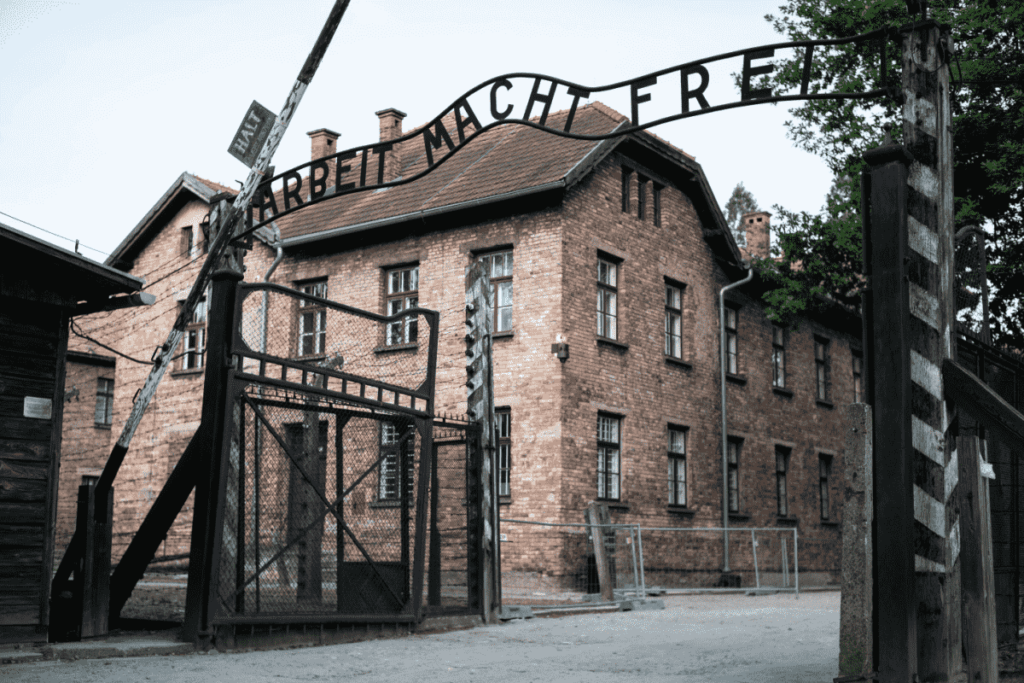
At the iron gates of Auschwitz-Birkenau, one of the most infamous extermination camps of Nazi Germany, the chilling phrase “Arbeit macht frei” (“Work sets you free”) still casts a haunting shadow. These deceptive words led into one of history’s darkest chapters.
Among those victims were 6 million Jewish men, women, and children, murdered in the genocide we now call the Holocaust. Millions more were persecuted, including:
Roma and Sinti people (ethnic groups often called “Romani”)
People with disabilities
LGBTQ+ individuals
Political dissidents
Anyone who resisted Nazi rule
This leaves us with a haunting question: How do hatred and propaganda become so powerful that mass murder becomes normalized?
This is the central question students confront in HIST6336: Third Reich and Holocaust, an online course offered by The University of Texas Permian Basin’s online Master of Arts in History program.
What Led to the Nazi’s Rise to Power?
In 1918, Germany founded the Weimar Republic, an attempt at democracy that faced serious challenges. On June 28, 1919, European officials signed the Treaty of Versailles, which demanded massive reparations from Germany for its role in World War I. The treaty:
Forced the struggling nation to lose much of its territory
Restricted the German military
Crippled the German economy
After the treaty, hyperinflation took hold in the Weimar Republic. A loaf of bread costing 250 marks in January of 1923 cost about 200 billion marks by November of that year. Widespread homelessness, poverty, and crushing unemployment devastated the nation, and these conditions created a breeding ground for extremism.
When Propaganda Overpowers Reason
The Nazi Party’s rise didn’t happen overnight. In 1933, Hitler became chancellor of a coalition government where Nazis were first a minority. However, the Nazis—led by Hitler’s fiery oration—used intimidation, violence, and emergency decrees to seize total power.
Their message was carefully crafted through propaganda, manipulation, and a calculated exploitation of human fear. Jews and other minority groups were blamed as scapegoats, tapping into centuries-old prejudices already present across Europe, and fueling division.
Propaganda boiled down to a dangerous message: “You suffer because of them.”
Meanwhile, Nazi leaders promoted their supposed achievements: job creation, investments in infrastructure and arts, sports and youth programs. They also promoted the myth of German superiority and dehumanized anyone who didn’t fit their narrow definition of “German.”
The Reichstag Fire: The Final Collapse of Democracy
In February 1933, a fire at the German parliament building (the Reichstag) gave Hitler the excuse he needed. He convinced Weimar Republic’s president, Paul von Hindenburg, to invoke emergency powers and later passed the Enabling Act, which gave him absolute control.
Soon after:
Opposition parties were banned
Independent newspapers were shut down
Books were burned in public
Teachers were fired or silenced
Artists and intellectuals were imprisoned
Neighbors and friends turned against each other. Families vanished. The SS (Hitler’s protection squads) and Gestapo (secret police) built a frightening surveillance state, while the SA (Stormtroopers) terrorized opponents.
Extermination Camps: The Machinery of Death
Auschwitz-Birkenau. Sobibor. Dachau. Treblinka.
From 1933 to 1945, concentration and extermination camps spread across much of Nazi-occupied Europe: sites of mass murder, starvation, torture, and medical experiments.
Trains arrived daily. Families who had traveled without food, water, or bathrooms for days were forced out of the wagons and separated into “showers”—gas chambers that ended their lives. One survivor recalled arriving at Auschwitz: cold air biting her skin, the deafening silence broken by barking dogs and shouting guards. Her family was torn apart in seconds. Her mother’s last words urged her to stay strong—words she honored as the family’s sole survivor.
Despite this darkness, countless people refused to be silenced. People sparked camp uprisings like those at Treblinka, created hiding places, organized resistance groups, and kept diaries. Survivors lived to tell the truth. These acts remind us that when faced with unimaginable evil, the human spirit can endure.
Why This History Still Matters
After the horrors of World War II came the Cold War, and with it, the rise of the Berlin Wall—a 96-mile-long concrete barrier that stood until 1989. It was a reminder of how the destruction of Nazi Germany continued to shape decades of international relations, tension and human struggle.
As time goes on, fewer survivors remain, but their voices urge us to listen. History calls us not only to remember, but to act: to speak up, to ask tough questions, and to refuse to look away.
What We’ve Learned
The Third Reich used propaganda, fear, and legal manipulation to destroy democracy.
Over 6 million Jews and millions of others were murdered in the Holocaust.
Ordinary people and institutions became complicit.
Understanding this history helps us recognize early warning signs and fight hatred today.
Learning From the Past, Protecting the Future
Third Reich and Holocaust, an online course offered by UT Permian Basin,is a deep dive into this period in history and its lasting impact. Students explore topics like:
How modernization, democracy, and dictatorship met in Nazi Germany
How institutions like railroads and bureaucracies—and even everyday citizens—enabled mass murder
How propaganda and surveillance controlled daily life, youth culture, and even private life
Most importantly, the course asks timeless questions:
What makes dehumanization possible?
How do propaganda, political systems, and personal choices intersect?
What warning signs from that era do we still see today?
Join the Journey: Understanding History at UTPB
UTPB’s fully online Master of Arts in History is more than a study of the past. It’s a call to engage with it. This program challenges you to confront difficult truths, explore the forces that have shaped our world, and discover your voice as a thoughtful future leader.
By understanding history, we gain the tools to build a future rooted in compassion, justice, and critical thinking. As Holocaust survivor Otto Frank once said, “To build up a future, you have to know the past.”
Ready to deepen your understanding and make a difference? Your next chapter starts here. Start your journey at UTPB today.
Imagine being told you can’t do something—by law, by tradition, by those close to you—and doing it anyway. Even today, women face greater barriers to recognition and authority than men. Yet throughout history, countless women stepped beyond traditional domestic roles, often at great personal risk. This article highlights nine of the countless important women who…
“Our country has deliberately undertaken a great social and economic experiment, noble in motive and far-reaching in purpose.” -Herbert Hoover Today, speakeasies are stylish bars hidden away behind bodegas, coffee shops, and laundromats. Ordering a cocktail is as easy as walking up to the bar, and while some places still require a password, you can…
At the iron gates of Auschwitz-Birkenau, one of the most infamous extermination camps of Nazi Germany, the chilling phrase “Arbeit macht frei” (“Work sets you free”) still casts a haunting shadow. These deceptive words led into one of history’s darkest chapters. Beyond that gate, more than a million lives were brutally ended. Auschwitz-Birkenau was just…
When you think of a great athlete, you might picture strength, speed, or agility. But what often separates the good from the great is more than physical skill; it’s the ability to stay focused under pressure, recover from setbacks, and trust in hard-earned preparation.
That mental edge comes from sports psychology. This key area within kinesiology explores how mindset shapes performance and recovery. If you’re interested in blending psychology and athletics, sports psychology can offer a powerful pathway to meaningful careers.
Understanding Sports Psychology in Kinesiology
Kinesiology is the study of human movement. And most professionals, from physical therapists to athletic trainers, know that perfecting movement in any sport doesn’t happen by chance. The development of physical skills is influenced by mental factors like motivation, confidence, and focus.
Together, this winning combination shapes how an athlete performs on the field. Sports psychology zooms in on these factors, helping individuals strengthen their mental game alongside their physical one.
In a kinesiology program (with a focus on sports psychology), you’ll explore topics such as:
Motivation and goal-setting that keeps athletes pushing toward peak performance
Stress and anxiety management strategies that help athletes stay calm when the stakes are high
Building confidence and resilience when bouncing back from injury, failure, or setbacks
Using focus and attention to train the mind to stay sharp when it matters most
These skills don’t just apply to elite athletes. They’re equally valuable for patients in physical therapy or anyone striving to build healthier habits.
The Athlete Mindset: How to Build Mental Toughness and a Competitive Edge
Athletes at every level face pressure, from game-day nerves to slow recovery after an injury. But with the help of sports psychology, they can develop mental toughness: the ability to perform consistently despite challenges.
The foundations of sport and exercise psychology include essential principles—motivation, confidence, focus, and resilience—that drive both performance and recovery.
Goal setting Set clear and specific SMART goals. Start with a long-term goal, like earning a starting spot on the team. Then break it into smaller, achievable steps, such as improving sprint times each week.
Positive self-talk and mindset coaching Replace lingering doubts with affirmations that boost confidence. Athletes might say, “I’ve trained for this, and I’m ready” to stay focused and energized before and while they perform.
Visualization Mentally rehearse the desired outcome before a match while considering realistic scenarios for how the game could unfold. This practice boosts confidence, sharpens focus, and enhances overall performance.
For kinesiology professionals, teaching these tools is just as important as designing a training plan or rehab program. Together, physical and mental strategies give athletes the competitive edge they need to succeed, while also supporting their long-term well-being.
The Mind-Body Connection: How Sports Psychology Enhances Performance
The mind-body connection is a buzzword in the sports industry, but it’s also a cornerstone of kinesiology. By syncing mental focus with physical effort, athletes can unlock higher levels of performance.
Athletes use controlled breathing techniques (like diaphragmatic or box breathing) to:
Slow their heart rate
Calm nerves
Lower cortisol (stress hormone) levels
Body Scanning
This mindfulness technique teaches athletes to check in with each muscle group, from head to toe. By noticing tightness or discomfort, they can take proactive steps before issues become serious, like:
Stretching
Posture adjustments
Corrective exercises
Pre-Performance Rituals
Whether it’s a sprinter listening to a custom playlist or a gymnast repeating affirmations, rituals train the brain to associate certain actions with “go time.” They build consistency, reduce uncertainty, and enhance confidence.
Beyond the Field: Careers with a Master’s in Kinesiology
A master’s in kinesiology will certainly prepare you for traditional coaching roles, but it’ll also prepare you for much more.
With a foundation in sports psychology, you can also pursue careers in:
Exercise physiology
Athletic training
Rehabilitation and wellness
Strength and conditioning
Corporate or community wellness
If you want to specialize further, a master’s degree can lead to advanced study in physical therapy, occupational therapy, or doctoral-level sports psychology.
UTPB’s Approach: Sports Psychology in Kinesiology Education
So, what separates good kinesiology professionals from great ones? At UT Permian Basin, it’s the ability to combine deep knowledge of the body with mental insights. That’s why our online Master of Science in Kinesiology offers three distinct tracks, including;
Psychology of Sport, where you’ll focus on the mental and emotional aspects of performance
Teaching, Coaching, and Administration, where you’ll develop the leadership skills to guide teams, athletes, and programs
Exercise Physiology, where you’ll explore the science behind how the body responds to movement, training, and recovery
In the Psychology of Sport track, you’ll build a strong kinesiology foundation through six core courses. Then you’ll customize your education with 12 elective credits based on your career goals—whether that’s working with athletes, clients in rehab, or organizations seeking performance optimization.
Curious about how the mental side of performance connects with human movement? These FAQs break down the role of sports psychology in kinesiology and what you can expect from UT Permian Basin’s graduate kinesiology program.
What role does sports psychology play in athletic performance? Sports psychology strengthens the mental side of the game, helping athletes stay focused, build confidence, and manage stress under pressure.
How does kinesiology connect the mind and body? Kinesiology links physical movement with mental factors like motivation and focus, showing how mindset directly impacts performance and recovery.
What makes UTPB’s kinesiology program unique for sports psychology? UTPB offers a sports psychology track that combines core courses with electives tailored to careers in performance, rehab, or wellness.
What career opportunities can I pursue with this degree? Graduates often work in athletic training, exercise physiology, rehab, or strength and conditioning. They can also pursue advanced study in sports psychology or therapy.
Have you ever seen wheelchair rugby players slam into each other at full speed? How about sitting volleyball players, as they cover the court with explosive movement generated entirely from their upper bodies and core? These are serious athletes doing serious athletic work. And behind a lot of that performance is a science: kinesiology, the study of human movement. Kinesiology…
You know that feeling right after a good workout? The addictive mix of pride, exhaustion, and the sudden realization that climbing stairs is a “tomorrow problem”? Most of us think workout recovery ends with a quick stretch and a protein shake. But in kinesiology, recovery isn’t the end of your workout. It’s where the real…
When you think of a great athlete, you might picture strength, speed, or agility. But what often separates the good from the great is more than physical skill; it’s the ability to stay focused under pressure, recover from setbacks, and trust in hard-earned preparation. That mental edge comes from sports psychology. This key area within…
Hospital bills that threaten to bankrupt families. Clinics struggling to keep their doors open. No matter which side of the exam table you’re on, healthcare costs are rising fast. Costs for everything from medical supplies to staff wages are on the rise—and it’s quickly adding up for hospitals and clinics around the country.
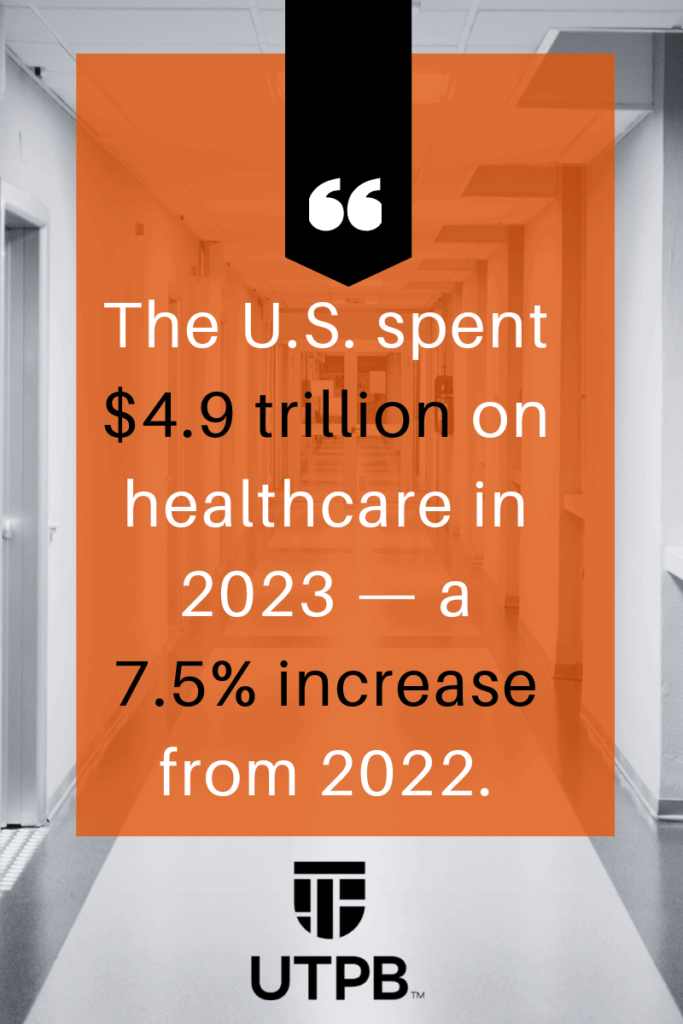
In 2023 alone, healthcare spending increased by 7.5% to $4.9 trillion: the largest uptick since 2003. The result? Healthcare facilities are facing mounting pressure to balance rising costs with delivering high-quality care to their patients.
That’s why effective healthcare administrators are crucial to the financial stability of healthcare facilities.
In this article, we explore six smart strategies you can use to tackle and lower some of the typical healthcare costs that have increased in recent years. (Where there’s a will, there’s a way—and a few extra dimes to rub together!)
Why Is Cost Management Important in Healthcare Facilities?
If healthcare were a human body, healthcare management would be the heart that keeps the entire operation running smoothly. This vital function ties together several key components, including:
Finances
Operations
Patient care
Employee satisfaction
When one of these elements is undervalued or neglected, the entire system is strained, like a body showing signs of illness. Healthcare administrators must ensure each part is carefully maintained, and cost management is one of the most effective ways to keep things in balance. Good cost management reduces expenses and creates and smoother, more effective operations.
Not sure where to start? Here are six proven strategies to help you cut costs while maintaining quality care.
#1 Optimize Available Resources
Facilities are teeming with resources. The more organized and informed a healthcare admin is—from medical supply inventory to staff capabilities and equipment status—the less likely they are to overspend on resources they don’t need.
Here are a few ways to make the most of what’s already available:
Leverage data analytics: Predictive analytics can help you anticipate patient volume. This insight can guide decisions about how many supplies to order, which equipment to prep, and how to allocate exam rooms or beds efficiently. A clear forecast helps reduce waste, prevent shortages, and avoid unnecessary overstocking.
Improve supply chain management: Streamline your buying procedures to avoid over-purchasing. Start by negotiating better contracts with your suppliers and using group purchasing, where multiple healthcare organizations pool their purchasing power to get bulk discounts.
#2 Improve the Billing and Payment Process
Whether you work in healthcare or you’ve been a patient yourself, you know one thing is true: Billing errors and insurance delays are all too common. But with the right systems in place, healthcare facilities can reduce these issues—and the headaches they cause. Here are a few ways to simplify the process:
Automate billing processes: Invest in billing software that catches errors before claims go out. Automation can also speed up submissions, flag potential coding issues, and quickly follow up on denied claims.
Offer flexible payment options: Patients are more likely to pay their bills when they have manageable options. Consider offering longer-term payment plans with low or no interest, especially for larger balances.
Ensure accurate coding: Train billing staff regularly on the latest coding guidelines (like ICD-10 or CPT updates). Mistakes in coding can lead to claim denials or lost revenue from underbilling, so staying up-to-date is essential in maximizing income.
#3 Support Staff Without Overspending
When looking into ways for managing costs in healthcare, labor is one of the biggest pieces of the puzzle. According to the American Hospital Association, labor accounted for 56% of hospitals’ total spending in 2024.
And while some facilities are cutting labor costs by reducing the number of employees (hello, nursing shortage), that can quickly lead to poor patient care due to burnout and understaffing.
Fortunately, there are ways to support your team while still keeping labor expenses under control:
Implement smarter scheduling: The data you gathered to anticipate patient volume? It’s a goldmine for managing staffing costs. Use it to schedule the right number of nurses, technicians, and support staff at any given time. This helps avoid unnecessary overtime and reduces the risk of burning out your core team.
Cross-train employees: Sure, front desk staff can’t step in for nurses—but that doesn’t mean they can’t be trained to help in other areas. Cross-training employees to handle multiple tasks (like check-ins, phone triage, or supply restocking) builds flexibility into your team and helps bridge gaps during busy shifts without bringing on extra hands.
Invest in retention: Hiring is expensive. Between recruitment fees, sign-on bonuses, onboarding, and training, the costs add up fast. But keeping the team you already have? That’s far more cost-effective. Retention strategies like professional development opportunities, flexible scheduling, and a competitive benefits package make employees feel valued and more likely to stick around.
Other Tips for Managing Healthcare Costs
In addition to the big-picture strategies above, here are a few simple yet effective ways healthcare facilities can keep costs in check:
#4 Focus on Value, Not Volume: Instead of getting paid for each test or procedure (a model called fee-for-service), more providers are shifting to value-based care, where hospitals and clinics are rewarded for keeping patients healthy.
For example, a bundled payment for a joint replacement covers everything from the surgery to follow-up care, encouraging providers to focus on good recovery and fewer complications instead of racking up individual charges.
#5 Concentrate on Small Fixes: Simple changes, like reducing supply waste or improving patient flow, can lead to significant cost savings over time. Even reworking how supplies are restocked or standardizing order sets can make a difference.
#6 Be Smart About Tech: Don’t chase trends. Invest in technology that improves efficiency, reduces errors, or boosts patient engagement, like automated appointment reminders, digital intake forms, or clinical decision support tools.
Ready to Lead Smarter Healthcare?
Whether you want to drive change in your current healthcare facility or pivot into the healthcare field from another industry, UT Permian Basin offers two fully online bachelor’s degrees designed to help you take the next step in your career—on your schedule.
We offer two 100% online programs for those interested in roles like healthcare administrator, operations manager, clinic supervisor, and more:
Bachelor of Applied Arts and Sciences in Healthcare Leadership: Designed for students with prior college or workforce experience, this program builds on your existing skills to prepare you for supervisory and mid-level leadership roles in healthcare.
Explore each program to see which one aligns best with your experience and goals. Still have questions? Contact us—and speak with a real person. Ready to apply? We offer year-round start dates, so you can jump in when the time is right for you.
When COVID-19 struck in 2020, the world as we knew it was thrown into complete chaos. Suddenly, many of us couldn’t leave our homes to complete simple tasks like grocery shopping or even taking a walk. Countless parents became tutors to their children, who were learning via Zoom calls. And when someone showed symptoms of…
When we consider a healthcare professional’s role in the patient experience, we might be inclined to picture a patient-facing individual such as a nurse or a patient care technician. These professionals have an incalculably beneficial effect on patients’ health and well-being. But apart from having the proper skills and disposition required to do their jobs…
A traditional MBA path often means finishing your bachelor’s degree, entering the workforce, then returning to school years later for your MBA: an expensive and time-consuming journey that can take six or more years in total. At The University of Texas Permian Basin, we offer a smarter, faster option: our online 4+1 MBA program. In…
Are you fascinated by vampires, haunted houses, or the macabre? If you nodded at any of those horror tropes, chances are you’ve encountered (or at least heard of) Gothic literature.
From the timeless terror of “Frankenstein” to modern-day Gothic thrills like “The Haunting of Hill House,” Gothic literature draws us into the creepy underbelly of what makes a character turn to violence or madness. Whatever the setting or supernatural twist, this genre’s terrifying grip can lead to goosebumps that linger long after we’ve turned the last page.
But before we dive into the famous Gothic authors who’ve defined the genre, let’s answer the question: What is Gothic literature?
What Is Gothic Literature? Key Characteristics to Look For
Gothic literature is filled with on haunting, mysterious, and eerie atmospheres, often infused with a sense of impending doom. (Sounds like a recipe for a stormy night read, right?)
The genre’s roots trace back to the mid-1700s, beginning with Horace Walpole’s “The Castle of Otranto.” As the genre has evolved, its key traits have been passed down through generations of readers and writers. In the years since its inception, Gothic literature has changed to reflect shifting societal norms and artistic influences.
Here are a few defining characteristics of Gothic literature that you’ll find in the works of its greatest authors:
A suspenseful setting Whether it’s a crumbling castle, a spooky forest, or an isolated family estate, the setting is a key part of building tension.
Supernatural elements Ghosts, vampires, and other paranormal creatures often lurk in the background or take center stage, adding to the sense of dread.
Social commentary While delivering chills, Gothic fiction also critiques societal norms, including class structures, gender roles, and moral ambiguities.
A dark mood A Gothic atmosphere is steeped in gloom and terror, and the landscape often mirrors the inner (and outer) turmoil of the characters.
7 Famous Gothic Authors
Gothic literature has evolved over the centuries, and many authors have left their distinctive mark on the genre. Here are some of the authors who have shaped Gothic fiction, their most esteemed works, and how their themes weave themselves into this genre.
#1 Mary Shelley (1797–1851)
During a summer spent with her future husband Percy Bysshe Shelley and Lord Byron (yes, the Lord Byron), Mary Shelley penned the first draft of “Frankenstein.”
Fun fact: The idea was born after Byron proposed a friendly competition: Who among them could write the scariest story? It seems fair to say that Mary likely won, as her tale of a scientist who creates life and then recoils from it went on to become one of the most enduring works of Gothic literature.
“Frankenstein” follows Victor Frankenstein, a young scientist obsessed with uncovering the secrets of life and death. His ambition culminates in the creation of a living being assembled from human body parts. Horrified by the creature’s grotesque appearance, Victor abandons it, setting off a tragic chain of events.
“Frankenstein” artfully incorporates several key Gothic themes, including:
Bleak, foreboding landscapes, from the icy Arctic to stormy mountaintops
Emotional torment, especially the creature’s painful awareness and longing for companionship
Moral boundaries, as the plot asks, how far is too far when it comes to scientific discovery and playing God?
#2 Edgar Allan Poe (1809–1849)
Looking for Gothic elements like isolation, unreliable narrators, and an impending feeling of dread? You’re in the right place. Best known for blending psychological horror with a haunting atmosphere, Poe’s chilling writing has captivated readers for generations.
His influence lives on not just in literature but in pop culture. For instance, Netflix’s “The Fall of the House of Usher” reimagines several of his stories through a modern lens. (And it’s full of Easter eggs for Poe superfans.)
Some of his most respected Gothic works include:
“The Fall of the House of Usher” (1839): A crumbling mansion and its unfortunate inhabitants spiral into ruin. With its decaying setting and family secrets, this tale is pure Gothic horror.
“The Masque of the Red Death” (1842): A prince throws a masquerade to escape a deadly plague. That is, until death shows up uninvited. The symbolism of inevitable doom and gruesome imagery make this a must-read Gothic tale.
“The Tell-Tale Heart” (1843): A murderer is driven to insanity by the imagined sound of his victim’s beating heart. The story’s claustrophobic tone and descent into madness reflect core Gothic themes of guilt and psychological pain.
#3 Anne Rice (1941–2021)
She may not have created vampire stories, but Anne Rice arguably redefined them for a modern audience and laid the groundwork for future vampire-centered romances. (“Twilight,” anyone?)
In the 1976 novel “Interview with the Vampire,” Rice explores the seductive (and disturbing) world of immortality through a Southern Gothic lens, drawing on the rich yet decaying beauty of New Orleans to set the tone.
This story drips with Gothic elements, including:
A dark but enticing atmosphere: From misty New Orleans streets to candlelit castles and crumbling catacombs, the setting is both vile and decadent.
Immortality: The novel delves into the tragedy of eternal life, examining isolation, regret, and the blurry line between man and monster.
FAQ: Gothic Literature and Authors
Curious about what makes Gothic literature tick? Whether you’re a first-time reader or a lifelong fan, we’ve compiled some answers to help you better understand this chilling genre:
What makes a book “Gothic”? Gothic literature features dark, eerie atmospheres, supernatural elements, and themes of isolation, madness, and moral ambiguity, often set in decaying or haunted locations.
Is Gothic literature still relevant today? Yes! Gothic themes continue to appear in modern books and shows like “Mexican Gothic” and “The Haunting of Hill House,” exploring psychological horror and human vulnerability.
Who are the most famous Gothic authors? Notable Gothic authors include Mary Shelley (“Frankenstein”), Edgar Allan Poe (“The Tell-Tale Heart”), and Bram Stoker (“Dracula”).
Other Notable Gothic Authors
Of course, many gothic authors have made an impact on the genre, both past and present. A few of those include:
#4 Bram Stoker (1847–1912): Author of “Dracula,” which cemented the vampire as a Gothic archetype. His work blends superstition, sexuality, and fear of the unknown.
#5 Charlotte Perkins Gilman (1860–1935): In “The Yellow Wallpaper,” Gilman transforms domestic life into a psychological prison, exploring mental illness and gender roles.
#6 Shirley Jackson (1916–1965): Known for “The Haunting of Hill House,” Jackson’s works use ambiguity and mental instability to evoke dread.
#7 Silvia Moreno-Garcia (b. 1981): Moreno-Garcia’s “Mexican Gothic,” set in 1950s Mexico, reimagines classic Gothic themes through a postcolonial and feminist lens.
Turn Your Passion for Stories Into a Degree
Love diving into dark themes, unforgettable characters, and literary classics that shaped entire genres? At UT Permian Basin, our fully online Bachelor of Arts in English gives you the foundation to explore literature from every angle, including courses in American and British literature.
You can also tailor your studies to match your interests, whether that’s mythology, visual media, or film as literature.
Study on your schedule while sharpening your writing and analysis skills and get one step closer to a career in teaching, editing, publishing, or beyond.
Monsters have been with us since the beginning of storytelling. Before novels, there were myths. Before myths, there were campfire stories about things lurking just outside the firelight. Something about the human brain is wired to conjure creatures (and compelled to write entire books about them). But literary monsters have never just been about scaring people. The…
“I took the road less traveled by, And that has made all the difference.” Even if you don’t know the entire poem, you may recognize the closing words from Robert Frost’s “The Road Not Taken.” They’re quoted at graduations, shared during moments of change, and used to describe the quiet courage of choosing your own path. So why have these simple words endured across generations? The power of…
Are you fascinated by vampires, haunted houses, or the macabre? If you nodded at any of those horror tropes, chances are you’ve encountered (or at least heard of) Gothic literature. From the timeless terror of “Frankenstein” to modern-day Gothic thrills like “The Haunting of Hill House,” Gothic literature draws us into the creepy underbelly of…