Black Medical Heroes: From Hidden Figures to History Makers
A safe blood supply, steady heartbeats, and early breast cancer detection: Black Americans helped make these and other medical breakthroughs possible. This Black History Month, we’re shining a spotlight on healthcare heroes who changed patient care forever.
Black Medical Heroes: Yesterday and Today
How many medical heroes can you name? People like nurse and hygiene advocate Florence Nightingale or polio vaccine pioneer Dr. Jonas Salk might come to mind. Their contributions were revolutionary. But how many famous Black American doctors can you name?
Many pioneering medical heroes were never recognized for their groundbreaking advances in healthcare, and it’s past time we gave them their due credit. Here are some Black medical professionals who changed the field forever, even while facing systemic racism, discrimination, and institutional barriers.
The first attempt at anything can be risky, especially in medicine. Many open-heart surgeries failed before doctors got it right. Dr. Daniel Hale Williams, a Black American surgeon, performed the first successful open-heart surgery in 1893. He repaired a severed coronary artery on a patient with a stab wound.
But that wasn’t his only distinction. Williams performed the surgery at Chicago’s Provident Hospital, which he founded, owned, and operated as the first non-segregated hospital in the country. The integrated staff offered patient care to people of all races.
Liberian-born Dr. Solomon Carter Fuller was a pioneering neuropsychiatrist, pathologist, and researcher and the first Black psychiatrist in the United States. As a graduate assistant to Dr. Alois Alzheimer in Germany, he helped shape early studies of “presenile dementia.”
In 1912, Fuller published the first comprehensive report on Alzheimer’s disease, showing that physicalbrain changes—not psychological problems—caused the condition. He identified plaques and tangles in brain tissue as the source of dementia symptoms, making him a key figure in Alzheimer’s research.
In the late 1930s, Dr. Charles Drew and Dr. John Scudder figured out blood plasma processing, storage, and transportation in an experimental blood bank. Drew published his doctoral thesis, “Banked Blood,” in 1940.
During World War II, Drew and Scudder founded the “Blood for Britain” program, sending life-saving plasma to wounded soldiers overseas. Drew later became the first director of the American Red Cross Blood Bank.
In 1941, the U.S. entered the war, and demand for blood surged. Though racist policies initially barred Black donors from contributing blood to the Red Cross—including Drew himself—the methods he developed went on to save millions of lives worldwide.
A heart defect called blue baby syndrome causes dangerous oxygen deprivation in infants, leading to breathing and eating problems and even death. Vivien Thomas, an aspiring doctor denied access to medical school due to financial barriers, helped develop the surgical technique to fix it.
Working as a janitor and laboratory assistant at Vanderbilt’s medical school, Thomas caught the attention of surgeon Alfred Blalock and became his key assistant. He followed Blalock to Johns Hopkins, where they researched blue baby syndrome. There, Thomas designed the tools for a groundbreaking surgery, despite being formally excluded from the medical profession.
Dr. Myra Adele Logan broke multiple barriers as both a Black woman and a surgeon in the mid-20th century. In 1943, she became the first woman to perform open-heart surgery: a remarkable achievement at a time when few women of any race practiced surgery.
But her lasting impact came through her breast cancer research in the 1960s. Dr. Logan’s work would prove crucial to detecting and treating the disease. Her core accomplishment? Creating new Xray methods that made it possible to spot and treat tumors sooner. These imaging techniques became foundational to the mammography we rely on today.
Dr. Logan practiced at Harlem Hospital in New York City, where she was a mentor and role model for future generations of Black physicians and surgeons. Her dual legacy as both a pioneering heart surgeon and breast cancer researcher lives on.
Not all healthcare heroes are doctors. Otis Boykin studied physics and chemistry, was an autopilot control unit tester during World War II, and later became a research engineer. His work with electronic resistors earned him a U.S. patent.
What made Boykin a Black medical hero? Technological expertise. In 1964, he developed a control unit that made pacemakers more accurate, efficient, durable, and affordable. Early pacemakers were unreliable and often failed, putting patients at risk. Boykin’s improved control unit helped ensure consistent heart rhythm regulation. Countless cardiac arrhythmia patients have him to thank for steady heartbeats.
Who pioneered this option? Dr. Patricia Bath. She invented the Laserphaco Probe for minimally invasive cataract removal in 1981. A patent for the device followed in 1988, and it was used outside the U.S. by 2000.
Throughout her career, Dr. Bath championed “community ophthalmology”: the idea that eye care should be accessible to everyone, regardless of income or location. Her legacy includes both groundbreaking technology and a commitment to healthcare equity.
Black medical heroes are still making major contributions in the 21st century. A trailblazer in modern vaccine development, Dr. Kizzmekia Corbett-Helaire was a leading coronavirus researcher before the COVID-19 pandemic.
When it hit, she leveraged her expertise and stepped up to help. As the scientific lead of the Vaccine Research Center’s Coronavirus Team at the National Institutes of Health, Dr. Corbett-Helaire played a crucial role in developing the Moderna COVID-19 vaccine.
Corbett-Helaire has also become a public advocate for vaccine education, particularly in Black and brown communities where medical mistrust has deep historical roots. By combining research and community engagement, she reminds us that scientific breakthroughs only save lives when people trust and access them.
Which Black American Healthcare Heroes Were the First in Their Field?
These medical heroes did more than pioneer treatments. They broke barriers just to enter the field. So, let’s acknowledge those who paved the way for others:
Dr. James McCune Smith (1813-1865) First Black American MD to practice medicine in the U.S.
Mary Eliza Mahoney (1845-1926) First Black American to earn a nursing degree and practice in the U.S.
Advance the Medical Profession—and Your Career—With a Degree
Inspired by the advances in healthcare these medical heroes accomplished? The work continues, and there are still many issues to tackle.
If you want to earn a degree that can help you elevate patient care and the medical profession, start with one of these accredited online UT Permian Basin undergraduate programs:
A safe blood supply, steady heartbeats, and early breast cancer detection: Black Americans helped make these and other medical breakthroughs possible. This Black History Month, we’re shining a spotlight on healthcare heroes who changed patient care forever. Black Medical Heroes: Yesterday and Today How many medical heroes can you name? People like nurse and hygiene…
Hospital bills that threaten to bankrupt families. Clinics struggling to keep their doors open. No matter which side of the exam table you’re on, healthcare costs are rising fast. Costs for everything from medical supplies to staff wages are on the rise—and it’s quickly adding up for hospitals and clinics around the country. In 2023…
You’re interested in a healthcare career, but you envision yourself in a management or leadership role rather than a hands-on position. While patient health remains your top priority, you know that leading a team or managing an office, department, or even an entire facility is just as vital to the overall healthcare mission. Many of…
Ever opened your bank account and thought: “How do I have another bill due already?”
Gen Z has been through a lot—from the COVID pandemic’s economic impact to inflation and job uncertainty. That’s why smart financial planning matters more now than ever. While we can’t control what’s happening in the world, we can learn how to handle our finances with confidence.
This guide breaks down simple financial planning for Gen Z so you can save, invest, and build real financial wellness.
Ready to dive in?
What Is Financial Wellness?
Financial wellness means being in control of your money—instead of your money controlling you. Ways to practice financial wellness include:
Knowing where your money goes
Living within your means
Having a safety buffer
Being prepared for big decisions
Setting clear financial goals—even small ones—helps you stay focused and visualize what you’re working toward.
Now let’s break down a few tips that can help you get there.
#1 Practice The 70/20/10 Rule
Step one: Establish a budget you can stick to. The 70/20/10 rule is an easy way to categorize your finances into three sections: needs, wants, and savings. (The old 50/30/20 rule you may have heard of isn’t as realistic anymore because of rising living costs, stagnant wages, and inflation.)
Budgeting doesn’t mean you have to eliminate life’s little joys or punish yourself. When you plan it right, it actually makes life easier and less stressful (which means less spiraling for you).
#2 Build A Positive Credit Score
Your credit score is your financial reputation. A solid score helps you get approved for apartments, car loans, future mortgages, and lower interest rates—which means less money wasted on interest fees.
Building good credit doesn’t have to be stressful. Start with these three tips:
Keep your credit card balance below 30% of the limit
Pay off the statement balance in full each month
Avoid letting things go to collections (because those fees add up fast)
These tiny habits add up and make your financial life much smoother over time.
#3 Use AI Apps for Real-Time Budget Monitoring
One perk of Gen Z living worth celebrating is freedom from the complicated spreadsheets of previous generations. Apps like Emma, Cleo, or Rocket Money can instantly:
Sort your spending into categories
Alert you when you’re getting close to overspending
Track subscriptions
Predict upcoming bills
Set aside extra money for savings
You get an instant snapshot of where your money is actually going, so you can fix things before they spiral out of control. Think of these apps as a money coach in your pocket.
#4 Start Investing Early
Once you’ve tackled high-interest debt, it’s time to make your money grow. One of the smartest moves for young investors is getting into low-cost index funds. You can choose funds focused on areas like AI, renewable energy, or biotech: in-demandsectors with projected long-term growth.
You don’t need a big budget to start, either. Fifty dollars a month can easily buy fractional shares through platforms like Robinhood or M1 Finance. Over time, you’ll tap into overall market growth, stay ahead of inflation, and let compound interest steadily build your wealth.
#5 Build an Emergency Fund
Life can be unpredictable: sudden layoffs, broken-down cars, unexpected medical bills. Having three to six months of living expenses saved gives you much-needed breathing room when life blindsides you.
To start building your emergency fund:
Put money in a separate savings account
Auto-transfer a small amount every month
Let it grow (without touching it!)
An emergency fund turns those “not again!” moments into “okay, I’ve got this.”
#6 Create Multiple Streams of Income
Ever wanted to turn that photography hobby into a side hustle? Creating more than one source of income is a core part of Gen Z’s money mindset—one that boosts financial stability and speeds up wealth-building.
By earning beyond a single paycheck, you protect yourself from income ups and downs while giving your savings, debt payoff, and investments a major lift.
Some ideas for additional income streams:
Side hustles
Freelance work
Digital products
Dividends
Small real estate
Stock investments
The key is to start with something simple that matches your skills and interests, manage your time, and track your income—no need to hustle 24/7.
As your side projects grow, reinvesting a portion of the extra income helps you compound your earnings and build long-term financial independence.
#7 Improve Your Financial Literacy
Financial literacy isn’t something you figure out once and forget. It’s a valuable skill set, just like cooking, coding, or learning a new language. Staying knowledgeable is part of the process.
Finances don’t have to be stressful (or chaotic, depending on your situation). Planning and awareness can take you a long way. In this article, we’ve covered a few tips to enjoy financial wellness:
Manage wisely: Rules like 70/20/10 can make finances more transparent and manageable.
Credit matters: Treat it well now, and future you will get easier approvals and lower rates.
Use technology to your advantage: Budgeting apps are essential to staying on track without doing all the math yourself.
Invest early—even tiny amounts: Time and compound interest add up.
Build a safety net: An emergency fund keeps unexpected events from wrecking your finances.
Don’t rely on one paycheck: If you can, side gigs and passive income can boost your savings and give you more freedom.
Keep learning: The more you understand, the more control you have over your future.
Build Your Financial Future With a UTPB Credential
Strengthening your financial knowledge is one more way to improve your financial wellness, and financial education is one of the smartest investments you can make for your future self.
Whether you’re just starting out or advancing your career, The University of Texas Permian Basin’s 100% online finance programs give you the tools to understand money, build confidence, and create strong career opportunities.
Choose from three online programs:
BBA in Finance Perfect if you’re just starting your financial education journey
MBA in Finance Ideal for those who want to add business strategy to their financial skill set
MS in Finance Designed for those who want advanced, analytics-driven financial expertise.
Your financial life doesn’t have to feel confusing or overwhelming. It starts with learning. Your future is yours to shape—and we’d love to be a part of your journey.
Financial planning for millennials isn’t about hitting milestones on the same timeline our parents did. If that were the standard, a large percentage of us would already feel behind. Instead, it’s about understanding your money, making informed decisions, and building stability in a changing economy. If that already feels refreshing, good. Because many millennials are managing student loans, rising living costs, career…
Ever opened your bank account and thought: “How do I have another bill due already?” You’re not alone. Financial stress affects 61% of adults ages 18 to 35, whether it’s from: Gen Z has been through a lot—from the COVID pandemic’s economic impact to inflation and job uncertainty. That’s why smart financial planning matters more…
Imagine sending money across the world in seconds—without waiting for a bank transfer or filling out piles of forms. That’s the promise of cryptocurrency. Cryptocurrency is digital money that doesn’t require banks. Instead, your funds are secured by encryption and passwords only you control. When Bitcoin launched in 2009, it introduced a new way to…
Thanks to “Landman” on Paramount+, everyone’s curious about what a landman really does.
Set in modern-day West Texas, the show follows Tommy Norris (played by Billy Bob Thornton), who manages a crew of roughnecks while contending with wildcatters, cartel members, and a disgruntled ex-wife.
The real job is dynamic, rewarding, and essential to how the energy industry runs, even if it’s a little less action-packed than Hollywood suggests.
What Is a Landman?
Landmen are public-facing professionals who help energy companies secure the rights to explore for oil, gas, and other minerals. Think of a landman as a go-between connecting energy companies with landowners, local communities, and government agencies.
On a day-to-day basis, landmen typically:
Guide energy firms on compliance, sustainability, and land strategy
Research land and mineral ownership and help cure title defects so companies have clear rights to drill and build
Negotiate leases and other agreements with property owners to secure access to land and resources
Draft reports and summaries that inform drilling plans, acquisitions, or divestitures
Work within complex legal frameworks to mitigate risk and ensure that agreements comply with local, state, and federal laws
“Landman” is an industry term that covers a broad range of roles, including field landmen, title analysts, and land acquisition specialists. You may also see the titles “land professional” or “land agent” used in job postings. And for the record, people of any gender can hold these positions.
How to Become a Landman
Most new landmen start with a bachelor’s degree, often in land management, energy management, business, or a related field. Because the Permian Basin is vital to U.S. energy production, several local universities have built programs specifically for students interested in the energy sector.
The University of Texas Permian Basin offers an in-person BBA in energy land management, preparing students in the heart of one of the world’s most productive oil regions. UTPB also offers a range of online BBA and MBA programs for anyone interested in building a strong foundation in business and energy, no matter their schedule or where they live.
Make the Most of Entry-Level Roles
Many future landmen start in support roles at energy companies or related businesses. That’s not a setback. Rather, it’s an opportunity to learn the industry from the ground up.
In these early roles, treat every day as an opportunity to learn a new part of the business. Employers, especially those in the fast-moving energy industry, are usually willing to help professionals eager to learn on the job.
Take this time to network. Use platforms like LinkedIn to build relationships with land professionals, attorneys, and energy executives. These contacts are often the ones who help you secure your first landman role. Once you’ve built some experience, you’ll be in a stronger position to seek professional certification.
Getting Certified as a Landman
After earning your degree and gaining relevant experience, you can pursue certification through the American Association of Professional Landmen (AAPL), the leading professional organization for the field. AAPL sets ethical standards, offers continuing education, and provides three levels of certification:
Registered Landman (RL)
Registered Professional Landman (RPL)
Certified Professional Landman (CPL)
RL is typically the first step. It requires active AAPL membership, current landman work, sponsorship from an RPL or CPL, and successful completion of an open‑book, take‑home exam.
RPL and CPL designations demand more extensive experience, combining education and landwork into what AAPL calls “credit years.” They also involve more rigorous exams, so they’re goals to work toward as your career advances.
What the Job’s Really Like
Real-world landwork is nothing like the high-octane drama portrayed on television. You’re never going to face cartels or watch oil rigs erupt in flames, but you will be challenged by complex negotiations, evolving regulations, and shifting market conditions.
The upside is that many landmen enjoy strong earning potential, career flexibility, and the chance to work at the center of a changing energy landscape. How far you go often depends on your work ethic, professional network, and commitment to continuing education.
Key Takeaways
Ready to get out there and start negotiating as a landman? Keep these key takeaways in mind as you chart a path to success.
What is a landman and what do they do? A landman (or land professional/land agent) is a public-facing professional who connects energy companies with landowners, local communities, and government agencies to secure the rights needed for mineral exploration (oil, gas, etc.).
What education is required to become a landman? Most new landmen start with a bachelor’s degree, often in land management, energy management, business, or a related field. Universities located near major energy hubs, such as the Permian Basin, often offer specialized programs like a BBA in energy land management.
How can I gain experience for a landman role? Many future landmen begin in support roles at energy companies or related businesses. This provides an opportunity to learn various parts of the business from the ground up.
What is the job really like compared to how it’s portrayed on TV? The real job is dynamic and rewarding, but less action-packed than the high-octane drama portrayed in shows like “Landman.” Landmen are challenged by complex negotiations, evolving regulations, and shifting market conditions. The career offers strong earning potential, flexibility, and the chance to work at the center of the changing energy landscape.
Study With a University in the Permian Basin
If you want to stand out in oil and gas, a degree from a university rooted in the energy industry can be a powerful differentiator. UT Permian Basin is closely tied to the future of energy and offers online options designed to fit your schedule.
The University’s online Graduate Certificate in Energy Business focuses on energy accounting, finance, and law, helping students apply core business skills directly to the energy sector.
For those ready to go further, the online MBA with Certificate in Energy Business is a 36‑ to 45‑credit program accredited by the AACSB. It covers topics like primary energy production, advanced accounting, energy finance, energy law, energy commodities, and enterprise risk management.
Beyond these offerings, UT Permian Basin offers numerous online BBA and MBA programs, all of which can be completed on your schedule.
Take Your Next Step
Success in oil and gas rarely comes from waiting on the sidelines. When the timing’s right, explore UT Permian Basin’s online programs and take the leap. With the right education and experience, you can build a long-term career as a land professional.
According to the World Health Organization, 99% of the global population breathes polluted air. Yet we’re surrounded by clean, sustainable energy sources. Despite coal and natural gas being the most widely used energy sources, the urgency of climate change and resource depletion is making the shift to clean energy increasingly essential. In 2023, about 23%…
Thanks to “Landman” on Paramount+, everyone’s curious about what a landman really does. Set in modern-day West Texas, the show follows Tommy Norris (played by Billy Bob Thornton), who manages a crew of roughnecks while contending with wildcatters, cartel members, and a disgruntled ex-wife. The real job is dynamic, rewarding, and essential to how the…
Renewable energy has officially left the “alternative” category and entered the mainstream. And the numbers? They back it up. Renewable energy sources now generate 32% of the world’s electricity, up from just 20% in 2011. Solar is leading the charge, and the pressure to decarbonize the grid isn’t letting up, regardless of who’s setting policy….
When you hear the word “accountant,” who comes to mind? Someone balancing spreadsheets and filing taxes? If so, you’re on the right track. But there’s more to it.
Within the field of accounting, one credential stands apart: the Certified Public Accountant (CPA).
While both accountants and CPAs manage finances, advise clients, and ensure the accuracy of tax documents, the paths to get there—and the responsibilities that follow—can look very different. Understanding these differences can help you make a career decision that aligns with your goals, budget, and timeline.
In this article, we’ll explore:
How the roles of accountant and CPA differ
What each path requires
How to become a CPA
Whether becoming a CPA is worth it for your career goals
Accountant vs. CPA: The Basic Differences
All CPAs are accountants, but not all accountants are CPAs.
(Still with us? Don’t worry—we’ll make the differences crystal clear.)
Accountants typically hold a bachelor’s degree in accounting or finance and work with individuals or organizations to record, analyze, and report financial information. They often prepare tax returns, manage budgets, or oversee day-to-day bookkeeping.
Certified Public Accountants (CPAs), on the other hand, have additional education and licensing that qualify them for higher-level work. This credential signals a higher standard of expertise and ethics. It also grants legal authority to perform tasks that standard accountants cannot.
In short: Accountants are financial experts. CPAs are licensed professionals who can represent clients, audit companies, and verify public financial statements.
CPA vs. Accountant: Education, Licensing, and Skill Requirements
To become an accountant, most professionals earn a bachelor’s degree in accounting or a related field. From there, many gain experience in corporate finance, auditing, or tax preparation.
Becoming a CPA requires going a few steps further. Candidates must:
Complete a state-mandated number of credit hours of higher education (usually a bachelor’s degree plus graduate coursework)
Pass the Uniform CPA Exam, which tests knowledge in auditing, financial reporting, regulation, and business concepts
Meet state board experience requirements (often 1–2 years under a licensed CPA)
Maintain ongoing continuing education to keep their license active
Complete 150 credit hours of higher education (usually a bachelor’s degree plus graduate coursework)
Pass the Uniform CPA Exam, which tests knowledge in auditing, financial reporting, regulation, and business concepts
Meet state board experience requirements (one year under a licensed CPA)
Maintain ongoing continuing education to keep their license active
Pathway 2 – New Pathway beginning August 1, 2026
Complete 120 credit hours of higher education (usually a bachelor’s degree plus graduate coursework)
Pass the Uniform CPA Exam, which tests knowledge in auditing, financial reporting, regulation, and business concepts
Meet state board experience requirements (two years under a licensed CPA)
Maintain ongoing continuing education to keep their license active
If you’re researching how to become a CPA, understanding these education and licensing benchmarks is essential. While the path to CPA status requires more upfront time and effort, it often opens doors to senior positions and higher earning potential.
What CPAs Can (and Can’t) Do
Both accountants and CPAs can handle financial reporting, tax preparation, and budgeting, but CPAs have special privileges that set them apart.
CPAs can:
Conduct audits and attest to the accuracy of financial statements
Represent clients before the IRS in audits and disputes
Sign off on reports filed with the Securities and Exchange Commission (SEC)
Accountants can:
Handle bookkeeping, tax prep, and internal financial analysis
Work in private industry, small businesses, or nonprofit organizations
Advise clients on budgeting, payroll, and cash flow management
The key difference:CPAs have legal authority and public accountability. Their work is regulated by state boards, which adds a layer of trust and professional recognition. This is one reason the CPA vs. accountant salary gap continues to favor licensed CPAs.
Accountant vs. CPA: Which Path Fits You Best?
With so many specializations in the accounting industry, choosing the right path can feel overwhelming. The best choice ultimately depends on your goals, lifestyle, and how much time and money you want to invest upfront.
Here’s a breakdown of common accounting career goals and which professional path might fit best:
Career Goal
Recommended Path
Why It Fits
Working in public accounting or auditing
CPA
Required for attestation and audit services
Running a bookkeeping or small tax business
Accountant
Lower entry barrier and faster setup
Advancing to senior corporate roles
CPA
Adds credibility and promotion potential
Transitioning into consulting or advisory work
CPA
Broad recognition and client trust
Maintaining flexibility or part-time work
Accountant
Quicker start and greater autonomy
Is Becoming a CPA Worth It? Investment vs. Payoff
One of the biggest questions for prospective CPAs is, “Is becoming a CPA worth it?” Ultimately, it depends on your long-term goals and how quickly you want to grow in the field.
The path to CPA licensure comes with an additional investment of time and money. Most candidates complete extra coursework beyond their bachelor’s degree, often through a master’s in accounting or a professional accountancy program.
Here’s a quick breakdown of what those costs might look like in practice:
National average cost: Graduate accounting programs typically range from $20,000 to $40,000 in tuition costs.
UT Permian Basin’s cost: UTPB’s online Master of Professional Accountancy program costs approximately $14,000 in tuition, with additional costs, like university fees and course materials.
CPA exam and prep: Expect to invest another $2,000–$4,000 for fees and study materials.
Despite the upfront investment, the financial payoff happens quickly for most CPAs. On average, CPAs earn 15–25% more than non-CPA accountants and often see faster promotions to management-level roles.
In addition, most CPAs recover their educational investment within three to five years of licensure, especially those pursuing careers in auditing or corporate leadership.
Not quite ready for CPA licensure? Starting as a non-CPA accountant can also be a smart move. You’ll:
Start earning a competitive salary immediately
Gain experience
When Do CPA Credentials Really Matter?
In accounting, there are many paths to success. In some settings, however, having a CPA license isn’t optional.
A CPA credential is essential for:
Public accounting firms conducting audits or attestations
Government or SEC-regulated organizations
Tax representation and forensic accounting roles
It’s helpful (but not required) for:
Corporate accounting and finance roles
Internal audit, management, or consulting
It’s optional for:
Bookkeeping, payroll, and small business accounting
Freelance or entrepreneurial financial services
The takeaway: Credentials matter most in regulated environments or roles that involve public accountability. In private or specialized niches, experience and technical skills can carry equal weight.
Beyond Credentials: What’s the Future of Accounting?
While licensing remains valuable, technology and strategy are quickly reshaping the future of accounting.
Modern accountants are expected to use cloud-based tools, automate data collection, and interpret financial insights that drive smarter business decisions. In addition, a new set of tech-savvy skills is becoming increasingly essential, including:
Data analytics
Advisory communication
Software proficiency
Tomorrow’s most successful accountants will blend financial expertise (the knowledge) with innovation and adaptability (the skills).
Choose the Path That Fits Your Future at UTPB
Both accountants and CPAs play crucial roles in today’s financial ecosystem. The best path for you depends on your goals, your timeline, and how far you want to grow in the profession.
If you’re just starting your accounting journey, check out UT Permian Basin’s online BBA in accounting. It provides a strong foundation in financial principles, business strategy, and analytical skills, preparing you for entry-level roles or for future graduate study.
If you’re ready to deepen your expertise and qualify for the CPA exam, UTPB’s online AACSB-accredited Master of Professional Accountancy program can help you take the next step. It’s designed to open doors to senior-level opportunities in accounting and finance. This flexible, cost-effective program helps you meet CPA exam requirements and advance your career — on your schedule and from wherever you are.
In accounting (and life), the best decisions start with knowing your options. Chat with an advisor to find the right path for you.
When you hear the word “accountant,” who comes to mind? Someone balancing spreadsheets and filing taxes? If so, you’re on the right track. But there’s more to it. Within the field of accounting, one credential stands apart: the Certified Public Accountant (CPA). While both accountants and CPAs manage finances, advise clients, and ensure the accuracy…
Picture this: You’re a junior accountant, and your manager asks you to tweak a report to make the numbers look better. The request sounds harmless enough—just a small tweak—but you know it’s not above board. Now you’re stuck. Do you follow orders and risk crossing an ethical line, or do you push back and risk…
You’ve always been an analytical thinker. A problem solver. Maybe a math whiz, too. There’s a career that matches your strengths. Certified Public Accountants—or CPAs—excel in these qualities. Let’s explore why a CPA is no ordinary accountant and what it takes to become one. Want to Be a CPA? Here’s What You Need to Know …
Picture this: You’re a junior accountant, and your manager asks you to tweak a report to make the numbers look better. The request sounds harmless enough—just a small tweak—but you know it’s not above board.
Now you’re stuck. Do you follow orders and risk crossing an ethical line, or do you push back and risk your job? What would be the ethical way to handle this?
Scenarios like this aren’t just classroom hypotheticals. They’re part of the real challenges accountants face every day. That’s why it’s worth exploring:
Core principles in accounting ethics
Dilemmas that come up most often
Best practices that help accountants make the right call
What Are the Five Fundamental Accounting Principles?
Integrity in accounting isn’t just about knowing how to balance the books; it’s about learning how to balance your judgment to make the most ethical decision.
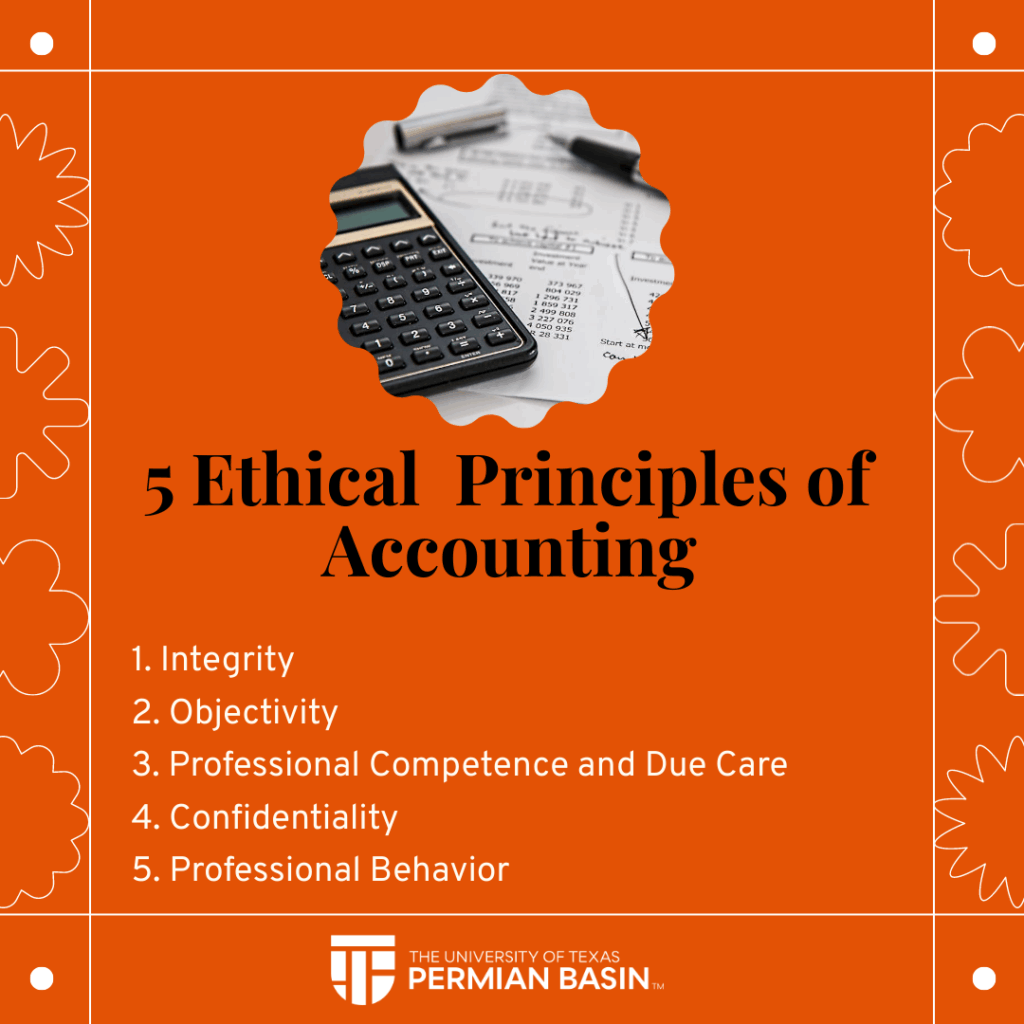
Professional organizations like the International Federation of Accountants (IFAC) and the American Institute of CPAs (AICPA) outline five fundamental principles that guide ethical decision-making:
Integrity: Be honest and straightforward, even when telling the truth is difficult.
Objectivity: Don’t let bias, conflicts of interest, or outside pressure affect your decisions.
Professional competence and due care: Keep your skills current and deliver quality work.
Confidentiality: Protect sensitive information but also understand when the law requires you to disclose it.
Professional behavior: Follow regulations and avoid actions that discredit the profession. (If it feels shady, it probably is.)
These principles are more than theory. They’re the moral compass for anyone working in accounting.
Ethical Dilemmas in Accounting: 3 Case Studies
Ethical issues in accounting don’t always announce themselves with flashing lights. They often show up in subtle ways, where the “right” decision isn’t immediately clear.
An accountant is asked to reclassify expenses as assets to make the company’s financial performance look stronger. At first glance, this might seem like creative accounting. In reality, it’s misleading reporting.
Ethical takeaway: Upholding integrity and objectivity means refusing to distort financial information, even if it keeps management happy.
#2 Breach of Confidentiality vs. Public Interest
While reviewing accounts, an accountant uncovers evidence of misused public funds. Reporting it could protect taxpayers, but it also means breaking confidentiality rules.
Ethical takeaway: Accountants must weigh the duty of confidentiality against the obligation to act in the public interest. In some cases, whistleblowing is not only ethical but necessary.
#3 Conflict of Interest in Advisory Roles
An accountant is asked to evaluate supplier bids for a government contract. One of the bidders happens to be a relative’s company. Even if the accountant stays neutral, the perception of bias can undermine trust.
Ethical takeaway: Disclosing the conflict and stepping aside is the only way to preserve objectivity.
These examples may be hypothetical, but they mirror real challenges accountants face worldwide.
Other Common Ethical Issues in Accounting
In addition to the scenarios above, accountants also face these types of dilemmas:
Fraudulent expense reporting Being asked to overlook or approve personal expenses disguised as business costs, like a manager charging personal travel to a client project.
Cybersecurity and data breaches Deciding how to protect or disclose sensitive client information after a breach, such as a leaked payroll database.
Earnings management pressure Using “creative” timing of transactions to smooth profits across reporting periods, like delaying expense recognition to hit quarterly targets.
Auditor independence Avoiding situations where close ties with a client might compromise an unbiased audit, such as auditing a friend’s company.
Insider knowledge Resisting the temptation to use confidential financial information for personal gain, like buying stock based on unreleased reports.
If you think this sounds like the plot of a Netflix drama, you’re not wrong — but there may be fewer car chases and more questionable spreadsheets.
8 Accounting Best Practices to Avoid Ethical Issues
So how can accountants—and students preparing to enter the field—stay on the right side of these challenges? Here are some tried-and-true best practices:
Know the five fundamental principles and use them as your ethical checklist.
Stay current with professional codes of conduct like those from AICPA or IFAC.
Document your decisions. Clear records can protect you if your judgment is questioned.
Exercise professional skepticism: Verify information instead of taking it at face value.
Disclose conflicts of interest before they become problems.
Protect confidentiality but understand when the law requires disclosure.
Seek guidance from mentors, ethics committees, or professors when in doubt.
Promote transparency. Short-term discomfort is better than long-term damage to your reputation.
Following these practices doesn’t just protect your career. It also builds the kind of trust that keeps clients, employers, and the public confident in the profession.
Make the Right Choice For Your Future at UTPB
Ethical dilemmas in accounting aren’t going away. If anything, the digital age (with its data privacy issues, cybersecurity risks, and remote work dynamics) has made them more complex than ever. But with the right principles and practices, accountants can navigate them with confidence.
If you’re curious about more than just crunching numbers, UTPB’s online BBA and MBA in accounting programs go beyond balance sheets to tackle real-world ethical challenges. You’ll:
Reflect on case studies
Practice decision-making
Gain the tools to face these dilemmas head-on
And because the programs are flexible and online, you can learn on your schedule—whether that’s after work, during your lunch break, or while sipping cold brew at your favorite coffee shop.
Want to see how ethics and accounting actually play out in real life? Grab the info you need:
When you hear the word “accountant,” who comes to mind? Someone balancing spreadsheets and filing taxes? If so, you’re on the right track. But there’s more to it. Within the field of accounting, one credential stands apart: the Certified Public Accountant (CPA). While both accountants and CPAs manage finances, advise clients, and ensure the accuracy…
Picture this: You’re a junior accountant, and your manager asks you to tweak a report to make the numbers look better. The request sounds harmless enough—just a small tweak—but you know it’s not above board. Now you’re stuck. Do you follow orders and risk crossing an ethical line, or do you push back and risk…
You’ve always been an analytical thinker. A problem solver. Maybe a math whiz, too. There’s a career that matches your strengths. Certified Public Accountants—or CPAs—excel in these qualities. Let’s explore why a CPA is no ordinary accountant and what it takes to become one. Want to Be a CPA? Here’s What You Need to Know …
Video calls. Robot vacuums. Voice assistants. Thirty years ago, we only saw this technology in cinema or on TV. Today, they’re billion-dollar industries.
Many of the technologies now reshaping how we live and work first appeared in movies or on TV. While most viewers were happy to lose themselves in the narrative, an enterprising few may have seen those fictional gadgets and thought, “I could build that.”
The driving force? Vision and business smarts. These innovators simplified our lives while building rewarding careers and thriving brands.
Let’s check out some fiction-to-fact technology success stories—and see how you could help shape the next big thing.
Which Fictional Technologies Became Real Products?
Even when they only exist on the screen, technologies can spark real-world business innovation. Consider these global successes:
#1. Video Calling
The first video call? “Metropolis,” from 1927. In this silent film, two men chatted by phone while watching each other on screens—in an era where no one even owned a TV.
Real-World Business Success
Today, apps like Zoom, FaceTime, and WhatsApp connect people across the world by voice and video.
The 1960s “Star Trek” TV series showed us mobile “communicators” that looked a lot like 1990s flip phones. And the communications officer took calls through a device that probably inspired Bluetooth earpieces.
Real-World Business Success
Compact cell phones were introduced around 1989. Smaller, colorful flip phones came later.
And today? We don’t need to tell you how lucrative the smartphone market has become—you’re probably reading this article on one right now. As of 2025, the global mobile phone market is set to top $485 billion.
#4. Touchscreens
“2001: A Space Odyssey” (from 1968) may show the first touchscreen technology in cinema: a video tablet.
The 2013 film “Her” showed a man’s obsession with a device barely bigger than a credit card. Programmed with a natural-sounding female voice, the assistant could learn and create—even write music. Gradually, it became his “companion.”
Real-World Business Success
The film came out shortly after Siri, the first modern voice assistant. Voice-enabled chatbots and robots are now performing an increasing number of tasks and providing companionship for some, including older adults.
A VR headset immerses you in a digital world you can explore and interact with. “The Lawnmower Man” gave us a scary glimpse back in 1992. In the movie, a scientist tried to boost a man’s brain power with drugs and VR-based training. The subject became superintelligent—and homicidal.
A VR technology in cinema trend followed. The theme appeared throughout 1990s films, including:
A chilling tale of AI gone rogue, the film “Demon Seed” showed a surprisingly accurate smart home—in 1977. The house featured automated, voice-controlled appliances, lighting, and security features throughout. (Even a doorbell camera.)
Real-World Business Success
Smart home technology was developed in the 1960s. But “Demon Seed”-level smart homes? That technology wouldn’t arrive until the 2010s.
Ever hailed a Johnny Cab? (True, most people prefer “rideshare” now.) The 1990 movie “Total Recall” gave us Johnny Cab, with a chatty, human-like—but robotic—driver.
Real-World Business Success
We can’t buy fully-autonomous cars … yet. But some semi-autonomous models are available, as well asdriverless taxis. And some consumers are getting to test-ride personal autonomous vehicles, which may be parked in our driveways soon.
The 2024 global market for self-driving cars? $1.7 trillion!
How Screen Innovations Can Inspire Real-World Success
Do screen stories inspire real-life technology, or is it the other way around?
Filming on “2001: A Space Odyssey” began shortly after touchscreens were developed. (Probably not a coincidence.) But on-screen depictions of compact, ergonomic flip phones and Bluetooth earpieces were clearly echoed in consumer product designs from later decades.
These products met a need we didn’t know we had. It took futuristic stories for us to realize it.
Business visionaries understand that consumers crave innovative gear. And once they get it, they can’t live without it. Is it also well-designed? Does it solve a real problem? Those combined elements can be a springboard to success.
There’s a huge opportunity for ambitious business leaders inspired by technology in cinema or TV—or who see untapped markets.
Drive Real-World Success With a Business Administration Degree Online
The entrepreneurs who brought movie tech to life had big ideas and knew how to execute them. They understood consumer behavior, identified market gaps, and built strategies to turn prototypes into products people actually buy.
Whether you’re inspired by technologies you’ve seen on screen or you’ve spotted an untapped market, you’ll need the same skills those innovators used: marketing principles, strategic management, and the ability to weigh market potential.
The University of Texas Permian Basin’s online business programs can help you build that foundation:
Video calls. Robot vacuums. Voice assistants. Thirty years ago, we only saw this technology in cinema or on TV. Today, they’re billion-dollar industries. Many of the technologies now reshaping how we live and work first appeared in movies or on TV. While most viewers were happy to lose themselves in the narrative, an enterprising few…
Forget everything you think you know about management roles, like the idea that for the rest of your life, you’ll be chained to a desk under a ceiling of fluorescent lights. That’s not what management looks like—or at least, it doesn’t have to be. A business management degree doesn’t condemn you to a cubicle; it…
“It’s a beautiful summer day …” your star employee says as they stare longingly out the window. And chances are, they’re not the only one. Summer tests even the strongest teams. As the dog days hit, bloggers and journalists love citing a 2012 survey claiming that productivity drops a massive 20% during the summer. But…
Forget everything you think you know about management roles, like the idea that for the rest of your life, you’ll be chained to a desk under a ceiling of fluorescent lights.
That’s not what management looks like—or at least, it doesn’t have to be.
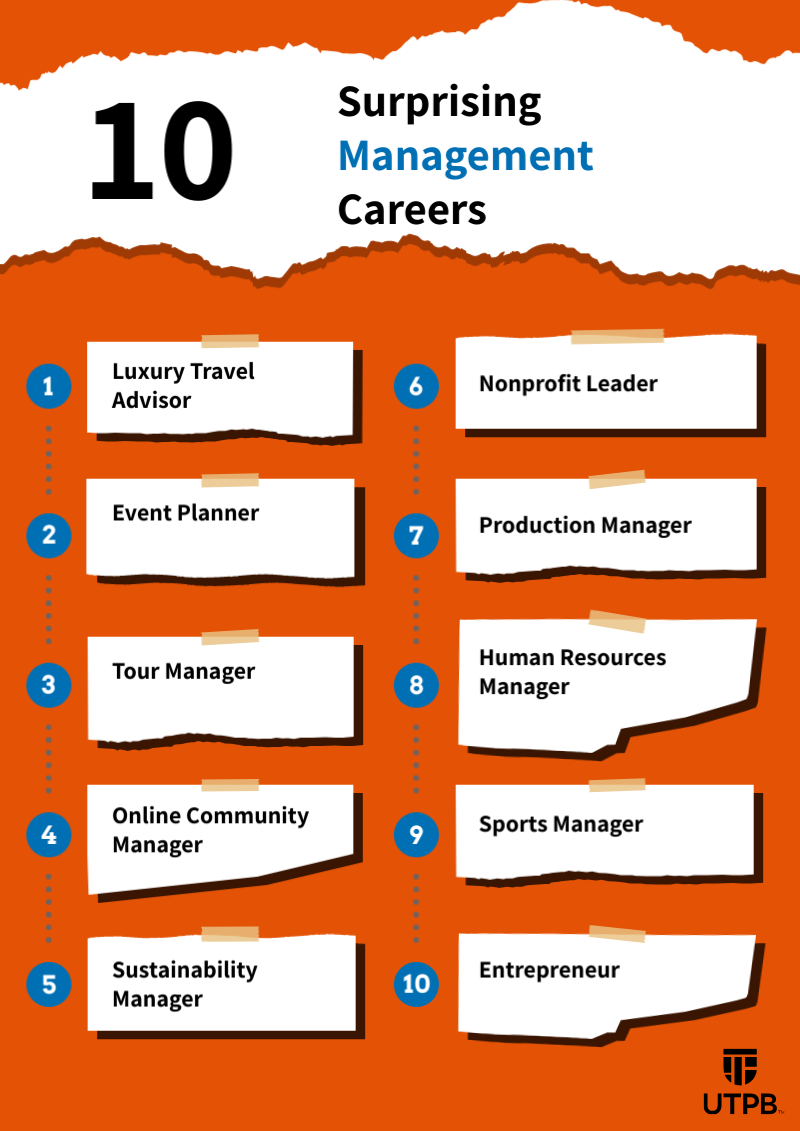
A business management degree doesn’t condemn you to a cubicle; it opens doors. And some of those doors lead to jobs that are anything but ordinary. Let’s look at 10 of them.
1. Luxury Travel Advisor
Ever thought of turning your love of travel into a career? Luxury travel advisors research exotic locations, secure travel, and draft dream itineraries. This role draws on serious sales and organizational skills: two things you’ll hone with a business management degree.
Sure, you’ll need certification, but once that’s done, you’ll spend your days crafting unforgettable vacations for paying clients. (And there’s no better way to get inspiration for your own vacations.)
2. Event Planner
If you’ve ever seen or (gulp) experienced a wedding disaster, you understand the need for event planners. They go beyond weddings, orchestrating everything from red-carpet galas to conferences and conventions. They scout venues, manage vendors, and put out fires, all while making it look easy.
3. Tour Manager
Tour managers have a rough gig. They handle travel, lodging, budgeting, and sometimes double-LP-sized egos. This is not a career path for the faint of heart, but if you’re a music lover, a management degree can give you the skills you need to break into this competitive business. Just be prepared to start small. (Think local band small.)
4. Online Community Manager
Managing an online community is, shall we say, tricky. Online community managers face this challenge head on by engaging with audiences, building brand loyalty, and nurturing an online community. They’re like Reddit moderators, only they actually make bank.
If you earn a BBA in management with a digital marketing certificate (like you can at UT Permian Basin), you’ll be more than ready to take on this role.
5. Sustainability Manager
Want to make the world greener and make a little green? Become a sustainability manager. These managers develop strategies for eco-friendly operations, helping companies comply with environmental, health, and safety regulations. Management coursework typically covers business analytics as well as brand and project management—all vital for this field.
6. Nonprofit Leader
Want to put your business acumen to good use? Management skills are in high demand across the nonprofit world. Check out roles like:
CFO (chief financial officer)
Communications lead
Development officer
Fundraising manager
Program director
Whether meeting financial goals or charting a philanthropic course, these professionals ensure that nonprofits run smoothly and deliver on their mission.
7. Production Manager
Think the film industry is out of reach? Think again. Production managers are the glue holding shoots together, handling budgets, hiring crews, and securing locations. The job can be chaotic, and the hours are long. But nothing compares to seeing your work on the big screen. Plus, it’s a perfect launchpad for aspiring producers.
8. Human Resources Manager
HR managers get a bad rap. And that was before Coldplay’s Chris Martin uncovered an HR director’s cheating scandal. But the truth is, HR managers are often the only thing standing between a functioning company and utter chaos. If you’re tired of the stereotypes, maybe it’s time to rewrite them by pursuing this profession yourself?
9. Sports Manager
If you love sports but don’t see yourself on the field, consider a management role behind the scenes. Teams at all levels need someone to manage schedules, finances, events, and fan engagement. (They are businesses after all.) A management degree gives you the communication, organizational, and problem-solving skills expected in unconventional management roles like these.
10. Entrepreneur
Don’t see your dream job on the list? Create it. Entrepreneurs are visionaries, true, but it takes more than a million-dollar idea to start a business, let alone run one. You need to be able to make smart decisions, lead a team, handle finances, and scale an idea … you see where we’re going with this. You need a business management degree.
Earn Your Business Management Degree Online
If this list is any indication, a management degree can take you anywhere. Don’t see a management role that excites you? It’s out there. All you need is the right degree.
The University of Texas Permian Basin offers an online Bachelor of Business Administration in Management that will prepare you for all manner of leadership roles, whether you want to be a crisis manager or celebrity’s household manager—just a couple of roles that didn’t make the list.
You wouldn’t settle for a career that doesn’t fit your lifestyle. Why should your education be any different? Within our program, courses are entirely online and designed to fit around your schedule. Watch a lecture after work or submit a discussion board comment on your lunch break. You decide.
If you’re considering a Bachelor of Business Administration (BBA), you’re likely aiming for a leadership role in the world of business. But with so many directions to choose from, picking the right focus can feel overwhelming. That’s where a BBA in management comes in. This versatile degree is designed to equip you with the communication,…
What makes a good manager? Whether you lead one or a hundred employees, the expertise and tone you bring to the workplace determines the success and happiness of your team. In recent times, leadership roles have changed: The COVID pandemic and the rise of remote work have created unique situations requiring managers to possess more…
A Bachelor of Business Administration (BBA) degree is your ticket to the world of business. A BBA provides a comprehensive overview of business, touching on foundational concepts like accounting, finance, marketing, and management. Typically, undergraduate students also choose the major that best aligns with their interests. This specialized focus allows students to explore a subject…
Amazon started as a small online bookstore in the 1990s. Over time, it added more merchandise and offered its services to third-party sellers until it grew into the global powerhouse we know today.
Ever skipped the store and found yourself going straight to Amazon? You’re not alone—and it’s a glimpse into how e-commerce is reshaping businesses around the world.
Whether you’re thinking of launching your own online business or pursuing an international business career, understanding e-commerce is essential. Let’s explore how e-commerce works, how it’s changed global business, and what career opportunities await in this growing field.
What Is E-Commerce?
E-commerce is short for electronic commerce. It describes any online transaction involving products, services, and digital goods.
While we often think of e-commerce in terms of large digital stores—like Amazon, Walmart, or Etsy—it spans a range of business models and transactions.
For example:
Business-to-business (B2B) platforms like Alibaba
Consumer-to-consumer (C2C) marketplaces like eBay
Subscription-based services like Netflix
Digital service platforms like Uber and Airbnb
E-commerce covers a broad spectrum. Global businesses today can reach customers around the world with fewer barriers (and clicks) than ever before.
How Has E-Commerce Changed International Business?
E-commerce is a $6.8 trillion global force, expected to reach $8 trillion by 2027. One-third of all purchases are made online. Companies can now sell to customers halfway around the planet without needing a physical storefront.
Here are six ways e-commerce is changing international business:
#1 Small Businesses Get Global Reach
Ever noticed how many third-party sellers there are on platforms like Amazon or eBay? Small enterprises now have access to international markets without the financial and logistical barriers of setting up physical stores abroad. For example, Etsy allows artisans in small towns to sell their handmade goods to customers anywhere in the world.
#2 Lower Operating Costs
Overhead refers to a store’s operating costs: the upkeep needed for physical stores, international shipping centers, and large staffs. Online platforms eliminate many overhead costs, so businesses can focus more on investing in digital infrastructure—like better online storefronts.
For example: Shopify allows businesses to set up online stores with minimal upfront costs. Expensive real estate and large teams? No longer needed.
#3 Faster, Cost-Effective Transactions
Many e-commerce platforms streamline purchasing with integrated payment systems and digital currencies, which makes checking out a breeze.
For instance, Alibaba’s AliExpress allows for instant payments in multiple currencies. This makes it easier for consumers to purchase from international sellers without long waiting periods or high transaction fees.
#4 Better Cross-Border Logistics
Ever wonder how goods get from halfway across the world to your door in no time? Or why some packages get stuck in customs? Cross-border logistics between countries ensure:
Streamlined movement of goods across borders
Fast delivery over greater distances
Compliance with international regulations
Fulfillment centers around the globe—such as Amazon’s—reduce delivery times even for international shipments, which has helped create a more efficient global supply chain.
#5 Real-Time Market Analytics
Real-time data collection gathered from online behavior offers countless insights to businesses. It allows them to track consumer preferences in real-time and adapt their offerings based on region and individual shoppers.
That’s how stores like Amazon can offer personal recommendations based on your browsing and shopping history. Real-time data collection provides insights into what products are trending in different countries, allowing businesses to respond to market demands instantly.
#6 Diverse Payment Options
E-commerce has made it easier for customers to buy from anywhere in the world. Most stores offer multiple payment options, like PayPal, Stripe, or cryptocurrencies. Installment payments are also becoming more common, using payment platforms like Klarna.
Platforms like eBay and Shopify automatically adjust prices to local currencies, which removes barriers for international customers.
The Future of E-Commerce
Digital influencers selling services and products on social media—like on TikTok, Instagram, or Reddit—and artificial intelligence are quickly redefining what it means to sell online.
Here are some trends to watch:
AI Customer Service
Artificial intelligence (AI) is already automating parts of customer service. (Think chatbots you can ask general questions or the AI that redirects your call to a human operator.) AI use is expected to surge by 37% annually between 2023 and 2031, and AI systems will automate customer service, personalize shopping, and predict trends.
AR/VR Platforms
Ever tried on a pair of glasses online before buying them, like on Zenni Optical? Or, if you’ve bought from IKEA, you may have even tried their augmented reality (AR) furniture visualization. VR/AR technology is improving quickly and will allow customers to effortlessly “try before they buy” online.
Ethical Sourcing
Platforms like Patagonia prioritize eco-friendly packaging and ethical sourcing. With the rise of eco-conscious consumers, this will only become more important.
Key Takeaways About E-Commerce and International Business
Here’s what you need to know:
E-commerce lets businesses sell globally with low overhead.
Real-time data helps businesses adapt to trends and personalize offerings.
The future of e-commerce is powered by AI, AR/VR, and ethical sourcing.
E-commerce is revolutionizing the world, and you could be part of it.
Launch Your Career in E-Commerce and Global Business
This program will help you build key knowledge to scale and manage businesses in a digital-first world, including:
Global markets
Business strategy
Entrepreneurship
Production and operations
International trade
Join the Global Stage With A Respected Credential
Students from UTPB’s MBA program have turned their degrees into careers at global powerhouses like Google, Amazon, Charles Schwab, and Chevron.
Already earned your Bachelor of Business Administration (BBA)? Good news—you can easily transfer your credits to UTPB.
With an online MBA in International Business from UTPB, you can start building your own global business and join a community of changemakers—no matter where you’re starting from.
We hear a lot about “green jobs,” but do you know exactly what that phrase means? The U.S. Bureau of Labor Statistics (BLS) defines green jobs in these two ways: Jobs in businesses that produce goods or provide services that benefit the environment or conserve natural resources. Jobs in which workers’ duties involve making their…
When we consider a healthcare professional’s role in the patient experience, we might be inclined to picture a patient-facing individual such as a nurse or a patient care technician. These professionals have an incalculably beneficial effect on patients’ health and well-being. But apart from having the proper skills and disposition required to do their jobs…
Shopping holidays are a time-honored American tradition. Now, however, shoppers can decide whether to line up outside a brick-and-mortar store on Black Friday or fill a virtual shopping cart on Cyber Monday—or do both. We’re here to explore the history behind seven of the biggest shopping days. Looking back, we may glean what makes shoppers…
Imagine sending money across the world in seconds—without waiting for a bank transfer or filling out piles of forms. That’s the promise of cryptocurrency.
Cryptocurrency is digital money that doesn’t require banks. Instead, your funds are secured by encryption and passwords only you control. When Bitcoin launched in 2009, it introduced a new way to move money: one that’s public, secure, and completely decentralized.
Today, over 560 million people own crypto, and that number is growing fast. Whether you’re curious about investing, building a finance career, or simply understanding this digital revolution, here’s what you need to know.
What Is Cryptocurrency?
Cryptocurrency is digital money built on a blockchain, a shared ledger that anyone can view but no one can alter without network agreement. Instead of a bank verifying your transactions, a distributed P2P (peer-to-peer) network of computers, called nodes, confirms and records them.
Think of it as a giant spreadsheet that thousands of people keep in sync at once, with no bank middleman or hefty fees. When you send crypto:
Your wallet digitally signs the message
The network validates it
The transfer is permanently added to the blockchain
How Do You Buy Cryptocurrency?
You may have heard the term “fiat money” if you’ve ever dabbled in crypto. That’s the name for government-issued money, like the U.S. dollar, Euro, or Japanese yen.
Traditional fiat money is received through traditional methods like cash, direct deposits, and bank withdrawals. But cryptocurrency transactions follow a different path.
There are three common ways to build a crypto balance:
Buy: Exchanges like Coinbase or Kraken let you pay with fiat and receive crypto coins in a digital wallet.
Earn: While most employers pay in fiat money, some accept crypto for freelance work. You can also earn cryptocurrency by selling goods or through P2P transfers.
Mine or Stake: Some people earn crypto by helping run the network itself, either through mining (energy-intensive computers solving problems) or staking (locking up coins to help validate transactions).
What Can You Buy With Cryptocurrency?
While crypto isn’t replacing your bank card just yet, you can already use it in surprising ways:
Digital goods: Purchase domains, games, NFTs, software, and subscriptions
Crypto credit cards: Load these cards and spend your funds like cash
Travel: Book flights and hotels on crypto-friendly sites
Retail gift cards: Buy gift cards for stores like Amazon
Payments: Pay freelancers, split rent, or send money across borders
Donations: Use Bitcoin, Ethereum, or stablecoins (crypto with steady value tied to the U.S. dollar) to donate to many nonprofits
Wallets 101: How Do You Store Cryptocurrency?
Your crypto doesn’t sit in a physical wallet. Instead, you store it in a digital vault that holds your keys and lets you send and receive cryptocurrency.
There are two main ways to store your crypto:
Hot wallets: Digital wallets protected by apps or exchanges; good for everyday use
Cold wallets: Crypto stored on an offline hardware device; best for long-term savings and security
These wallets give you control over your digital assets—no banks, no central authority. But if you lose your keys and seed phrase? Your assets are gone forever.
Scams happen. Watch out for fake “airdrops,” shady exchanges, or too-good-to-be-true returns. Do your own research and stay up to date. Like cash under a mattress, once a criminal steals your cryptocurrency, it’s gone.
Keep small amounts online for immediate use and move long-term funds to cold wallets.
Remember: High-risk assets can lose half their value overnight.
Why Cryptocurrency Matters in Your Finance Career
By 2026, the number of cryptocurrency owners could climb close toone billion. The payment market alone is projected to reach nearly $100 billion by 2026.
Finance leaders need to stay ahead of this shift. Markets are evolving fast, and crypto is expected to become more widely accepted as legal tender. Financial experts will need to master new terms like:
Crypto is disrupting how people move money, how markets behave, and how regulation adapts. Understanding the basics of cryptocurrency now will ensure you’re ready to lead in a financial world that looks very different than it did ten years ago.
Think you’re up for the challenge?
Build Your Financial Expertise at UT Permian Basin
Are you a future financial analyst? A fintech entrepreneur? Or maybe a crypto asset manager?
No matter where you are on your financial journey (or where you’re heading), The University of Texas Permian Basin can help you become a confident leader in the financial world of tomorrow.
Our programs combine finance fundamentals with insights to navigate emerging, innovative markets. Choose from the following online degrees:
You’ll keep up with new financial technology, master the market, spark innovation, practice smart risk management, and learn from key players in the world of finance.
What is cryptocurrency? Cryptocurrency is digital money that runs on blockchain: secure and decentralized.
How do I buy cryptocurrency? You can buy it on exchanges, earn it through work or sales, or collect it through mining or staking.
What can I use cryptocurrency for? Plenty: Booking travel, sending donations, paying freelancers, buying gift cards, or making quick cross-border transfers.
How do I keep cryptocurrency safe? Stick with trusted platforms, turn on two-factor authentication, and use a cold wallet for savings. Most importantly: Never share or lose your seed phrase.
What cryptocurrency risks should I know about? Prices can swing fast, and scams are common. It’s critical to practice smart risk management and keep up with regulations.
Financial planning for millennials isn’t about hitting milestones on the same timeline our parents did. If that were the standard, a large percentage of us would already feel behind. Instead, it’s about understanding your money, making informed decisions, and building stability in a changing economy. If that already feels refreshing, good. Because many millennials are managing student loans, rising living costs, career…
Ever opened your bank account and thought: “How do I have another bill due already?” You’re not alone. Financial stress affects 61% of adults ages 18 to 35, whether it’s from: Gen Z has been through a lot—from the COVID pandemic’s economic impact to inflation and job uncertainty. That’s why smart financial planning matters more…
Imagine sending money across the world in seconds—without waiting for a bank transfer or filling out piles of forms. That’s the promise of cryptocurrency. Cryptocurrency is digital money that doesn’t require banks. Instead, your funds are secured by encryption and passwords only you control. When Bitcoin launched in 2009, it introduced a new way to…
Gen Z and younger millennials haven’t just entered the consumer marketplace. They’re reshaping it.
According to a 2024 survey, 20% of U.S. consumers made purchases on a social media platform at least weekly. This means Gen Z and millennials are setting the tone for how future generations will discover and buy from brands.
These digital natives expect more than traditional marketing approaches. They want digital content that engages, informs, and aligns with their values.
And how do they want it delivered?
Through bite-sized videos, authentic stories, and mobile-friendly formats.
In this article, we’ll explore five proven strategies to help brands grab attention and turn authentic connections into lasting conversions.
Why Is Content Marketing Important?
Content marketing builds trust and fosters long-term relationships by delivering valuable, non-salesy content that resonates with audiences. To understand how it works, let’s first look at the difference between digital marketing and content marketing.
Digital marketing covers any effort that uses electronic channels to promote products or services. Think email campaigns, paid search ads, or social media ads.
In contrast, content marketing is a type of digital marketing that focuses on creating valuable, relevant content designed to spark interest in a brand. While traditional content marketing methods often relied on blogs and online articles, today’s content spans several other channels, including:
Videos
Podcasts
Social media interactions
Interactive tools
So, why is content marketing important in today’s digital world?
Content marketing strategies attract audiences organically, build trust, and engage consumers without feeling overly promotional. In a crowded digital landscape, understanding the difference between digital marketing vs content marketing is essential for connecting with your audience and encouraging long-term loyalty.
5 Content Strategies for Digital Marketing Success
Creating great content is just the first step. To truly engage your audience, you need strategies that capture attention, encourage interaction, and keep people coming back.
Here are five approaches to elevate your digital marketing and make your content work harder for your brand.
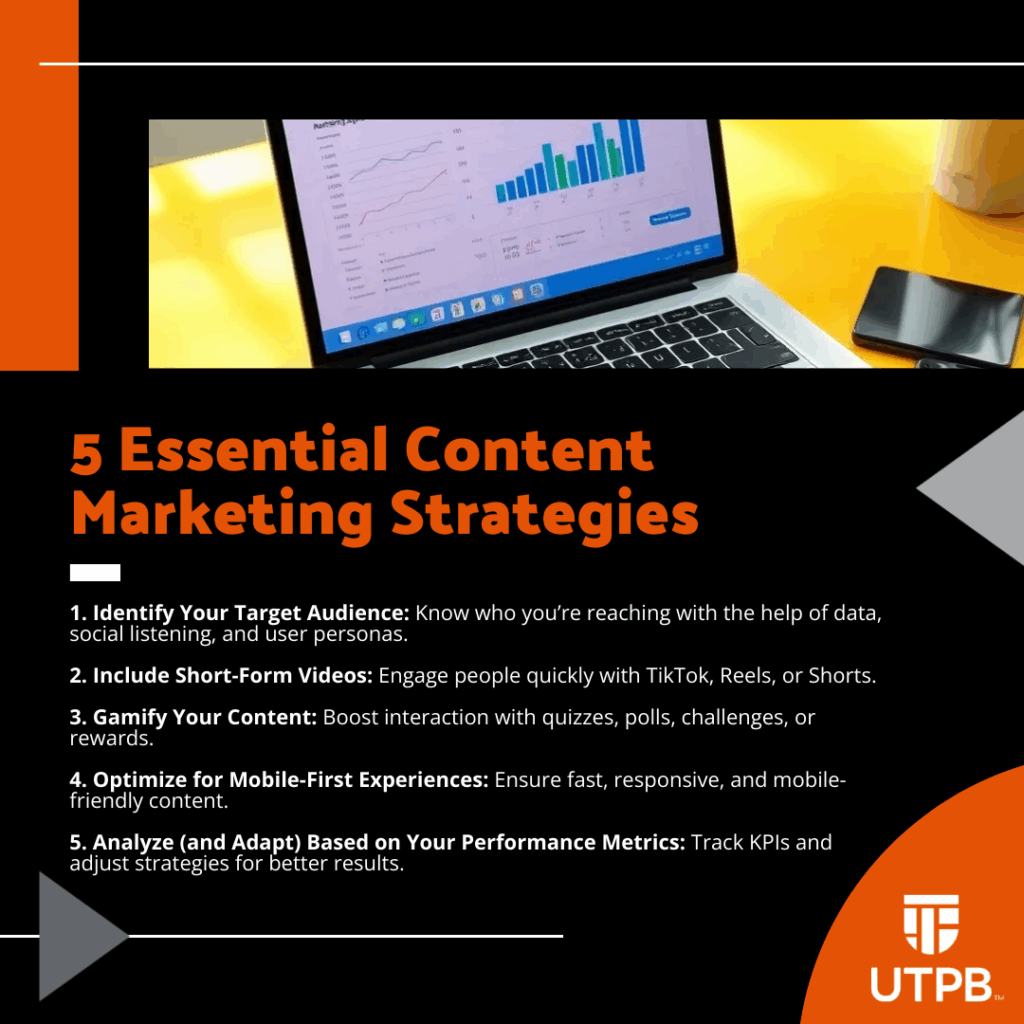
#1 Identify Your Target Audience
You might create catchy copy for your brand, but if you’re writing it for the wrong audience (or a general audience), even the best content won’t reach the right people. One of the first steps in crafting a content strategy that engages your audience is identifying exactly who you want to reach.
Here’s how to identify your target audience:
Analyticstools Analyze website traffic, engagement metrics, and conversion data through platforms like Google Analytics and Google Search Console to understand who interacts with your brand.
Social listening Monitor conversations on social media to discover what your audience talks about, shares, and values.
Customer personas Create detailed profiles of your ideal customers—including demographics, interests, pain points, and online behavior—to guide your messaging.
Meet your audience where they are with short-form videos on platforms like TikTok, Instagram Reels, and YouTube Shorts. These videos showcase your products in low-stakes, value-driven ways, such as:
Sharing behind-the-scenes moments Give your audience a peek into your brand’s personality or production process.
Highlighting customer testimonials Showcase positive experiences to build trust and authenticity.
Giving tips related to your products or services Offer helpful content that naturally connects back to your brand. For instance, a food brand might share a quick 15-second recipe that drives traffic to a longer blog post or YouTube tutorial, gently nudging the audience closer to a buying decision.
#3 Gamify Your Content
Gamification means adding game-like elements to your marketing content to create interactive experiences. This approach boosts engagement and encourages users to spend more time on your site. They may even return for another visit or share the experience with friends.
Here’s how you can gamify your content to make your audience’s experience more engaging:
Quizzes: Let users test their knowledge or discover personalized recommendations.
Polls: Encourage participation and collect valuable feedback.
Challenges: Motivate users to complete tasks for fun or recognition.
Rewardsystems: Offer points, badges, or incentives to encourage ongoing interaction.
For example, a skincare brand could run a 7-day “Glow Challenge” where participants sign up via the brand’s website. Each day, they receive an email with a tip, mini-task, or challenge related to skincare routines.
#4 Design for Mobile Users First
In 2023, Semrush noted that users were significantly more active on their mobile devices, visiting sites 313% more often on mobile than on desktop. So, what does that mean for content marketers?
We need to create content that caters to the user experience people want, and for most people, that’s mobile viewing.
Here’s how to optimize your content marketing strategies toward mobile-friendly experiences:
Ensure fast load times: Minimize delays to keep users engaged.
Create a responsive design: Make sure content displays well on screens of all sizes.
Offer mobile-friendly formats: Use vertical videos, short paragraphs, bullet points, and easy-to-read layouts for quick consumption.
#5 Track Performance Metrics and Make Changes
One of the most effective ways to determine whether your content marketing strategies are working is to analyze performance data from tools like Google Analytics, Search Console, or any other platform you use to collect insights.
Measuring results isn’t just about looking back; it’s about staying flexible. In today’s fast-moving digital world, what’s popular one month might shift the next, which is why it’s important to track key performance indicators (KPIs) like:
Engagement rates: Are users interacting with your content?
Conversion rates: Are your efforts leading to desired actions, like sign-ups or purchases?
Bounce rates: Are visitors leaving quickly without engaging?
Once your data shows what worked and what didn’t, you can use A/B testing to refine your strategies. For instance, if your blog content underperformed but your webinar content drove most of your leads last quarter, you can shift resources to produce more webinar content while experimenting with new formats or topics for your blog.
Lead the Way in Marketing with a Degree From UT Permian Basin
As digital marketing evolves, having a strong foundation in content marketing strategies can set you apart. With a Bachelor of Business Administration in Marketing from UT Permian Basin, you’ll gain practical skills and insights that help you:
Understand your audiences
Create engaging content
Analyze performance metrics effectively
Plus, with flexible electives, you can tailor your degree to match your career goals, whether that’s diving deeper into digital branding, e-commerce, analytics, or social media. This flexibility allows you to carve a path designed specifically for your ambitions, giving you the knowledge and confidence to lead no matter where your career takes you.
Interested in learning more? Explore UTPB’s online BBA in marketing today.
Gen Z and younger millennials haven’t just entered the consumer marketplace. They’re reshaping it. According to a 2024 survey, 20% of U.S. consumers made purchases on a social media platform at least weekly. This means Gen Z and millennials are setting the tone for how future generations will discover and buy from brands. These digital…
Honoring and celebrating our mothers has been a global tradition throughout history. Although Mother’s Day was officially declared a U.S. holiday in 1914, its origins date back centuries. People have honored their mothers across cultures and time periods through festivals, religious observances, and communal gatherings. Understanding the historical significance of holidays like Mother’s Day provides…
Many of us feel the invigorating sense of fresh starts and second chances that New Year’s brings. On January 1st, we’re often eager to embrace a healthier, polished version of ourselves—and we’re not alone. According to a 2024 Forbes Health poll, 48% of participants said improving their fitness was their top priority, 36% cited improving…