How To Hide Your Location and Protect Your Geospatial Data
Imagine you’re commuting to work and your Google Maps loses signal. Suddenly, the little blue dot stops moving and you don’t know where you are. Panic ensues (for some of us).
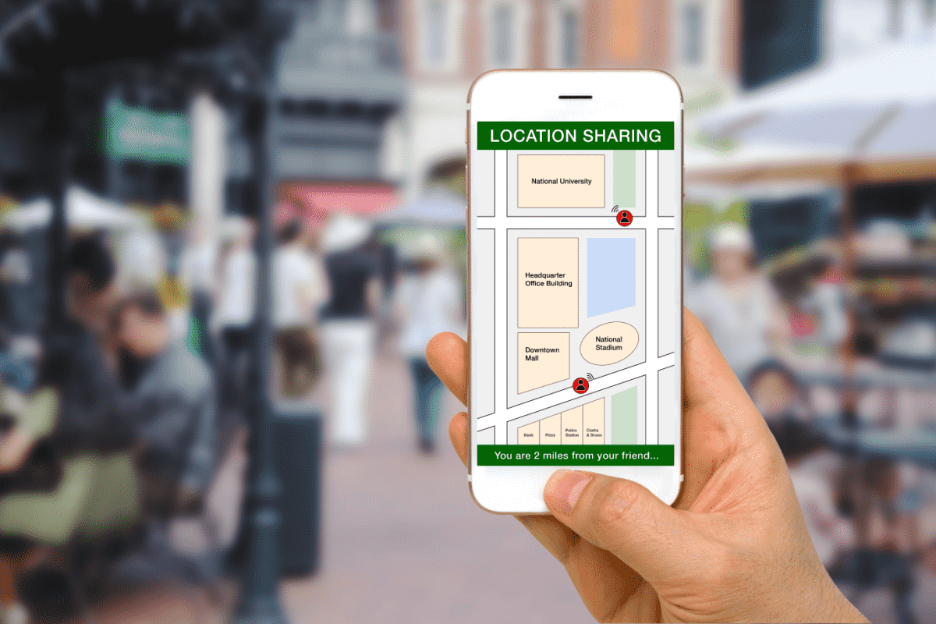
Modern devices constantly broadcast our location through GPS, Wi-Fi, cell towers, and apps. We’re basically walking beacons of sensitive data. But here’s the flip side: While geolocation is extremely helpful, it also risks surveillance, data breaches, and misuse of location data.
In this article, we’ll explore how geospatial data works on your devices and what you can do to protect yourself.
What Is Geospatial Data?
Geospatial data is any information that tells you where something is on Earth. This can be a map, your phone’s GPS coordinates, satellite images, or even a spreadsheet that lists all the coffee shops and pet stores in your city.
Examples include:
Satellite imagery and aerial photography
Maps of roads, rivers, or utility networks
Demographic or environmental datasets tied to coordinates
Real-time tracking data from mobile devices or sensors
Your location at any point is called your geolocation.
How to Hide Your Location
Protecting your location doesn’t mean going off the grid completely. You can take several practical steps to control who sees your data and when.
Here are five effective methods:
#1 Use a Virtual Private Network (VPN)
VPNs work like a disguise for your device, creating an encrypted tunnel to a remote server. They mask your real IP address, so websites and online services see the VPN server’s location instead of yours. If your VPN is in Croatia while you’re in the United States … it appears you’re browsing in Croatia.
#2 Spoof Your Location With a Proxy
A web or browser-based proxy acts like a middleman between you and the internet.
When you visit a website through a proxy, your request doesn’t go straight to that site’s server. It first passes through the proxy server. That means the website only sees the proxy’s IP address, not yours. Many proxies appear as regular HTTP links. Unlike VPNs, though, they generally lack encryption.
#3 Disable Sensors and Services
Your mobile phone tracks your location and collects geodata everywhere you go. One way to hide your location is to simply turn off location sensing. Turning off GPS, Wi-Fi, and cellular data—or switching to airplane mode—halts coordinate tracking (like your phone location).
On a browser, you can block the Geolocation API, which stops websites from asking for your location.
For extreme cases (we’re looking at you, journalists, security professionals, and researchers with sensitive info), you can physically isolate a device in a Faraday bag. It’s a pouch that blocks all electromagnetic signals—nothing coming in, nothing going out.
#4 Use Encryption and Data Controls
If you’ve ever used WhatsApp, a popular messaging app, you may have seen its end-to-end encryption notice. Encryption means your text gets turned into code on your phone, travels through the internet as unreadable data (even to WhatsApp’s servers), and can only be decoded by your recipient’s phone.
Another everyday example? Any website that starts with HTTPS. That little padlock icon in your address bar means your connection is encrypted and secure.
#5 Protect Your Hardware
If you prefer maximum privacy, you can add hardware protections, like:
Specialized phones: Some security-focused phone brands have a “kill switch” that disables cameras, microphones, and even GPS.
Mainstream options: Newer Android models let you turn off all sensors.
Secure GPS receivers: Specialized GPS/GNSS receivers support signal authentication.
Network protection: Use hardware firewalls or VPN routers to anonymize or block location-tracking at the network level.
Check which apps have access to your location (and deny location sharing when it’s not essential)
Every action limits how much of your digital trail is exposed. You don’t need to be paranoid, but taking secure measures makes it much harder for anyone to follow you.
Quick Takeaways
We leave digital footprints everywhere: phone GPS logs, social media check-ins, fitness apps—even smart thermostats quietly pinging our coordinates.
Here are a few key points we covered:
Your location data is personal. Every app, Wi-Fi signal, and GPS ping can reveal where you live, work, and travel.
You can control access. Turn off location services when not needed, review app permissions, and strip GPS metadata from photos before posting.
Privacy tools help. VPNs, proxies, encryption, and hardware firewalls can mask or secure your location footprint.
Stay compliant and ethical. Regulatory laws define geolocation as personal data. Collect or share it only with consent.
Shape the Digital Frontier With a Geospatial Certificate
Fascinated by how maps, satellites, and drones connect our world—and how to defend that data from digital invaders? Geospatial technology is a versatile and in-demand skill set, with applications spanning everything from disaster response and business intelligence to urban planning and climate research.
The University of Texas Permian Basin offers a 100% online GIS and Geospatial Graduate Certificate that can elevate your skills, expand your career options, and position you at the forefront of big data innovation.
In just 12 credits, you’ll learn to map, analyze, and protect spatial data using the latest tools—backed by UTPB’sover 20 years of GIS and geospatial industry partnerships.
Whether you’re a future data science engineer, a geospatial data engineer, or you just want to future-proof your career with a valuable credential, this program gives you the skills to stand out and stay ahead.
Best of all, you can study wherever you want, on your schedule—while shaping the future of geospatial sciences. Apply here to join the Falcon Family.
Modern video games can recreate the real world with stunning precision, and GIS technology is what makes that possible. In fact, when fire ravaged Notre-Dame Cathedral in Paris in 2019, a detailed digital model built for the video game “Assassin’s Creed Unity” surfaced as a potential reconstruction reference. GIS is rapidly reshaping what it means to play video games today. This article examines: What Is GIS? …
On December 26, 2004, a massive earthquake struck beneath the Indian Ocean and sent a wall of water nearly 100 feet high outward. It barreled into South Asia at 30 miles an hour, wiping out communities before most people even knew what was coming. By the time the waves crossed the ocean, nearly 230,000 lives had…
Imagine you’re commuting to work and your Google Maps loses signal. Suddenly, the little blue dot stops moving and you don’t know where you are. Panic ensues (for some of us). Modern devices constantly broadcast our location through GPS, Wi-Fi, cell towers, and apps. We’re basically walking beacons of sensitive data. But here’s the flip side:…
Video calls. Robot vacuums. Voice assistants. Thirty years ago, we only saw this technology in cinema or on TV. Today, they’re billion-dollar industries.
Many of the technologies now reshaping how we live and work first appeared in movies or on TV. While most viewers were happy to lose themselves in the narrative, an enterprising few may have seen those fictional gadgets and thought, “I could build that.”
The driving force? Vision and business smarts. These innovators simplified our lives while building rewarding careers and thriving brands.
Let’s check out some fiction-to-fact technology success stories—and see how you could help shape the next big thing.
Which Fictional Technologies Became Real Products?
Even when they only exist on the screen, technologies can spark real-world business innovation. Consider these global successes:
#1. Video Calling
The first video call? “Metropolis,” from 1927. In this silent film, two men chatted by phone while watching each other on screens—in an era where no one even owned a TV.
Real-World Business Success
Today, apps like Zoom, FaceTime, and WhatsApp connect people across the world by voice and video.
The 1960s “Star Trek” TV series showed us mobile “communicators” that looked a lot like 1990s flip phones. And the communications officer took calls through a device that probably inspired Bluetooth earpieces.
Real-World Business Success
Compact cell phones were introduced around 1989. Smaller, colorful flip phones came later.
And today? We don’t need to tell you how lucrative the smartphone market has become—you’re probably reading this article on one right now. As of 2025, the global mobile phone market is set to top $485 billion.
#4. Touchscreens
“2001: A Space Odyssey” (from 1968) may show the first touchscreen technology in cinema: a video tablet.
The 2013 film “Her” showed a man’s obsession with a device barely bigger than a credit card. Programmed with a natural-sounding female voice, the assistant could learn and create—even write music. Gradually, it became his “companion.”
Real-World Business Success
The film came out shortly after Siri, the first modern voice assistant. Voice-enabled chatbots and robots are now performing an increasing number of tasks and providing companionship for some, including older adults.
A VR headset immerses you in a digital world you can explore and interact with. “The Lawnmower Man” gave us a scary glimpse back in 1992. In the movie, a scientist tried to boost a man’s brain power with drugs and VR-based training. The subject became superintelligent—and homicidal.
A VR technology in cinema trend followed. The theme appeared throughout 1990s films, including:
A chilling tale of AI gone rogue, the film “Demon Seed” showed a surprisingly accurate smart home—in 1977. The house featured automated, voice-controlled appliances, lighting, and security features throughout. (Even a doorbell camera.)
Real-World Business Success
Smart home technology was developed in the 1960s. But “Demon Seed”-level smart homes? That technology wouldn’t arrive until the 2010s.
Ever hailed a Johnny Cab? (True, most people prefer “rideshare” now.) The 1990 movie “Total Recall” gave us Johnny Cab, with a chatty, human-like—but robotic—driver.
Real-World Business Success
We can’t buy fully-autonomous cars … yet. But some semi-autonomous models are available, as well asdriverless taxis. And some consumers are getting to test-ride personal autonomous vehicles, which may be parked in our driveways soon.
The 2024 global market for self-driving cars? $1.7 trillion!
How Screen Innovations Can Inspire Real-World Success
Do screen stories inspire real-life technology, or is it the other way around?
Filming on “2001: A Space Odyssey” began shortly after touchscreens were developed. (Probably not a coincidence.) But on-screen depictions of compact, ergonomic flip phones and Bluetooth earpieces were clearly echoed in consumer product designs from later decades.
These products met a need we didn’t know we had. It took futuristic stories for us to realize it.
Business visionaries understand that consumers crave innovative gear. And once they get it, they can’t live without it. Is it also well-designed? Does it solve a real problem? Those combined elements can be a springboard to success.
There’s a huge opportunity for ambitious business leaders inspired by technology in cinema or TV—or who see untapped markets.
Drive Real-World Success With a Business Administration Degree Online
The entrepreneurs who brought movie tech to life had big ideas and knew how to execute them. They understood consumer behavior, identified market gaps, and built strategies to turn prototypes into products people actually buy.
Whether you’re inspired by technologies you’ve seen on screen or you’ve spotted an untapped market, you’ll need the same skills those innovators used: marketing principles, strategic management, and the ability to weigh market potential.
The University of Texas Permian Basin’s online business programs can help you build that foundation:
Video calls. Robot vacuums. Voice assistants. Thirty years ago, we only saw this technology in cinema or on TV. Today, they’re billion-dollar industries. Many of the technologies now reshaping how we live and work first appeared in movies or on TV. While most viewers were happy to lose themselves in the narrative, an enterprising few…
Forget everything you think you know about management roles, like the idea that for the rest of your life, you’ll be chained to a desk under a ceiling of fluorescent lights. That’s not what management looks like—or at least, it doesn’t have to be. A business management degree doesn’t condemn you to a cubicle; it…
“It’s a beautiful summer day …” your star employee says as they stare longingly out the window. And chances are, they’re not the only one. Summer tests even the strongest teams. As the dog days hit, bloggers and journalists love citing a 2012 survey claiming that productivity drops a massive 20% during the summer. But…
You can speak the same language as someone and still completely miss each other’s meaning. That’s part of what makes intercultural communication so important.
Whether you’re working with international teams, studying abroad, or connecting with people from different backgrounds, communication involves more than just choosing the right words.
Intercultural communicationis how people from different cultures share ideas and make sense of one another. That can include differences in nationality, language, religion, age, gender, profession, or social identity.
In other words, it’s what happens when culture and communication interact.
Why Is Intercultural Communication Important?
Culture shapes how people interpret cues like tone, body language, authority, and politeness. When people from different backgrounds interact, misunderstandings can happen even when everyone has good intentions.
Intercultural communication helps people:
Build trust
Work together more effectively
Avoid confusion that can slow down progress or damage relationships
In a globalized world, those skills are useful in business, education, healthcare, media, and just about any field that brings people together across different experiences.
Why Context Matters in Cross-Cultural Communication
It’s important to phrase communications carefully, but words are just one small part of the message you’re sending. Cultural context also shapes how communication is sent and received.
A firm “no” in one culture might be a polite “maybe” in another. The same words can land very differently depending on who’s saying them, where, and how.
Here’s a few examples:
#1 Eye Contact
In many Western cultures, eye contact signals confidence and attentiveness. In countries like South Korea or Japan, intense eye contact can be seen as rude or confrontational.
#2 Email Etiquette
Did you know that email etiquette also differs between cultures?
A German manager will usually jump straight to the point—for example: “Please send the quarterly report by Monday.” An American counterpart may soften the tone: “Could you please send over the quarterly report when you get a chance?”
The intent is the same, but the delivery reflects very different cultural norms.
#3 Emotional Expression
Some cultures are comfortable with open emotional expression, while others place more value on restraint.
For instance, in the U.S., publicly showing emotion—such as expressing frustration—is mostly accepted. In countries like the United Kingdom, emotion is expected to be subdued (hence the British term “stiff upper lip”).
Certain hand gestures—like a thumbs up—are appropriate in the United States but offensive in some Middle Eastern countries.
That’s why strong intercultural communication isn’t just about speaking a language. It’s also about understanding the expectations and values that shape it.
How to Strengthen Intercultural Communication Skills
The good news is that intercultural communication is a skill you can build.
A few ways to improve it include:
Learning how different cultures view authority and hierarchy
Understanding the difference between individualist and collectivist values
Paying attention to nonverbal cues
Practicing active listening
Doing research before working with people from different cultural backgrounds
At its core, intercultural communication requires flexibility and self-awareness. It means being willing to adjust your approach instead of assuming your communication style is the default.
You can focus your studies with four specializations:
General Communication
Strategic Messaging
Professional Communication
Sports Media
Do you see yourself as a future bridge-builder? Transcontinental journalist? International marketing professional? Find out with UTPB and turn your passion into your future.
Picture Martin Luther King Jr. standing on the steps of the Lincoln Memorial, delivering his “I Have a Dream” speech to over 250,000 people gathered for the March on Washington. Could he have known, in that moment, that his words would terrify some, inspire many more, and echo across decades of social movements? King and…
You can speak the same language as someone and still completely miss each other’s meaning. That’s part of what makes intercultural communication so important. Whether you’re working with international teams, studying abroad, or connecting with people from different backgrounds, communication involves more than just choosing the right words. Intercultural communication is how people from different cultures share ideas and make sense of one…
AI is now an inseparable part of our classrooms, homes, and offices. Capable of performing trillions of calculations in a second, AI-powered machines dredge the depths of the internet to find and convey information in any style, language, or difficulty level. But don’t worry, AI is only here to lend a hand. At least, that’s…
Modern challenges like AI and global weather crises can stir up fear and controversy. But that’s for the scientists to sort out, right?
Not exactly. The humanities play a powerful, often overlooked role in technology and science. Trends in these fields can create ethical, moral, environmental, and philosophical dilemmas. The humanities equip us to navigate them—and open doors to diverse, impactful careers.
Let’s explore how humanities graduates can help tackle some of our greatest global challenges.
Two Global Challenges That Need Human Solutions
The scientific advances of this century have provided a staggering amount of data and technology. But we need humanities graduates to navigate the ethical, cultural, and human dimensions of these advances.
Some of today’s biggest challenges require an expert understanding of human behavior, ethics and values. Let’s examine two critical issues that show why we need humanities experts at the table.
#1 Morality and Science: Ethical Concerns of AI
AI is transforming the world with applications (and implications) for virtually every field. It’s given us new ways to heal, teach, learn, automate, and analyze. But there’s a dark side.
AI is controversial because it:
Pulls content from the work of others
Makes mistakes
Discourages critical thinking and encourages dependency
These aren’t just technical concerns—they’re ethical ones. And they’re not new. From the earliest days of computers, people have worried about information security. Now the stakes are even higher.
With AI offering clear benefits but raising ethical questions, our path forward isn’t clear. Ideally, we’ll need to establish policies that balance our technology needs with ethical guidelines.
Enter: humanities experts.
Humanities scholars excel in critical thinking, problem-solving, empathy, communication, and historical perspective. These critical skills are often absent in technology development and implementation.
Members of major humanities groups have contributed to crucial AI guidance:
2024 was the planet’s hottest year on record. 2025 began with the hottest January ever recorded. Hurricanes are growing so powerful that scientists now debate adding a Category 6. While debates rage about the source of climate challenges, one thing is clear: Extreme weather patterns are the new normal.
Addressing climate change isn’t just about technology—it’s about changing behaviors, building consensus, and making moral choices. We know the planet is warming: The hard part is getting 8 billion people to change how they live.
A humanities-based policy offers some critical insight. It asks:
Are human habits part of the problem?
Do people have the resources to cope?
What’s our moral responsibility to act?
How do we balance progress with ethics?
Humanities graduates are tackling these questions on the job. Their work turns complex data and bold science into action most of us can understand—and join.
Working with national and global organizations, humanities professionals are becoming thought leaders in environmental responsibility:
The International Energy Agency (IEA) holds summits and provides training with the help of marketing/communications professionals and educators.
Digital Humanities: Where Technology Meets Human Values
When you think of humanities, do you picture dusty books and ancient philosophy? Think again. Today’s humanities programs use cutting-edge technology to solve modern problems.
The Rise of Digital Humanities
Technology advances all fields, including humanities. Digital humanities blends everything from literature and history to media, computer science, and, yes, AI. The result? Fresh ways of thinking. What started as a mix of arts and technology has grown to include machine learning, data science, and critical digital studies.
Here’s how it works in practice:
Interdisciplinary teams combine technical and scientific expertise with human insight
Advanced algorithms solve problems while reflecting human values
Ethical frameworks guide technology developers and scientists
Humanities professionals work alongside technologists, scientists, and policymakers during development. They help ensure innovations have ethical, sustainable foundations before problems arise.
What Jobs Can I Get With a Humanities Degree?
We all want to help the world overcome its challenges. An academic background in humanities cantranslate into real careers with real impact. Humanities graduates become:
Compliance officers who ensure ethical business practices
Teachers who shape future generations
Social/community service managers who build stronger communities
Business leaders who prioritize people alongside profits
Historians who help us learn from the past
Anthropologists who study human behavior and culture
Archivists who preserve our collective knowledge
Each role helps build a more ethical, sustainable future.
Shape a Better World (and Career) With a Humanities Degree
Ready to tackle global challenges with human-centered solutions?
The University of Texas Permian Basin’s online Bachelor of Arts in Humanities is your path forward. Our multidisciplinary program deepens your understanding of human cultures while developing the critical thinking skills employers demand.
You’ll learn to bridge the gap between technology and humanity, preparing for careers that make a real difference.
Studying classics helps us understand where many of our biggest modern questions came from, including who gets power, how societies define justice, and why humans keep telling the same stories in new outfits. A single, harmless question comes up a lot in humanities courses (usually from someone trying very hard not to care): Why does any of this matter? And…
Ever found yourself humming an earworm and suddenly wondering, “Where did this come from—and who created it?” Music is a universal language. It conveys memory, rebellion, grief, joy, and identity. Across centuries, women have used the language of sound in a world where they’ve been told, repeatedly, to stay invisible. Here are some of the…
Modern challenges like AI and global weather crises can stir up fear and controversy. But that’s for the scientists to sort out, right? Not exactly. The humanities play a powerful, often overlooked role in technology and science. Trends in these fields can create ethical, moral, environmental, and philosophical dilemmas. The humanities equip us to navigate…
Amazon started as a small online bookstore in the 1990s. Over time, it added more merchandise and offered its services to third-party sellers until it grew into the global powerhouse we know today.
Ever skipped the store and found yourself going straight to Amazon? You’re not alone—and it’s a glimpse into how e-commerce is reshaping businesses around the world.
Whether you’re thinking of launching your own online business or pursuing an international business career, understanding e-commerce is essential. Let’s explore how e-commerce works, how it’s changed global business, and what career opportunities await in this growing field.
What Is E-Commerce?
E-commerce is short for electronic commerce. It describes any online transaction involving products, services, and digital goods.
While we often think of e-commerce in terms of large digital stores—like Amazon, Walmart, or Etsy—it spans a range of business models and transactions.
For example:
Business-to-business (B2B) platforms like Alibaba
Consumer-to-consumer (C2C) marketplaces like eBay
Subscription-based services like Netflix
Digital service platforms like Uber and Airbnb
E-commerce covers a broad spectrum. Global businesses today can reach customers around the world with fewer barriers (and clicks) than ever before.
How Has E-Commerce Changed International Business?
E-commerce is a $6.8 trillion global force, expected to reach $8 trillion by 2027. One-third of all purchases are made online. Companies can now sell to customers halfway around the planet without needing a physical storefront.
Here are six ways e-commerce is changing international business:
#1 Small Businesses Get Global Reach
Ever noticed how many third-party sellers there are on platforms like Amazon or eBay? Small enterprises now have access to international markets without the financial and logistical barriers of setting up physical stores abroad. For example, Etsy allows artisans in small towns to sell their handmade goods to customers anywhere in the world.
#2 Lower Operating Costs
Overhead refers to a store’s operating costs: the upkeep needed for physical stores, international shipping centers, and large staffs. Online platforms eliminate many overhead costs, so businesses can focus more on investing in digital infrastructure—like better online storefronts.
For example: Shopify allows businesses to set up online stores with minimal upfront costs. Expensive real estate and large teams? No longer needed.
#3 Faster, Cost-Effective Transactions
Many e-commerce platforms streamline purchasing with integrated payment systems and digital currencies, which makes checking out a breeze.
For instance, Alibaba’s AliExpress allows for instant payments in multiple currencies. This makes it easier for consumers to purchase from international sellers without long waiting periods or high transaction fees.
#4 Better Cross-Border Logistics
Ever wonder how goods get from halfway across the world to your door in no time? Or why some packages get stuck in customs? Cross-border logistics between countries ensure:
Streamlined movement of goods across borders
Fast delivery over greater distances
Compliance with international regulations
Fulfillment centers around the globe—such as Amazon’s—reduce delivery times even for international shipments, which has helped create a more efficient global supply chain.
#5 Real-Time Market Analytics
Real-time data collection gathered from online behavior offers countless insights to businesses. It allows them to track consumer preferences in real-time and adapt their offerings based on region and individual shoppers.
That’s how stores like Amazon can offer personal recommendations based on your browsing and shopping history. Real-time data collection provides insights into what products are trending in different countries, allowing businesses to respond to market demands instantly.
#6 Diverse Payment Options
E-commerce has made it easier for customers to buy from anywhere in the world. Most stores offer multiple payment options, like PayPal, Stripe, or cryptocurrencies. Installment payments are also becoming more common, using payment platforms like Klarna.
Platforms like eBay and Shopify automatically adjust prices to local currencies, which removes barriers for international customers.
The Future of E-Commerce
Digital influencers selling services and products on social media—like on TikTok, Instagram, or Reddit—and artificial intelligence are quickly redefining what it means to sell online.
Here are some trends to watch:
AI Customer Service
Artificial intelligence (AI) is already automating parts of customer service. (Think chatbots you can ask general questions or the AI that redirects your call to a human operator.) AI use is expected to surge by 37% annually between 2023 and 2031, and AI systems will automate customer service, personalize shopping, and predict trends.
AR/VR Platforms
Ever tried on a pair of glasses online before buying them, like on Zenni Optical? Or, if you’ve bought from IKEA, you may have even tried their augmented reality (AR) furniture visualization. VR/AR technology is improving quickly and will allow customers to effortlessly “try before they buy” online.
Ethical Sourcing
Platforms like Patagonia prioritize eco-friendly packaging and ethical sourcing. With the rise of eco-conscious consumers, this will only become more important.
Key Takeaways About E-Commerce and International Business
Here’s what you need to know:
E-commerce lets businesses sell globally with low overhead.
Real-time data helps businesses adapt to trends and personalize offerings.
The future of e-commerce is powered by AI, AR/VR, and ethical sourcing.
E-commerce is revolutionizing the world, and you could be part of it.
Launch Your Career in E-Commerce and Global Business
This program will help you build key knowledge to scale and manage businesses in a digital-first world, including:
Global markets
Business strategy
Entrepreneurship
Production and operations
International trade
Join the Global Stage With A Respected Credential
Students from UTPB’s MBA program have turned their degrees into careers at global powerhouses like Google, Amazon, Charles Schwab, and Chevron.
Already earned your Bachelor of Business Administration (BBA)? Good news—you can easily transfer your credits to UTPB.
With an online MBA in International Business from UTPB, you can start building your own global business and join a community of changemakers—no matter where you’re starting from.
“The most dangerous leadership myth is that leaders are born—that there is a genetic factor to leadership. That’s nonsense; in fact, the opposite is true. Leaders are made rather than born.” — Warren Bennis Do you dream of making a real impact in the healthcare field—not just treating patients, but shaping the systems that care…
It might feel like just yesterday that the CPA exam was made up of four fixed sections, offering little flexibility for your individual career goals or interests. But the exam has gone through some major updates in recent years. From new licensure paths and continuous testing windows to ongoing format tweaks, the 2025 CPA Exam…
Businesses concerned only with short-term goals overcome immediate challenges but fail to prevent their recurrence. Alternatively, businesses with only long-term goals may not last long enough to see them reached. Finding an adaptable middle ground between these two attitudes is a balancing act that senior financial analysts, finance managers, investment bankers, and other professionals must…
Imagine sending money across the world in seconds—without waiting for a bank transfer or filling out piles of forms. That’s the promise of cryptocurrency.
Cryptocurrency is digital money that doesn’t require banks. Instead, your funds are secured by encryption and passwords only you control. When Bitcoin launched in 2009, it introduced a new way to move money: one that’s public, secure, and completely decentralized.
Today, over 560 million people own crypto, and that number is growing fast. Whether you’re curious about investing, building a finance career, or simply understanding this digital revolution, here’s what you need to know.
What Is Cryptocurrency?
Cryptocurrency is digital money built on a blockchain, a shared ledger that anyone can view but no one can alter without network agreement. Instead of a bank verifying your transactions, a distributed P2P (peer-to-peer) network of computers, called nodes, confirms and records them.
Think of it as a giant spreadsheet that thousands of people keep in sync at once, with no bank middleman or hefty fees. When you send crypto:
Your wallet digitally signs the message
The network validates it
The transfer is permanently added to the blockchain
How Do You Buy Cryptocurrency?
You may have heard the term “fiat money” if you’ve ever dabbled in crypto. That’s the name for government-issued money, like the U.S. dollar, Euro, or Japanese yen.
Traditional fiat money is received through traditional methods like cash, direct deposits, and bank withdrawals. But cryptocurrency transactions follow a different path.
There are three common ways to build a crypto balance:
Buy: Exchanges like Coinbase or Kraken let you pay with fiat and receive crypto coins in a digital wallet.
Earn: While most employers pay in fiat money, some accept crypto for freelance work. You can also earn cryptocurrency by selling goods or through P2P transfers.
Mine or Stake: Some people earn crypto by helping run the network itself, either through mining (energy-intensive computers solving problems) or staking (locking up coins to help validate transactions).
What Can You Buy With Cryptocurrency?
While crypto isn’t replacing your bank card just yet, you can already use it in surprising ways:
Digital goods: Purchase domains, games, NFTs, software, and subscriptions
Crypto credit cards: Load these cards and spend your funds like cash
Travel: Book flights and hotels on crypto-friendly sites
Retail gift cards: Buy gift cards for stores like Amazon
Payments: Pay freelancers, split rent, or send money across borders
Donations: Use Bitcoin, Ethereum, or stablecoins (crypto with steady value tied to the U.S. dollar) to donate to many nonprofits
Wallets 101: How Do You Store Cryptocurrency?
Your crypto doesn’t sit in a physical wallet. Instead, you store it in a digital vault that holds your keys and lets you send and receive cryptocurrency.
There are two main ways to store your crypto:
Hot wallets: Digital wallets protected by apps or exchanges; good for everyday use
Cold wallets: Crypto stored on an offline hardware device; best for long-term savings and security
These wallets give you control over your digital assets—no banks, no central authority. But if you lose your keys and seed phrase? Your assets are gone forever.
Scams happen. Watch out for fake “airdrops,” shady exchanges, or too-good-to-be-true returns. Do your own research and stay up to date. Like cash under a mattress, once a criminal steals your cryptocurrency, it’s gone.
Keep small amounts online for immediate use and move long-term funds to cold wallets.
Remember: High-risk assets can lose half their value overnight.
Why Cryptocurrency Matters in Your Finance Career
By 2026, the number of cryptocurrency owners could climb close toone billion. The payment market alone is projected to reach nearly $100 billion by 2026.
Finance leaders need to stay ahead of this shift. Markets are evolving fast, and crypto is expected to become more widely accepted as legal tender. Financial experts will need to master new terms like:
Crypto is disrupting how people move money, how markets behave, and how regulation adapts. Understanding the basics of cryptocurrency now will ensure you’re ready to lead in a financial world that looks very different than it did ten years ago.
Think you’re up for the challenge?
Build Your Financial Expertise at UT Permian Basin
Are you a future financial analyst? A fintech entrepreneur? Or maybe a crypto asset manager?
No matter where you are on your financial journey (or where you’re heading), The University of Texas Permian Basin can help you become a confident leader in the financial world of tomorrow.
Our programs combine finance fundamentals with insights to navigate emerging, innovative markets. Choose from the following online degrees:
You’ll keep up with new financial technology, master the market, spark innovation, practice smart risk management, and learn from key players in the world of finance.
What is cryptocurrency? Cryptocurrency is digital money that runs on blockchain: secure and decentralized.
How do I buy cryptocurrency? You can buy it on exchanges, earn it through work or sales, or collect it through mining or staking.
What can I use cryptocurrency for? Plenty: Booking travel, sending donations, paying freelancers, buying gift cards, or making quick cross-border transfers.
How do I keep cryptocurrency safe? Stick with trusted platforms, turn on two-factor authentication, and use a cold wallet for savings. Most importantly: Never share or lose your seed phrase.
What cryptocurrency risks should I know about? Prices can swing fast, and scams are common. It’s critical to practice smart risk management and keep up with regulations.
Financial planning for millennials isn’t about hitting milestones on the same timeline our parents did. If that were the standard, a large percentage of us would already feel behind. Instead, it’s about understanding your money, making informed decisions, and building stability in a changing economy. If that already feels refreshing, good. Because many millennials are managing student loans, rising living costs, career…
Ever opened your bank account and thought: “How do I have another bill due already?” You’re not alone. Financial stress affects 61% of adults ages 18 to 35, whether it’s from: Gen Z has been through a lot—from the COVID pandemic’s economic impact to inflation and job uncertainty. That’s why smart financial planning matters more…
Imagine sending money across the world in seconds—without waiting for a bank transfer or filling out piles of forms. That’s the promise of cryptocurrency. Cryptocurrency is digital money that doesn’t require banks. Instead, your funds are secured by encryption and passwords only you control. When Bitcoin launched in 2009, it introduced a new way to…
Ever wonder how elections actually work? The answer lies in electoral systems.
Not to be confused with the Electoral College, an electoral system is a set of rules for casting and counting votes and determining who wins. Different countries use different methods to choose their leaders. Some systems can declare a winner with just 34% of the vote. Others require over 50%. Some give voters multiple choices on one ballot. Others split power based on exact vote percentages.
These differences shape entire democracies. They determine whether your vote counts the same as everyone else’s, how many parties can compete, and how well your government represents what people actually want.
Let’s explore the most popular types of electoral systems and how they work in the real world.
Plurality and Majority Electoral Systems: When the Most Votes Win
Whoever gets the most votes wins. Seems fair and sensible, right? Both plurality and majority systems operate on this model, but there’s at least one major difference between them. Let’s compare:
Plurality System
Its alternate name, “First-Past-the-Post,” makes it sound more like a horse race, but pluralitysimply means thatthe candidate with the most votes wins. You’ll find plurality electoral systems in place in many areas globally:
North America (including the United States, Canada, and Caribbean nations)
The United Kingdom
Asia
Africa
South Pacific island nations
Imagine three candidates are running. Candidates A and B each get 33% of the vote, and Candidate C gets 34%. In plurality voting, Candidate C wins. It represents the choice of the people—but in this example, just barely.
Majority System
Seems straightforward, right? But Candidate C may not want to deliver that acceptance speech just yet. In a majority electoral system, they would not win the election.
Why? Because majority system candidates must earn more than 50% of the vote to win. Countries that opt for this type of system (like Australia and France) argue that an absolute majority—more than 50%—reflects the will of a greater number of voters.
Proportional Representation (PR): When Seats Match Vote Percentages
What if elections worked like splitting a pizza? If your party gets 53% of the votes, you get 53% of the governing seats. No more, no less.
That’s proportional representation in action. This system focuses on parties rather than individual candidates and is most often applied to legislative bodies. Supporters argue it’s the fairest system because it best reflects what most voters want and virtually ends gerrymandering. New Zealand, Germany, and Hong Kong all use this type of electoral system.
Preferential Voting: Ranking Candidates by Choice
Ever wished you could vote for your favorite candidate without “wasting” your vote? Preferential voting lets you do just that.
Instead of picking just one candidate, voters rank them in order of preference. If your first choice gets eliminated? Your vote automatically goes to your second choice. This continues until someone wins a majority.
Overall, voters have a greater say with this type of voting. You can vote for who you actually want (without worrying about helping your least favorite candidate win).
Where can you find this type of electoral system? Though we also mentioned it as a majority system, Australia is actually a mixed system that includes majority and preferential voting. When voting for members of their parliament, Australians use the preferential voting system.
Mixed Systems
What if a country wants to pick and choose from different electoral systems? In that case, they’re using a mixed system. Some countries use plurality or majority for some elections and proportional representation for others. Voters get two votes: one for a candidate and one for a party.
The advantages? Votes count proportionately, and local communities get fair representation. This system is called Mixed Member Proportional (MMP). You’ll find it used in:
Bolivia
Hungary
Italy
Mexico
Venezuela
Frequently Asked Questions
Let’s quickly review what we’ve learned!:
What is an electoral system? An electoral system is the set of rules that decide how votes are cast and counted to determine election winners.
What are common types of electoral systems in the world? In a plurality system, like we have in the United States, the candidate with the most votes wins.
A majority system requires the winner to have more than 50% of the vote.
Proportional representation gives each party the percentage of governing seats that voters awarded them.
Preferential voting has voters choose their candidates in order of preference by numbering them on the ballot.
Mixed systems can pull elements from different electoral systems.
Choose the Right Online Political Science Degree for Your Future
From Congress to the White House to the Supreme Court, America’s political institutions shape every part of our lives. They decide how much you pay in taxes, whether your vote counts, and what rights you have. But are they working the way they’re supposed to? What Is a Political Institution? Political institutions are the organizations…
When people picture women who reshaped American politics, Ruth Bader Ginsburg often comes to mind first—and for good reason. RBG changed how the law sees gender equality from the inside of the Supreme Court. But here’s the thing: she wasn’t in Congress. Long before women were reliably winning elections—long before it was even legal for…
Ever wonder how elections actually work? The answer lies in electoral systems. Not to be confused with the Electoral College, an electoral system is a set of rules for casting and counting votes and determining who wins. Different countries use different methods to choose their leaders. Some systems can declare a winner with just 34%…
If you hop on a Citi Bike in New York City, you’re doing more than just getting across town. You’re helping create real-time data that city planners use to design new bus routes and bike lanes where they’re needed most. Convenient and essential, right?
Big data is reshaping our cities—and the future of public administration. Instead of relying on traditional paperwork, the public sector is shifting toward fast, informed action powered by data.
What Is Big Data?
Every second, we create massive amounts of information through hospital records, traffic sensors, social media posts—and yes, even bike share rides—that governments can harness.
It’s an impressive undertaking. But what makes big data such a powerful tool for public administrators is the innovative ways people in the field are leveraging it.
How Is Big Data Transforming Public Administration?
Public administrators sift through this data to figure out what people actually need and how to make daily life run smoother. They look for answers to questions like:
Where should new bus routes be added?
How can emergency resources be deployed faster?
Which policies work—and which ones don’t?
While these questions are already shaping today’s decisions, they’re also pointing to where public administration is heading next. And that future looks dramatically different from today.
The Next Decade: Smart Cities, Transparent Governance
Cities like Boston use this data to inform their CityScore system, a dashboard that turns performance metrics into a daily score that the mayor and citizens can see. Leaders can spot problems quickly (like a dip in EMS response times) and address them before they escalate. Resources can be allocated based on need to prevent burnout.
In the future, citizens will know what happens in their city in real-time and can even take corrective actions themselves. They’ll also expect more transparency frompolicymakers and administrators, who will be held accountable every step of the way.
But what will this transformation actually look like?
Let’s explore five key areas where big data is revolutionizing how government works.
Real-Time Government Transparency Some modern cities use dashboards that track city performance in real time. This gives city leaders invaluable, constantly updated access to metrics like:
Emergency response times
Service requests
Crime rates
Trash collection
Cities like Boston use this data to inform their CityScore system, a dashboard that turns performance metrics into a daily score that the mayor and citizens can see. Leaders can spot problems quickly (like a dip in EMS response times) and address them before they escalate. Resources can be allocated based on need to prevent burnout. In the future, citizens will know what happens in their city in real-time and can even take corrective actions themselves. They’ll also expect more transparency frompolicymakers and administrators, who will be held accountable every step of the way.
Urban Planning: Building Smarter Infrastructure The uses of big data go beyond performance tracking. Cities are also using data to redesign themselves.
Administrators are using sensors and GPS (Global Positioning Systems) to redirect heavy traffic, adjust energy use, and even predict where new infrastructure is needed.
In Singapore, traffic sensors feed real-time data into the city’s transport network, allowing signals to adjust on the fly and cutting rush-hour congestion by 25%. Other major cities like Boston and Stockholm are experimenting with similar tools.
The message is clear: Urban planning is now shaped by data and the people who use it. Tomorrow’s administrators will likely spend less time filing forms and more time designing live systems that keep whole cities running.
Public Health Data Analytics to Prevent Health Crises Did you know that a person dies of a drug overdose every five minutes in the United States? Using data analytics, policymakers can create community education programs and ensure doctors are held accountable for over-prescribing treatments.
But the applications go far beyond the opioid crisis. The CDC’s syndromic surveillance system tracks up to 88% of ER visits within 24 hours and processes 700,000 lab results daily. This means healthcare workers save precious time and spot problems before they spread.
In the future, administrators may use predictive health models to prevent outbreaks before they have a chance to spread.
Law Enforcement and Data Ethics In modern police stations, crime-mapping software highlights hotspots so officers know where they’re needed most. And tools like ShotSpotterdetect gunfire and alert police within seconds. Even financial crimes—like fraud and money laundering—are easier to trace with analytics.
Predictive tools like these can make policing faster and more effective, but they also raise tough questions about bias and equity. Future administrators will need training in the ethics of AI-driven justice—balancing machine efficiency with fairness, privacy, and civil rights.
Data-Driven Policy Evaluation Policy evaluation ultimately comes down to one question: Does this program actually help people? Using data analytics, officials can study administrative records from thousands of participants to predict outcomes like employment rates or health improvements.
Some cities are taking this a step further. In Hamburg, Germany, leaders are testing an open approach: holding “data dialogues” with citizens to decide how information should guide public services. It’s a shift from top-down policymaking to something more collaborative, where success isn’t measured just in numbers but in how well programs serve real people.
Key Takeaways
Let’s look at some of the key points in this article:
Big data is transforming every sector of public administration.
Administrators’ roles are changing. They now interpret live data streams, not just paperwork.
Government services will adapt to real people in real time. Predictive models, real-time dashboards, and continuous evaluation will allow governments to anticipate needs instead of just responding to crises.
Lead the Future of Public Administration With a UTPB Degree
In the Permian Basin, data-driven planning is already part of daily life—like the $11 million investment in safer roads guided by real-time traffic data. As a UTPB graduate, you’ll take that same evidence-based mindset into leadership roles anywhere.
Data is only as important as those who can use it wisely. The future needs leaders who can see numbers and the people behind them. How will you help shape it?
Once upon a time, renewing your driver’s license meant sacrificing a precious half-day off work, enduring the chaos of an overcrowded Department of Motor Vehicles, and patiently awaiting your turn as they called out your name. You’d then go through the ritual of proving your identity with a physical ID and completing a cumbersome paper-based…
Did you know there are an estimated 1.3 million charitable nonprofit organizations (NPOs) in the United States? Considering this figure, and the diversity of organizations that fit under the nonprofit banner, it’s fair to say the impact of nonprofits on communities is significant. Let’s break that down into specifics by outlining some of the ways…
If you hop on a Citi Bike in New York City, you’re doing more than just getting across town. You’re helping create real-time data that city planners use to design new bus routes and bike lanes where they’re needed most. Convenient and essential, right? Big data is reshaping our cities—and the future of public administration….
Can speaking multiple languages boost your salary? Make travel easier? Even help prevent dementia? The answer is yes. But multilingual societies also face real challenges, from schools struggling with resources to entire languages disappearing.
Whether you’re considering learning a second language or wondering how multilingual communities work, this guide covers what you need to know. We’ll explore the career and personal benefits, examine the obstacles multilingual societies face, and show you how countries like Switzerland make it work.
Benefits of Multilingual Literacy Skills
Knowing multiple languages can improve your career, travel, brain health, and more. Here’s what research shows about the advantages.
Career and Financial Benefits
Some jobs require you to know more than one language. For others, it’s an added skill that sets your resume apart. Either way, being multilingual can give you a professional advantage. It broadens your career options and can boost your paycheck. You might even have your pick of international positions.
Employers often value multilingualism in:
Education
Business
Translation and interpretation
Diplomacy and government
Healthcare
Tourism and hospitality
Better Travel and Social Connections
International travel goes more smoothly when you speak the local language. Whether you take business trips or vacations abroad, multilingual skills help. You’ll feel more confident talking with hotel staff, cab drivers, or anyone you meet.
But you don’t need to hop on a plane to use multilingual skills. Think about that neighbor, coworker, or barista at your favorite coffee spot who speaks another language. They’ll be surprised and delighted to know you speak it, too. Multiple language skills can help you make more friends and deeper connections.
Cultural Understanding
Maybe you already speak some Spanish. But can you read and write it too? Multilingual skills can help your career and enrich your life. Reading a novel in its original language, for example, reveals details translations miss.
Learning a new language often leads you to explore a new culture and history. This cultural understanding helps you connect with new perspectives and develop empathy for different viewpoints.
Want to perform better at school? Try learning a second language. Studies show that multilingual students have superior math abilities. There’s also evidence that they may be better readers.
Challenges Multilingual Communities Face
Multilingual communities face real challenges. When different languages compete for dominance, some get pushed aside. Schools struggle with resources, and governments wrestle with policy decisions. Here are the main obstacles these communities encounter.
Dominant Languages Push Out Others
A language with many speakers can push other languages aside. In the 1920s, for example, Louisiana passed an English-only policy for its mandatory public school system. Creole and French languages and cultures there declined as a result. This pattern repeats worldwide when one language becomes dominant.
Education and Resource Challenges
How do you educate a multilingual population? Separate schools can hurt societal unity. Integrated schools work better, but they require more resources: multilingual staff, materials, and curriculum.
And it’s not just schools. Libraries, government services, and community programs need resources that meet the needs of their multilingual population, which costs money many rural and underserved communities don’t have.
Government Policy Decisions
Governments in multilingual areas face tough choices: Will government sessions be conducted in multiple languages? Will documents be published in all languages, or just the primary one?
Canada shows how complex this dilemma can be: It has two official languages: English and French. But Quebec considers French its sole official language and has (unsuccessfully) attempted to secede from Canada several times.
Cultural Misunderstandings
You may understand the language, but do you understand the culture? Language barriers can lead to misunderstandings, bias, and harmful stereotypes. Knowing cultural norms, values, and traditions matter just as much as vocabulary.
How Multilingual Education Works: The Switzerland Example
With all these challenges, can multilingual societies actually succeed?
Switzerland proves they can. The country has four official languages: German, French, Italian, and Romansh. Children must learn their main local language, a second official language, and English.
The result? Switzerland maintains political stability, low crime rates, and high living standards while preserving multiple languages and cultures.
Frequently Asked Questions
Let’s quickly review what we’ve discussed.
What are the main benefits of multilingualism? Multilingual people may enjoy more job opportunities, including international positions, and higher pay. They may also get more out of travel and socializing, be more culturally fluent, and even avoid dementia longer.
What challenges do multilingual communities face? Dominant languages can often push out others. Multilingual schools need more resources, governments must make complex policy decisions, and cultural misunderstandings can occur.
Are there any examples of a multilingual culture that is living harmoniously? Yes! Switzerland has four official languages, and its children must learn three of them. Yet Switzerland also boasts political stability, a high standard of living, low violent crime rate, and good education system.
Prepare Educators for Multilingual Classrooms With an Online Master’s Degree
These challenges and opportunities create a need for skilled educators who understand multilingual literacy development. Graduate programs in literacy and bilingual education prepare teachers to support students learning in multiple languages.
Programs typically cover:
How children develop reading and writing skills in multiple languages
Teaching methods for multilingual classrooms
Supporting students who speak different languages at home
Creating inclusive learning environments
Help nurture language skills for a diverse world—and unlock lifelong opportunities for generations! Start with a CAEP-accredited program from The University of Texas Permian Basin:
Texas teachers, here’s the reality: More than half of all K-12 students in the state are Hispanic, and nearly a quarter are enrolled in bilingual/ESL programs. That translates to over a million students who needed specialized language support throughout the 2023-2024 school year. Districts are struggling to find enough certified bilingual and ESL teachers. A critical shortage for schools? Absolutely. But…
Can speaking multiple languages boost your salary? Make travel easier? Even help prevent dementia? The answer is yes. But multilingual societies also face real challenges, from schools struggling with resources to entire languages disappearing. Whether you’re considering learning a second language or wondering how multilingual communities work, this guide covers what you need to know….
Bilingualism can come in handy for travel, work, and personal conversations. But did you know bilingual brains function better and longer? Bilingual people: Impressed yet? Let’s explore the cognitive advantages of a bilingual brain. How Does Being Bilingual Benefit Your Brain? Delayed Cognitive Decline People can stay sharp as they age by reading, playing word…
Ransomware, phishing, viruses: If it’s connected to the internet, someone’s probably trying to hack it. Threats are everywhere in today’s digital world, and now that factories run on smart technology, it’s not just laptops at risk.
Industry 4.0 has moved manufacturing from traditional methods to smart, automated systems (think robots and sensors on the factory floor). But with this shift comes a bigger risk: cyberattacks targeting vulnerable networks.
If you’re entering the industrial world, understanding cybersecurity isn’t optional—it’s survival. Here’s what you need to know.
Why Does Cybersecurity Matter in Industrial Technology?
A 2020 study by Ponemon Institute showed that the industrial technology sector spent $5 billion to fight cybersecurity data breaches that year. That number has only grown since, and phishing attacks have become scarily convincing. Industrial cyber-attacks aren’t isolated incidents but rather part of a growing trend.
Manufacturing has become the most-targeted sectorfor cybercriminals. Believe it or not, industrial tech accounts for over a quarter of known security incidents!
Why Cybercriminals Target Industrial Tech
Industrial technology companies are high-value targets for cybercriminals because of how costly downtime is. If a hacker can break into a facility’s industrial control system, for example, they get immediate access to specialized computers and controllers that run machinery.
Think about what’s at stake with such an intrusion: Everything from assembly line robots to the valves in a chemical plant can be reprogrammed, altered, and controlled remotely. It’s like holding a victim hostage … except the victim is a robot, or even a company’s entire system.
Here’s a real-life example: In 2021, a hacker gained access to a water treatment plant in Florida and tried to change the water’s chemical levels. A plant operator discovered the breach in time to prevent harm—but imagine what could have happened if those chemical levels had reached the water supply.
How Industrial Plants Use Cybersecurity Protection
Most industrial plants employ two types of teams to manage cybersecurity:
Information Technology (IT) IT teams work on software security, business applications, storage systems, and data analysis.
Operational Technology (OT) OT teams focus on securing machinery, equipment, and monitoring systems.
Most modern factories use “defense-in-depth” strategies. Think of these as multiple walls of protection around their systems—like multiple firewalls. If one layer is breached, several others remain. This helps keep damage from spreading unchecked.
Common practices used against cyberattacks include:
Regular software updates
Strong authentication systems
Segmented networks
Offline backups and recovery plans
A Siemens white paper found that the root cause of many security incidents was poor password practices—something many of us (we get it!) are guilty of. For instance, factory equipment installers often left systems with no password or reused the same easy-to-guess password on multiple machines.
The NotPetya malware outbreak in 2017 hit industrial firms hard, prompting large corporations like Siemens to ramp up security efforts, building security into their equipment and even retrofitting older systems.
What About Legacy Equipment?
Older machines weren’t designed around cybersecurity, which makes them easy targets. In the United States, many Texas-based companies (especially oil, gas, and manufacturing) are upgrading legacy systems with help from cybersecurity partnerships and local university programs like The University of Texas Permian Basin.
Looking Ahead: The Future of Cybersecurity in Industrial Technology
Industrial technology is the most-targeted sector for cyberattacks. To stay ahead of looming cybersecurity threats, companies must layer defenses like updates, network segmentation, backup plans—anything to make a hacker’s job harder.
The next wave of cybersecurity will likely include:
AI-powered security tools todetect threats in real-time
Stricter global regulations to keep companies accountable
Hardware-based encryption that helps make IIoT (industrial internet of things) devices tamper-proof
Greater demand for skilled talent, as tomorrow’s industrial tech professionals will need to understand engineering and security
By 2026, the global market for industrial cybersecurity is expected to hit over $22 billion. This means professionals in industrial technology are becoming more essential than ever.
Think you’re up for the challenge?
Future-Proof Your Career with UTPB’s Online IT Programs
Imagine building secure networks and encrypting hardware for next-generation industrial plants. Today’s industrial technology professionals are more than just engineers—they’re experts in security and artificial intelligence, as well.
In West Texas, UT Permian Basin’s new Cyber Center in Odessa-Midland is training future professionals to safeguard critical infrastructure. But you don’t have to be on-site to receive UTPB’s top-quality education.
UTPB offers two fully online industrial technology programs. If you’re just starting out, our online BS in industrial technology can help you learn:
How to design automated systems that resist cyberattacks
How to secure industrial control systems
The latest trends in Industry 4.0 and cybersecurity
Real-world problem-solving in high-tech environments
Already working? Our online BAAS in industrial technology is an ideal fit for professionals looking to continue their studies. It’s the only one of its kind in the UT System.
Lead the Next Generation in Industrial Tech
As more industries go digital, there will be a growing need for cyber-literate industrial professionals. If you want to help protect the systems that power our factories, energy grids, and supply chains, then cybersecurity is your way in.
Ever check the tag on a t-shirt or appliance and see “Made in China” or “Made in Mexico”? Soon, you may be seeing more tags labeled “Made in the USA.” Today, there’s a reshoring trend that’s reopening factories, strengthening American manufacturing, and creating new opportunities for businesses and workers. As more companies move toward domestic…
Ransomware, phishing, viruses: If it’s connected to the internet, someone’s probably trying to hack it. Threats are everywhere in today’s digital world, and now that factories run on smart technology, it’s not just laptops at risk. Industry 4.0 has moved manufacturing from traditional methods to smart, automated systems (think robots and sensors on the factory…
Imagine a factory where machines, robots, and sensors are all talking to each other, like nerves sending signals to a brain. Before a human notices anything, the system’s already flagged a motor that’s starting to lag and adjusted a product’s assembly in seconds. This is connected manufacturing in action. Today’s smart factories run on connected…